We here at Philly Poetry Chapbook Review love poetry, whether it’s in chapbooks or full-length collections. We have a hunch that our readers do, too. Every Tuesday, we publish an update about what full-length poetry titles we know are releasing in the following week.
Information, including product descriptions, is provided by the publisher and not a critical judgment. If we cover the book on this site, links will be included.
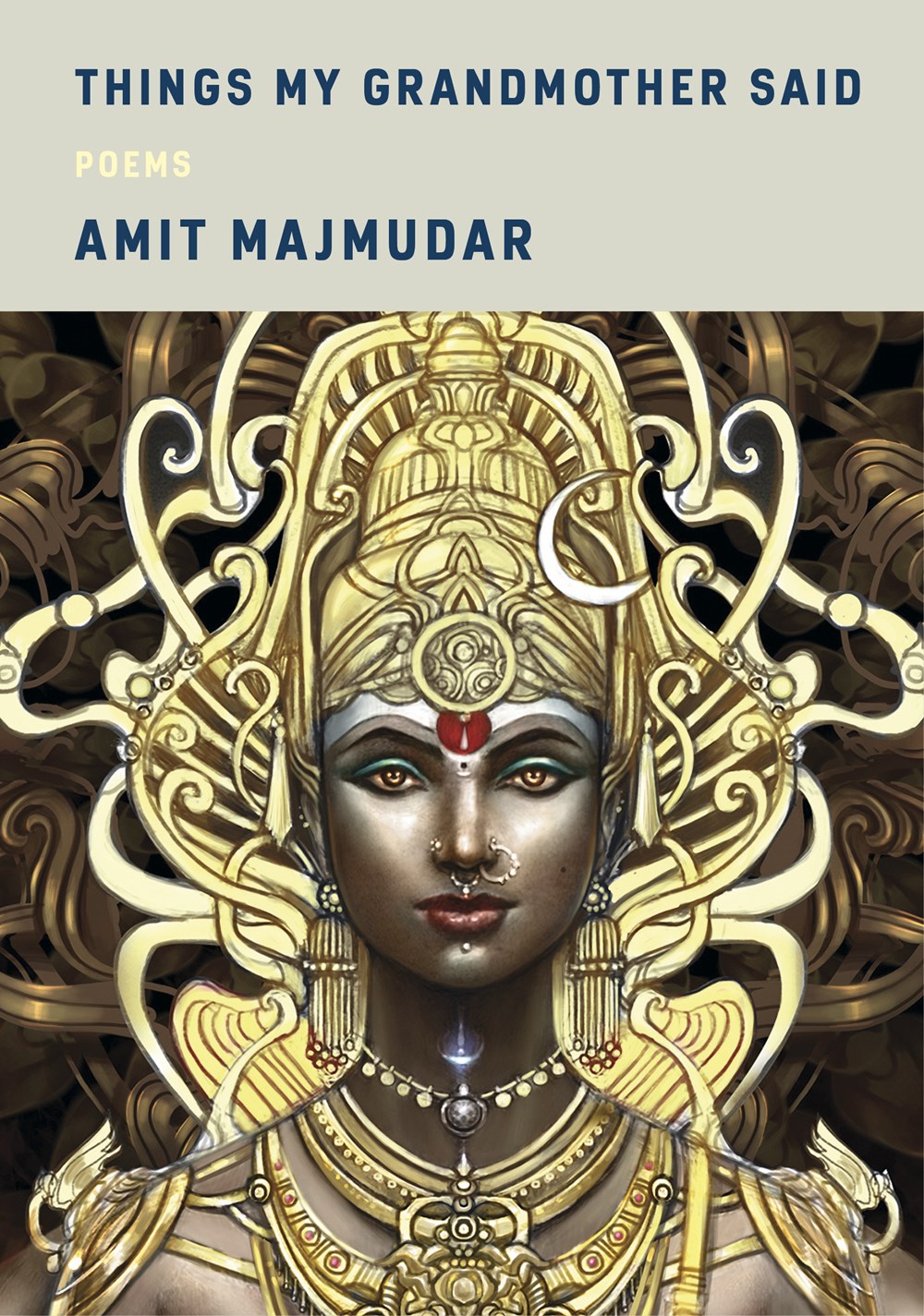
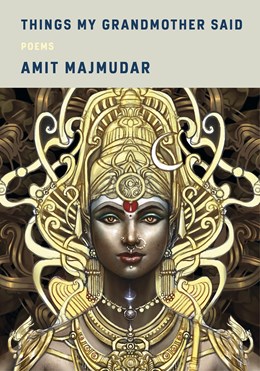
Things My Grandmother Said, Amit Majmudar
Publisher: Knopf
Publication Date: April 14, 2026
Format: Hardcover / eBook
This marvelous collection opens with the practical wisdom and unforgettable wit of the poet’s grandmother, who said (among other things), “Turmeric can heal anything / but a broken heart” and “Read that to me at / my funeral, boy, right now my show is on.” From the foundation of the matriarchal, Majmudar turns to the impact of women as lovers and partners, exploring the contours of passionate, romantic, and married love; he and his wife are “two fireflies/ scooped out of the same evening” to meet in the jar where their constancy contains and sustains them. In the end, all this love transforms into the gift of language: Majmudar writes of how the Goddess in all her forms has charmed his life, giving rise to the creativity and personhood that allows him to seek and find his mother country in poetry.
A remarkable work from a man celebrating the power of the feminine to shape us and define who we are.
Amit Majmudar is the author of four volumes of poetry, most recently What He Did in Solitary, as well as an internationally acclaimed novelist and essayist. His work as a translator includes Godsong: A Verse Translation of the Bhagavad-Gita, with Commentary. A diagnostic nuclear radiologist, he lives in Westerville, Ohio.
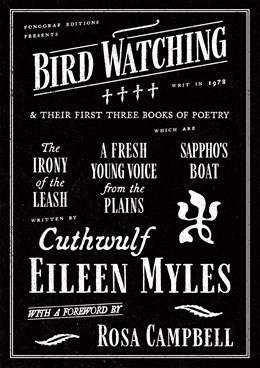
Bird Watching and their First Three Books of Poetry, Eileen Myles
Publisher: Fonograf Editions
Publication Date: April 14, 2026
Format: Hardcover / Paperback / eBook
Any future film director planning to make a movie of Myles’s iconic novel Chelsea Girls (it’s always just about to happen) would be wise to read Bird Watching first. Written in 1978 and unpublished until now, the central character of the book is a twenty-something that is already filled with memories. Living in New York City, resplendent, full of both grandeur and awkwardness, they are about to embark on a life fully invested in art. Bliss happens, as does uncertainty. Everything is here and now.
The Irony of the Leash, A Fresh Young Voice from the Plains, and Sappho’s Boat, the other collections contained in the volume, comprise the first three books that Myles published, when their promise as one of the most important writers of their generation was just coming into view. Immensely readable, raw, and slightly unhinged, the poetry that comprises these three texts is post young. Slight creaky but fully functional, all of these poems are beautiful and funky.
Bird Watching and Their First Three Books of Poetry contains a critical foreword by poet and scholar Rosa Campbell, along with a preface by Eileen Myles contextualizing the book within our contemporary moment.
Eileen Myles (them/them, b. 1949) is a poet, novelist and art journalist whose practice of vernacular first-person writing has made them one of the most recognized writers around town (globally). They live in New York & in Marfa, TX.
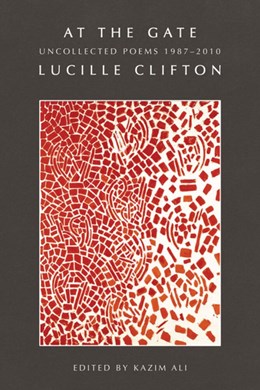
At the Gate: Uncollected Poems 1987–2010, Lucille Clifton
Publisher: BOA Editions
Publication Date: April 14, 2026
Format: Hardcover / Paperback
Discovered in digital archives by poet and scholar Kazim Ali, these poems span a prolific and reflective period in Clifton’s career as she shifted from typewriters to word processors and desktop computers. Many were originally drafted for publication, but set aside—until now.
Edited by Ali, this collection includes a contextual Foreword and detailed notes that illuminate Clifton’s late writing process and the editorial journey of these poems—deepening and expanding the themes that defined Clifton’s celebrated body of work.
At the Gate is a profound and necessary addition to Clifton’s legacy—one that reaffirms her place as a poet of the body, the spirit, and the deep truths that we must endure—her voice as intimate, fearless, and luminous as ever.
Lucille Clifton (1936–2010) was an award winning poet, fiction writer, and author of children’s books. Her poetry collection, Blessing the Boats: New & Selected Poems 1988-2000 (BOA, 2000), won the National Book Award for Poetry. In 1988 she became the only author to have two collections selected in the same year as finalists for the Pulitzer Prize, Good Woman (BOA), and Next (BOA). Among her many other awards and accolades are the Ruth Lilly Poetry Prize, the Frost Medal, and an Emmy Award. In 2013, her posthumously published collection The Collected Poems of Lucille Clifton 1965-2010 (BOA), was awarded the Hurston/Wright Legacy Award for Poetry.
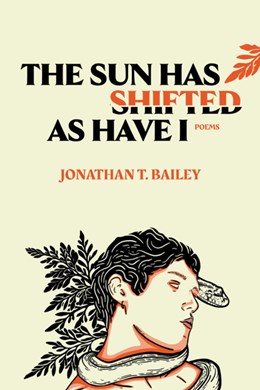
The Sun Has Shifted As Have I, Jonathan T. Bailey
Publisher: Torrey House Press
Publication Date: April 14, 2026
Format: Paperback
Jonathan Bailey maps the process of transformation, weaving themes of longing, belonging, and self-discovery. Set against the beauty of the West where the buzz of cicadas and the song of the hermit thrush echo across the desert, the collection draws power from the land’s ability to hold both desolation and renewal. Bailey’s poems embrace contradiction as essential to healing, refusing to separate pain from beauty or vulnerability from strength. Rather than offering closure, the collection reveals how wholeness is forged through emotional risk and the clarity gained by facing oneself fully.
Jonathan T. Bailey is the author of the literary memoir When I Was Red Clay: A Journey of Identity, Healing, and Wonder and co-author of The Greater San Rafael Swell. His work has been published in Archaeology Southwest, the Salt Lake Tribune, Indian Country Today, and more. As an artist and conservation photographer Jonathan’s works turn an eye to the Utah desert that forged him. He lives in Tucson, Arizona.
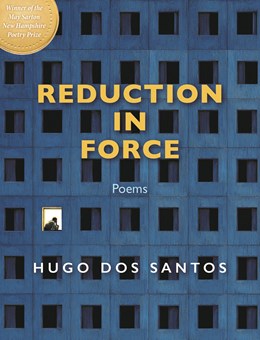
Reduction in Force, Hugo Dos Santos
Publisher: Bauhan Publishing
Publication Date: April 14, 2026
Format: Paperback
“In a literary moment when so much lyric poetry seems preoccupied with private experience and ready-made epiphany, Hugo Dos Santos’s Reduction in Force is revelatory. It is, yes, an examination of the self, but it performs its review through lenses and landscapes that are rarely utilized in poetry, which is to say the cold and bureaucratized reality of the American corporate world, and the ways that world can affect and pressure the individuals and families who attempt to build their lives under the dominion of those companies. Dos Santos maps the experience of a true believer who must come to terms with the betrayal now inherent in what used to be known as the American dream and work through the humiliation of starting over. He does so in poems that are consistently surprising in content, satisfyingly varied in form and tone, and utterly, winningly, trustworthy to the reader. I haven’t seen anything like this book before, and it heralds the arrival of an original poet, with the promise of more originality and excitement ahead.” —Anthony Walton
Hugo dos Santos is the author of Reduction in Force (Bauhan Publishing, 2026), winner of the May Sarter New Hampshire Poetry Prize, and Then, there (Spuyten Duyvil, 2019), a collection of Newark stories. He is the translator of Homecoming (Arquipelago Press, 2024) and A Child in Ruins (Writ Large Press, 2016), a staff pick at the Paris Review Daily. Born in Lisboa, Portugal, and raised in Newark, New Jersey, he writes toward questions of diaspora, belonging, and memory.
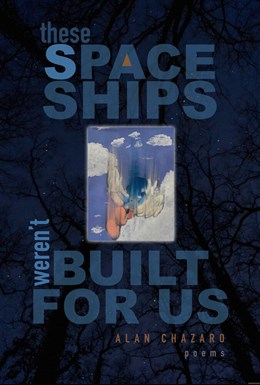
These Spaceships Weren’t Built For Us, Alan Chazaro
Publisher: Tia Chucha Press
Publication Date: April 14, 2026
Format: Paperback
In his newest poetry collection, These Spaceships Weren’t Built For Us, Alan Chazaro reconsiders the possibilities of space travel as the son of Mexican immigrants while navigating daily life across rapidly shifting social spaces. From barren gas stations in Central California during the height of the pandemic to faraway jungle planets governed by paleteros, Chazaro imagines the present and future in ways that are simultaneously bleak and dire, hopeful and beautiful, and seemingly, impossibly unrealized.
Alan Chazaro is the author of This Is Not a Frank Ocean Cover Album (Black Lawrence Press, 2019), Piñata Theory (Black Lawrence Press, 2020), and Notes from the Eastern Span of the Bay Bridge (Ghost City Press, 2021). He is a graduate of June Jordan’s Poetry for the People program at UC Berkeley and was selected as a Lawrence Ferlinghetti Poetry Fellow at the University of San Francisco. A former high school teacher, he was raised by Mexican immigrants in the Bay Area and writes about the world. His work can be found in NPR, The Guardian, SLAM, GQ, L.A. Times, Condé Nast Traveler, Eater, and more. He currently lives in Veracruz, Mexico.
Last Stops of the Night Journey, Milo De Angelis, Susan Stewart (Tr)
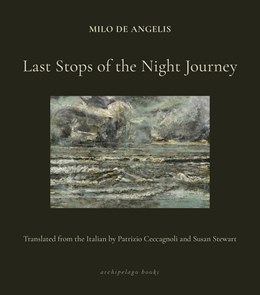
Publisher: Archipelago
Publication Date: April 14, 2026
Format: Paperback / eBook
An arrow hits a grape and carries it through the air, a hand untangles a knot, a voice emerges from a stone to speak about life. In his poems, Milo De Angelis attends to the experience of confinement. Since 1996, he has taught poetry in a high-security prison on the outskirts of Milan. He sees poetry as a daily salvation; when the knot comes undone, it “carries back the sweet human voice of bodies in motion.” And when the stone cracks open, a voice tells of you and of me, a shared story. De Angelis never shies from the deep fears, darkness, and indeterminacy of incarceration. The characters of these poems wonder whether they will survive. They know all that stays hidden in an end, and they plan for their salvation. Milo De Angelis’s language is ancient and new, transcendent, and urgent. Last Stops of the Night Journey pulses with the immensity of silence, memory, life, time, and fear. De Angelis insists that the infinite language of poetry can speak to the incarcerated person, greet them, know them, and chart a world beyond physical walls.
From his publication of Somiglianze at the age of 25, Milo De Angelis has garnered much recognition. Known beyond his poetry for his literary essays and his translations of Virgil, Lucretius, Racine, Baudelaire, Blanchot, and others, in the 1970’s he founded the literary journal Il Niebo. In 2005, his Tema dell’addio was awarded the Premio Viareggio. In 2011 Quell’andarsene was awarded the Premio Cetonaverde, the Premio Pascoli, the Premio Romagna, and the Premio Mondello. Incontri e agguati received the Premio Dessì, the Premio Nazionale di Poesia “Luciana Notari,” and the Premio Castello di Villalta Poesia in 2016. In 2017, De Angelis was awarded the prestigious Premio Lerici Pea for his body of work.
Susan Stewart, the Avalon Foundation University Professor in the Humanities at Princeton University, is a poet, critic, and translator. A former MacArthur Fellow and Chancellor of the Academy of American poets, she is the author of six books of poems, including Columbarium, which won the National Book Critics Circle Award, and, most recently, Cinder: New and Selected Poems. Her many prose works include On Longing, Poetry and the Fate of the Senses, The Open Studio: Essays in Art and Aesthetics, and The Poet’s Freedom.
The Bonfire Party, Sean O’Brien
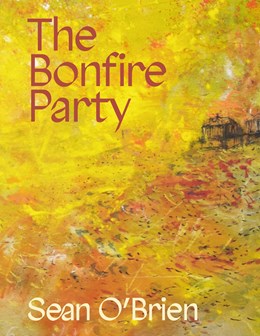
Publisher: Picador UK
Publication Date: April 14, 2026
Format: Paperback / eBook
The Bonfire Party – Sean O’Brien’s twelfth collection – considers conditions at the limit of things, where the world can seem as mysterious as it is empty. This metaphysical cast of mind has deepened through O’Brien’s later works, and amongst The Bonfire Party‘s reflections on love, history and recurrence, the climate emergency is also a peremptory and nightmarish presence.
In a central sequence, O’Brien writes into the rich imaginative climate of George Simenon in his Maigret novels. These poems are both ‘homage and transposition’, notes the critic Patrick McGuinness, ‘but also a poetic close reading of the smells and tastes and moral atmospheres of one of most singular pairings in literature – Maigret and his creator, Simenon.’
The working of the imagination itself emerges as O’Brien’s true subject, where the fact of the world and the imagined order of literature and art begin to merge. The Bonfire Party finds Sean O’Brien advancing the intellectual inquiries for which he is regarded as one of our wisest living poets.
Sean O’Brien’s poetry has received numerous awards, including the T. S. Eliot Prize, the Forward Prize (three times), the E. M. Forster Award and the Roehampton Poetry Prize. His Collected Poems appeared in 2012. His work has been published in several languages. His novel Once Again Assembled Here was published in 2016. He is also a critic, editor, translator, playwright and broadcaster. Born in London, he grew up in Hull. He is Professor of Creative Writing at Newcastle University and a Fellow of the Royal Society of Literature.
Reverse Requiem, Ina Cariño
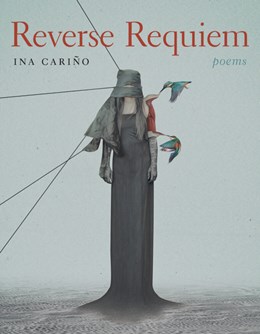
Publisher: Alice James Books
Publication Date: April 14, 2026
Format: Paperback / eBook
These soulful and elegiac poems, written in Cariño’s signature saturated lines, follow a speaker shaped by both subtle and profound personal tragedies. The collection’s emotional resonance is deepened by its formal inventiveness: poems shift in length, tone, and use of white space, mirroring the fractured, nonlinear journey at the book’s heart. The title, Reverse Requiem, suggests a retracing of a life: rather than unfolding chronologically, the poems are guided by the speaker’s shifting mental and emotional states. Early pieces carry a stark, dirge-like weight that gradually gives way to glimmers of hope—proposing that healing, though never linear, remains within reach.
Cariño wrote Reverse Requiem gradually, over the course of a year spent immersed in other creative disciplines, including music and visual art. A mentor once told them, “Even if you stop writing, you’re never truly leaving it behind—you’re always a writer if you stay open to the world.” That openness permeates this collection. Where Feast, Cariño’s debut, turned inward, Reverse Requiem reaches outward. While it remains grounded in introspection, this second book reflects a year of emotional risk and connection—extending itself toward the world and those who inhabit it.
Originally from Baguio City in the Philippines, Ina Cariño is a 2022 Whiting Award winner for poetry. Their work appears in the American Poetry Review, the Margins, Guernica, Poetry Northwest, Poetry Magazine, the Paris Review Daily, Waxwing, New England Review, and elsewhere. She is a Kundiman fellow and is the winner of the 2021 Alice James Award for Feast, published by Alice James Books in March 2023. In 2019, Ina founded a poetry reading series called Indigena Collective, a platform that aims to center marginalized creatives in the NC community and beyond.
History of the Child, Penelope Shuttle
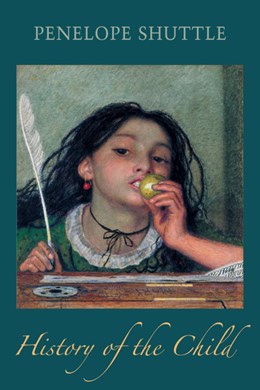
Publisher: Bloodaxe Books
Publication Date: April 14, 2026
Format: Paperback
The first of the book’s four sections features poems about Katherine of Aragon, the Vestal Virgins, Stanley Spencer and Wallace Stevens, with a focus on grief, nature, and animals. The second, Book of Lullabies, steps closer to the theme of the child, with poems about memory, inwardness, climate change, sexuality in older age, and the natural world. The third part, History of the Child, is a journey back to Penelope Shuttle’s own childhood, blending personal memories with imagined perspectives to explore psychological crises, emotional recovery, and the traumas of childhood. It introduces an ‘alternative girl child self’, inspired by Persian legends, by her late husband Peter Redgrove’s dream of such a girl (‘my death, and she is my soul’), and by a friend’s fanciful wish. The culminating fourth section is a playful sequence about a little table, inspired by her mother and her childhood. The table symbolises connection to her mother, who lived to be 100 years old, and their shared history.
History of the Child is guided by themes of memory, imagination, foreboding, magic, history and humour, and seeks to articulate the essence of ‘being’ through fiery language and elemental imagery. She draws inspiration from Donald Winnicott’s concept of the ‘potentive space’ where play, fantasy and reality intersect.
Penelope Shuttle has lived in Cornwall since 1970, and is the widow of the poet Peter Redgrove, co-author with her of the classic study The Wise Wound: Menstruation and Everywoman (1978; latest US edition, 2005). Her first collection of poems, The Orchard Upstairs (1981) was followed by six other books from Oxford University Press, and then A Leaf Out of His Book (1999) from Oxford Poets/Carcanet, and Redgrove’s Wife (2006) and Sandgrain and Hourglass (2010) from Bloodaxe Books. Her ninth poetry collectio Redgrove’s Wife (2006) was shortlisted for both the Forward Prize and the T.S. Eliot Prize in 2006. Sandgrain and Hourglass (2010) is a Poetry Book Society Recommendation. Her retrospective, Unsent: New & Selected Poems 1980-2012 (Bloodaxe Books, 2012), drew on ten collections published over three decades plus the title-collection, Unsent. Her later collections from Bloodaxe are Will you walk a little faster? (2017), Lyonesse (2021), longlisted for the Laurel Prize 2022, and History of the Child (2026).
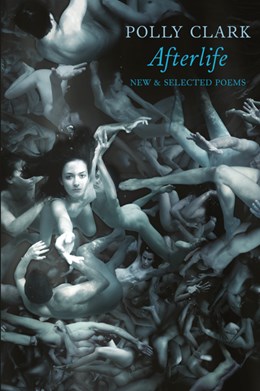
Afterlife: New & Selected Poems, Polly Clark
Publisher: Bloodaxe Books
Publication Date: April 14, 2026
Format: Paperback
This retrospective of her work drawns upon her collections Kiss (2000), the T.S. Eliot Prize shortlisted Take Me with You (2005), and Farewell My Lovely (2009), plus Afterlife, a collection of new poems.
Her debut, Kiss, journeys inward, exploring the self with an unflinching gaze, before Take Me with You turns outward to question how we connect – with others, with the wider world, with the unknown. In these collections, her characters, both human and animal, speak in many voices, illuminating the moments when we are most alive – and most alone. Farewell My Lovely grapples with the price of survival, charting the experience of leaving one’s life behind and returning as a stranger. By turns moving and darkly comic, these poems examine the ways we cling to who we were, even as certainty dissolves and the past slips beyond reach. This retrospective of her poetry opens with a magical new collection – also called Afterlife – in which there are no physical limits, nothing is stable and the world is distilled to its elements. The traumatic experience of rape transforms a girl into a tiger, and a tiger into a girl; a whale embraces both air and water until forced to inhabit only one by jealous fish. The poems grapple with the inexplicable nature of some experience, suggesting that we are most real in that mysterious space between living and dying.
Polly Clark was born in Canada and brought up in Scotland. She received an Eric Gregory Award for her poetry in 1997. Three collections followed from Bloodaxe: the first, Kiss (2000), was a Poetry Book Society Recommendation; her second, Take Me with You (2005), was a Poetry Book Society Choice and shortlisted for the T.S. Eliot Prize; her third was Farewell My Lovely (2009). Her debut novel, Larchfield (Quercus, 2017), fictionalised a little-known period in the life of W.H. Auden. It won the Mslexia Prize, as well as critical plaudits from Margaret Atwood, Louis de Bernières and Richard Ford. Her follow-up, Tiger (Quercus, 2019), was shortlisted for the Saltire Scottish Book of the Year. Her third novel, Ocean, was published by Eye Books in the UK and Lightning Books in the US in 2025. She divides her time between the west of Scotland and a houseboat in London.
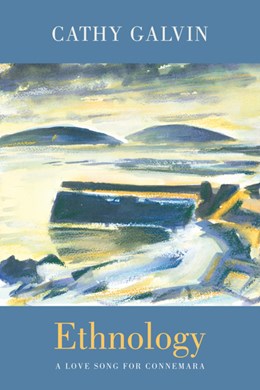
Ethnology: a love song for Connemara, Cathy Galvin
Publisher: Bloodaxe Books
Publication Date: April 14, 2026
Format: Paperback
Drawing on classic forms within literary and oral traditions, Ethnology becomes a love song for Connemara, witness to vivid encounters: between the living and the dead and between the poets, folklorists and ethnologists who have written about the West of Ireland for their own agendas. In her first full-length book of poetry, fragility and strength are finely balanced, focused on the ruins of an island cottage built by her great-grandfather. Here, Cathy Galvin locates both mourning, humour and joy. The poems give a vivid, original voice to the tradition of keening, of honouring the loss of those we love.
Cathy Galvin published three pamphlets, Black & Blue (2014), Rough Translation (2016) and Walking The Coventry Ring Road with Lady Godiva (2019), before her first full-length book of poetry, Ethnology: a love song for Connemara (Bloodaxe Books, 2026). She has been nominated for several awards including the Ilkley Poetry Prize, the Listowel Poetry Collection Prize (twice) and the Goldsmiths/ Spread the Word Life-Writing Prize, and is the recipient of a Hawthornden Fellowship, Heinrich Böll (Achill Island) residency and an Arts Council England DYCP award. She also edited Red, an anthology of new writing published by Waterstones. As a journalist she has worked as a senior editor for Newsweek and the Sunday Times. With roots in Coventry and Connemara, she lives near Bodmin Moor in Cornwall.
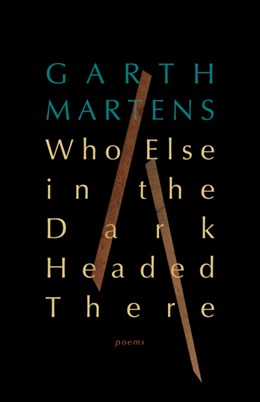
Who Else in the Dark Headed There, Garth Martens
Publisher: Biblioasis
Publication Date: April 14, 2026
Format: Paperback / eBook
A mother disappears. A son struggles to make sense of the life she left behind. Set against the stark northern Alberta of the 1980s and 90s, Who Else in the Dark Headed There follows a man reaching through time to find the child he was and the father he is becoming.
Beneath this waking world is another world, of the overheard, of the unsaid. To enter is to find a lyricism finely wrought and hallucinatory, a depth of feeling and fidelity to metaphor in all its guises—but most of all an urgent relationship with language. Here, in a reconstruction of childhood’s rooms, Garth Martens approaches the past not as a record but as a pressure, a “muscled concentration” that reorders, resuscitates, and redoubts.
Garth Martens is the author of Prologue for the Age of Consequence and Who Else in the Dark Headed There. For his first book, he was a finalist for the Governor General’s Literary Award for Poetry. He is also a past winner of the Bronwen Wallace Award for Emerging Writers. His poetry appears in Dark Mountain Project, Poetry Ireland, Hazlitt, This Magazine, Vallum, Fiddlehead, and Best Canadian Poetry. He is also a member of Palabra Flamenco, a literary flamenco ensemble that joins traditional flamenco dance and music with poetry and oral storytelling. He lives in Victoria, BC.
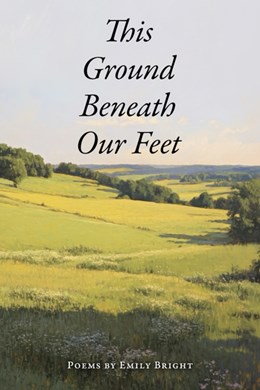
This Ground Beneath Our Feet, Emily Bright
Publisher: Holy Cow! Press
Publication Date: April 14, 2026
Format: Paperback
Gathered from nearly 20 years of writing, the poems in This Ground Beneath Our Feet sailfrom the Atlantic crossings of her ancestors to the forests of New England, to the Mississippi River Valley, to the world contained within a neighborhood backyard. Over and over, through offers of food and a listening ear, connections form across distances. Strangers find common ground. These poems capture scenes with lyrical precision: Emily Dickinson shares homemade cake; a dawn house fire sends neighbors tapping at the window for help; a family gathers for a loved one’s final hours. In other snapshots from the collection, a stranger guides the lost poet through the streets of Togo’s capital city. These are poems that delight in the natural world, even in wildflowers tucked next to buildings. Written with the intimacy of Bright’s first collection, Fierce Delight: Poems of Early Motherhood, these poems ask, “What seeds are we planting for the future?”
Emily Bright is a weekend host for Minnesota Public Radio news, where she also produces “Ask a Bookseller” and “Art Hounds.” She is the author of Fierce Delight: Poems of Early Motherhood, which was featured on National Public Radio’s “All Things Considered.” She holds an MFA in poetry from the University of Minnesota and a BA from Williams College. She lives in the Twin Cities with her family.
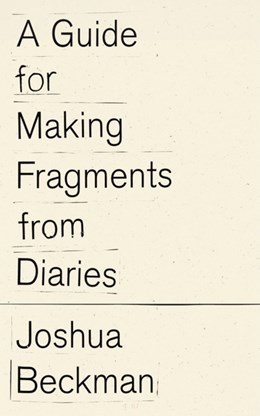
A Guide for Making Fragments from Diaries, Joshua Beckman
Publisher: Wave Books
Publication Date: April 14, 2026
Format: Paperback
Joshua Beckman’s new book, A Guide for Making Fragments from Diaries, gathers poems found or made in various forms—chapter summaries of non-existent books, body poems, an assemblage of his mother’s remarks while painting his portrait, lists of thoughts and things (one of all the uninvited animals and insects who entered his house over the course of a year!). The book culminates with the guide, including light instructions toward finding fragments within a notebook or diary.
Joshua Beckman was born in New Haven, Connecticut. He is the author of many books, including Tomaž (2021), Animal Days (Wave, 2021), The Lives of the Poems and Three Talks (Wave Books, 2018), The Inside of an Apple, Take It, Shake, Your Time Has Come, and two collaborations with Matthew Rohrer: Nice Hat. Thanks. and Adventures While Preaching the Gospel of Beauty. He is editor-in-chief at Wave Books and has translated numerous works of poetry and prose, including Micrograms, by Jorge Carrera Andrade, 5 Meters of Poems (Ugly Duckling Presse, 2010) by Carlos Oquendo de Amat, and Poker (Ugly Duckling Presse, 2004) by Tomaž Šalamun, which was a finalist for the PEN America Poetry in Translation Award. He also co-edited Supplication: Selected Poems of John Wieners (Wave Books, 2015).
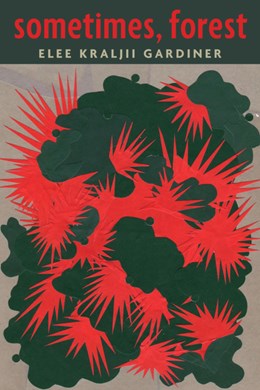
sometimes, forest, Elee Kraljii Gardiner
Publisher: Talonbooks
Publication Date: April 14, 2026
Format: Paperback
sometimes, forest alternatively rails at and desires a fluid beloved, sometimes forest, sometimes lover, friend, mother, or an absence the speaker yearns for in herself. But the coastal temperate rainforest continues foresting, existing independently of the speaker’s wants or needs, a place of both refuge and harm. Returning daily to the same woods, the speaker notices minute seasonal changes and considers her own internal changes too.
Meanwhile, fires, heat domes, and landslides mirror hormonal heat and biological surges. Considering how networks of lateral support mitigate and challenge hierarchical, individualistic structures, sometimes, forest develops a theory of hylofeminism that attends to a deep, communal connection with nature as a relational way of being with the self and the more-than-human world.
Elee Kraljii Gardiner is the author of two poetry books, Trauma Head (Anvil Press, 2018) and serpentine loop (Anvil Press, 2016). She is editor of the anthologies Against Death: 35 Essays on Living (Anvil Press, 2019) and V6A: Writing from Vancouver’s Downtown Eastside (Arsenal Pulp Press, 2012) and nine anthologies from Thursdays Writing Collective, a program she founded with Downtown Eastside writers. She is also author of the chapbooks Trauma Head: the medical file (Otter Press, 2017) and Residence (Otter Press, 2023).
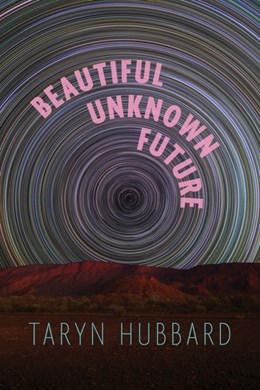
Beautiful Unknown Future, Taryn Hubbard
Publisher: Talonbooks
Publication Date: April 14, 2026
Format: Paperback
Haunted by the looming shadows of our compounding crises, Beautiful Unknown Future reflects with candour and wit on the precarity we share with the nonhuman world. Written while Hubbard’s children were young, these poems hold space for messy feelings about motherhood and care, the climate crisis, family ghosts, and office dynamics. Refusing false optimism, Beautiful Unknown Future layers the chaos of domestic life with the detachment of the corporate environment to examine the joys and complexities of these competing spaces, looking critically to a future centred around tenderness, resilience, and love.
Taryn Hubbard is the author of Desire Path (Talonbooks, 2020) and The Very Good Best Friend (Now or Never Publishing, 2025). She lives in Chilliwack, British Columbia, with her family.
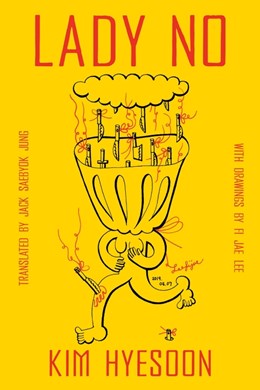
Lady No, Kim Hyesoon, Jack Saebyok Jung (Tr)
Publisher: Ecco
Publication Date: April 14, 2026
Format: Hardcover
In March 2014, Kim Hyesoon, the grand dame of contemporary Korean poetry, began to post anonymously on the online blog of Munhakdongne, a major South Korean publisher. Rather than use her own name, Kim Hyesoon’s chosen persona for these blog posts was Lady No. Fittingly, Lady No’s writings are dissenting, combative, subversive, and ontologically feminine; formally, they defy any attempt at easy categorization. They are neither poems, nor are they prose, but a radical innovation Kim calls shisanmun—an ungovernable style that heralds her internationally acclaimed works Autobiography of Death and Phantom Pain Wings.
The entries in this seminal collection, arranged chronologically and in their entirety here for the first time, are an eclectic hybrid of opinion editorials, aphorisms, recipes, daydreams, travelogues, art criticism, as well as treatises on the metaphysics of poetry and the current state of international literature. They take place in and around the world but most often they return to a country called Aerok, a frightening yet familiar mirror of contemporary Korea. First unwittingly, and then with concentrated grief, they chart the course of one of the most politically significant years in recent South Korean history: the sinking of the MV Sewol on the morning of April 16th that killed 304 people, including 250 high school students, and the reverberations of this national tragedy that culminated in the impeachment and ouster of the country’s then-sitting president. Taken together, these writings bear witness to the people’s shame, mourning, and perseverance under a corrupt administration—a painful public reckoning not dissimilar from our own.
Surreal but visceral, and inflected with both humor and rage, Lady No contains perhaps the most accessible of Kim Hyesoon’s writing to date and documents her first and only work of digital performance art. Totaling 179 individual entries and featuring 34 drawings by the artist Fi Jae Li, Lady No explores the inner and outer lives of contemporary Korean women and embodies the inextricable link between social justice and literary citizenship.
Kim Hyesoon is one of the most prominent and influential poets of South Korea. She is the first woman poet to receive the prestigious Kim Su-yeong Literary Award and Midang Literary Award, and her work has since been translated around the world. Among many other honors, she is a winner of the Griffin Poetry Prize in 2019 and was the first foreign laureate to win the National Book Critics Circle Award for Poetry, in 2023. Her poetry collection Phantom Pain Wings, translated by Don Mee Choi, was named poetry book of the year in 2023 by the New York Times, Washington Post, and The Poetry Society.
Jack Saebyok Jung is a 2024 National Endowment for the Arts Translation Fellow and the author of Hocus Pocus Bogus Locus (Black Square Editions, 2025). A Truman Capote Fellow at the Iowa Writers’ Workshop, he co-translated Yi Sang: Selected Works (Wave Books, 2020), winner of the MLA’s Aldo and Jeanne Scaglione Prize for a Translation of a Literary Work. He teaches at Davidson College.
Beyond Where Words Can Go: A Novel in 200 Sonnets, Richard Smith
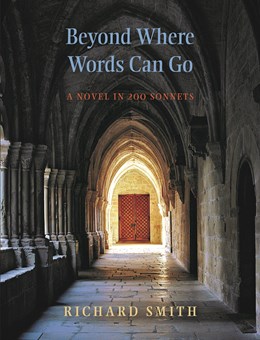
Publisher: Bauhan Publishing
Publication Date: April 14, 2026
Format: Paperback
“Beyond Where Words Can Go is so many things at once: a collection of finely wrought narrative sonnets; a deeply felt (and highly unusual) love story spanning decades; a meticulously researched account of 16th-century English ecclesiastical history and practice—all in the space of 2800 lines! With psychological precision, subtle humor, and unfailing empathy, Smith brings to life not just a few central characters, but an entire monastery full of vivid and indelible individuals. He has created an utterly original work of literature, as generous as it is sui generis.” —Gary Krist, author of Trespassers at the Golden Gate and The Mirage Factory
Richard Smith began life as an English major. After graduating from Princeton, he worked in publishing for twelve years, including stints as managing editor of The Hudson Review and World Policy Journal. In his thirties, he retooled as a clinical psychologist, earning his Ph.D. from the University of Maryland, College Park, and now maintains a private practice in Washington, D.C. He is on the core faculty of the Center for Existential Studies and Psychotherapy, for which he gives presentations on plays and novels, ranging from Sophocles to Toni Morrison, exploring how an existential sensibility can lend these voices fresh urgency. He and his partner live with their two dogs, who inspired the sonnet-writing that led to this book.
Modicum, Joal Hetherington
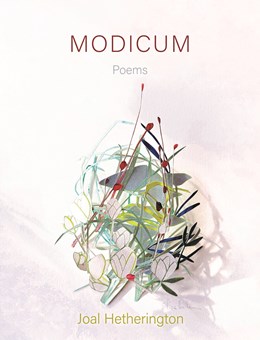
Publisher: Bauhan Publishing
Publication Date: April 14, 2026
Format: Paperback
Ranging from spare to wry to exuberant, these poems embrace what’s closest—how a moment unfolds into nuances of meaning and understanding; how memory and attention preserve what we love and lose.
Joal (Jody) Hetherington has been caught up in the crafting of words all her life. She has received awards for both her poetry and fiction from the Maine Writers and Publishers Alliance, and her work has been published in Common Ground Review. An earlier chapbook, Life in Prism: Selected Prose Poems, was published in 2014. She is a cofounder of Pen Central, a small organization that offers writing workshops in the Maine/New Hampshire Seacoast area. She lives in southern Maine.
The Bright Afters, Sadie McCarney
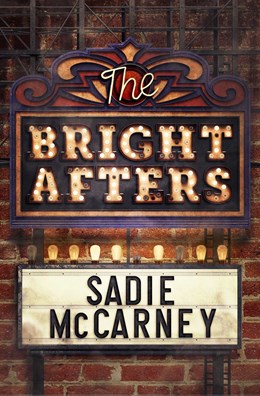
Publisher: a misFit book
Publication Date: April 14, 2026
Format: Paperback
When a gay teenager is mercilessly stabbed in a high school bathroom in West Nowhere, Nova Scotia, the surrounding community is sent into a tailspin. While Colton fights for his life in a hospital room at West Nowhere General, everyone from a school janitor to the boy’s abusive stepfather overflows with emotion in the form of verse monologues, unburdening themselves of their feelings.
The Bright Afters is a poetic container for the pain endured by the town and surrounding area — and sometimes, their confessions. The voices we hear from include the sympathetic (a favorite teacher) and the arresting (the kid who stabbed Colton). As Colton recovers, his powder keg sister Christine and his escapist best friend, Annie, have the most to lose from the act that almost killed him — and the most to gain from coming to a new understanding about the senseless violence.
Told from a variety of perspectives, The Bright Afters seeks to interrogate collective and individual trauma, queer belonging, and the ways in which a place sculpts the people it produces. Its individual poems take their names from Broadway shows, containing all of the community’s fraught hope for a positive “big finish” to the story.
Sadie McCarney’s other books are Live Ones and Your Therapist Says It’s Magical Thinking. Her work has also appeared in Best Canadian Poetry, The Walrus, Grain, Foglifter, The Malahat Review, and The Fiddlehead, among other publications. She lives in Cornwall, PEI.
Surgencies, Abraham Smith
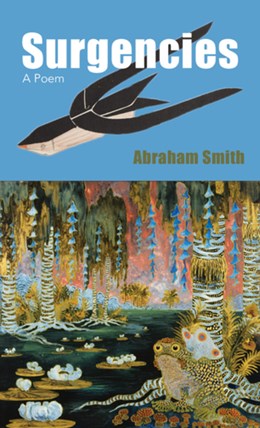
Publisher: Baobab Press
Publication Date: April 14, 2026
Format: Paperback
Surgencies is a poem; surge with urge; surgery with urgency. Line and sound emerge as emergency scribbled on grass. The message is green. The knife fight of light barnswallow flight. All zig and zag. And when the singing mouths of the peeping frogs open everyone flies and crawls in. Which is to say, Abraham Smith’s eye is fast, but his ink is faster.
In Surgencies, he sings the sweet news that loving is prismatic pendulum. Smith seeks the right words for how frogsong sounds or feels, and with every lost left-hand turn, he maps the grand effort of trying to articulate the varied and the vast.
Surgencies, Abraham Smith’s latest eco-audiological foray into our contemporary consciousness and rural locales, warns that “kicked skulls roll funny.” Prepare to get honey-skulled.
Abraham Smith hails from Ladysmith, Wisconsin. His recent poetry collections include Insomniac Sentinel (Baobab Press, 2023) and Dear Weirdo (Propeller Books, 2022). Away from his desk, he improvises poems inside songs with the Snarlin’ Yarns on the albums It Never Ends (DBS/Don Giovanni, 2023) and Break Your Heart (Dial Back Sound, 2020). Smith lives in Ogden, Utah, where he is associate professor of English and co-director of Creative Writing at Weber State University.
Other Edens, Ash Bowen
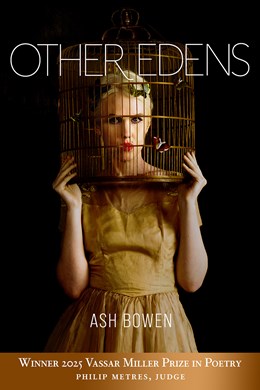
Publisher: University of North Texas Press
Publication Date: April 15, 2026
Format: Paperback
Other Edens captures the heartache that arises from hope’s repeated failures. The poems explore how grief (re)shapes belief and how death (re)shapes memory. Readers of Frank Stanford’s poetry might find a kinship between his and Bowen’s depictions of menace in the world, particularly in the rural South, where violence patiently waits to be useful to someone. Bowen’s poems are stark and terse, eschewing any poetic impulses to repaint the world as anything but a demoralizing series of crushing disappointments.
Ash Bowen taught creative writing at a number of universities, including the University of Alabama, Minot State University, and, most recently, Arkansas State University–Queretaro, Mexico. He has been the recipient of a Mona Van Dyun Scholarship from Sewanee Writers’ Conference, and his work has appeared in New England Review, Kenyon Review Online, Rust+Moth, Best New Poets, and Best of the Net. His first book of poetry, The Even Years of Marriage, was winner of the Orphic Prize.
Amphibian, Joseph O. Legaspi
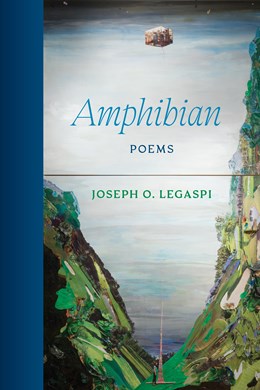
Publisher: Curbstone Books 2
Publication Date: April 15, 2026
Format: Paperback / eBook
How does a queer brown body move through the American panorama? In Amphibian, Joseph O. Legaspi explores the metaphor of “amphibious living”—adapting, surviving, and flourishing in varying geographies—as it pertains to immigrants and to queerness. These poems draw on the natural world to illuminate personal experiences and, in turn, closely examine cultural, environmental, and societal constructs and concerns.
Legaspi searches in nature for evidence of the validity of his own existence, determined to declare his belonging. Dwelling in landscape as a guide into the interior, Amphibian journeys not only between earth, water, and air, but also into the past, cataloging an immigrant’s departures, arrivals, and returns to native soil. This moving collection is at every turn liberating, fraught, and altered.
Joseph O. Legaspi is the author of two previous poetry collections, Threshold and Imago, and of three chapbooks: Postcards; Aviary, Bestiary; and Subways. He works at Columbia University, teaches at Fordham University, and resides with his husband in Queens, New York.
We Survived Until We Could Live, Uchechukwu Peter Umezurike
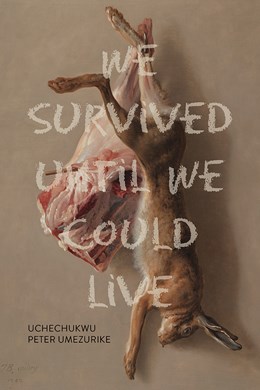
Publisher: University of Calgary Press
Publication Date: April 15, 2026
Format: Hardcover / Paperback / eBook
A powerful, intimate portrait of a family navigating the memories of war.
Who survives war? What does survival mean? And at what cost? Yes, the sirens and bombs have ceased. Yes, peace has settled over the rubble. But even in moments of laughter, ghosts chafe. Blood still smells in the air. The present is as fraught as the past, filled with shadows and fumes. Old wounds sting the body and the mind, rekindling nightmares and memory.
In poetry by turns lyrical and intense, elegiac and intimate, We Survived Until We Could Live plumbs the contours of vulnerability, inviting readers to reflect on loss and the broken flesh. Uchechukwu Peter Umezurike skillfully uses multiple narrative voices and personas —a father, a mother, a son—to show how postwar trauma and memory warp family relationships, how violence persists long after a war has ended.
Umezurike doesn’t turn away from contemplating the psychic and physical scars that war leaves on people, whether on the old or young, parents or children. These are poems of taut breath, silence, and echoes. These are also poems of love and its redemptive power. Poems of the courage to continue. Tender yet enduring snapshots of kindness, grace, hope, and resilience, reminding us of our capacity to emerge from the crushing shrouds of darkness and tragedy into the light.
Uchechukwu Peter Umezurike is assistant professor in the Department of English and Wayne O. McCready Emerging Fellow at the University of Calgary. He is the author of Masculinities in Nigerian Fiction, Please Don’t Interrupt, there’s more, Double Wahala, Double Trouble, and Wish Maker.
Blue Between Owls: Blue Chore Coat and Other Collected Poems, Daye Phillippo
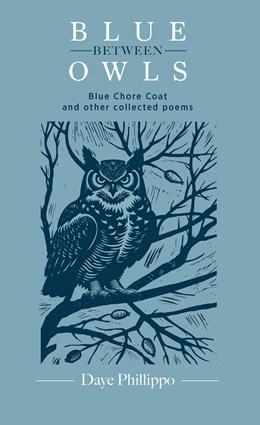
Publisher: SUNY Press
Publication Date: April 15, 2026
Format: Paperback
In Blue Between Owls, the calls of great-horned owls from the tangled woods become both metaphors for longing and calls to prayer. These poems draw their images and inquiries from the landscape of the rural Midwest, its green seas of corn and soybeans, its great expanse of sky above, and the Teays River, that ancient underground tributary that flows below, informing the way faith might inform a life, giving rise to praise. In the “Migration” poems, which walk with a beloved friend through her final illness, a bird-sown sunflower springs up in the burn pile and is transformed into flame the way we may hope to be transformed into light-bearing beings in this world.
Daye Phillippo says she’s lived her life backwards, first raising a large family and later earning degrees in Creative Writing from Purdue University (2011) and Warren Wilson MFA for Writers (2014). She is the recipient of a Mortarboard Fellowship, an Elizabeth George Grant for work in progress, and a Tennessee Williams Scholarship for poetry. Her work has been nominated for a Pushcart Prize and was selected by Educational Testing Services for inclusion in the AP English exam. Her poems have appeared or are forthcoming in Poetry, Valparaiso Poetry Review, The Midwest Quarterly, LETTERS, Shenandoah, Cider Press Review, One Art, Natural Bridge, Presence, The Windhover, and many others.
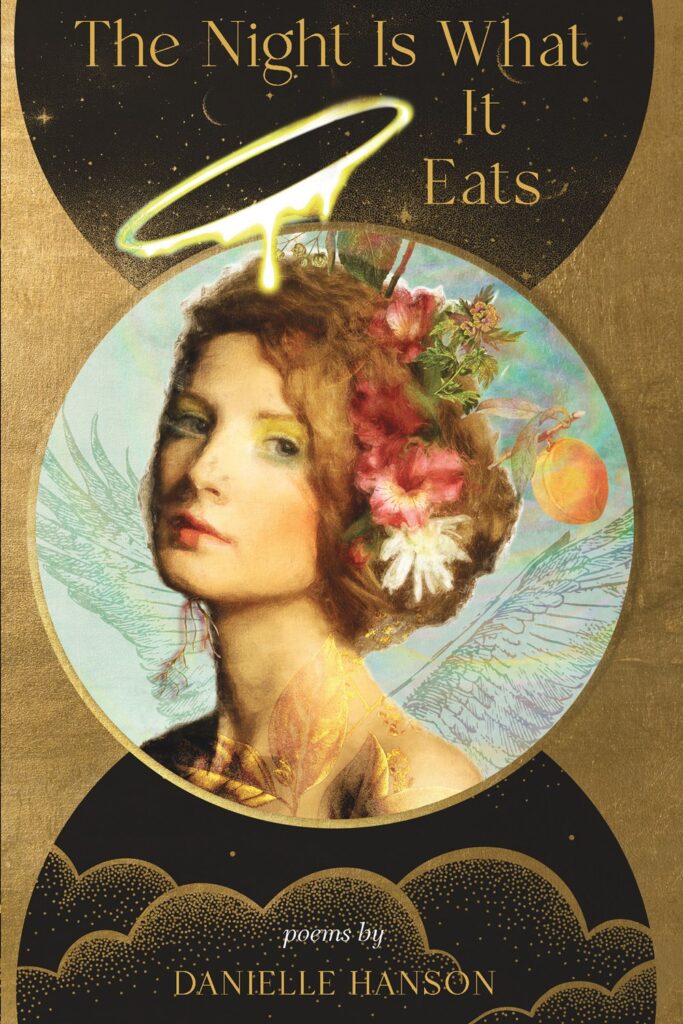
The Night Is What It Eats, Danielle Hanson
Publisher: SUNY Press
Publication Date: April 15, 2026
Format: Paperback
Danielle Hanson’s latest collection of poems, The Night Is What It Eats, explores several interlacing themes: saints complaining about their Heaven, body parts disassembled and put to use in a surrealistic bending of reality, elegies to animals loved and unloved. These magical realist poems and odes to nature and natural forces address the world we live in, but dismantled and reassembled. Parts of the whole are set free, like St. Lucia’s eyes, to see the world on their own.
Danielle Hanson is author of Fraying Edge of Sky, winner of the 2017 Codhill Press Poetry Prize, and Ambushing Water, Finalist for the 2018 Georgia Author of the Year Award; and editor of Objects in This Mirror (coedited with Julia Beach Anderson) and Sightlines: View Points on Susheel Kumar Sharma’s “The Door is Half Open.” She is Marketing Director for Sundress Publications and teaches poetry at UC Irvine. She serves as the Poet Laureate of Costa Mesa, California.
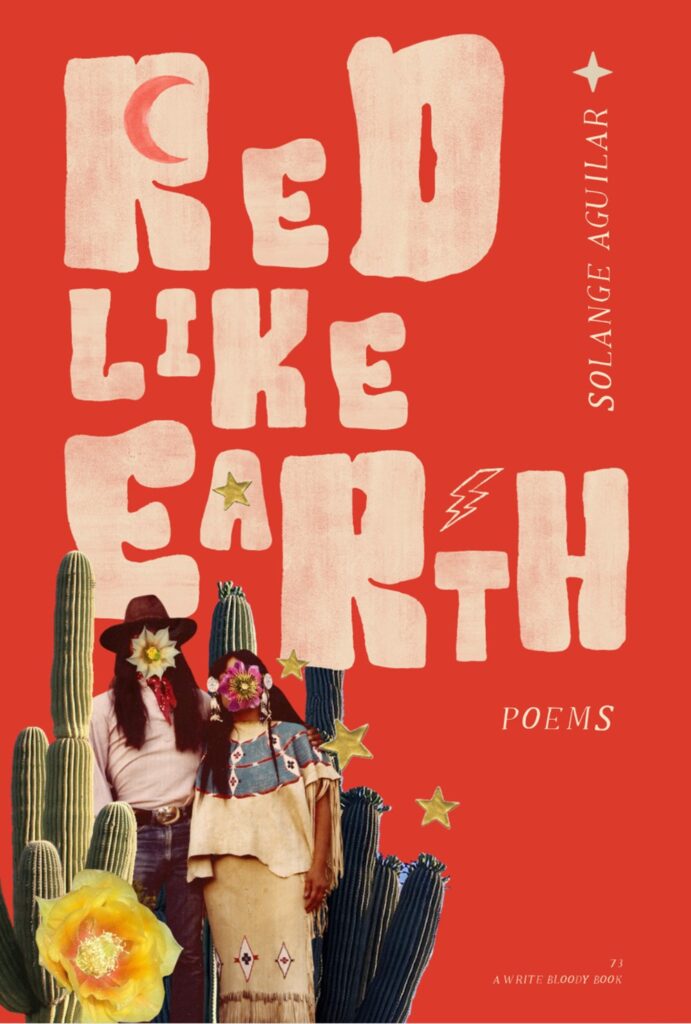
Red Like Earth, Solange Aguilar
Publisher: Write Bloody Publishing
Publication Date: April 17, 2026
Format: Paperback
Red Like Earth is a collection of poems that centers around the color red and the three main emotions Aguilar associates with it: love, anger, and their Indigenous identity. Red is passion. Red is history. Red is the color of homelands and skin. Red Like Earth is a raw and real look at poetry through a lens of reclamation of the heart, the body, and the land. Solange Aguilar moves us through a collection of poems that seek to paint the complexity of identity, culture and land politics, and love in the colors, tastes, and memories of being a body in a tender yet breaking world.
Solange Aguilar (They/Ze) is a queer Mescalero Apache, Yo’eme, and Filipinx (Kalinga/Kapampangan) multimedia artist, poet, and zinemaker. They are a 2025 Jack McCarthy Book Prize winner with Write Bloody Publishing, a co-winner of the Corazó n de Oro from Raí ces for their work on the Mispu Story Signs at Santa Barbara City College, and a first place winner in the Santa Barbara Poetry Slam. They are also a recipient of The Pachamama Skillshare and Women’s Creative Collective for Change artist scholarship and a 2021 fellow from the Artist2Artist program by the Art Matters Foundation.
Don’t see a poetry title published between 4/14 and 4/20 here? Contact us to let us know!
Contents
Chapbook Poem: Slow Burn by Evan Wang
“The concept of personifying a slow burn deeply resonated with who I thought myself to be—a slow burn, love flickering around me.” Read the featured Chapbook Poem of the Month for April 2026, “Slow Burn” by Evan Wang, along with a few words from the poet.
Book Excerpt: She wants shimmering scales by Nicole Alston Zdeb
“The nexus of the erotic, the social, and the body felt relevant to what I was experiencing at the end of the 20th Century. There are glimmers of personal lore as well…” Read the featured Excerpt Poem of the Month for April 2026, “She wants shimmering scales” from The End of Welcome by Nicole Alston Zdeb, along with a few words from the poet.
“I wanted to explore how time was registered not only by the calendar and clock, but also in the various utilitarian tasks of my mother’s life.” Read three poems by Ron Mohring, our first biweekly poet of the Spring 2026 issue, along with a few words about “Fuse.”
Three Poems by Andrew Pelham-Burn
“Children in these circumstances are deprived of love at a formative stage and learn to immediately behave like adults without the benefit of the learning path of childhood.” Read three poems by Andrew Pelham-Burn, our second biweekly poet of the Spring 2026 issue, along with a few words about “Conkers.”
A Conversation with John deSouza
“Language is a powerful tool and can do great harm both to ourselves and to those most close to us when used cruelly or selfishly.” Poet John deSouza discusses his chapbook, This Rough Magic, his creative process, and the influence of John Ashbery in this interview with editor Danielle McMahon.
Chapbook Poem: from Stray Hunter’s Bullet by Lance Le Grys
“…what interested me was the idea of a character who didn’t do what he was capable of, not because of external circumstances, but because of either a lack of will or a seemingly perverse one.” Read the featured Chapbook Poem of the Month for May 2026, from Stray Hunter’s Bullet by Lance Le Grys, along with a few words from the poet.
Book Excerpt: Love does not exist by Maria Giesbrecht
“This poem was inspired by a dream… I had this strange feeling when I woke up that it meant something more and started writing a poem to see if anything would reveal itself to me.” Read the featured Excerpt Poem of the Month for May 2026, “Love does not exist” from A Little Feral by Maria Giesbrecht, along with a few words from the poet.
“After a loss in my family, I discovered one grieves for both the living who hide their pain and for the dead who sleep in silence.” Read two poems by Patricia Wallace, our third biweekly poet of the Spring 2026 issue, along with a few words about “Fox.”
May ’26: New Staff, New Calls, New(ish) Name
Editor Aiden Hunt provides information about changes to PCR’s name, format, and staff in this editor’s note, which also contains links to our Spring calls for submissions.
“I kept thinking about how easily adults learn to stop seeing what’s right in front of them, especially when they’re somewhere between one country and another, neither arriving nor leaving.” Read four poems by Nivara Lune, our fourth biweekly poet of the Spring 2026 issue, along with a few words about “Notes Toward an Elsewhere.”
The Lines of Landscape: on The Catastrophes by Marie Scarles
“Scarles’ choice of title points away from place, and toward the book’s deeper and more powerful offering: a changed way of seeing, one of the hallmarks of any successful poetics.” Read the full chapbook review by contributing editor, D.W. Baker.
“Every time I plucked a few of the little orange sun sugars to take inside, their garden smell lingered on my fingers. It was almost enough to just sit with that scent…” Read three poems by Kait Quinn, our fifth biweekly poet of the Spring 2026 issue, along with a few words about “The Tomato.”
Chapbook Poem: Superbloom by Joyce Schmid
“That June, flowers bloomed everywhere in Northern California—as if to honor her, to celebrate her life. This poem is an attempt to accept the fact that she is really gone.” Read the featured Chapbook Poem of the Month for June 2026, from Superbloom by Joyce Schmid, along with a few words from the poet.
Book Excerpt: The Well by Robin Becker
“Allowing flickering sentiments and images to play against one another, I replicated one form of consciousness. A surprising aspect of the poem: the sudden appearance of figures of government.” Read the featured Excerpt Poem of the Month for June 2026, “The Well” from Midsummer Count by Robin Becker, along with a few words from the poet.
“Like a lot of my poems, this one reaches toward something impossibly out of grasp. But … maybe that’s the power of a poem, to momentarily touch something out of our reach.” Read three poems by Scott Weaver, our sixth and final biweekly poet of the Spring 2026 issue, along with a few words about “Annotating The Inferno.”
A Conversation with Abby Minor
“[A] long time ago I realized, and more or less accepted, that I would commune with most of my poet teachers and comrades via their work, not in person. And my work is how I talk to them.” Poet Abby Minor discusses her chapbook, Infinity Ballot, her Jewish-Appalachian heritage, and her convictions in this interview with new contributor, Julie Swarstad Johnson.