Contributions
- Three Poems by Sophia Naz
 Read three poems by Sophia Naz, our six biweekly poet of the Winter 2026 issue, along with a few words about “Sun Sonata.”
About the Contributor
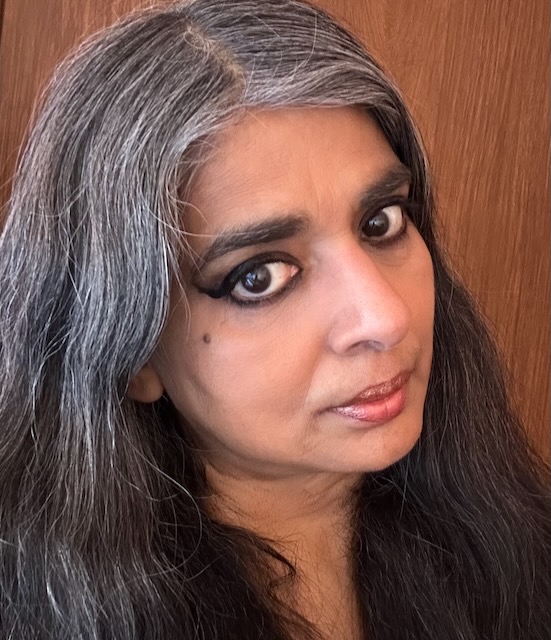
Sophia Naz is an interlingual writer, artist and translator. She has authored the poetry collections Bark Archipelago (Weavers Press, San Francisco & Red River India, 2023), Open Zero (Yoda Press, 2021), Pointillism (Copper Coin, 2017), Date Palms (City Press, 2017), Peripheries (Cyberhex, 2015 ) and Shehnaz, a biography (Penguin Random House, 2019) Her work appears in The Academy of American Poets, Poetry Daily, The Penguin Book of Modern Indian Poets, The Night Heron Barks, Singing in the Dark, Berfrois, The Bombay Literary Magazine, Rattle, The Adirondack Review and many others.
Author Website
Books
Bark Archipelago (Weavers Press, 2023)
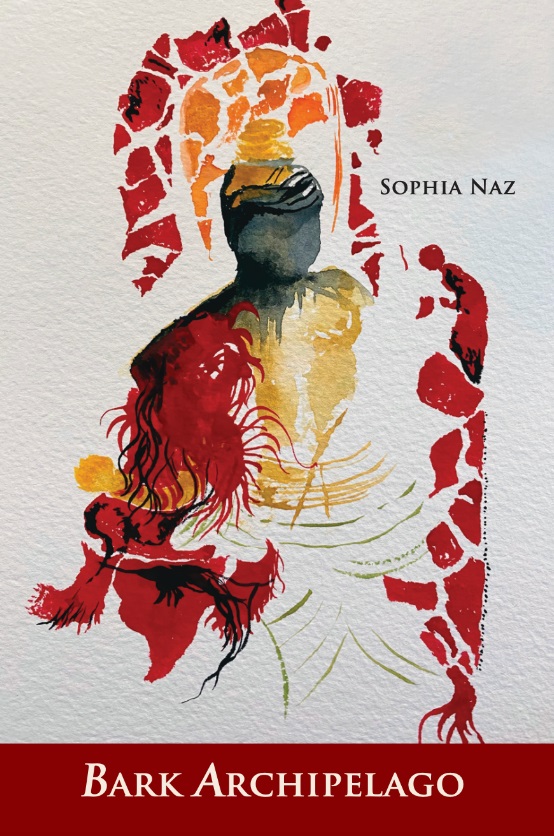
“Sophia Naz’s Bark Archipelago hits startling and giddy, inventive and destroyful. Sinewy lines of chime and pun, misdirection and feint make to paint grotesques. Excess tangled in loss, thus “everything will kill you,” even a lawn, even a length of fabric, even marriage. Naz pans slowly over the gory flensing of a whale and later breaks a human body into six members under twilight as gelatinous as blubber. This is a book of material, a broadside of extracted flesh and stone. Things. And the people who are made them. Material: the poet’s language itself should fill your mouth before you spill it into air like “windborne plastic bags”; till the thought-bubbles come, “taking up all the oxygen.” Yes: Bark Archipelago is breathless, racing to the line break before autocorrect can aggress or we wheel and deal the globe to our end.” —Douglas Kearney, author of Sho
Open Zero (Yoda Press, 2021)
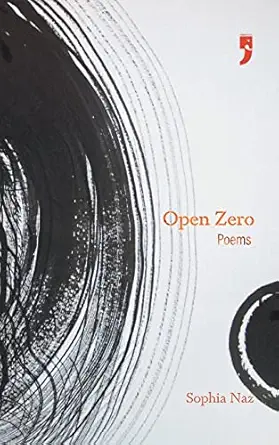
“These new poems by Sophia Naz are marked by a deep music, the strong beating of a battered but indomitable heart, the percussion of a tidal bore of meticulously crafted emotion. This is an apostrophe to loss, marked by the optimism inherent in poetry, for Naz’s passion for language goes way deeper than the anagrams and play of post-modernism, drawing the reader into a new territory of passionate rediscovery and retrieval.” —Jerry Pinto
Shehnaz: A Tragic True Story of Royalty, Glamour and Heartbreak (Vintage Books, 2019)
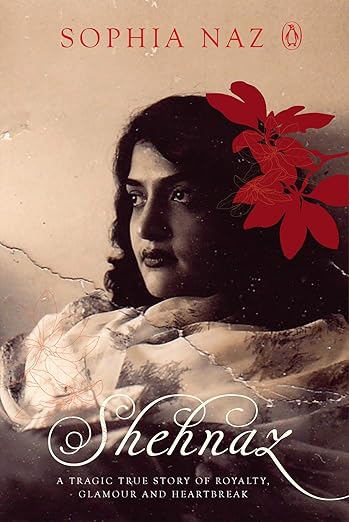
Shehnaz was a beautiful, erudite woman from the royal family of Bhopal, who was almost cast to play Anarkali in K. Asif’s Mughal-e-Azam. Her daughter Sophia Naz tells her story as she heard it from her-about her childhood as part of the royal household in Bhopal, where she led a revolt among the women for their right to be educated before being married, her glamorous life in Mumbai that hid the reality of an abusive first marriage that left her emotionally and physically traumatized, her divorce during which she lost custody of both her children to her husband, her second marriage to an army doctor in Pakistan, and her life thereafter.
As a child, the author accompanied her mother every year to Mumbai, where she would try to find some trace of her children in vain. Though remarried and with a new family, Shehnaz pined for her older children all her life, the pain lending a near-permanent patina of grief to her life. She finally met her children after twenty-one years, in the US. Her son refused to recognize her, saying he had no memory of her. Her daughter did remember her, though their reunion was brief, with the father exerting his will and threatening to disown the children if they had anything to do with their mother. When Shehnaz passed away, it was with her older daughter’s name on her lips.
Pointillism (Copper Coin, 2017)
Sophia Naz calls herself an in-between, an inhabitant of the hyphen. A South Asian-American poet who has lived in the US since 1989, she was born in Karachi in 1964 to migrant parents from Allahabad and Bhopal, where she spent summer vacations since the age of three. Obsessed with dismantling the concept of “otherness” into one big yarn, her writing often dwells in the liminal, engaging with linguistic, cultural, religious, temporal, personal and geographical borders. She herself crossed quite a few onerous customs before moving to New York at the age of twenty-six, after living in Thailand for two years. During her time in Manhattan she studied Sumi-e painting with Sensei Koho Yamamoto and garnered critical acclaim for her role as a deranged immigrant housewife in Watchman, Bina Sharif’s play at the Theater for the New City, before moving to California, where she currently resides with her husband Raam Pandeya, a former journalist, Hindi poet and master of an ancient healing practice known as Kayakalpa, which she has imbibed and practiced for the last two and a half decades. Although external events have inevitably influenced her work, Sophia believes that a daily practice of introspective solitude, a kind of inner alchemical refining of consciousness, is the crux of her poetic mother lode.
Recent Links
- Poem: “To Bear the Right” (Academy of American Poets Poem-a-Day)
- Multimedia: Mirrored Gestures: A Dance and Poetry Collaboration between artists Sophia Naz and Tara Pandeya (San Francisco Public Library)
- Poem Series: “Night Sequins” (SWWIM)
Contributor Q & A
Can you tell readers a little about yourself and your life?
I was born in 1964 and have lived in 22 cities before moving to my present home in Glen Ellen, California in 2010. Besides poetry, my passions are art, Indian classical music, photography, gardening, and cooking. Since childhood, all my poetry journals have contained drawings and doodles. Sadly, all of these were lost when my home burned down in a wildfire in 2017. I have painted/photographed the covers of most of my books and I often donate my artwork to other poets seeking art for their books. For the last 35 years, I have worked alongside my husband Raam as a practitioner of Kayakalpa, an ancient Indian system of wellness.
How long have you been a writer and how did you get started?
I started writing at the age of six but wasn't published until 1999. It was another 16 years before my first book was published.
What’s an accomplishment in your writing life of which you’re proud and what do you still hope to acheive?
Writing Shehnaz, my biography of my mother, written after her death, was the hardest thing I ever did. I am proud that I didn't allow her story to be erased. My goal is to write a novel that reads like a long prose poem.
What do you look for in a book?
Books with a strong sense of place. I love historical fiction. I'm also partial to Surrealism in both poetry and fiction; I think it has something to do with my South Asian upbringing steeped in fantastical stories. The Seven Moons of Maali Almeida by Shehan Karunatilaka, Quarterlife by Devika Rege, Breasts and Eggs by Mieko Kawakami, Necropolis by Jeet Thayil, and The Loneliness of Sonia and Sunny are some recent books I have enjoyed. Poetry by Indian Anglophone poets, Meena Alexander, Raena Shirali, Meena Kandasamy, Imtiaz Dharkar, and Kamala Das. After by Vivek Narayanan is an astounding reimagining of the Ramayana in contemporary poetry as is Until the Lions by Karthika Nair. I read a lot of poetry in translation; The Collected Poems of Octavio Paz sits at my bedside table, as does Breathturn into Timestead, Pierre Joris's translation of Paul Celan. What I don't like is when a book is sloppy in its approach to language, as in taking the easy rather than surprising route.

Contents
“Managing [my husband’s] pain became fraught in the last week of his life when he could no longer swallow the medications that had kept him comfortable…The poem explores the vulnerability and intimacy found in such a crisis.” Read five poems by Amy Riddell, our first biweekly poet of the Winter 2026 issue, along with a few words about “Reading the Body.”
Chapbook Poem: Aphasia by Robert Allen
“Ultimately this is a poem of love and recognition, of finding the right words for the right listener, to the one who listens and understands.” Read the featured Chapbook Poem of the Month for January 2026, “Aphasia,” along with a few words from the poet.
Book Excerpt: The Egg of Anything by Paula Bohince
“The poem is filled with moments of ‘O’ sounds and ‘Ah’ sounds, mimicking the O of the egg and the Ah of the open jaw. I like that the poem is compact in its little form, also a bit egg-like.” Read the featured Excerpt Poem of the Month for January 2026, “The Egg of Anything” from A Violence by Paula Bohince, along with a few words from the poet.
Three Poems by Abraham Aondoana
“Instead of providing any solution to the issue, the poem is ready to be open to the ambiguity that can enable doubt, tenderness, and resilience to co-exist. By so doing, it points to survival not as victory, but as endurance…” Read three poems by Abraham Aondoana, our second biweekly poet of the Winter 2026 issue, along with a few words about “Surviving a Country That is Also a Question.”
Five Poems by Colleen S. Harris
“I am always struck by the juxtaposition of the biology and science of illness versus the life of the person living with it, and how those two spheres constantly interrupt and flow into each other.” Read five poems by Colleen S. Harris, our third biweekly poet of the Winter 2026 issue, along with a few words about “Inflammation As Girl.”
Chapbook Poem: Offering by Richard Jordan
“In my mind, the narrator recognizes that Harper’s fate could very well have been his own, and I hope that readers can relate, in the sense that we all have done reckless things, especially in our youth…” Read the featured Chapbook Poem of the Month for February 2026, “Offering,” along with a few words from the poet.
Book Excerpt: Passage by Paul Hostovsky
“When she’d call me on the weekends, I was high half the time, impatient with her, and unforthcoming. It’s one of my greatest regrets. The tears well up just thinking about it. I didn’t grieve her properly. I’m grieving her now.” Read the featured Excerpt Poem of the Month for February 2026, “Passage” from Perfect Disappearances by Paul Hostovsky, along with a few words from the poet.
“The poem captures us both there in the dreaded check up appointment: me clenching crinkling paper, scared of what the lab reports say; him…lab reports in hand like some mysterious document…” Read three poems by Mary Whitlow, our fourth biweekly poet of the Winter 2026 issue, along with a few words about “Examined.”
February ’26: Section Editors & Staff Wanted
Editor Aiden Hunt begins year three with a call for applications for section editors and other editorial and production staff in this editor’s note.
“I am most comfortable in a chair with a pen looking at nature through a window. And yet nature is something my mind is also totally immersed in…So I think it’s a bit of a paradox.” Poet Lisa Low discusses her latest chapbook in this interview with Contributor Saudamini Siegrist.
“My work has always found a focus in the bodies of women, and watching the mix of strength and fragility in women as they face illness and pain has been a topic that I keep coming back to.” Read four poems by Betty Stanton, our fifth biweekly poet of the Winter 2026 issue, along with a few words about “Vein Song.”
Chapbook Poem: Found in the African Art Collection… by Rohanna Ssanyu
“It is laborious to hold on to a culture removed, one for which I am a perpetual novice. I do, however, try, and I bring my children with me. … Can this space, this culture, only be ours if cut up and reimagined?” Read the featured Chapbook Poem of the Month for March 2026, “Found in the African Art Collection of a New Haven Gallery After the Guard Asks Whether My Son Knows the Rules,” along with a few words from the poet.
Book Excerpt: Targeted by Frances Klein
“The poem focuses specifically on the way that online algorithms ‘read’ a person’s internet history related to pregnancy or trying to conceive, then deliver the most painful possible ads…” Read the featured Excerpt Poem of the Month for March 2026, “Targeted” from Another Life by Frances Klein, along with a few words from the poet.
“Trying to conjure a word sound that doesn’t exist in English creates a scaffolding for poetic reconstruction of the extractive colonial violence that rendered the phooti karpas cotton extinct.” Read three poems by Sophia Naz, our six biweekly poet of the Winter 2026 issue, along with a few words about “Sun Sonata.”