Philly Poetry Chapbook Review is pleased to present three original poems by Sophia Naz as our sixth biweekly featured poet of the Winter 2026 issue.
Poems
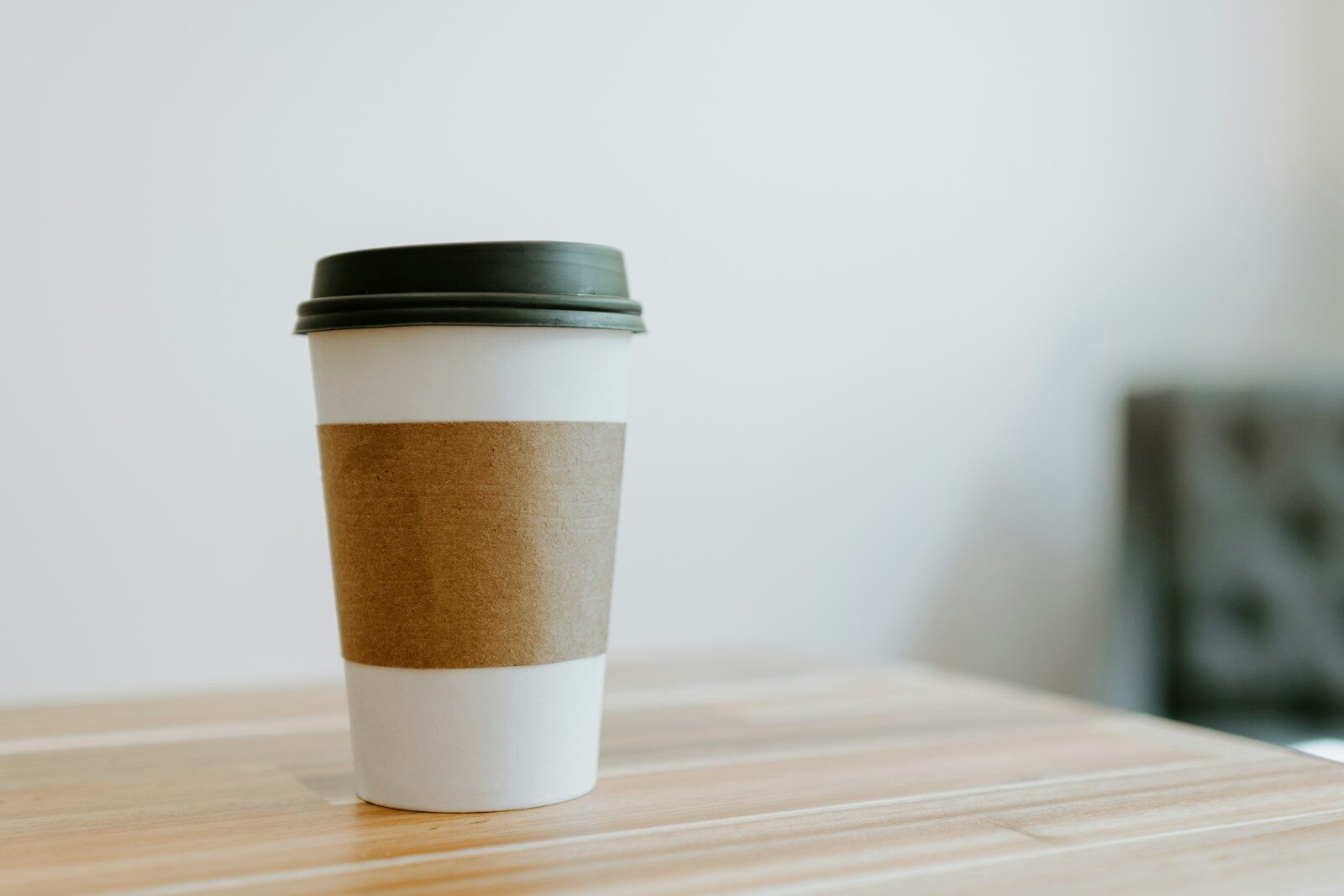
Coffee Cup Sleeve
(NYC 2025)
How, in eminent disposability
to wear your heart on something
down the draining
home in foam of horizon’s shifting lip
finding yourself unearthed
in grounds for suspicion.
A ship is also paper after all
the yarn feathers into blot
Just below truss belt, circling back
blue meander, roundly scalding.
The I Ching of Broken Things
In the I Ching of Broken Things
there are no pairs of trigrams
no cautionary tell
Tails between legs the lines court
jesters blur foisting of point
blank upon us by X or why
who sit spouting knee over knee
overstuffed gilded wiles
we, who are penciled in
soft, friable, carbon.
Check out the poet reading and commenting on this poem for Al Filreis and Jacket2: The I Ching of Broken Things: A new poem by Sophia Naz
Sun Sonata
Urdu sun doesn’t rhyme with one
it’s not a snug homonym to sweep
under the rug in Queen’s English.
Gut a missing corps, a story sung and yet
the sea returns, weaving amputated thumbs
tâna-bâna1 made extinct, white-stained
Strain of muslin beyond redress; now you loom
your sound wealth to His Master’s Voice
chute mouth to an anglophone sonic
sans parallel longitude, phantom limb
in between suck of spun and tune of spoon
Sun in Urdu means to listen, or be numb
a temporary deafness, as if a bomb
had gone off or the slow death of touch
turned to an eternity of stone.
- warp and weft ↩︎
About “Sun Sonata”
‘Sun Sonata’ is an interlingual play between non-existence and violent extinction. The double meanings of the Urdu sun, both having to do with sound, cognate with the Latin sonus (both come from the Proto-Indo-European root swen– ‘to sound’), one meaning is asking you to listen while the other carries an implicit violence that renders the listener numb. The tension between these two meanings are the warp and weft, the sonic surface mimicking the movement of hand looms that once wove muslin so light as to be completely transparent. This was a fabric so coveted throughout Europe that the British decided to annihilate it to protect their own textile industry.
Trying to conjure a word sound that doesn’t exist in English creates a scaffolding for poetic reconstruction of the extractive colonial violence that rendered the phooti karpas cotton extinct.
The imposition of the language of the colonizer is another kind of violence, one that we have seen play out here in the Americas as well. In that sense the elusive pronunciation of the Urdu sun is the aural equivalent of the phantom limb, the chopped thumb of the master weaver.
Author Bio
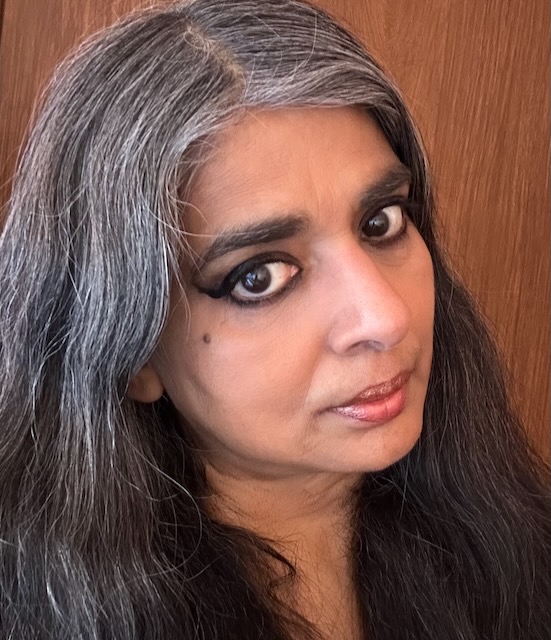
Sophia Naz is an interlingual writer, artist and translator. She has authored the poetry collections Bark Archipelago (Weavers Press, San Francisco & Red River India, 2023), Open Zero (Yoda Press 2021), Pointillism (Copper Coin 2017), Date Palms (City Press, 2017), Peripheries (Cyberhex, 2015 ) and Shehnaz, a biography (Penguin Random House, 2019) Her work appears in The Academy of American Poets, Poetry Daily, The Penguin Book of Modern Indian Poets, The Night Heron Barks, Singing in the Dark, Berfrois, The Bombay Literary Magazine, Rattle, The Adirondack Review and many others. She can be found online at sophianaz.com.

Contents
“Managing [my husband’s] pain became fraught in the last week of his life when he could no longer swallow the medications that had kept him comfortable…The poem explores the vulnerability and intimacy found in such a crisis.” Read five poems by Amy Riddell, our first biweekly poet of the Winter 2026 issue, along with a few words about “Reading the Body.”
Chapbook Poem: Aphasia by Robert Allen
“Ultimately this is a poem of love and recognition, of finding the right words for the right listener, to the one who listens and understands.” Read the featured Chapbook Poem of the Month for January 2026, “Aphasia,” along with a few words from the poet.
Book Excerpt: The Egg of Anything by Paula Bohince
“The poem is filled with moments of ‘O’ sounds and ‘Ah’ sounds, mimicking the O of the egg and the Ah of the open jaw. I like that the poem is compact in its little form, also a bit egg-like.” Read the featured Excerpt Poem of the Month for January 2026, “The Egg of Anything” from A Violence by Paula Bohince, along with a few words from the poet.
Three Poems by Abraham Aondoana
“Instead of providing any solution to the issue, the poem is ready to be open to the ambiguity that can enable doubt, tenderness, and resilience to co-exist. By so doing, it points to survival not as victory, but as endurance…” Read three poems by Abraham Aondoana, our second biweekly poet of the Winter 2026 issue, along with a few words about “Surviving a Country That is Also a Question.”
Five Poems by Colleen S. Harris
“I am always struck by the juxtaposition of the biology and science of illness versus the life of the person living with it, and how those two spheres constantly interrupt and flow into each other.” Read five poems by Colleen S. Harris, our third biweekly poet of the Winter 2026 issue, along with a few words about “Inflammation As Girl.”
Chapbook Poem: Offering by Richard Jordan
“In my mind, the narrator recognizes that Harper’s fate could very well have been his own, and I hope that readers can relate, in the sense that we all have done reckless things, especially in our youth…” Read the featured Chapbook Poem of the Month for February 2026, “Offering,” along with a few words from the poet.
Book Excerpt: Passage by Paul Hostovsky
“When she’d call me on the weekends, I was high half the time, impatient with her, and unforthcoming. It’s one of my greatest regrets. The tears well up just thinking about it. I didn’t grieve her properly. I’m grieving her now.” Read the featured Excerpt Poem of the Month for February 2026, “Passage” from Perfect Disappearances by Paul Hostovsky, along with a few words from the poet.
“The poem captures us both there in the dreaded check up appointment: me clenching crinkling paper, scared of what the lab reports say; him…lab reports in hand like some mysterious document…” Read three poems by Mary Whitlow, our fourth biweekly poet of the Winter 2026 issue, along with a few words about “Examined.”
February ’26: Section Editors & Staff Wanted
Editor Aiden Hunt begins year three with a call for applications for section editors and other editorial and production staff in this editor’s note.
“I am most comfortable in a chair with a pen looking at nature through a window. And yet nature is something my mind is also totally immersed in…So I think it’s a bit of a paradox.” Poet Lisa Low discusses her latest chapbook in this interview with Contributor Saudamini Siegrist.
“My work has always found a focus in the bodies of women, and watching the mix of strength and fragility in women as they face illness and pain has been a topic that I keep coming back to.” Read four poems by Betty Stanton, our fifth biweekly poet of the Winter 2026 issue, along with a few words about “Vein Song.”
Chapbook Poem: Found in the African Art Collection… by Rohanna Ssanyu
“It is laborious to hold on to a culture removed, one for which I am a perpetual novice. I do, however, try, and I bring my children with me. … Can this space, this culture, only be ours if cut up and reimagined?” Read the featured Chapbook Poem of the Month for March 2026, “Found in the African Art Collection of a New Haven Gallery After the Guard Asks Whether My Son Knows the Rules,” along with a few words from the poet.
Book Excerpt: Targeted by Frances Klein
“The poem focuses specifically on the way that online algorithms ‘read’ a person’s internet history related to pregnancy or trying to conceive, then deliver the most painful possible ads…” Read the featured Excerpt Poem of the Month for March 2026, “Targeted” from Another Life by Frances Klein, along with a few words from the poet.
“Trying to conjure a word sound that doesn’t exist in English creates a scaffolding for poetic reconstruction of the extractive colonial violence that rendered the phooti karpas cotton extinct.” Read three poems by Sophia Naz, our six biweekly poet of the Winter 2026 issue, along with a few words about “Sun Sonata.”