
We here at Philly Poetry Chapbook Review love poetry, whether it’s in chapbooks or full-length collections. We have a hunch that our readers do, too. Every Tuesday, we publish an update about what full-length poetry titles we know are releasing in the following week.
Information, including product descriptions, is provided by the publisher and not a critical judgment. If we cover the book on this site, links will be included.
The Opposites Game, Brendan Constantine
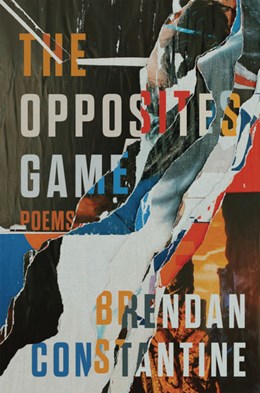
Publisher: Red Hen Press
Publication Date: March 3, 2026
Format: Hardcover / Paperback / eBook
In his fifth collection of verse, The Opposites Game, poet Brendan Constantine inspires us to revel in the abundance of life by reckoning its many astonishments (and antonyms). Through a simple yet profound framework of odes, lists, memoirs, and classroom assignments, Constantine asks us to think critically about how we define and understand each other, urging us to look beyond simplistic binaries and engage with the deeper nuances of meaning.
The Opposites Game is a powerful reminder of the intricate relationship between words and the realities they represent, and an invitation to explore the rich, beautiful, and often perilous terrain of human thought and emotion.
Brendan Constantine is the author of five collections of verse. His work has appeared in many standards, including Poetry, The Nation, Best American Poetry, Tin House, and Poem-a-Day. A popular performer, Brendan has presented his work to audiences throughout the US and Europe, also appearing on NPR’s All Things Considered, TED-Ed, numerous podcasts, and YouTube. He currently teaches at the Windward School and the Los Angeles County Museum of Art in Southern California. He lives in Los Angeles, CA.
The Negroes Send Their Love, Sean Hill
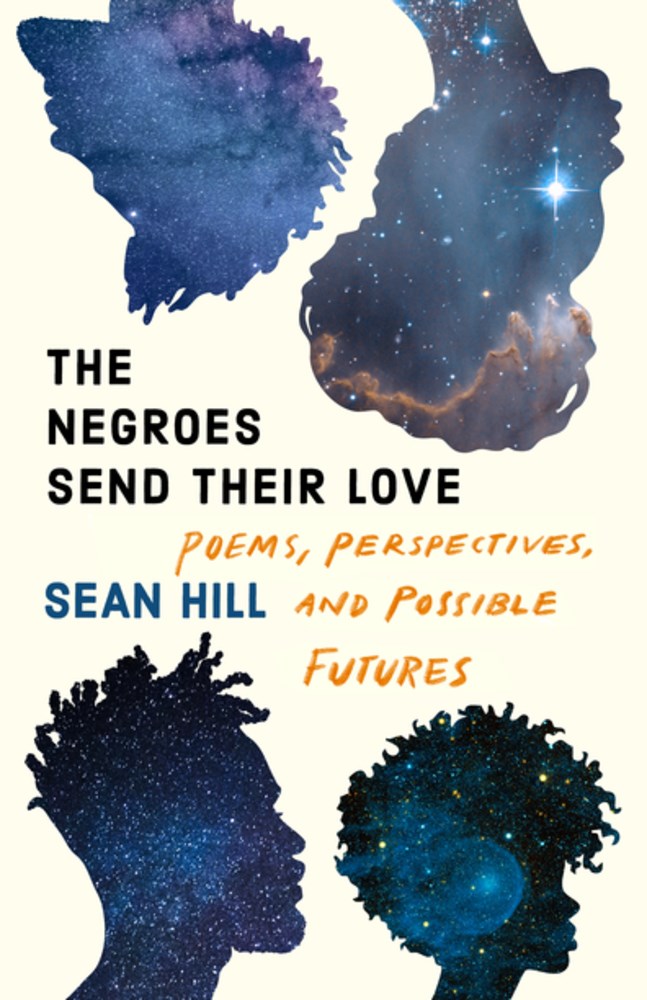
Publisher: Milkweed Editions
Publication Date: March 3, 2026
Format: Paperback
Posing questions that belie their simplicity, Sean Hill’s new collection is rooted in our shared history, lived experience, and a speculative future. It considers how we fashion identities through formative relationships with history and community, with our ancestors, our children, and ourselves. These connections underscore our ties to nature and emphasize humanity’s seemingly inevitable turn to violence. For instance, a meditation on the white-headed woodpecker connects to knowledge of Black miners in nineteenth century Roslyn, Washington, and sparks an understanding of white-headed woodpeckers as “arboreal miners” with “a patch of red feathers / on the back of their crowns” that the speaker observes and “can’t help but see blood.”
This collection ranges in setting from antebellum Georgia to twenty-first century Alaska, from the Wild West to the Asteroid Belt in the twenty-fifth century. The exploration of people in relation to place excavates the complexity of heritage and privilege, fatherhood amid environmental collapse, and the inherited memories, abilities, hardships, and love that link Black people living centuries apart.
Taken together, these poems, queries, and possibilities paint a sensibility that strives to integrate itself into the known world, and through that world into an imagined future. In searching for answers that almost arrive, The Negroes Send Their Love reveals a heart as big as the home it seeks.
Sean Hill is the author of two poetry collections, Dangerous Goods, awarded the Minnesota Book Award in Poetry, and Blood Ties & Brown Liquor, named one of the Ten Books All Georgians Should Read by the Georgia Center for the Book. He has received numerous awards and fellowships, including a Stegner Fellowship from Stanford University and a Creative Writing Fellowship from the National Endowment for the Arts. His poems and essays have appeared in Harvard Review, Orion, Oxford American, Tin House and in nearly three dozen anthologies. Hill has served as the director of the Minnesota Northwoods Writers Conference at Bemidji State University since 2012. He is a consulting editor at Broadsided Press and has taught at several universities. Hill lives with his family in southwest Montana and is an assistant professor in the Creative Writing Program at the University of Montana.
The Blue Bridge, Maurya Simon
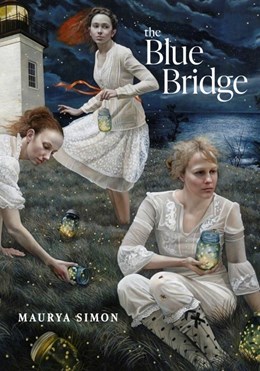
Publisher: Etruscan Press
Publication Date: March 3, 2026
Format: Paperback
Maurya Simon’s twelfth volume of poems, The Blue Bridge, is a literary tour de force that bears witness to the twenty-first century’s dire and lasting dangers brought about by human folly and greed. At the same time that it laments species loss, it honors the enduring lives of small creatures, and the perseverance and adaptability of larger animals. Simon also charts the journey of her own life in an America that is increasingly marked by violence and division, as well as by the ameliorating and lasting ties between people. At turns philosophical, playful, irreverent, and passionate, this book showcases a poet’s work at the peak of her powers, as she illuminates how the bonds between spirit and flesh, and each other, sustain us.
Maurya Simon’s The Blue Bridge, is her twelfth volume of poems. La Sirena: A Novella in Verse (2024), an earlier volume, was a National Book Award and Pulitzer Prize nominee. Simon’s collection, The Wilderness: New and Selected Poems, received the 2019 Independent Booksellers Association’s Gold Medal in Poetry. Simon’s opera, “Tamar,” based on her verse libretto, with music composed by French American composer, Eliane Aberdam, premiered at the University of Rhode Island. A Fulbright Senior Research Fellow (South India), NEA Poetry Fellow, and a Poetry Society’s Lucille Medwick Memorial and Cecil Hemley Memorial Awardee, she’s served residencies at the American Academy in Rome, the Baltic Centre for Writers & Translators (Visby, Sweden), Hawthornden Castle (Edinburgh, Scotland), the Djerassi Resident Artists Program (Santa Cruz, CA), and at the MacDowell Colony (Peterborough, NH). Simon’s poems have been translated into Hebrew, French, Spanish, Rumanian, Bengali, Greek, and Farsi. She serves as a Professor Emerita in the Creative Writing Department at the University of California, Riverside.
The Vineyard: A Poem, Jonathan Galassi
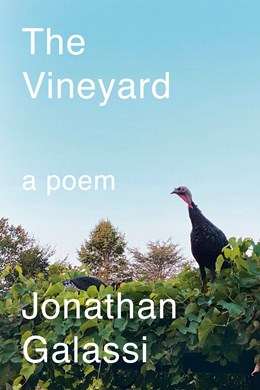
Publisher: Knopf
Publication Date: March 3, 2026
Format: Hardcover / eBook
The delicious long-form poem The Vineyard is set in and around the quasi-fictional Long Island village of Oyster Ponds, where the poet spends the summer months. In free-flowing lines and pages that turn with the calendar, the poem unspools impressions that seem confided rather than written, as Galassi observes the “pretend peace’’ of this quiet house and garden, his oasis in the turbulence of dailiness. Themes and imagery recur, swerve, and transform as he watches the vineyard next door come alive, thrive, and die away only to return the next year, different but the same, in our time of plague, climate threat, and a culture that too often seems to attack what is enduring and fundamental.
But this book is not a complaint or a raging against the dying of the light: it is an honest record of seeing and feeling in a beloved place, of gratitude, of searching for one’s center. As the poet describes the wisteria vine that sends out suckers into the lawn and the long and complex tale of the village and its inhabitants, this modern eclogue becomes an ample container for Jonathan’s life: he’s having a chat with us about all he notices and dreams, about tending his plants and cooking and gossiping, about loving a man and aging, about his mother and Vita Sackville-West and bike-riding and having regrets. The narrative swells and touches us in its surprising turns; sometimes whole poems swim up and hold a page in the midst of its ongoing narrative, reminding us of the ways that writing can shape the quotidian.
This intimate, unhurried, and unpretentious poem of past and present will stand as the central work of Jonathan Galassi’s career.
Jonathan Galassi is the author of three earlier books of poetry, including Left-handed, and has published translations of the Italian poets Giacomo Leopardi, Primo Levi, and Eugenio Montale. A lifelong inmate of the publishing business, he lives in New York City and on Long Island.
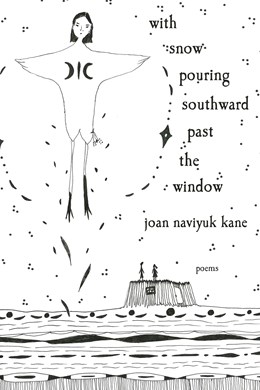
with snow pouring southward past the window, Joan Naviyuk Kane
Publisher: University of Pittsburgh Press
Publication Date: March 3, 2026
Format: Paperback / eBook
The poems in with snow pouring southward past the window turn with and for relatives and beloveds across seas and oceans, continents and nations, languages and histories. In this collection, public and personal archives work with literary translations across several dialects of the Inupiaq language, and re-complexify Arctics at a time when empires once again seem interested in flattening and erasing millennia of Indigenous inhabitation, care, and situatedness. It was written between Massachusetts, Inuit Nunaat, Sápmi, the “Old World” and through waves of overlapping pandemics, political and social exigencies, and solidarities.
Joan Naviyuk Kane is the author of the poetry collections The Cormorant Hunter’s Wife, Hyperboreal, Milk Black Carbon, and Dark Traffic. Her edited volumes include The Griffin Poetry Prize 2017 Anthologyand Circumpolar Connections: Creative Indigenous Geographies of the Arctic. A Guggenheim Fellow, Radcliffe Fellow, Native Arts and Cultures Foundation National Artist Fellow, Whiting Award winner, and Paul Engle Prize recipient, she’s a 2025 United States Artists Fellow based in Oregon, where she’s an associate professor at Reed College.
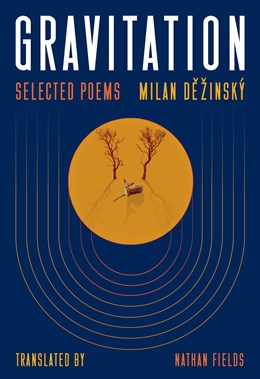
Gravitation: Selected Poems, Milan Dežinský, Nathan Fields (Tr)
Publisher: University of Pittsburgh Press
Publication Date: March 3, 2026
Format: Paperback / eBook
The selected poetry of Milan Děžinský, translated by Nathan Fields, including many poems previously not published in English by the celebrated Czech poet.
Milan Děžinský is a Czech poet and the author of eight collections of poetry. In 2018, he won the Magnesia Litera Award for poetry, the most prestigious annual literary prize in the Czech Republic. His work has been translated into English, German, and Polish, and several of his poems have appeared in US and UK magazines, including The New York Review of Books, Poetry London, Modern Poetry in Translation, The Dark Horse, and PN Review, as well as the Prague-based B O D Y. He lives in Roudnice nad Labem in the Czech Republic.
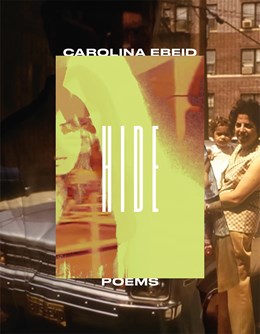
Hide, Carolina Ebeid
Publisher: Graywolf Press
Publication Date: March 3, 2026
Format: Paperback
A reinvention of visual poetry and personal history charting exile’s impact on memory, identity, and futurity
Intellectual and intimate, Carolina Ebeid’s Hide gathers shreds of memory, dream, and the ordinary artifacts of diaspora, as the poet casts a sounding line into her patrilineal and matrilineal histories in Palestine and Cuba. With the hum of cassettes and the glow of projectors, these poems superimpose voice upon voice, image upon image, a here upon a there, to disclose the choral noise inside postmemory.
Hide is a restless innovation of form and multimodal expression breaking open words across Arabic, English, and Spanish to release hidden meanings. Poems trace the letter M back to the Phoenician pictograph of waves, while technological “glitches” are portals that summon oracular voices across the family archive. In swirling “spell” poems, Ebeid conjures Cuban American artist Ana Mendieta, whose Siluetas write the human shape upon the earth.
Ebeid’s title is prismatic: Hide as in concealment, as in animal skin, as in to secret oneself away. Hide commands attention like a whispering voice, prompting readers to lean in, to listen for transmissions from ancestors and futurity both.
Ebeid’s title is multiplicitous: Hide as in to secret oneself away, as in skin, as in a surface to be written upon. Hide is a sizzling collection that commands attention like the sotto voce, prompting readers to lean in closer.
Carolina Ebeid is a multimedia poet and author of You Ask Me to Talk about the Interior. She edits poetry at The Rumpus and Visible Binary and is the 2023–2025 Bonderman Assistant Professor of the Practice in Literary Arts at Brown University.
America, A Love Story, Camille T. Dungy
Publisher: Wesleyan University Press
Publication Date: March 3, 2026
Format: Hardcover / Paperback / eBook
America, A Love Story is Camille T. Dungy’s powerful testament to living and loving as a Black woman and mother in today’s America, and her first book of poetry in almost a decade. Piercingly honest and deeply compassionate, this poetry moves through the mounting griefs of contemporary American life with unwavering clarity. The book is part indictment, part celebration—full of gratitude, fear, resistance, and hope. Dungy explores intimacy, parenting, racism, history, and the natural world with clarity and depth. Some poems reflect on the past; others respond to the work of contemporary Black artists. Many are formally playful, including a series of 700-character poems inspired by the 700 hours of sleep a mother loses in her child’s first year. Gorgeous, bright, and bold, these poems speak from the edges—between mother and child, body and earth, self and country. They hold tension and tenderness in equal measure, creating a space for love amidst uncertainty.
Camille T. Dungy is the author of Soil: The Story of a Black Mother’s Garden (2023). She has also written Guidebook to Relative Strangers: Journeys into Race, Motherhood, and History (2017), a finalist for the National Book Critics Circle Award, and four collections of poetry, including Trophic Cascade (2017), winner of the Colorado Book Award. Dungy edited Black Nature: Four Centuries of African American Nature Poetry (2009), and her work has appeared in Best American Poetry, 100 Best African American Poems, Best American Essays, The 1619 Project, plus dozens of venues including The New Yorker, Poetry, Literary Hub, The Paris Review, and Poets.org. A University Distinguished Professor at Colorado State University, Dungy’s honors include the 2021 Academy of American Poets Fellowship, a 2019 Guggenheim Fellowship, an American Book Award, an Honorary Doctorate from SUNY College of Environmental Science and Forestry, and fellowships from the NEA in both prose and poetry.
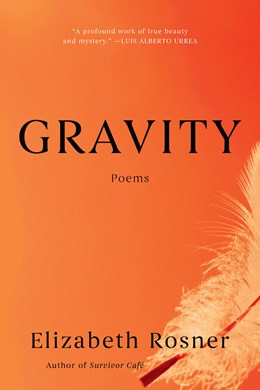
Gravity, Elizabeth Rosner
Publisher: Counterpoint
Publication Date: March 3, 2026
Format: Paperback / eBook
Composed over a period of some twenty years, Gravity is Elizabeth Rosner’s profoundly searching account of her experience as the daughter of Holocaust survivors. In an extraordinarily powerful mix of poetry and prose, Rosner traces the earliest remembered resonances of her parents’ past and her dawning awareness of the war history that colored her family home during her youth in Schenectady, New York. She recounts her false starts in raising the subject with her father (a survivor of Buchenwald concentration camp), his piecemeal revelations, and their eventual travels together to the sites of the nightmare in Germany. And she evokes, courageously and heart-wrenchingly, her search for identity against the gravitational pull of her parents’ experience and the traditional upbringing they’ve given her.
Like Rosner’s celebrated novels, Gravity plumbs the deep complexities of inherited grief, but here the author discloses, with breathtaking candor and sensitivity, “what it felt like to grow up inside my family.” Also featuring spellbinding artwork by Lola Fraknoi, these astonishing pages remind us that history happens at home and that the past is something we all embody, knowingly or not.
Elizabeth Rosner is a bestselling novelist, poet, and essayist. Her works include Survivor Café: The Legacy of Trauma and the Labyrinth of Memory, a finalist for the National Jewish Book Award, and the novel Electric City, named a best book by NPR. Rosner’s essays have appeared in The New York Times Magazine, Elle, and numerous anthologies. She lives in Berkeley, California.
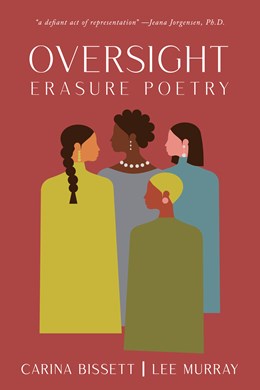
Oversight: Erasure Poetry, Lee Murray, Carina Bissett
Publisher: RIZE
Publication Date: March 8, 2026
Format: Paperback / eBook
From Sappho to Sinéad, acclaimed poets Carina Bissett and Lee Murray parse the pages of historical writings to uncover stories lost between the lines, to lift women’s voices from the margins and give them new life in a vibrant collection of sixty biographical poems that resonate with universal truth.
Carina Bissett is a writer, poet, and editor working primarily in the fields of dark fiction and fabulism. She has written numerous short stories, many of which are featured in her debut collection Dead Girl, Driving and Other Devastations (2024), and she is also a co-editor of the award-winning anthology Shadow Atlas: Dark Landscapes of the Americas (2021). Her poetry has been nominated for the Rhysling Award, the Pushcart Prize, and Sundress Publications Best of the Net. Her nonfiction has been nominated for a Bram Stoker Award®.
Lee Murray ONZM is a writer, editor, poet, essayist, and screenwriter. A New Zealand Society of Authors Honorary Literary Fellow, she is the first person of Asian descent to hold the New Zealand Prime Minister’s Award for Literary Achievement, one of her country’s most prestigious accolades. She is a five-time Bram Stoker Awards® winner, including for poetry for Tortured Willows (with Christina Sng, Angela Yuriko Smith,and Geneve Flynn), and was awarded the Grimshaw Sargeson Fellowship and the NZSA Laura Solomon Cuba Press Prize for ‘unique and original’ vision for her debut solo poetry collection Fox Spirit on a Distant Cloud, released in 2024 by The Cuba Press. Exploring Chinese women’s experiences in Aotearoa, New Zealand’s Poet Laureate, Chris Tse, described the collection as a “full-bodied experience”. An Elgin Award runner up, and a multiple Rhysling-, Dwarf Star-, and Pushcart-nominated poet, Lee’s poem “cheongsam’ won her the 2021 Australian Shadows Award. Together with Lindy Ryan, she co-edited women-in-horror poetry anthology Under Her Eye, a Pixel’s Project / Black Spot Books publication to eliminate violence against women.
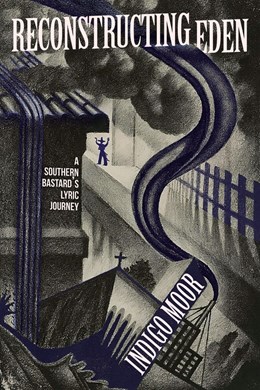
Reconstructing Eden: A Southern Bastard’s Lyric Journey, Indigo Moor
Publisher: CavanKerry Press
Publication Date: March 3, 2026
Format: Paperback
In Reconstructing Eden, Indigo Moor performs an exorcism of a childhood shaped by the dizzying racism that once drove him to the brink of murder. Using a poetic form that Moor calls jazz triptych—a tercet followed by a nonstandard villanelle, followed by a rhyme royal stanza—the book is a stunning rendering of a Black child moving through life with a smoldering anger emerging within him. Only through an incredibly violent act while deployed in Operation Desert Storm does the author realize the murderous intent in his heart. Through his lyrical poetry, he begins to cleanse himself.
Indigo Moor is Poet Laureate Emeritus of Sacramento. His books include Everybody’s Jonesin’ for Something, Through the Stonecutter’s Window, Tap-Root, and In the Room of Thirsts & Hungers. Moor taught as visiting faculty for Dominican University’s MFA program.
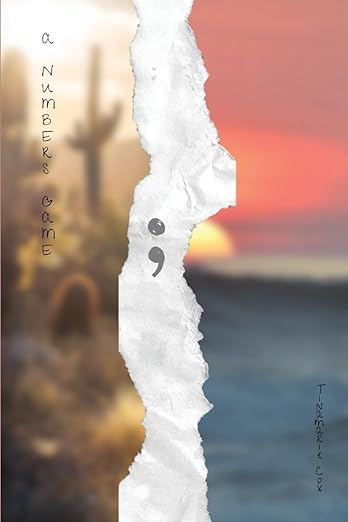
A Numbers Game, Tinamarie Cox
Publisher: Nymeria Publishing
Publication Date: March 3, 2026
Format: Paperback / eBook
In A Numbers Game, Cox has curated poetry, prose, images, and artwork from her past and present. Each piece examines the formula that has added up to such a life-changing decision and shines a light on the after-effects that lasted for years post-survival. Travel through time as Cox remembers the teenager she was and the woman she uncovers as she enters middle age and finally discovers self-acceptance.
Tinamarie Cox lives in Arizona with her husband, two children, and rescue felines. Her written and visual work has appeared in numerous online and print publications under various genres. She has two poetry chapbooks with Bottlecap Press: Self-Destruction in Small Doses (2023), and A Collection of Morning Hours (2024). Her first full-length poetry collection, Through a Sea Laced with Midnight Hues, was released with Nymeria Publishing in 2025.
Sunlight Trapped in Stone, Natalya Sukhonos
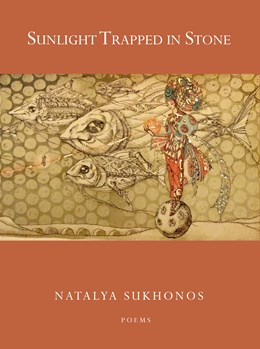
Publisher: Green Writers Press
Publication Date: March 5, 2026
Format: Paperback
Journeying into the speaker’ s immigrant past as well as the stories of others, we wander in the fields of war-torn Ukraine, the stones of Guadalajara, and the frigid shores of Halifax during World War II. Roaming through rain-soaked forests, treacherous deserts, and the whimsical architecture of childhood, we hear voices of immigrants, refugees, and lovers, children yet unborn and those sprinting to their next adventures, mothers and fathers, grandparents both wise and defeated, adolescents luminous with wonder and paralyzed by their own bodies. How does poetry cradle a sea of voices? Ensconced in the amber of memory, how do they emerge full-blooded and speak to us with urgency?
A native of Odesa, Ukraine, Natalya Sukhonos is multilingual, speaking Russian, English, as well as Ukrainian, Spanish, French, Portuguese, and Italian. She holds a PhD in Comparative Literature from Harvard. Natalya is a poet, scholar, and teacher deeply committed to the power of language to uplift, inspire, and defamiliarize us from the ordinary. Nominated for the Pushcart Prize in 2015 and 2020 and the Best New Poets Anthology of 2015, Natalya came out with Parachute in 2016 (Kelsay Books of Aldrich Press) and A Stranger Home (Moon Pie Press) in 2020.
Sonora, Chus Pato, Erín Moure (Tr)
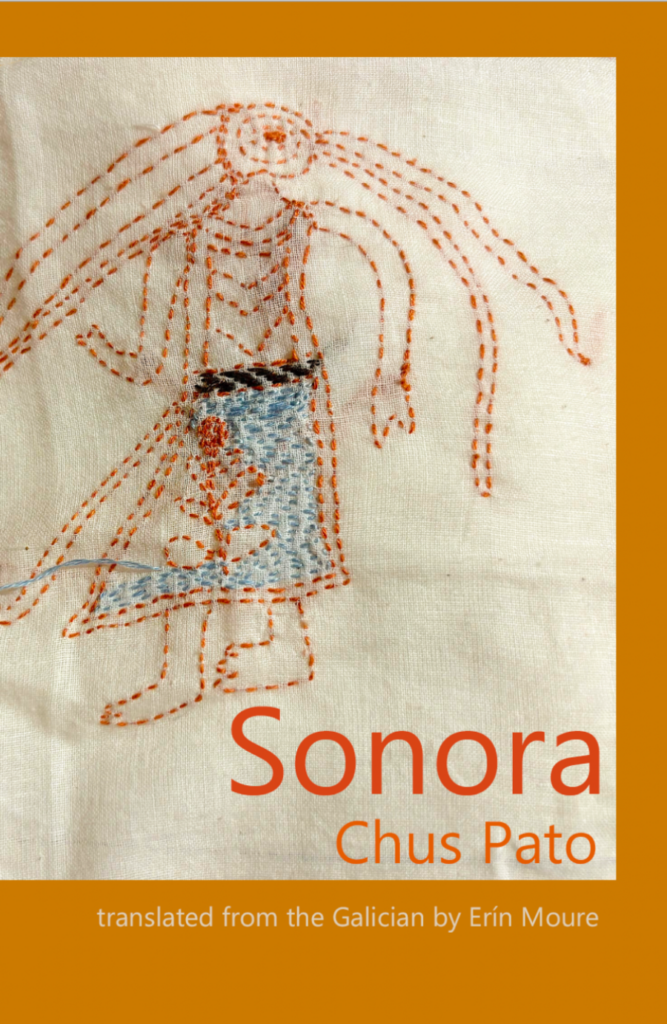
Publisher: Veliz Books
Publication Date: March 5, 2026
Format: Paperback
Sonora holds the resonance of human life facing time itself, and an inevitable finality of voice. Here the voice is that of a feminine lineage; the death faced most centrally is that of the poet’s mother, in a book dedicated to her daughters. Crucially, it includes the sound waves of her native language, the language of both her parents, its history of endurance, as well as the granitic fissures and domes of the place where this language, Galician, is spoken. This lineage cherishes others too, poets who keep Galician alive, and keep Chus Pato alive, even (but we hope not) on the path to planetary extinction: thus poems dedicated to Xabier Cordal, Alba Cid, Manuel Igrexas, Gonzalo Hermo, Oriana Méndez. Sonorous indeed is this voice of a woman who faces the flight of time and the planetary present, so that we too —wherever we live — can face language, place, and future. Pato’s poetry makes all of us more fiercely and humanly alive.
Chus Pato is a celebrated Galician poet. Six of her twelve books of poetry have been translated from Galician into English, all by Erín Moure, most recently The Face of the Quartzes (Veliz Books, 2021), and her books have also been translated into Spanish, Catalan, Dutch, Portuguese, and Bulgarian. In 2015, she became the first Galician poet to be recorded for the archives of the Woodberry Poetry Room at Harvard University. Her latest work, Sonora (Xerais, 2023), received the 2024 Spanish National Book Award in poetry and the 2024 Spanish Critics’ Prize for poetry in Galician.She has performed throughout Europe, in Mexico and South America, in Canada and the USA, in Cuba, and in North Africa and India. Retired from teaching history and geography, she lives in central Galicia, Spain.
Cow Stomach and Mother Fat, steve halle
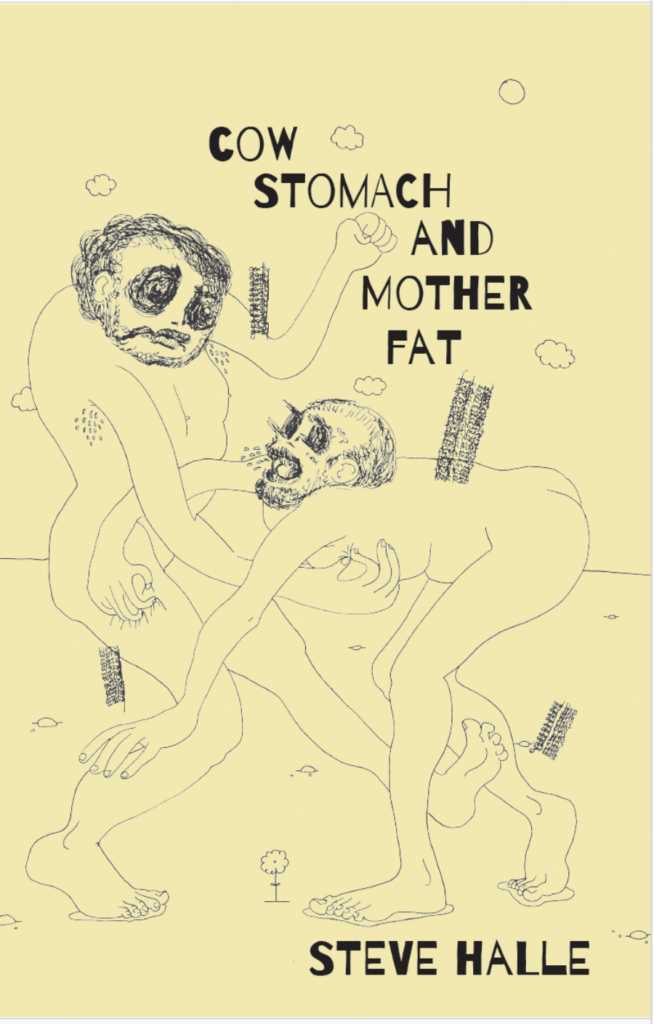
Publisher: Veliz Books
Publication Date: March 5, 2026
Format: Paperback
In his second full-length poetry collection Cow Stomach and Mother Fat, Steve Halle interrogates how our innermost selves emerge from time immemorial to navigate conditional economies of being. Written and refined over a fourteen-year span, Cow Stomach and Mother Fat employs the dramatis personae of Cow Stomach, Mother Fat, and Ensu Fario, whose monologues and verses use dark comedy to explore ideas of hunger, needfulness, want, desire, and love; emergence and formation of being and identity; how human and nonhuman persons are intertwined and enmeshed in precarious systems; toxicity/toxic masculinity; monstrousness; formlessness; and the politicization and regulation of gender, among other subjects. Halle’s poetry blends aggressive incantatory prose poem streams with softer lyrical flights and stylized design elements to create a sui generis work that reckons with the seemingly sacred forces that may be misused to commodify our most intimate interrelationships.
Steve Halle lives, writes, teaches, and publishes books in Normal, IL where he is the director of the Publications Unit at Illinois State University. He is the author of Cow Stomach and Mother Fat, Map of the Hydrogen World, cessation covers, and The Collectors, and his writing has been published in various literary magazines. He is the founder and publisher of the award-winning nonprofit literary publisher co•im•press, the editor-in-chief of the poetry magazine SRPR, and the founder and publisher for Downstate Legacies, Undiscovered Americas, and the teaching chapbook press and workshop PRESS 254.
Our Prediction, Daniel Tiffany
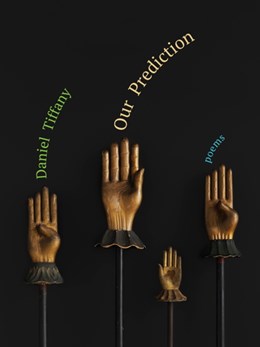
Publisher: Fordham University Press
Publication Date: March 3, 2026
Format: Paperback / eBook
The poems of Our Prediction are lifted from a folder of sketchy reports recalling the strange neutrality of the ancient chorus. And this intimate archive exposes a fear of language concealed at the root of poetry, delivering a book in which doubt, shame, and dread overtake poetry’s stereotypical love affair with words, a book that crosses over into the exclusion zone of stupidity and never returns.
Breeding and scavenging without scruple or restraint, the “bare life” of these unauthorized poems invariably confuses reading and writing. Listening becomes the business of speaking, of saying we but not asking who. And in its crooked way, the crooked text may begin to sound like a campfire oath of senseless plots and garbled refrains. For the listener soon will be surrounded by an accident of voices—a cassandrian short cut—exposing the particulars of not-yet-being.
Daniel Tiffany is the author of collections of poetry from presses including Wesleyan, Action Books, Noemi, Tinfish, Parlor Press, and Omnidawn. His poems have been published in many journals, including Poetry, Boston Review, Brooklyn Rail, Lana Turner, Bomb, and Paris Review. In addition to his own writing, he has published translations of texts from French, Greek, and Italian. Tiffany is also the author of five volumes of academic criticism from presses including Harvard, Chicago, and Johns Hopkins. His entry on “Lyric Poetry and Poetics” can be found in the current edition of the Oxford Encyclopedia of Literature, and he is a recipient of the Berlin Prize from the American Academy in Berlin.
Universal Corner, Mitchell L. H. Douglas

Publisher: Persea
Publication Date: March 3, 2026
Format: Paperback
Dancing at the intersection of melody and humanity, Mitchell L. H. Douglas’ Universal Corner imagines what beat moves the world. Douglas’ poetry rides the skip and pop of vinyl, radio waves, and mixtape collage through a complex modern life, his voice equally shaped by freestyling and stage diving, having come of age in two seemingly different musical cultures: punk and Hip-Hop. These seemingly disparate genres reveal surprising connections in Douglas’ poems, in which he finds that, through the experience of memory and musical communion, common ground abounds. Reconciling rage and joy, public and private, Mitchell Douglas is one of our most vital voices of the urban Midwest, a poet of with both a critical and compassionate perspective on the pulse of America’s heartland.
Mitchell L. H. Douglas is the author of three poetry collections. A native of Louisville, he lives in Indianapolis.
Don’t see a poetry title published between 3/3 and 3/9 here? Contact us to let us know!

Contents
“Managing [my husband’s] pain became fraught in the last week of his life when he could no longer swallow the medications that had kept him comfortable…The poem explores the vulnerability and intimacy found in such a crisis.” Read five poems by Amy Riddell, our first biweekly poet of the Winter 2026 issue, along with a few words about “Reading the Body.”
Chapbook Poem: Aphasia by Robert Allen
“Ultimately this is a poem of love and recognition, of finding the right words for the right listener, to the one who listens and understands.” Read the featured Chapbook Poem of the Month for January 2026, “Aphasia,” along with a few words from the poet.
Book Excerpt: The Egg of Anything by Paula Bohince
“The poem is filled with moments of ‘O’ sounds and ‘Ah’ sounds, mimicking the O of the egg and the Ah of the open jaw. I like that the poem is compact in its little form, also a bit egg-like.” Read the featured Excerpt Poem of the Month for January 2026, “The Egg of Anything” from A Violence by Paula Bohince, along with a few words from the poet.
Three Poems by Abraham Aondoana
“Instead of providing any solution to the issue, the poem is ready to be open to the ambiguity that can enable doubt, tenderness, and resilience to co-exist. By so doing, it points to survival not as victory, but as endurance…” Read three poems by Abraham Aondoana, our second biweekly poet of the Winter 2026 issue, along with a few words about “Surviving a Country That is Also a Question.”
Five Poems by Colleen S. Harris
“I am always struck by the juxtaposition of the biology and science of illness versus the life of the person living with it, and how those two spheres constantly interrupt and flow into each other.” Read five poems by Colleen S. Harris, our third biweekly poet of the Winter 2026 issue, along with a few words about “Inflammation As Girl.”
Chapbook Poem: Offering by Richard Jordan
“In my mind, the narrator recognizes that Harper’s fate could very well have been his own, and I hope that readers can relate, in the sense that we all have done reckless things, especially in our youth…” Read the featured Chapbook Poem of the Month for February 2026, “Offering,” along with a few words from the poet.
Book Excerpt: Passage by Paul Hostovsky
“When she’d call me on the weekends, I was high half the time, impatient with her, and unforthcoming. It’s one of my greatest regrets. The tears well up just thinking about it. I didn’t grieve her properly. I’m grieving her now.” Read the featured Excerpt Poem of the Month for February 2026, “Passage” from Perfect Disappearances by Paul Hostovsky, along with a few words from the poet.
“The poem captures us both there in the dreaded check up appointment: me clenching crinkling paper, scared of what the lab reports say; him…lab reports in hand like some mysterious document…” Read three poems by Mary Whitlow, our fourth biweekly poet of the Winter 2026 issue, along with a few words about “Examined.”
February ’26: Section Editors & Staff Wanted
Editor Aiden Hunt begins year three with a call for applications for section editors and other editorial and production staff in this editor’s note.
“I am most comfortable in a chair with a pen looking at nature through a window. And yet nature is something my mind is also totally immersed in…So I think it’s a bit of a paradox.” Poet Lisa Low discusses her latest chapbook in this interview with Contributor Saudamini Siegrist.
“My work has always found a focus in the bodies of women, and watching the mix of strength and fragility in women as they face illness and pain has been a topic that I keep coming back to.” Read four poems by Betty Stanton, our fifth biweekly poet of the Winter 2026 issue, along with a few words about “Vein Song.”
Chapbook Poem: Found in the African Art Collection… by Rohanna Ssanyu
“It is laborious to hold on to a culture removed, one for which I am a perpetual novice. I do, however, try, and I bring my children with me. … Can this space, this culture, only be ours if cut up and reimagined?” Read the featured Chapbook Poem of the Month for March 2026, “Found in the African Art Collection of a New Haven Gallery After the Guard Asks Whether My Son Knows the Rules,” along with a few words from the poet.
Book Excerpt: Targeted by Frances Klein
“The poem focuses specifically on the way that online algorithms ‘read’ a person’s internet history related to pregnancy or trying to conceive, then deliver the most painful possible ads…” Read the featured Excerpt Poem of the Month for March 2026, “Targeted” from Another Life by Frances Klein, along with a few words from the poet.
“Trying to conjure a word sound that doesn’t exist in English creates a scaffolding for poetic reconstruction of the extractive colonial violence that rendered the phooti karpas cotton extinct.” Read three poems by Sophia Naz, our six biweekly poet of the Winter 2026 issue, along with a few words about “Sun Sonata.”