We here at Philly Poetry Chapbook Review love poetry, whether it’s in chapbooks or full-length collections. We have a hunch that our readers do, too. Every Tuesday, we publish an update about what full-length poetry titles we know are releasing in the following week.
Information, including product descriptions, is provided by the publisher and not a critical judgment. If we cover the book on this site, links will be included.
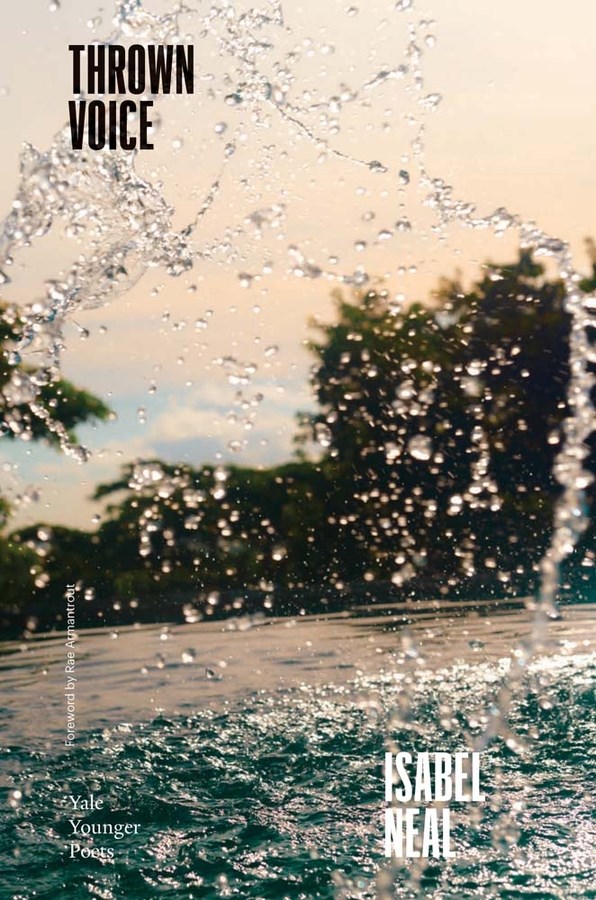
Thrown Voice, Isabel Neal
Publisher: Yale University Press
Publication Date: March 10, 2026
Format: Hardcover / Paperback / eBook
Isabel Neal’s prizewinning volume bears with confidence its central tensions between beauty and the unseen, contact and the mysterious, arrival and undoing. Both tender and forceful in their curiosity, these poems are vocally sharp, strange, freely moving and then utterly still. Thrown Voice travels along the poet’s image-worlds and beloved waterways in wholly unexpected ways: “A thaw thunders loose / Just one mink darkens the ice / A live ampersand.”
Isabel Neal is a poet, writer, and teacher living in Maine. She is the recipient of fellowships from Lighthouse Works, the James Merrill House, and the Provincetown Fine Arts Work Center. This is her first collection.
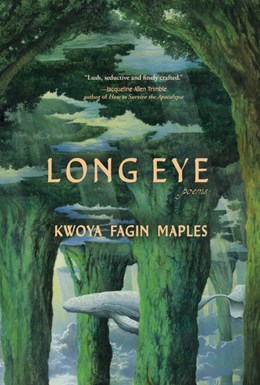
Long Eye, Kwoya Fagin Maples
Publisher: Hub City Press
Publication Date: March 10, 2026
Format: Paperback
Inspired by Mami Wata, a water spirit of West African folklore, Maples explores the power and divinity of being a Black woman, a mother, a thinker, a protector, and creator. The poems emerge from a neurodivergent mind navigating writing, parenthood, and the Atlantic waters of the South Carolina Lowcountry. The sea and its many creatures serve as guides—for survival, resistance, and transformation.
As she explores the intersection of science, poetry, and mythology, Maples also seeks to depict Black familial bonds in societies structured against them. Woven through the book is the voice of the mermaid, reminding us that “every underwater being exists in relation.”
At turns wonderstruck and irreverent, these poems pulse with human longing. Maples is a poet whose work is both musical and meticulous. Her eye somehow equally trained on the world at large and her own inner workings. The result is an astonishing, immersive experience.
Kwoya Fagin Maples is a poet, woodworker and teacher of creative writing. A Charleston, S.C. native, her creative practice spans both literary and visual arts. She is the author of Long Eye, forthcoming from Hub City Press 2026; Mend, (University Press of Kentucky, 2018) and co-editor of I Witness: An Anthology of Documentary Poetry, forthcoming from Wesleyan University Press. Maples’s debut collection, Mend, received a 2019 Hurston/Wright Legacy Finalist Award for Poetry. Maples is a graduate Cave Canem Fellow. She lives in Birmingham, AL.
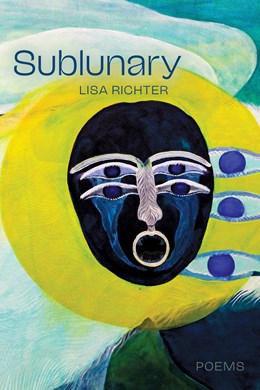
Sublunary, Lisa Richter
Publisher: University of Alberta Press
Publication Date: March 10, 2026
Format: Paperback/ eBook
In Sublunary, Lisa Richter explores what it’s like to live “under the moon” in a world that is simultaneously a heartbreak and a total wonder. Sweetmeats and ocelots rain from the sky. Pets are shadow puppets. A kitten impersonates a teacup. A grieving daughter travels back in time to be at her father’s side in the final hours of his life. Newlyweds soar over the rooftops of west-end Toronto, passing a violin-playing goat along the way. From Atlantis to Mount Olympus to Christie Pits, these poems interweave moments of absurdity and awe, creating a nuanced portrait of what “a reckless intimacy with the world” might look like—for better or worse. Sublunary is a book of elegy, play, and rupture that advocates for an ethics of care, solidarity, and compassion for our perfectly imperfect selves and each other: a mode of survival that is full-throated and, at times, even joyous.
Lisa Richter is an award-winning poet, writer, and educator. She is the author of two full-length poetry collections, Closer to Where We Began and Nautilus and Bone, winner of the Canadian Jewish Literary Award for Poetry, the National Jewish Book Award for Poetry (US), and the Robert Kroetsch Award, among other honours. Her work has been longlisted for the CBC Poetry Prize, named a finalist for a National Magazine Award, and has been published widely in literary journals and anthologies, including Best Canadian Poetry 2024, Plenitude, The Fiddlehead, and The Malahat Review, among others. She holds an MFA in Creative Writing from the University of Guelph and makes her home in Tkaronto/Toronto, where she is currently working on a hybrid-genre memoir.
Enormous Morning, Philip Schultz
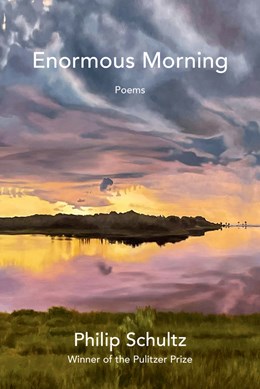
Publisher: W. W. Norton
Publication Date: March 10, 2026
Format: Hardcover
Philip Schultz is famous for his empathetic explorations of male shortcomings, primarily those of his late father. Enormous Morning, his incisive new volume, reflects on the sacrifices of women in their roles as mothers, wives, and friends, including those of his own mother, who was forced to support the family in the face of his father’s financial ruin. The collection ends with a long poem, “Something and Nothing,” that pays homage to the Arshile Gorky painting The Artist and His Mother.
But the poems are also political in scope. Schultz weaves these personal stories into the broader tapestry of our political moment, reflecting on the fragility of democracy, including the January 6 insurrection, and those who are willing to sacrifice themselves to preserve it. Intimate, vulnerable, and inviting, Enormous Morning cements Schultz as our greatest chronicler of compassion.
Philip Schultz is the author of nine poetry collections, including the Pulitzer Prize–winning Failure. The founder and director of The Writers Studio, he has been teaching creative writing since 1971. He lives in East Hampton, New York.
Amerigun, Anne Marie Macari
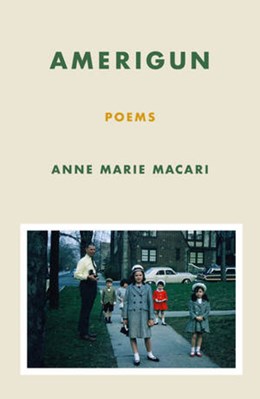
Publisher: Persea
Publication Date: March 10, 2026
Format: Paperback
In Amerigun, a stunning collection of loss and rediscovery, poet Anne Marie Macari revisits her brother Edward’s long-ago death by a self-inflicted gunshot. Interweaving and disentangling her own memories and those of her family, and by reconstructing a legal and medical paper trail, Macari begins a dialogue with the dead, bringing her brother’s lost voice back to her after years of sealing herself off from him. Embedded in her story is the devastation of a culture that elevates guns and violence over the sacredness of human life. Yet, out of that devastation, Macari writes a kind of love story, renewing her connection with her brother, as well with other departed friends and family. By revisiting grief, she uncovers a deeply-felt gratitude for the world around her—and indeed for her own life.
Anne Marie Macari is the author of five books of poetry. Her first book, Ivory Cradle, won the APR/Honickman first book prize. She is also the co-editor of Lit From Inside: 40 Years of Poetry from Alice James Books. Macari’s poetry and prose has been widely published in magazines. In 2005 she was the recipient of the James Dickey Prize for poetry from 5 Points Magazine. She lives in New York City.
Lo-Fi Citadels, Andrew Collard
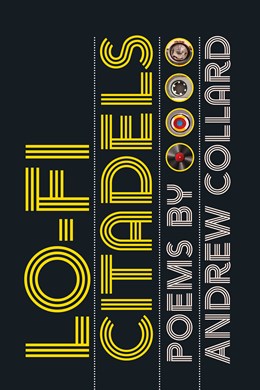
Publisher: Wayne State University Press
Publication Date: March 10, 2026
Format: Paperback
Inspired by classic Motown and the Midwest’s rich history of social poetics, Andrew Collard’s poetry collection asks readers to trust their bodies and the experience of human connection in a society that alienates us from our handiwork and from each other. Set largely in Southeast Michigan, these poems evoke the joys and difficulties of raising a family amid financial uncertainty in the empire of the automobile. Poems like “Bus Stop Promenade” and “Loneliness in the Key of Sprawl,” in tone and form, embrace the challenge of putting language to experience, while the “Autotopia” sequence addresses issues of labor and the environment. Lo-Fi Citadels is a love song sung among grocery stores, bus stops, malls, and vacant lots to remind us what we’re made of. This stunning book emphasizes the interrelatedness of living things and revels in the interdependence of the human body and mind.
Andrew Collard is a writer and teacher. His first book, Sprawl, won the Hollis Summers Poetry Prize and a gold medal in the 2024 Midwest Book Awards. He received a PhD from Western Michigan University and has served as a poetry editor for Witness and Third Coast Magazine. He lives with his son in Grand Rapids, Michigan.
All Us Beautiful Monsters, Alex Lemon
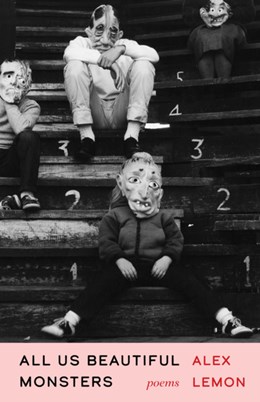
Publisher: Milkweed Editions
Publication Date: March 10, 2026
Format: Paperback
Having extensively detailed his experience with a traumatic brain injury, Alex Lemon writes with the remarkable ability to transform the depth of pain into brilliant light. His enthralling new collection charts a visual map of the sprawling mind, translating images that alight behind the eye. It is a luminous study in contradictions: corporeal bewilderment and overwhelming apathy, the levity of dreams and the acridity of existence, aching grief and radiant joy. In turns evoking an imperative you and a collective we, our omniscient speaker is urgent and complex; he’s existential, dissociative, unable to recognize himself in photographs, and powerless in the face of the world’s crises. “I’m right here,” our speaker says. “Smack dab on planet nowhere, awaiting / The infinite ways a body can absorb / Pain.”
But in spite of its melancholia, this collection embraces the lightness and beauty that prevails. Lemon interrupts the banal imagery of the everyday with surrealist fantasia—he paints “the purpled vault of night” with “glowing eels” and visualizes “grief etched into / The air by songbirds.” These poems turn their lines into nesting dolls of images, holding “The world. In my chest.”
All Us Beautiful Monsters renders in loving, painstaking detail the complexities of life, of the earth, of humankind—in all our terror and wonder.
Alex Lemon is a poet and the author of two memoirs: Happy, selected by Kirkus as a best memoir, and Feverland. His collections of poems include Mosquito, Hallelujah Blackout, Fancy Beasts, The Wish Book, and Another Last Day. Lemon’s writing has appeared in Esquire, River Teeth, Best American Poetry, AGNI, Bomb, Pleiades, and many other magazines and journals. He received a National Endowment for the Arts Fellowship in Poetry, a Jerome Foundation Fellowship, and a Minnesota State Arts Board Grant, as well as the Paterson Award for Literary Excellence. An editor at large for Saturnalia Books, the poetry editor of descant, and a member of the advisory board for TCU Press, he lives in Fort Worth with his family and is the director of the Master of Liberal Arts Program at Texas Christian University.
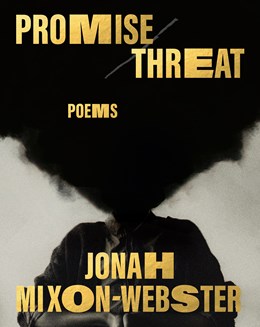
Promise/Threat, Jonah Mixon-Webster
Publisher: Knopf
Publication Date: March 10, 2026
Format: Hardcover/ eBook
“I’m coming to you live,” Jonah Mixon-Webster announces early on in Promise/Threat, “from the corner of Shit Blvd. and Out o’ Luck St. / with my monkey paws.” So begins a three-part journey of a troubled rebirth, one that ushers the reader through all the torment of a Dantean comedy as it climbs unsteadily from darkness to light, navigating an internalized landscape that evokes the Flint, Michigan, of the poet’s youth.
In the long central sequence, “Territory,” Mixon-Webster sets the reader in a mirror hall of dreams, where one’s nemesis (or one’s self) is always lurking around the corner. Violences of the waking life trickle into the narrator’s sleep as he flees from vision to vision, “picking fruit in one dream and eating it in the next.” In the book’s third and final section, as the poet begins to wake, he finds that the “real poem is the life I’m writing.” Mixon-Webster’s musings turn to love and the often-destructive desires it provokes in us as he grapples with how to carry the burden of a past that threatens to sabotage the future.
These are seeking, supple poems whose forms adapt to contain their transfigured images. What emerges in this daring second collection is a surreal and haunting portrait of life in modern America, where pitfalls hide in every promise.
Jonah Mixon-Webster is a poet and conceptual/sound artist from Flint, Michigan. His debut collection, Stereo(TYPE), won the Sawtooth Poetry Prize and the PEN/Joyce Osterweil Award for Poetry and was a finalist for the Lambda Literary Award for Gay Poetry. He graduated from Eastern Michigan University and received a Ph.D. in creative writing from Illinois State University. He is the recipient of the Windham Campbell Prize for Poetry, and fellowships from the Vermont Studio Center, the Center for African American Poetry and Poetics, the Conversation Literary Festival, and the PEN Writing for Justice Program.
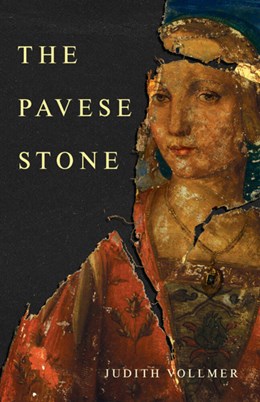
The Pavese Stone, Judith Vollmer
Publisher: Alice James Books
Publication Date: March 10, 2026
Format: Paperback
In these pages, fortitude, elegy, and quiet dignity are interwoven with a profound desire for expansion. Vollmer’s poems offer a sharp attentiveness to the textures of daily life, remaining firmly grounded in the physical world even as the speaker questions the soul’s place within it. This is a book of deep listening and keen observation, where even the smallest gesture—such as severing the leather cords of a tethered owl—becomes an act of radical grace. The Pavese Stone reminds us of the power in meeting another’s gaze and truly witnessing.
Near the end, Vollmer invites the reader to embrace and celebrate the ceremony of what one might even consider an unceremonious life: “Here is a ring I would slide onto your finger, / a plain thread.” The poems of The Pavese Stone find their beauty in the ordinary, elevating moments of stillness and loss into sacred space.
Judith Vollmer‘s seventh book of poetry, The Pavese Stone, is forthcoming from Alice James Books in March 2026. The Sound Boat: New and Selected Poems, was awarded the 2022 University of Wisconsin Press Four Lakes Prize; other collections have been awarded the Brittingham, the Cleveland State, and the Center for Book Arts publication prizes. Reactor was nominated for the National Book Critics Circle Award and featured in The Los Angeles Times Book Review.The Door Open to the Fire received finalist honors for the Paterson Prize. Vollmer is recipient of poetry fellowships from the National Endowment for the Arts and the Pennsylvania Council on the Arts; and artist residencies from the Corporation of Yaddo, the American Academy in Rome, Blue Mountain Center, and the Centrum Foundation, among others. Her poetry, reviews, and essays have been published in Plume, Rhino, Barrow Street, The Georgia Review, The Women’s Review of Books, Agni, Prairie Schooner, Pleiades, and elsewhere. She is Professor Emerita of the University of Pittsburgh/Greensburg, and recipient of the Chancellor’s Distinguished Teaching Award of the University of Pittsburgh. For three decades, Vollmer co-edited the international poetry journal 5 AM. Her essay on Baudelaire, “The Stroll and Preparation for Departure,” is included in the Cambridge Companion to Baudelaire (Cambridge University Press). She has read her work internationally at colleges, universities, museum and galleries, arts organizations, and community centers. Vollmer has taught in low-residency programs at New England College’s MFA in Poetry, the Drew University Program in Poetry and Poetry in Translation, and most recently in Carlow University’s MFA Program. She lives in Pittsburgh’s Nine Mile Run watershed.
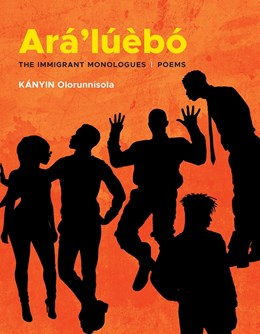
Ará’lúèbó: The Immigrant Monologues, Kányin Olorunnisola
Publisher: Acre Books
Publication Date: March 15, 2026
Format: Paperback
The Yoruba word Ará’lúèbó (/ah-rah-loo-ay-bow/), as the book tells us, means “an endearing term for a native who has gone abroad, and/or is returning” or “a person who becomes a foreigner everywhere they go.”
In his debut poetry collection, Kányin Olorunnisola showcases the expansiveness of the immigrant experience through the form of the choreopoem, a non-Western style of poetry that incorporates elements of music and theater. The collection tells a multitude of stories through five people (Odunsi, beja, Levi, Sekina, and Ismaila), who, though fictional, represent the emotional truths of the lived experience of an African residing in the United States. As Ismaila says early on, “we r five fly kids hyphenated by time & / geography.”
Mixing Yoruba, Nigerian Pidgin, and English, Ará’lúèbó: The Immigrant Monologues is a blend of linguistic influences, with debts to visual art and rap music. At the center of its expression is formal experimentation; poems are structured like movie screenplays, diary entries, flowcharts, pie charts, and dictionary entries. The book encompasses a broad span of American, African, and other world history, even as it is strongly rooted in the contemporary, with references to Lauryn Hill, Kendrick Lamar, and other Black creatives. Ultimately, the book asks who is allowed to belong and paints a portrait of what it means to be American and from elsewhere.
Kányin Olorunnisola is a multidisciplinary experimentalist of Yoruba descent. His writing has appeared in The Georgia Review, The Chicago Review of Books, Al Jazeera, FIYAH Literary Magazine of Black Speculative Fiction, and elsewhere. His debut short film, Chiaroscuro, premiered at the 2024 Rising Tide Film Festival. He is the founder of Sprinng Inc., a literary nonprofit, and a former nonfiction editor of the Black Warrior Review. He lives in Boston, Massachusetts. For more information, visit www.kanyinolorunnisola.com.
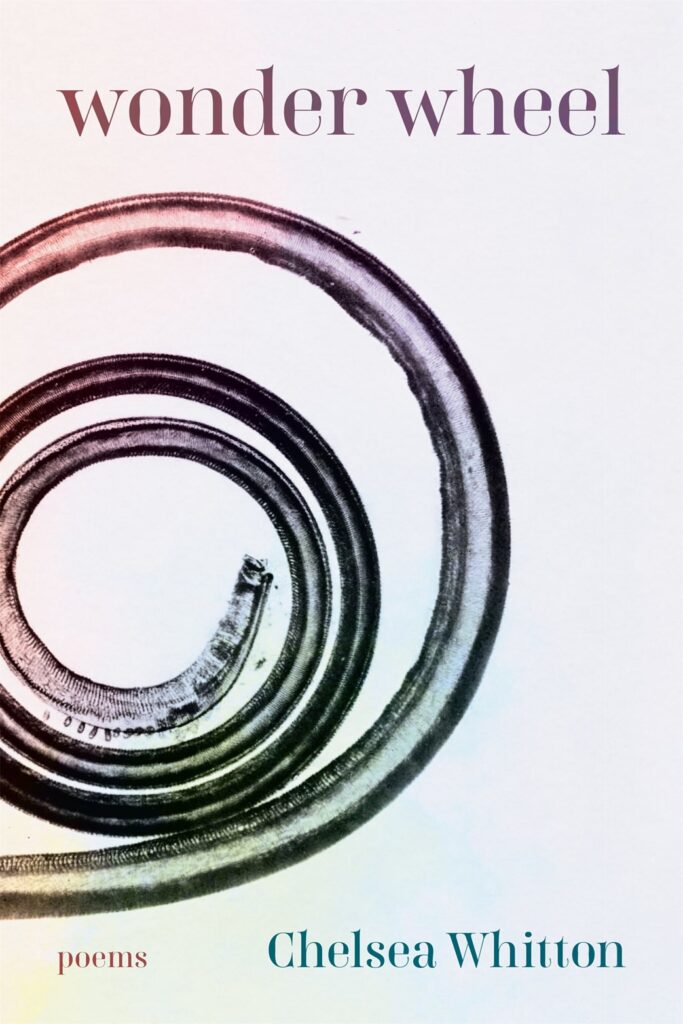
Wonder Wheel, Chelsea Whitton
Publisher: LSU Press
Publication Date: March 16, 2026
Format: Paperback / eBook
Chelsea Whitton’s debut poetry collection, Wonder Wheel, dexterously whirls in sonic circles, ruminating on themes of spiritual bestowal and terrestrial bequest, millennial identity, adult friendship, feminine desire, and the mythmaking at stake in family history. Disoriented speakers who nevertheless believe they know where they are going, and what they are doing, provide an occasion for lyric expansiveness and periodic bathos, including elegies for June Carter Cash, Patsy Cline, the author’s father, an ex-cat, and others. At the heart of the collection is a rhyming sonnet crown that offers a wicked inversion of the book’s larger vision by constructing an apocalyptic mythology of matrilineal inheritance reliant on resistance, destruction, and martyrdom as much as on cycles of creation and healing.
Chelsea Whitton is a poet and essayist whose work has appeared in many print and online publications including Beloit Poetry Journal, Cream City Review, Copper Nickel, Cimarron Review, and Poetry Ireland, among others. She lives in southwestern Ohio and teaches at the Art Academy of Cincinnati.
Dusk, Empire: New and Selected, Daniel Tobin
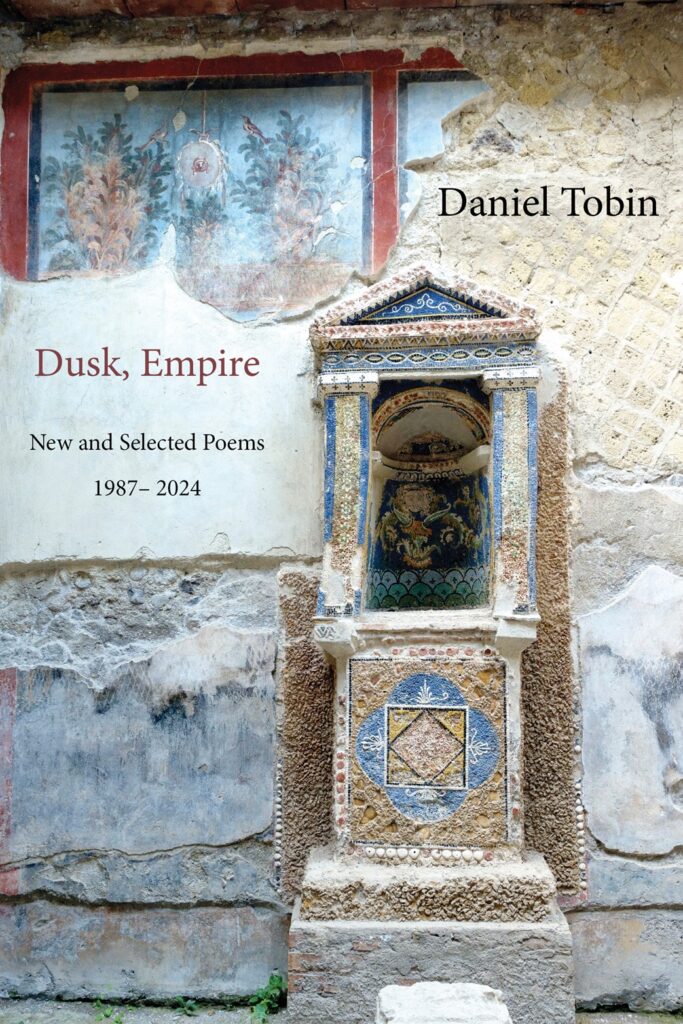
Publisher: Four Way Books
Publication Date: March 15, 2026
Format: Paperback / eBook
Dusk, Empire: New and Selected Poems 1987-2024 is a panoramic collection of Daniel Tobin’s most exemplary, ambitious, and accomplished poems from nearly forty years at work in the art. These range from his award-winning first book, Where the World is Made, through successive volumes that reveal a progressive deepening of his essential themes even as the poems evolve to an ever more refined technical risk and mastery. These themes include the unflinching encounter with time, suffering, and mortality, as well as what one earlier reviewer called “a quest for transcendence, a search for the sacred.” They seek, in short, to do, as another reviewer observed, what Yeats said was “one ideal for poetry: to hold justice and reality in a single thought.” In so doing, Tobin’s poems probe the individual life in relation to the pressures of history, including his own family’s perilous and traumatic immigration from famine in the 19th century—a backstory he explores in The Narrows, which he has called “a mural in verse.” At the same time, his “Homage to Bartolomeo de las Casas” delves into the fraught early colonial history of the Americas through the eyes of the eponymous friar, a repentant colonizer.
Daniel Tobin is the author of ten books of poems, most recently Blood Labors (2018), which the New York Times and Washington Independent Review of Books named one of the Best Poetry Books of the year, and The Mansions (2023), a trilogy of book-length poems which won the Human Relations Indie Book Award and the National Indie Excellence Award in Poetry. A suite of versions from the German of Paul Celan, The Stone in the Air, was published in 2018, and a chapbook, Gloss Arias I: From the Distances of Sleep, appeared in 2025. He is the author of several critical studies, among them On Serious Earth: On Poetry and Transcendence (2019) and The Odeon: Essays on Poetry (2025), as well as the editor of The Book of Irish American Poetry from the Eighteenth Century to the Present (2007), and To the Many: Collected Early Works of Lola Ridge (2018), which received a Special Commendation from the Poetry Society (UK). His many awards include the Massachusetts Book Award in Poetry, the Julia Ward Howe Prize, the Stephen J. Meringoff Award, and fellowships from the National Endowment for the Arts and the John Simon Guggenheim Memorial Foundation.
Sugar, Andrea Cohen
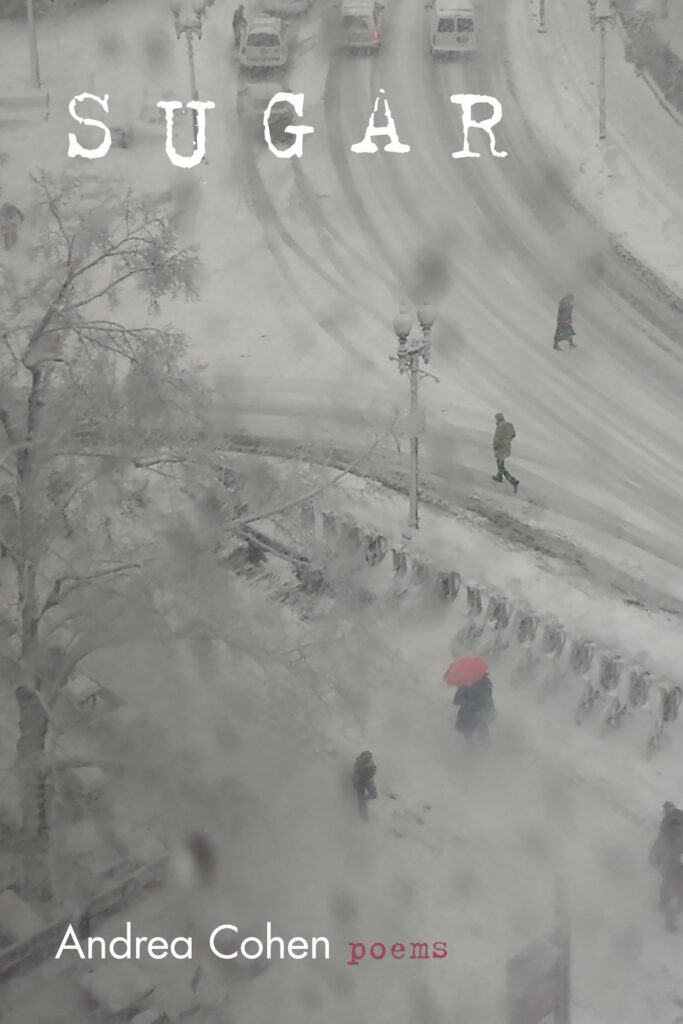
Publisher: Four Way Books
Publication Date: March 15, 2026
Format: Paperback / eBook
About Sugar, David Orr has said: “Andrea Cohen’s ninth collection is elegantly precise—but this isn’t the precision of a meticulously arranged garden or tidy bookshelf. Rather, Cohen’s nimble, exacting lines are like guide ropes strung up the sides of an icy mountain: Her precision manages risk, and the risk leads to startling vistas. An entire relationship dynamic unfolds in the five monosyllables of ‘Proximity’: ‘She died / Of my wounds.’ In ‘Ghosting,’ the ambiguity of departure—the way in which lives and loves sometimes cease without concluding—is captured in all its shades of gray: ‘Any ghost will / tell you— // the last thing / we mean // to do / is leave you.’ We sometimes think of poems as recreating experience, but Cohen’s work reminds us that poetry, at its most patient and compassionate, is also a way of discerning. Sugar brings us a step closer to the sun; it helps us to orient ourselves, but more than that, it helps us to see.”
Andrea Cohen‘s poems have appeared in The New Yorker, The New York Review of Books, The Threepenny Review, The New Republic, The Atlantic Monthly, and elsewhere. She is the author of nine poetry collections, including Sugar, The Sorrow Apartments, Everything, Nightshade, Unfathoming, Furs Not Mine, Kentucky Derby, Long Division, and The Cartographer’s Vacation. Awards include a Guggenheim Fellowship and several residencies at MacDowell. She directs the Blacksmith House Poetry Series in Cambridge, MA.
If You Would Let Me, Maggie Dietz
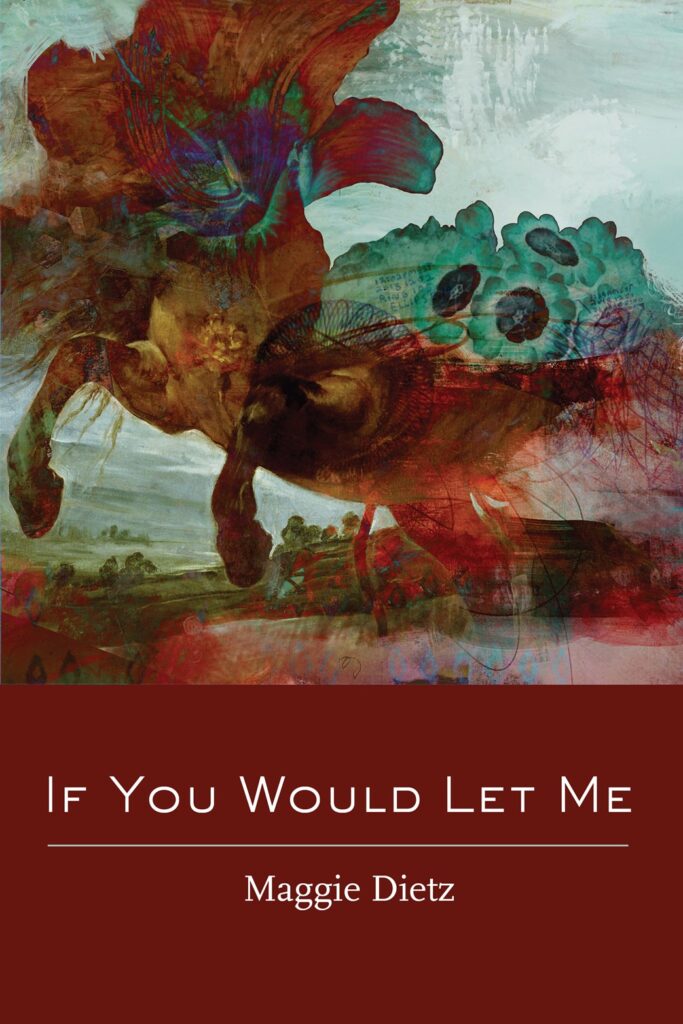
Publisher: Four Way Books
Publication Date: March 15, 2026
Format: Paperback / eBook
If You Would Let Me uses the myth of Persephone and Demeter to explore, in an utterly contemporary idiom, the hellish descents and unequivocal love of a mother and an adolescent child. The old story is reimagined in new terms—a present-day Persephone’s cycles of psychic affliction giving rise to botched facial piercings, social media ghostings, and squalls of physical fury—and revoiced in poems that sing Demeter’s rage, the depths of maternal grief, the seasons of erasure and renewal. In an electric transposition of classic lore onto modern descriptive modes, Dietz casts the imperiling pubescence and anxiety of middle school as canonically significant and dangerously chimerical: “Persephone and her friends brought / Waxed paper cups of ice cream / To the meadow by the river,” where “Their laughter made ripples a heron / Mistook for alewives underwater” while “Under some of their shirts” grew “The first hiccups of puffy nipples.” Throughout these teenage transformations and the distances they grow, Dietz remains as constant as a lodestar, offering unwavering light for her child to see by in order to return. “You must know what I mean even if / You do not know you know: Child, // When you called my name I heard you / Though your cries could find no wind.” Formally meticulous and sonically intricate, these poems hear as much as they make themselves heard, harnessing ancient energies to create a picture of our recycled world—a story for our own times, one not only familiar but perennially, timelessly true.
Maggie Dietz was born and raised in Green Bay, Wisconsin, and educated at Northwestern University and Boston University. She is author of the poetry collections That Kind of Happy and Perennial Fall, which won New Hampshire’s Jane Kenyon Award. Dietz was the founding director of the Favorite Poem Project, created by former U.S. poet laureate Robert Pinsky, and is co-editor of three anthologies related to the project. Her awards include a Pushcart Prize and fellowships from the Fine Arts Work Center in Provincetown, Phillips Exeter Academy, the New Hampshire State Council on the Arts, and Jentel Arts in Wyoming. Her work has appeared in AGNI, The Adroit Journal, Bennington Review, Birmingham Poetry Review, Ploughshares, Poetry, Salmagundi, The Threepenny Review and elsewhere. She teaches at the University of Massachusetts Lowell and lives in New Hampshire with her family.
All There Is to Lose, Aiden Heung
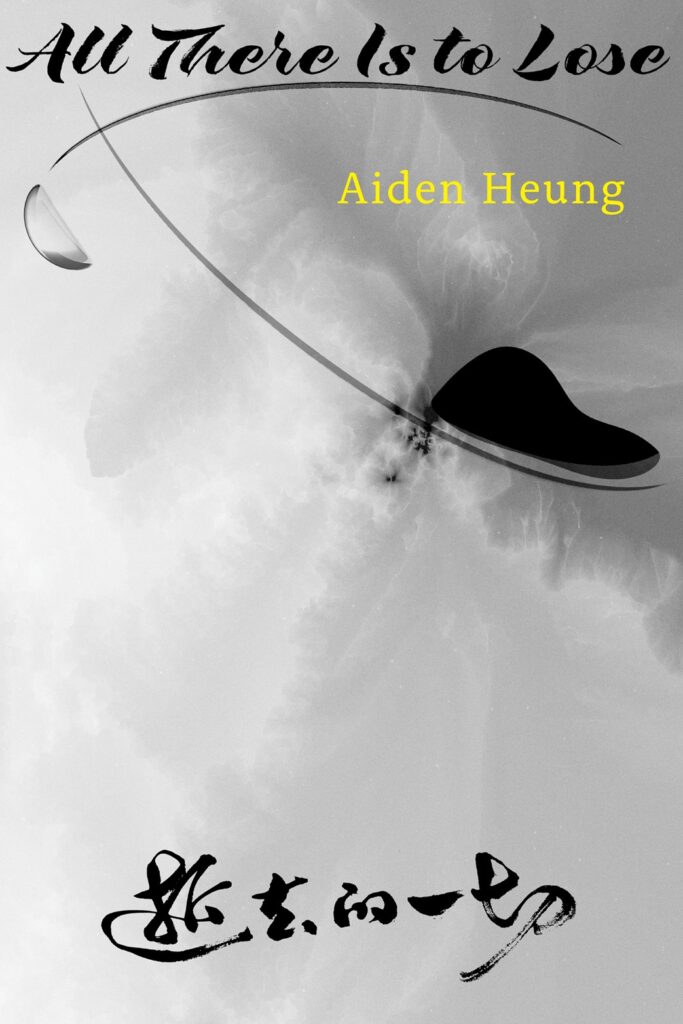
Publisher: Four Way Books
Publication Date: March 15, 2026
Format: Paperback / eBook
Marking Aiden Heung’s debut collection, All There Is to Lose is the 2024 winner of the Four Way Books Levis Prize in Poetry. The selecting judge, National Book Award Finalist Ilya Kaminsky, praises the resonant particularities and depth of feeling found in these poems, which convert “elegy [into] its driving force.” Poet and Critic Felicity Plunkett observes, “Dreams and memory move through these porous, venturesome poems. The spectral jostles with the sensual to tell ‘a story in which I could be found.’ Achily tender, they open to light, love and the jab of a joke.” Poet David Tait notes, “Unsettling and luminous, the poems preserve the memory of Village 915: its volatile seasons and hard-worn inhabitants, its headstones, spirits, and myriad forms of water. Here you’ll find not only poems of lyrical beauty, but of grim exactness.” The result is a stunning achievement of a first book, what Kaminsky identifies as an exemplar of “that ages-old mode of poetry wherein the poet uses language to break bread with the dead, to bring them back to life, if only for the moment, for a portion of the moment, an instant, before the line breaks.” Channeling the poet as medium, “I am the tension on the bow that draws the arrow,” Heung writes in “Epilogue.” “To lose myself — that is my destiny.”
Aiden Heung (he/they) is a Chinese poet born in a Tibetan Autonomous town. After working as a traveling salesman for years, he recently relocated to St. Louis, USA. His poems have been published in Australian Poetry Journal, Harvard Review, The Kenyon Review, The Yale Review, 声韵诗刊 (Voice and Verse Poetry Magazine), and many other places. He is a finalist for the DISQUIET Prize, a winner of the International Proverse Poetry Prize, and the recipient of 2025 Elinor Benedict Poetry Prize, selected by Diane Seuss. He and his work have been generously supported by Varuna, The National Writers’ House (Australia) and Swatch Art Peace Hotel residency (Switzerland/ Shanghai, China). He holds an MFA in creative writing from Washington University.
Worms, Dirt, Daniel Levin
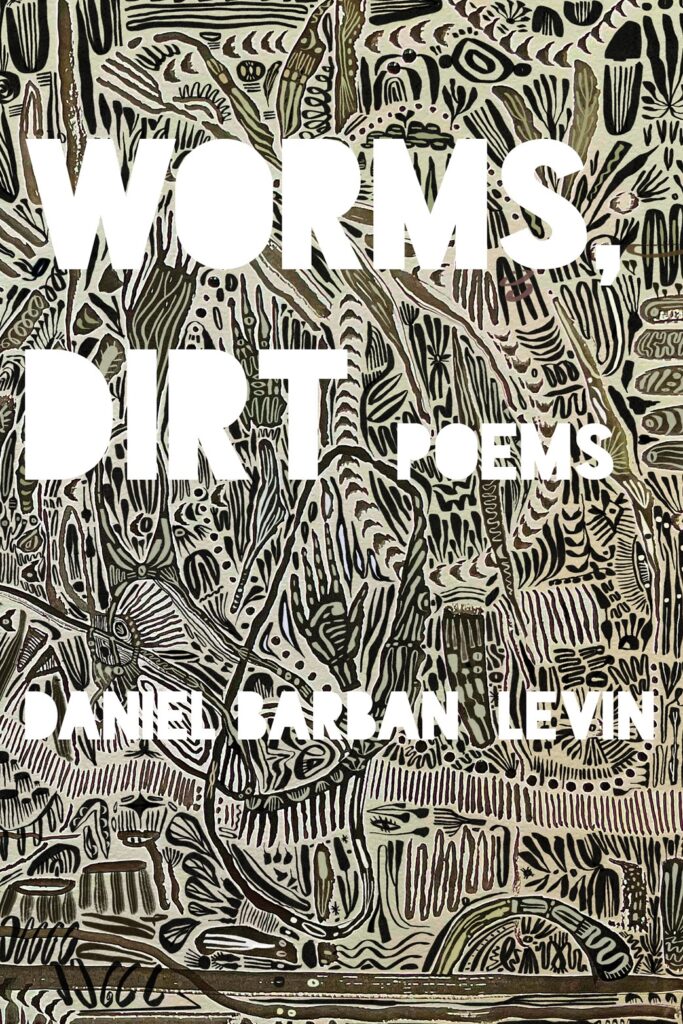
Publisher: Four Way Books
Publication Date: March 15, 2026
Format: Paperback / eBook
“The / drugs, the page, none of it is here. That was years ago,” Daniel Barban Levin writes in his debut collection of poems, trying to create an inventory of blank spaces, to describe the persistent presence — the psychological furniture — of what no longer exists. “There was a room. I lived there. / Now, I can’t find it anymore.”
Written in the wake of the media storm surrounding the revelation of the Sarah Lawrence cult, interrogating the constructs of confessionalism and journalistic epistemology after the release of memoirs and viral articles and a Hulu docu-series, Worms, Dirt considers the soil beneath the story playing out aboveground. These poems are a unique telling of two kinds of departure – leaving a cult and exiting a relationship. They weave together fragments and elisions of memory — “Was any of it right? Did any of it happen the way / You remembered?” — reverse engineering a story from the aftermath — “The piece you still can’t find. It must be true. He was // Gentle. Sometimes, he was gentle.” Devastating and open-hearted, these pages transcribe transformation and reconstruction of self, survival, reckoning. They confront the intimate betrayals of belonging to a high-control group or seeking love from the wrong romantic relationships. These lyrics confront horror and a fragile hope in their recognition of this inconceivable thing, the soft flesh smothered by the scar: “The hands’ capacity / For gentleness even as you watched them, in disbelief, dismantle you.”
Daniel Barban Levin is the author of Slonim Woods 9 (Crown, 2021), described by Nylon as “extraordinary, biting, observant,” a memoir that vividly recounts his experience as a survivor of a college cult and offers a profound exploration of manipulation, resilience, and recovery. He produced the Hulu docuseries Stolen Youth, which unflinchingly depicted the tragic consequences of coercive control and the remarkable resilience of its survivors. His essays and poems have appeared in Provincetown Arts, Psychology Today, and numerous other publications, and he has spoken and taught widely on the power of poetry, memoir, mental health, trauma recovery, and the psychology of coercion for both national media—including Radiolab—and classrooms across the country. Levin lives in Los Angeles.
As Long as We’re Here, Joel Brouwer
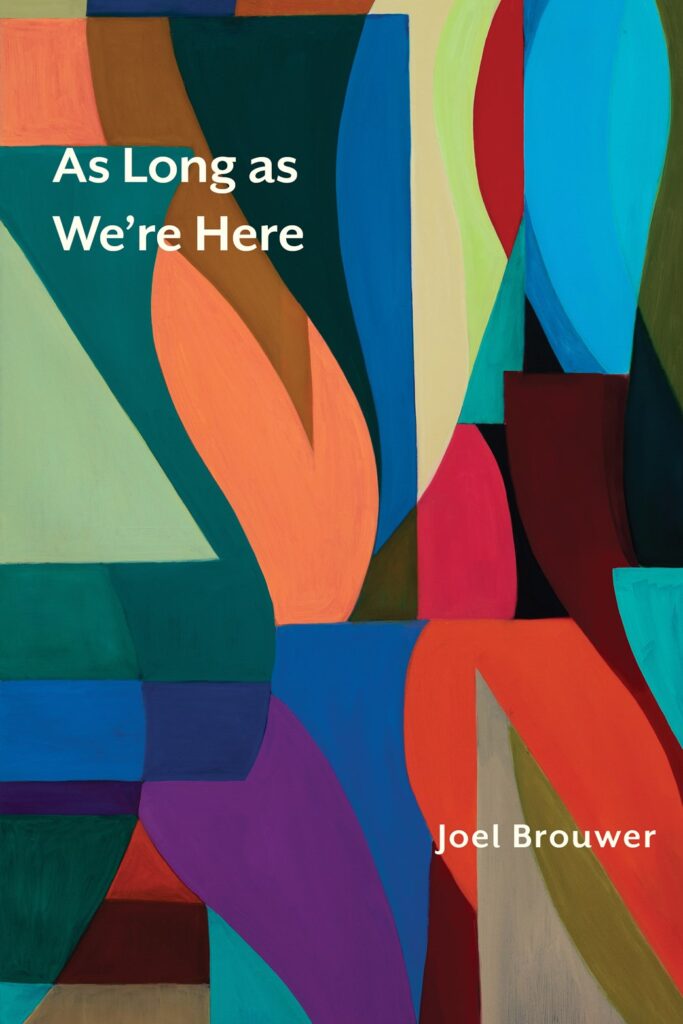
Publisher: Four Way Books
Publication Date: March 15, 2026
Format: Paperback / eBook
As Long as We’re Here is an off-key anthem, a funhouse mirror held up to our dumpster fire era. Chronically online, distracted and distracting, with too many browser tabs open at once, attentive to everything and focused on nothing, Brouwer delights in the late capitalist absurdities of sleeping apps and internet dance crazes, and riffs on the argot of the group chat and the team meeting. These slippery poems both suffer from and revel in their ADD. Their shifts are as fleet as our news feeds, their serpentine sentences leap from barroom jests to high modernist splendor and back. But the book is not all fun and games. Dreamy tales of edgelords and loyalty oaths often arrive at places of surprising pathos and beauty. Mortality gnaws at the narrators of these poems, and political unrest lurks in the background. Still, a sense of solidarity—that we of the title, a recurring pronoun throughout—keeps despair at bay. Indeed, As Long as We’re Here is a book of intimacy, of the coterie. Friends and lovers people its lyrics, which often feel like late-night hang sessions with eccentric, wise-cracking pals. Full of wry wisdom and lush music, As Long as We’re Here knows what to do with a diminished thing: make it sing.
Joel Brouwer is the author of four earlier collections of poems: Exactly What Happened, Centuries, And So, and Off Message. He lives in Tuscaloosa and New Orleans and teaches at the University of Alabama.
The Future, Monica Ferrell
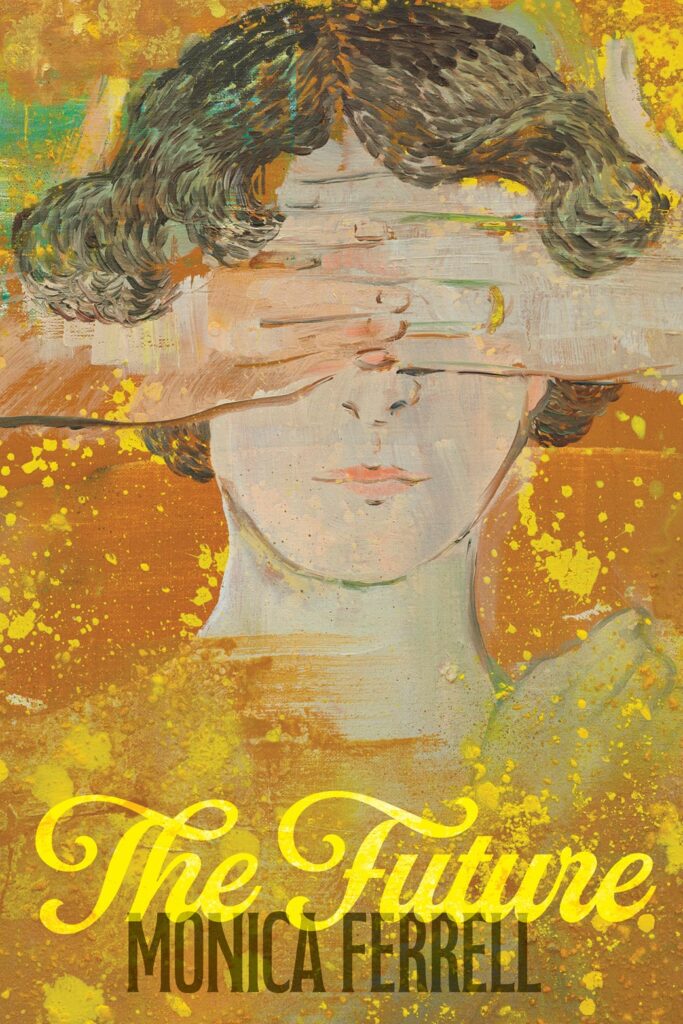
Publisher: Four Way Books
Publication Date: March 15, 2026
Format: Paperback / eBook
The Future is a book about time. The tender, vulnerable, and bitingly funny poems of Monica Ferrell’s third collection confront the hours as they stream by, our relatively brief lives that feel so long while we are living them, successive generations and the unwinding story of our species, and the bewilderingly vast geological age of the planet. Traveling across eras, through ice ages to the eighteenth century and the modern day of Ozempic and chatbots, these poems also square up to the obscurity of what comes next as they peer forward into time still to come.
At once irreverent yet elegant, sophisticated yet conversational, these poems capture what it means to get by day to day in a 21st century destabilized by ecological collapse, political havoc, and the incursion of technology into our most private and intimate spaces. “Every day I wake up,” Ferrell writes, “and ask, is it today? The volcano?” Restless in their imaginative scope, these poems leap across the world, from the enduring statues at Angkor Wat and Hampi to Alpine meadows contaminated with plastic to a supermarket in Vermont. Without papering over any of the difficulties we face today, Ferrell nonetheless expands our capacity to wonder, especially about the experience of motherhood, how the future keeps finding a way of breaking through.
Monica Ferrell is the author of a novel and three books of poetry, including You Darling Thing (2018), a finalist for the Kingsley Tufts Poetry Award and the Believer Book Award in Poetry, and Beasts for the Chase (2008), winner of the Kathryn A. Morton Prize and finalist for the Asian American Writers Workshop Prize in Poetry. Born in New Delhi, she lives in Vermont.
The Kin of Nakedness, Chris Crowder
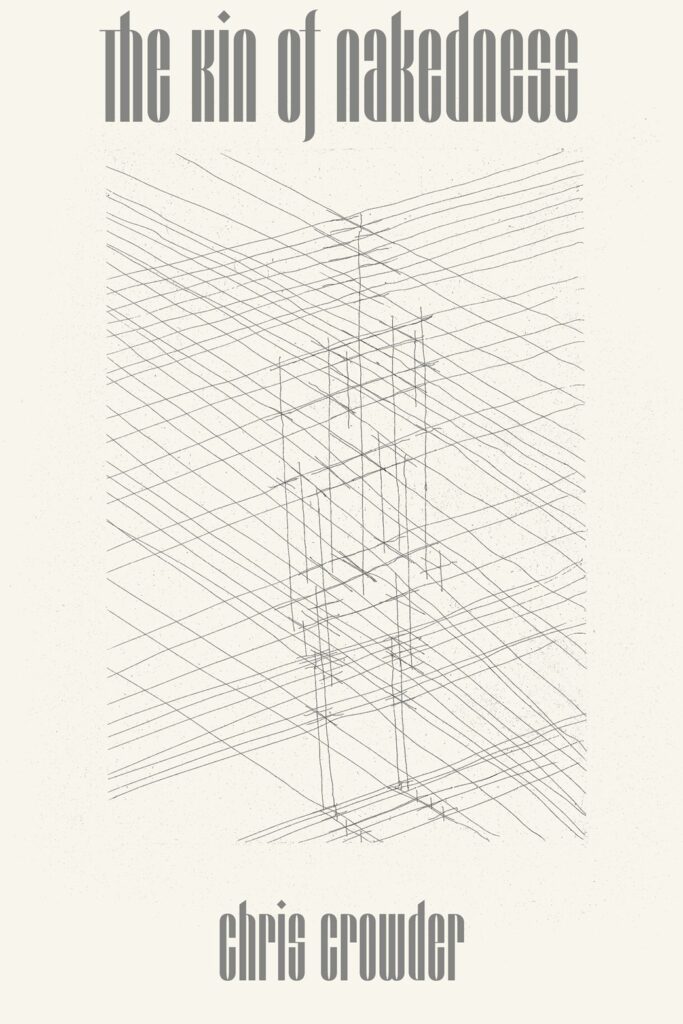
Publisher: Four Way Books
Publication Date: March 15, 2026
Format: Paperback / eBook
The debut collection from Adroit Managing Editor Chris Crowder, The Kin of Nakedness interrogates the ethics of complaining and self-work beginning with a lens focused on body image. Structured by sections that complicate the biblical definitions of servitude—being Christ’s hands and feet—and a long ars poetica, the speaker risks toward honesty as he explores his struggles and privileges as a Black and biracial man. “Digging for everything I have to write into my flesh,” Crowder works to witness the harm done to himself and others who are competing for recognition. Seeking to understand these internal and external struggles, he embodies characters, including benched quarterbacks and Jimmy Fallon, while reckoning with fractured subjects like greedy pastors and alternate universes.
Chris Crowder is a writer from Flint, Michigan. The Kin of Nakedness is his debut collection. His work has appeared in various publications, including The Georgia Review, The Rumpus, Best New Poets, TriQuarterly, Witness, and the VS podcast. He is Managing Editor of The Adroit Journal and a lecturer at the University of Michigan, where he earned his MFA in the Helen Zell Writers’ Program. He lives in Ann Arbor with his wife and dog.
Printer’s Fist, Melissa Range
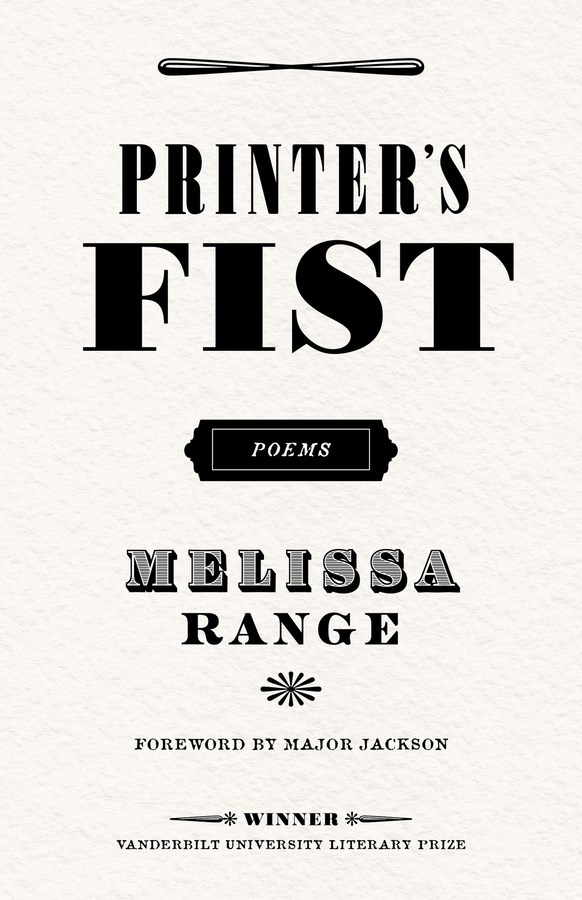
Publisher: Vanderbilt University Press
Publication Date: March 15, 2026
Format: Paperback / eBook
Melissa Range’s Printer’s Fist, awarded the 2025 Vanderbilt University Literary Prize, is a collection that tells the story of a political movement—its strides and setbacks, its unity and fractures—with a particular emphasis on print culture. Drawing upon more than a decade’s worth of archival research into nineteenth-century antislavery newspapers, pamphlets, broadsides, and more, Range highlights the expansiveness of the movement by focusing not on one, but a chorus of abolitionist voices. Her investment in celebrating Black and women’s histories, in particular, offers an inclusive account of American history, informed not only by thorough research but through a formal, poetic engagement with the past. In exploring how enslaved people’s self-emancipation was a form of resistance that preceded, operated alongside, and intertwined with organized networks of antislavery activists, Printer’s Fist will help facilitate discussions surrounding race, gender, and activism that are grounded in historical fact and emotional truth.
Melissa Range is the author of Scriptorium, winner of the 2015 National Poetry Series competition, and Horse and Rider, a finalist for the Kate Tufts Discovery Prize. Her recent poems have appeared in Ecotone, The Hopkins Review, Michigan Quarterly Review, The Nation, and Ploughshares. Range has received awards and fellowships from the National Endowment for the Arts, the Rona Jaffe Foundation, the American Antiquarian Society, the Fine Arts Work Center, and MacDowell. Originally from East Tennessee, she teaches creative writing and American literature at Lawrence University in Wisconsin.
Differential Diagnosis, Cavar
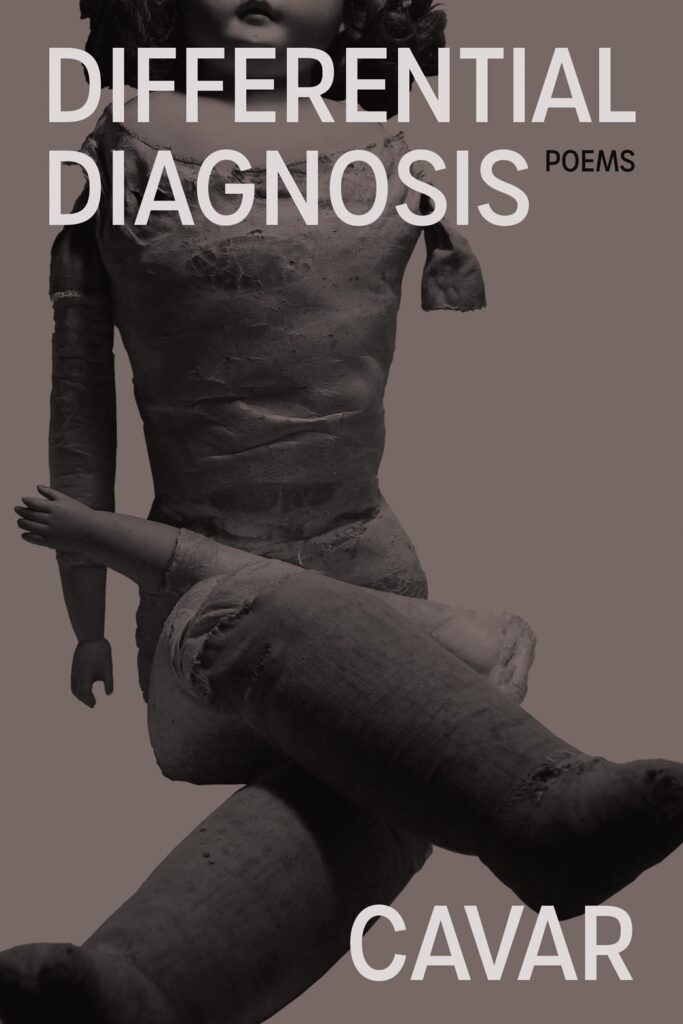
Publisher: Curbstone Books 2
Publication Date: March 16, 2026
Format: Paperback / eBook
Drawing from queer, trans, disabled, and Mad poetic traditions, Differential Diagnosis introduces a deeply entangled transMad approach, investigating ways of knowing, loving, and living not legible to the normative eye. This collection challenges the architecture of institutional psychiatry and its popular “wellness” analogues, offering instead a counternarrative of forced institutionalization, disorderly embodiment, and transMad self-determination.
At once jarring and joyful, Differential Diagnosis interrogates psychiatric power and locates capacities for disabled and/or transMad resistance in the oblique, the speculative, and the “nonsensical.” Cavar’s inventive full-length debut defamiliarizes cis, sane, abled existence through linguistic play and speculative imagery, offering Madness not only as poetic content, but also as craft technique and, ultimately, as a new way of being in the normative world.
CAVAR is the author of the novel Failure to Comply and editor in chief of manywor(l)ds. Their work can be found in Electric Literature, The Rumpus, Split Lip Magazine, and elsewhere. Cavar holds a PhD in cultural studies from the University of California, Davis.
The Banished and The Dead, Anne Leigh Parrish
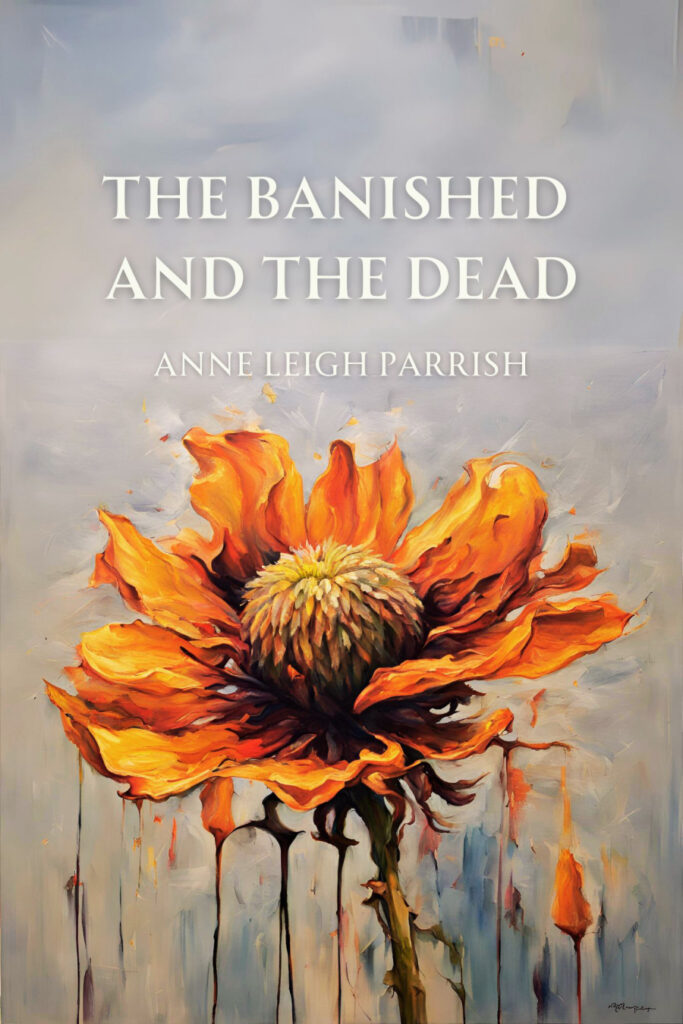
Publisher: Unsolicited Press
Publication Date: March 10, 2026
Format: Paperback / eBook
Anne Leigh Parrish’s latest poetry collection delves into the depths of grief, exploring the nuances of loneliness and loss with an elevated, thoughtful voice. Yet within its pages, there is also joy, a celebration of the world’s beauty, where art and nature rise to meet sorrow, challenging despair. Here, those who have wronged us and those we have wounded do not seek forgiveness, only remembrance. Accompanied by twenty stunning illustrations from Kathryn Gerhardt, these seventy-eight poems invite readers on a journey where emotion and observation intertwine, balancing passion with a keen eye for truth.
Anne Leigh Parrish is the author of seventeen books which include short stories, novels, and poetry. She is also an avid photographer and draws from rugged splendor of her home in the South Sound Region of Washington State. Learn more about Anne at www.anneleighparrish.com and also at www.laviniastudios.com.
These Saints are Stones, Millie Tullis
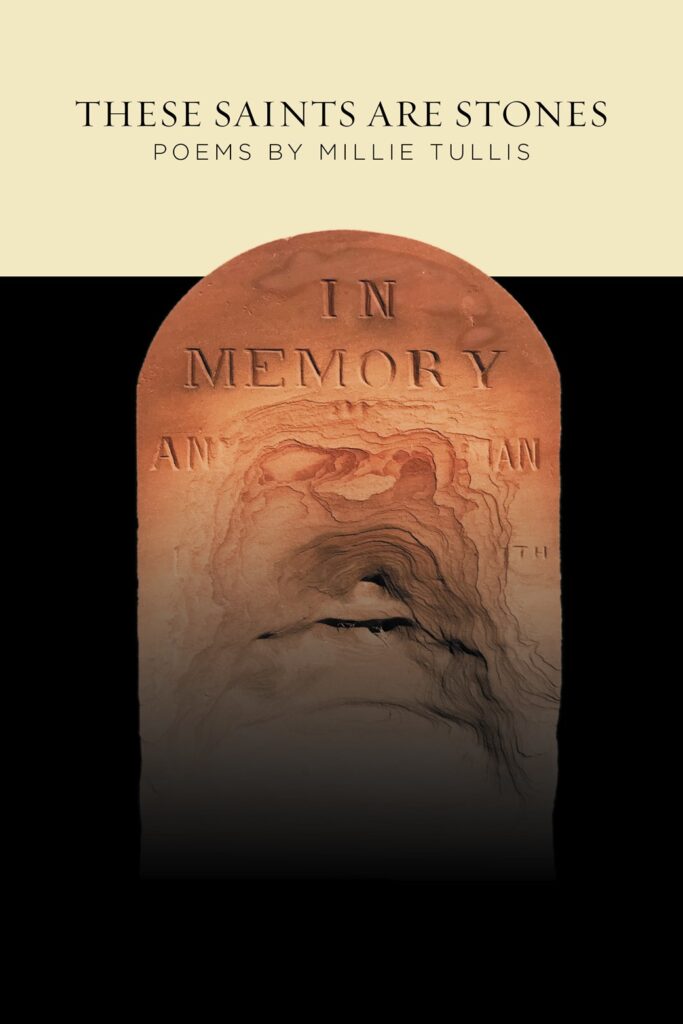
Publisher: Signature Books
Publication Date: March 16, 2026
Format: Paperback / eBook
In Millie Tullis’s new poetry collection, These Saints are Stones, a faithless daughter is haunted by her third-great-grandmother, Martha, a woman who married her stepfather at sixteen and became a sister-wife to her own mother. Tullis cannot stop uncovering details about Martha, who left no written history behind, and her silence permeates this collection, which is rife with gaps and fragments, scraps of memory that blend with dreams. Sparse and spare, these poems echo the red desert landscape where the speaker’s ancestors lived and died, where she hunts for graves among the rocks and confronts a past she can never fully know. After all, like a sampling of lace, the cloth of women’s history is more hole than thread.
Millie Tullis is a poet, editor, and researcher from northern Utah. She holds an MFA from George Mason University and an MA in American Studies & Folklore from Utah State University. Her poetry has been published in Dialogist, Sugar House Review, Cimarron Review, Dialogue, Ninth Letter, and elsewhere. Her digital micro-chapbook, Dream With Teeth, was published by Ghost City Press in 2023. Her research has won awards from the Utah Historical Society, the Folklore Society of Utah, and the American Folklore Society. She is the editor-in-chief of Exponent II. Find more at millietullis.com.
Precedence, Pujita Verma
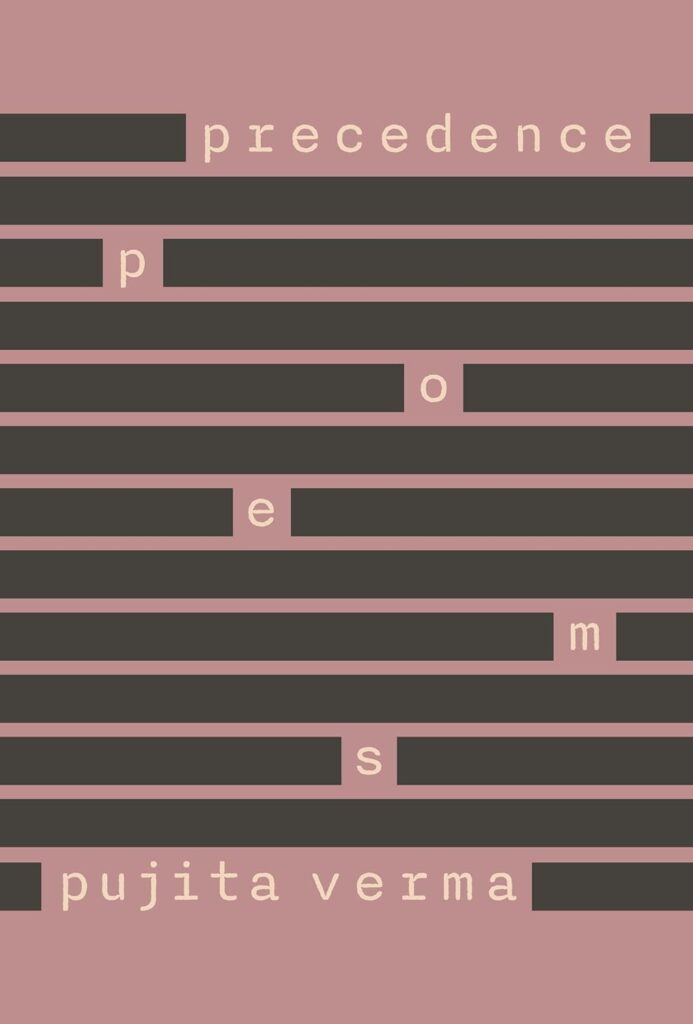
Publisher: Brick Books
Publication Date: March 10, 2026
Format: Paperback
Grounded in a recent legal case that crosses borders, Precedence offers an intimate and stunningly poised insight into a young woman’s experience leaving home and facing her father in a Canadian courtroom. Pujita Verma’s tender, hopeful voice exposes the shortcomings of the international legal infrastructure in providing recourse to survivors of childhood sexual abuse, while honoring the generations of women who have protected and taught her, and whose sacrifices ultimately put her in the position to speak out publicly. What precedents, Verma asks―legal, personal, cultural―do we rewrite for ourselves and others each time we act? What does it look like to know romantic love, and come of age, after coming forward?
Pujita Verma is a poet and illustrator currently living in London, Ontario. Her work has appeared across the Toronto Transit Commission Network and CBC’s The National. She won awards from the League of Canadian Poets, the Toronto Arts & Letters Club Foundation, and the Eden Mills Writer’s Festival, and was runner-up for the Janice Colbert Poetry Award. Pujita was Mississauga’s Youth Poet Laureate from 2018-2020, and she studied Political Science at Western University. As an active member of London’s literary scene, Pujita is currently serving on the committee for Antler River Poetry.
My Great-Grandfather Danced Ballet, Misha Solomon
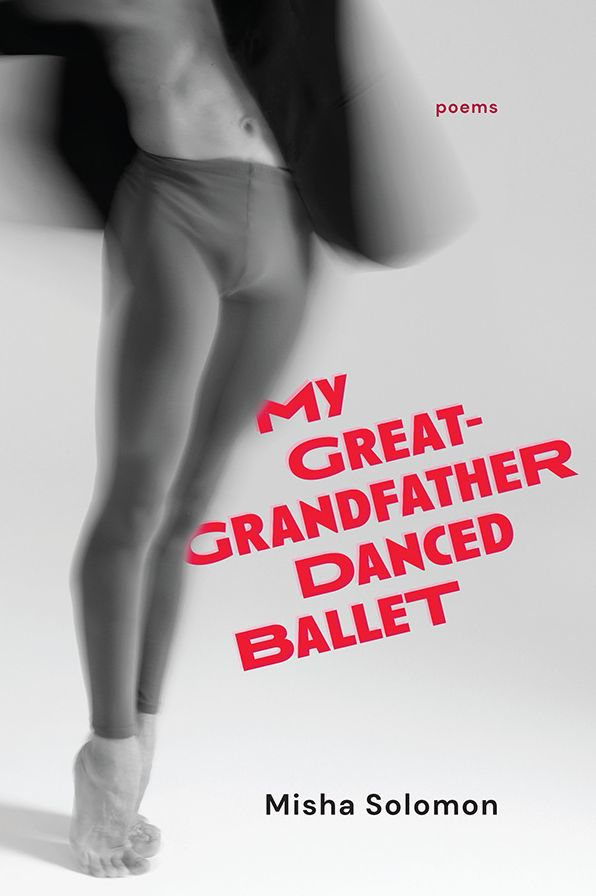
Publisher: Brick Books
Publication Date: March 15, 2026
Format: Paperback
What if the queer ancestor you always wondered about had really existed—and could speak to you across all time? When there’s only one document to be found in the archive, can our misheard or half—remembered family stories be enough? My Great—Grandfather Danced Ballet is a daring, erotic, and humorous exploration of queer longing and Jewish possibility at the turn of two centuries. In a captivating series of narrative poems, Misha Solomon entwines an alternate memoir of his great—grandfather in pre—Holocaust Romania with a contemporary gay life in Montreal. With profound vision, voice, and craft, Solomon sets a new and powerful precedent for speculative poetic histories, allowing intimacy to find a way through memories real, imagined, and desired.
Misha Solomon is a homosexual poet in and of Tiohtià:ke/Montréal. He is the author of two chapbooks, Full Sentences (Turret House Press, 2022) and FLORALS (above/ground press, 2020), and his work has appeared in Best Canadian Poetry, Arc, The Fiddlehead, Grain, The Malahat Review, The New Quarterly, Riddle Fence, and & Change. He completed an MA at Concordia Universityand a BA at Columbia Universityin New York City. My Great—Grandfather Danced Ballet is his debut full—length collection.
No One Is Daddy, Dylan Krieger
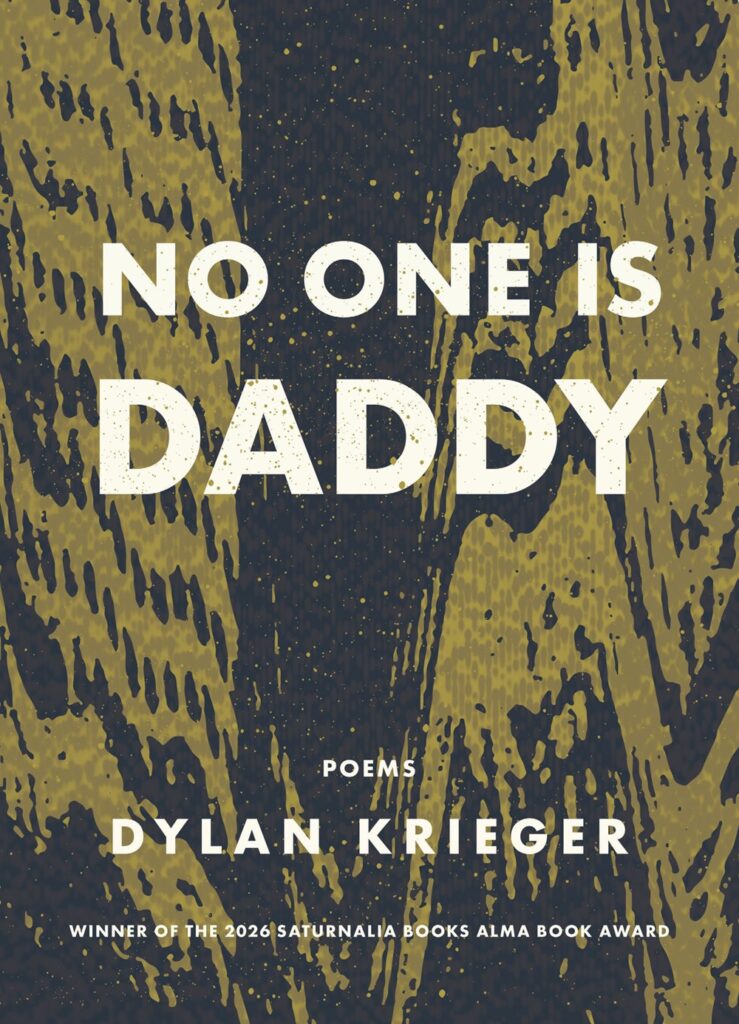
Publisher: Saturnalia Books
Publication Date: March 15, 2026
Format: Paperback / eBook
No One Is Daddy is a book of poems about resisting power in all its guises: politicians, religious leaders, the police, bosses, landlords, the extremely wealthy, the patriarchy, nations and governments, militaries, and corporations. Despite occasional moments of panic or despair, these poems take strange comfort in the sense that no one is, in fact, in charge, relishing the prospect of an overdue uprising for those who have been treated as “children” far too long. From sex work to childhood abuse, No One Is Daddy explores difficult-to-stomach examples of unjust hierarchies and the specific types of labor required to survive them. As the book ultimately declares, “ no one is daddy and that’ s how we like it.” For these poems, control is temporary; rebellion is eternal.
Dylan Krieger is a child of the Great Lakes and a grownup of the Gulf Coast. She earned her BA in English & Philosophy at the University of Notre Dame and her MFA in creative writing at Louisiana State University. In addition to No One Is Daddy (Saturnalia, 2026), she is the author of Giving Godhead (Delete, 2017), Dreamland Trash (Saint Julian, 2018), and Predators Welcome (Limit Zero, 2024) among others. She also serves as managing editor of newsprint literary magazine Fine Print and co-creator of the astrological poem generator at Orb.Church.
Don’t see a poetry title published between 3/10 and 3/16 here? Contact us to let us know!

Contents
“Managing [my husband’s] pain became fraught in the last week of his life when he could no longer swallow the medications that had kept him comfortable…The poem explores the vulnerability and intimacy found in such a crisis.” Read five poems by Amy Riddell, our first biweekly poet of the Winter 2026 issue, along with a few words about “Reading the Body.”
Chapbook Poem: Aphasia by Robert Allen
“Ultimately this is a poem of love and recognition, of finding the right words for the right listener, to the one who listens and understands.” Read the featured Chapbook Poem of the Month for January 2026, “Aphasia,” along with a few words from the poet.
Book Excerpt: The Egg of Anything by Paula Bohince
“The poem is filled with moments of ‘O’ sounds and ‘Ah’ sounds, mimicking the O of the egg and the Ah of the open jaw. I like that the poem is compact in its little form, also a bit egg-like.” Read the featured Excerpt Poem of the Month for January 2026, “The Egg of Anything” from A Violence by Paula Bohince, along with a few words from the poet.
Three Poems by Abraham Aondoana
“Instead of providing any solution to the issue, the poem is ready to be open to the ambiguity that can enable doubt, tenderness, and resilience to co-exist. By so doing, it points to survival not as victory, but as endurance…” Read three poems by Abraham Aondoana, our second biweekly poet of the Winter 2026 issue, along with a few words about “Surviving a Country That is Also a Question.”
Five Poems by Colleen S. Harris
“I am always struck by the juxtaposition of the biology and science of illness versus the life of the person living with it, and how those two spheres constantly interrupt and flow into each other.” Read five poems by Colleen S. Harris, our third biweekly poet of the Winter 2026 issue, along with a few words about “Inflammation As Girl.”
Chapbook Poem: Offering by Richard Jordan
“In my mind, the narrator recognizes that Harper’s fate could very well have been his own, and I hope that readers can relate, in the sense that we all have done reckless things, especially in our youth…” Read the featured Chapbook Poem of the Month for February 2026, “Offering,” along with a few words from the poet.
Book Excerpt: Passage by Paul Hostovsky
“When she’d call me on the weekends, I was high half the time, impatient with her, and unforthcoming. It’s one of my greatest regrets. The tears well up just thinking about it. I didn’t grieve her properly. I’m grieving her now.” Read the featured Excerpt Poem of the Month for February 2026, “Passage” from Perfect Disappearances by Paul Hostovsky, along with a few words from the poet.
“The poem captures us both there in the dreaded check up appointment: me clenching crinkling paper, scared of what the lab reports say; him…lab reports in hand like some mysterious document…” Read three poems by Mary Whitlow, our fourth biweekly poet of the Winter 2026 issue, along with a few words about “Examined.”
February ’26: Section Editors & Staff Wanted
Editor Aiden Hunt begins year three with a call for applications for section editors and other editorial and production staff in this editor’s note.
“I am most comfortable in a chair with a pen looking at nature through a window. And yet nature is something my mind is also totally immersed in…So I think it’s a bit of a paradox.” Poet Lisa Low discusses her latest chapbook in this interview with Contributor Saudamini Siegrist.
“My work has always found a focus in the bodies of women, and watching the mix of strength and fragility in women as they face illness and pain has been a topic that I keep coming back to.” Read four poems by Betty Stanton, our fifth biweekly poet of the Winter 2026 issue, along with a few words about “Vein Song.”
Chapbook Poem: Found in the African Art Collection… by Rohanna Ssanyu
“It is laborious to hold on to a culture removed, one for which I am a perpetual novice. I do, however, try, and I bring my children with me. … Can this space, this culture, only be ours if cut up and reimagined?” Read the featured Chapbook Poem of the Month for March 2026, “Found in the African Art Collection of a New Haven Gallery After the Guard Asks Whether My Son Knows the Rules,” along with a few words from the poet.
Book Excerpt: Targeted by Frances Klein
“The poem focuses specifically on the way that online algorithms ‘read’ a person’s internet history related to pregnancy or trying to conceive, then deliver the most painful possible ads…” Read the featured Excerpt Poem of the Month for March 2026, “Targeted” from Another Life by Frances Klein, along with a few words from the poet.
“Trying to conjure a word sound that doesn’t exist in English creates a scaffolding for poetic reconstruction of the extractive colonial violence that rendered the phooti karpas cotton extinct.” Read three poems by Sophia Naz, our six biweekly poet of the Winter 2026 issue, along with a few words about “Sun Sonata.”