
Philly Poetry Chapbook Review is pleased to present three original poems by Ron Mohring as our first biweekly featured poet of the Spring 2026 issue.
Poems
In Which You’re Not Yet Dead
Give me a greenish word for survival
to pull around me like a cloak. Smuggle me:
Cleopatra rolled inside that carpet
must have emerged like a sneezing cat no
matter how Liz Taylor played the scene. You’re
no Marc Anthony. I’m nobody’s queen.
Remember the memorial potluck
for, who was it, Craig? How someone’s great-aunt
brought a pan of stuffed grape leaves then asked you
for a platter and tongs? Lifted a saucer
then murmured approval at the maker?
How when I told you in the kitchen you
said Good for her. I’ve always lacked the nerve.
You and your Wedgwood. You and your dead friends.
Author Note: [opening italicized line by Deborah Fries, “Emergence,” Having Visions Again]
Fuse
From bones she made soup. From rags
she made rugs. From feed sacks, a house
dress, an apron, kitchen curtains.
From sunblistered backbent labor,
from sun and rain and simple dirt
came rows of corn, came baskets of beans
to snap and toss on a bedspread on the porch.
With tongs and boiling water she scalded jars
to hold the scarlet, green, and gold. From
marriage she made children till
she couldn’t. Made dolls. Made cakes.
Marked time in peaches
gone bad, fuzzy in their amniotic float,
lids rusting. Standing on the cellar
stairs, she felt the heavy seasons
pressing into the damp foundation.
From old school clothes she made rags.
From hope she made a barren cyst
that ate her tired womb. A bomb. A fuse
burning so long we all forgot its quiet,
steady hiss.
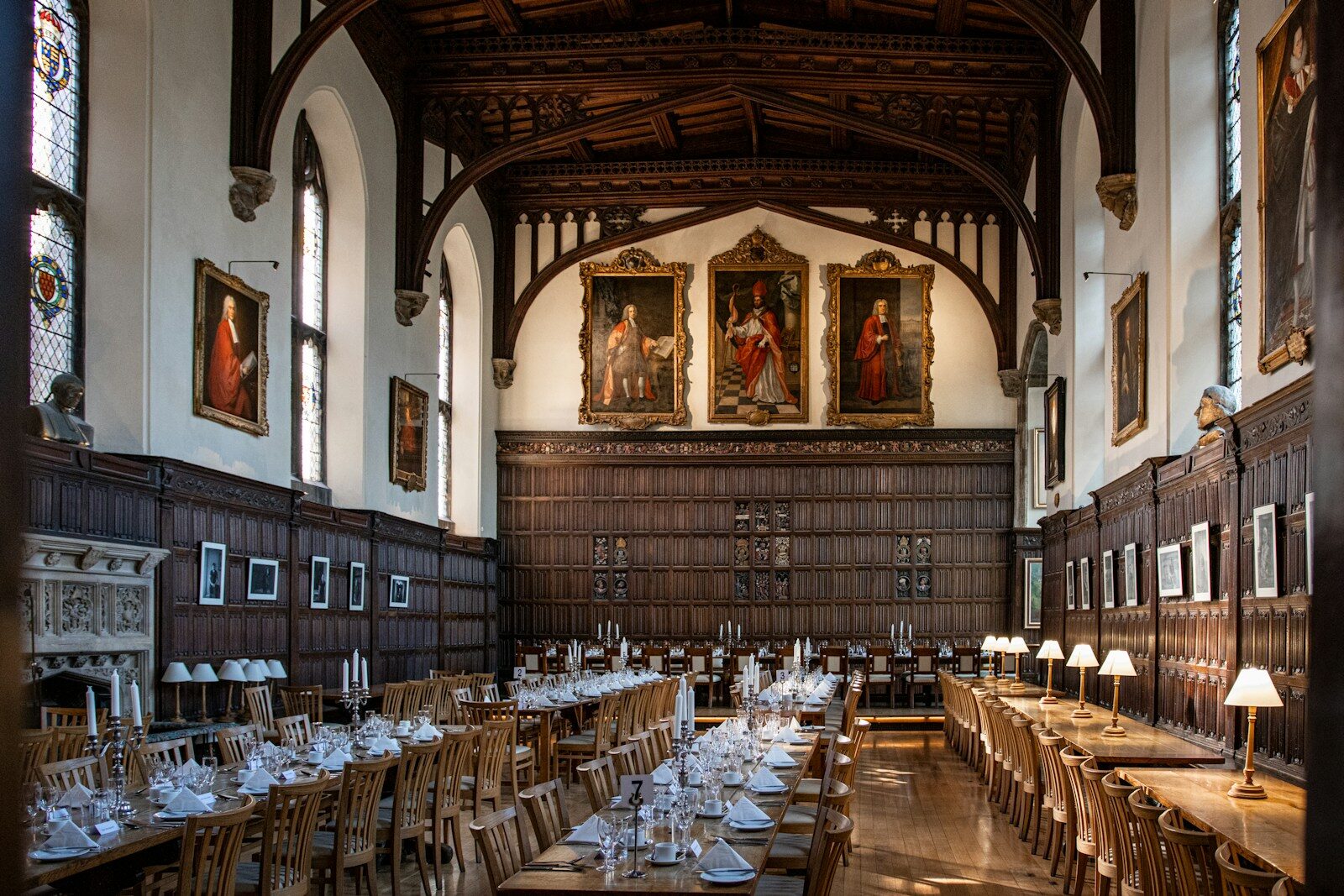
The Woman in the Dining Hall
Scarlet sweater. Glasses smeared to fog.
That frowning squint. Her table companion
can’t summon his own name. The awkward
grasping, the patient expectation until politeness
feels like cruelty. What matters? Do I
know you, she asks as I pull up a chair. Then hides
her grin behind a bruised crepe hand. Someday.
Not yet. Whatever circumstance has brought
you both this far feels less and less like luck.
About “Fuse”
During her last years, as her dementia increased, my mother’s relationship to time became progressively warped—or so it seemed to me. In this poem I wanted to explore how time was registered not only by the calendar and clock, but also in the various utilitarian tasks of my mother’s life. Time can shrink to a short repeating loop, as it did at the end of her life. But to remember her from my childhood, I imagined the impress of time, its weight both upon and within her.
Author Bio

Ron Mohring is the author of, most recently, Relative Hearts (Lily Poetry Review) and The Boy Who Reads in the Trees (The Word Works). He lives with his husband and two cats in Cincinnati, where he runs Seven Kitchens Press with unflagging enthusiasm.
Contents
Chapbook Poem: Slow Burn by Evan Wang
“The concept of personifying a slow burn deeply resonated with who I thought myself to be—a slow burn, love flickering around me.” Read the featured Chapbook Poem of the Month for April 2026, “Slow Burn” by Evan Wang, along with a few words from the poet.
Book Excerpt: She wants shimmering scales by Nicole Alston Zdeb
“The nexus of the erotic, the social, and the body felt relevant to what I was experiencing at the end of the 20th Century. There are glimmers of personal lore as well…” Read the featured Excerpt Poem of the Month for April 2026, “She wants shimmering scales” from The End of Welcome by Nicole Alston Zdeb, along with a few words from the poet.
“I wanted to explore how time was registered not only by the calendar and clock, but also in the various utilitarian tasks of my mother’s life.” Read three poems by Ron Mohring, our first biweekly poet of the Spring 2026 issue, along with a few words about “Fuse.”
Three Poems by Andrew Pelham-Burn
“Children in these circumstances are deprived of love at a formative stage and learn to immediately behave like adults without the benefit of the learning path of childhood.” Read three poems by Andrew Pelham-Burn, our second biweekly poet of the Spring 2026 issue, along with a few words about “Conkers.”
A Conversation with John deSouza
“Language is a powerful tool and can do great harm both to ourselves and to those most close to us when used cruelly or selfishly.” Poet John deSouza discusses his chapbook, This Rough Magic, his creative process, and the influence of John Ashbery in this interview with editor Danielle McMahon.
Chapbook Poem: from Stray Hunter’s Bullet by Lance Le Grys
“…what interested me was the idea of a character who didn’t do what he was capable of, not because of external circumstances, but because of either a lack of will or a seemingly perverse one.” Read the featured Chapbook Poem of the Month for May 2026, from Stray Hunter’s Bullet by Lance Le Grys, along with a few words from the poet.
Book Excerpt: Love does not exist by Maria Giesbrecht
“This poem was inspired by a dream… I had this strange feeling when I woke up that it meant something more and started writing a poem to see if anything would reveal itself to me.” Read the featured Excerpt Poem of the Month for May 2026, “Love does not exist” from A Little Feral by Maria Giesbrecht, along with a few words from the poet.
“After a loss in my family, I discovered one grieves for both the living who hide their pain and for the dead who sleep in silence.” Read two poems by Patricia Wallace, our third biweekly poet of the Spring 2026 issue, along with a few words about “Fox.”
May ’26: New Staff, New Calls, New(ish) Name
Editor Aiden Hunt provides information about changes to PCR’s name, format, and staff in this editor’s note, which also contains links to our Spring calls for submissions.
“I kept thinking about how easily adults learn to stop seeing what’s right in front of them, especially when they’re somewhere between one country and another, neither arriving nor leaving.” Read four poems by Nivara Lune, our fourth biweekly poet of the Spring 2026 issue, along with a few words about “Notes Toward an Elsewhere.”
The Lines of Landscape: on The Catastrophes by Marie Scarles
“Scarles’ choice of title points away from place, and toward the book’s deeper and more powerful offering: a changed way of seeing, one of the hallmarks of any successful poetics.” Read the full chapbook review by contributing editor, D.W. Baker.
“Every time I plucked a few of the little orange sun sugars to take inside, their garden smell lingered on my fingers. It was almost enough to just sit with that scent…” Read three poems by Kait Quinn, our fifth biweekly poet of the Spring 2026 issue, along with a few words about “The Tomato.”
Chapbook Poem: Superbloom by Joyce Schmid
“That June, flowers bloomed everywhere in Northern California—as if to honor her, to celebrate her life. This poem is an attempt to accept the fact that she is really gone.” Read the featured Chapbook Poem of the Month for June 2026, from Superbloom by Joyce Schmid, along with a few words from the poet.
Book Excerpt: The Well by Robin Becker
“Allowing flickering sentiments and images to play against one another, I replicated one form of consciousness. A surprising aspect of the poem: the sudden appearance of figures of government.” Read the featured Excerpt Poem of the Month for June 2026, “The Well” from Midsummer Count by Robin Becker, along with a few words from the poet.
“Like a lot of my poems, this one reaches toward something impossibly out of grasp. But … maybe that’s the power of a poem, to momentarily touch something out of our reach.” Read three poems by Scott Weaver, our sixth and final biweekly poet of the Spring 2026 issue, along with a few words about “Annotating The Inferno.”
A Conversation with Abby Minor
“[A] long time ago I realized, and more or less accepted, that I would commune with most of my poet teachers and comrades via their work, not in person. And my work is how I talk to them.” Poet Abby Minor discusses her chapbook, Infinity Ballot, her Jewish-Appalachian heritage, and her convictions in this interview with new contributor, Julie Swarstad Johnson.