
Philly Chapbook Review is pleased to present three original poems by Scott Weaver as our sixth and final biweekly featured poet of the Spring 2026 issue.
Poems
Annotating The Inferno
Of course it’s an allegory—I never failed
to smirk at my mother underlining
50-some years ago the most obvious
sentence in the introduction. Now, midway
through my own journey, I wonder what made
my 25-year-old mind so unkind to my mother’s.
What punishment, O Great Florentine,
for this familiar callousness? I can almost see
his scythe-like grin, picking torture’s perfect form.
Mother, from my circle of middle age I know you
now as I never could, nineteen years old,
diligent at your dorm room desk, marking
each perfect word in a language invented for the damned.
Here was the student you wanted me to become.
Contrapasso, Dante’s divine punishment that turns
each sin so perfectly against its host, forcing them
to punish themselves forever. Eighteen years ago you died,
and while I snuck out to smoke in secret, the staff
took custody of your body, crossed your hands
over your chest that had only just finally risen and fallen.
Hands that washed and chopped and loved and slapped
and once, in Autumn 1969, cradled a green pen
to mark a book that’s now mine, a thing in this world
I will never not keep. I teach from that book
and I summon a better self when I’m able
to repent. Make your own hell, I tell my students,
and you will understand. Words are what remain
of you, this obviousness of your life,
marks in a book written to punish
the living and to forgive the dead.
Remedial Nature Poet
for Kevin McKelvey (1977-2025)
Nothing makes sense. Like, what even is a “thicket?”
And how did this person, born in Lebanon, Indiana, manage
to make poems out of every shrub, weed, and tree
as he made each new place of the Hoosier state his home?
There’s a class, you might say, to learn such things,
it’s called life, but I think I skipped a bunch
of prereqs. Meanwhile his lines grew ripe with latinate
names, calling white snakeroot, nodding onion
and boxelder maple to reach for the Midwest sun.
Kevin, when did you learn to distinguish one oak
from its cousin? Lord, does he live now in that knowledge
so mysterious to me? Can You help his family breathe
through these awful days? I don’t believe
and still I close my eyes as I run alongside
dark Virginia rivers, lay my aching self down
in bed and beg You, unclench the fists
in their chests, give them each a fleeting few
passing breaths of mysterious lightness.
I left Indiana years ago in search of something
but all I saw from the summit of yesterday’s hike
was everything I’m missing. God, I’m afraid
my only reference for You is mass-produced prints
and early aught screensavers and whose fault is that?
I rattle though life spewing exhausted want
instead of thanks. I call each buzzard I see a hawk.
I’m afraid once more the world is sliding
by too quickly, frictionless from my ignorance,
afraid it will dwindle to darkness without
my ever knowing the names of the trees
the sun burns through on its way to my upturned face.
Kevin, it’s all so bright. I shut my eyes against it
and still it shines through skin and blood until all that’s left
are these tiny stars, yellows and reds that map
my empty head, their names a distant tangle of sound.
Changing the Oil in My Wife’s Car
I mean, not me, obviously. I’m as useless
as a stripped screw. But when I drive her car
to the dealership, digital records and front-desk
assumption transform me into Mr. Ford.
In this overhead-fluorescent showroom I am
born anew. Who is this Mr. Ford? Patient, kind
with hands to fit power tools.
Slower to anger. Better taste in music
but large enough of heart not to roll my eyes
at the toothless minivan rock worn smooth
by decades of showroom use limping from these speakers.
How I love to peacock my new patience
surrounded by fuel-efficient cars parked indoors, a museum
of machines promising renewal, forgiveness.
Is this factory-fresh self what the Baptists are chasing
in their rivers? I too want to fight a soul-rattling breath
back from death. I want this gasp of something new.
I want to become a man who knows how to change
a cabin filter, when to rotate his tires. O Lord, make me
clean as a crisp new four square slid across
the assistant manager’s desk, scrubbed of sin.
In this well-lit room I swell with love for each
factory-trained technician, for Teresa who runs my card
and doesn’t mention its mismatched name. For Kenny Loggins
and his catalogue of undead songs, for home.
For her and this palimpsest life given to me
by a name I did nothing to earn, the one
the world, so full of grace, greets me with today.
About “Annotating The Inferno“
I first read The Inferno in high school. It was my mother’s college copy—the paperback Ciardi translation, her maiden name inked on the inside cover. I was fascinated with Dante’s hell, but I’m sure I didn’t get much from that first read. I did notice, though, my mother’s annotations, the path of her thoughts into that dark wood.
I spent my teens and 20’s hiding behind a smirk. The only way I could confront something so intimate as my mother’s inner life marked inside that book was to judge her younger self from afar. God, how ashamed I am of that.
Ishmael Reed said, ’I read Dante and realized how much power a writer could have. A writer could put people in hell who weren’t even dead yet.’ I’m nearly as old as my mother when she died. By asking for forgiveness with this poem, am I also asking for punishment? Like a lot of my poems, this one reaches toward something impossibly out of grasp. But as Reed suggests, maybe that’s the power of a poem, to momentarily touch something out of our reach. I think that was my hope in writing this poem.
Author Bio
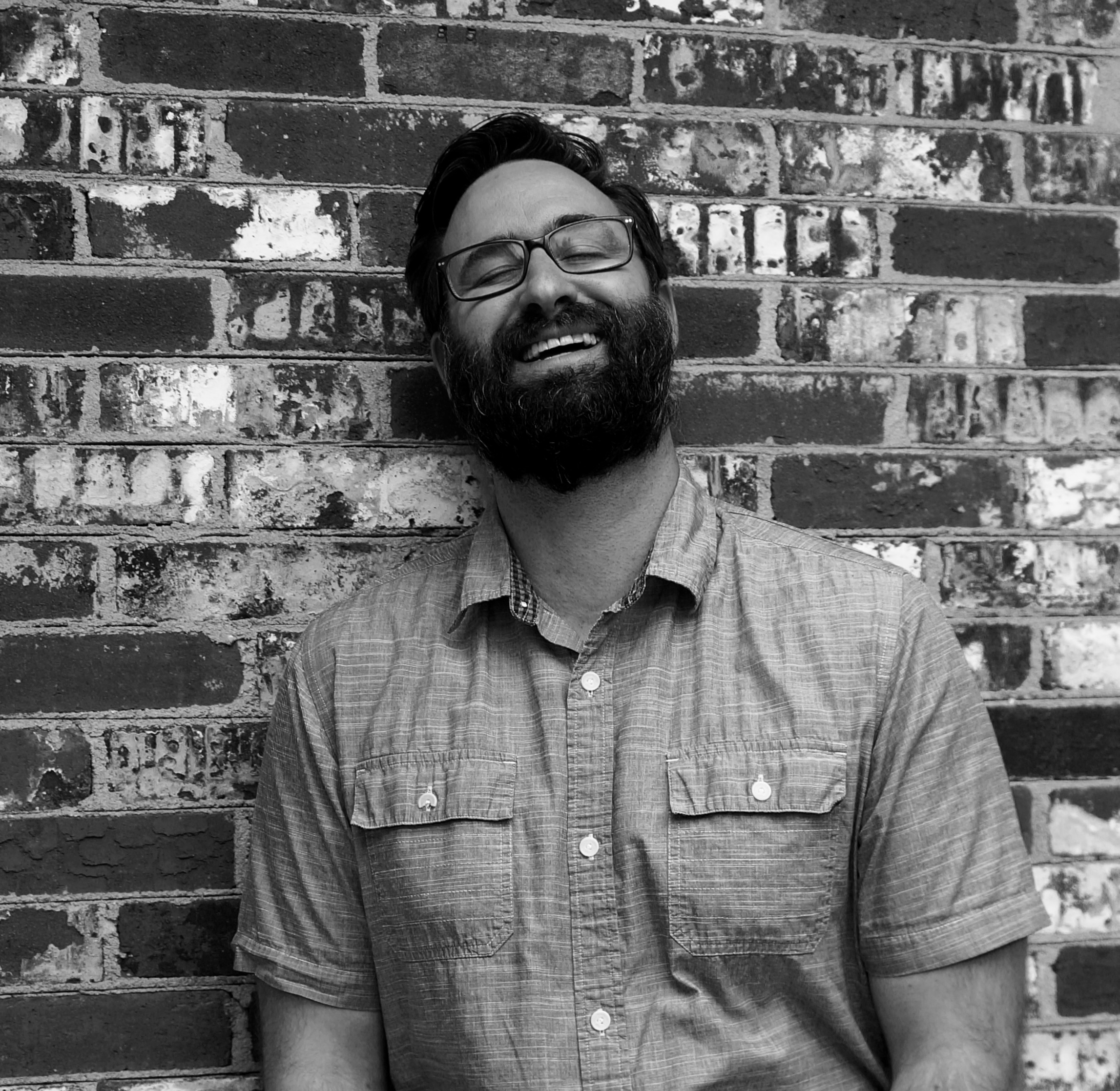
Scott Weaver is a writer and professor at Virginia Piedmont Community College. His poems have appeared in SWING, THRUSH, Rattle, The New York Quarterly, DIAGRAM, UCity Review, and other journals. He’s published creative nonfiction in Catapult, Slate, Streetlight Magazine, and alt weeklies. Scott’s first poetry collection, Home & Ghost, is available from Urban Farmhouse press. His poetry has been nominated for Pushcart Awards and was recently recognized with an Open Doors Poetry Fellowship. You can read more of his work at scott-weaver.com.
Contents
Chapbook Poem: Slow Burn by Evan Wang
“The concept of personifying a slow burn deeply resonated with who I thought myself to be—a slow burn, love flickering around me.” Read the featured Chapbook Poem of the Month for April 2026, “Slow Burn” by Evan Wang, along with a few words from the poet.
Book Excerpt: She wants shimmering scales by Nicole Alston Zdeb
“The nexus of the erotic, the social, and the body felt relevant to what I was experiencing at the end of the 20th Century. There are glimmers of personal lore as well…” Read the featured Excerpt Poem of the Month for April 2026, “She wants shimmering scales” from The End of Welcome by Nicole Alston Zdeb, along with a few words from the poet.
“I wanted to explore how time was registered not only by the calendar and clock, but also in the various utilitarian tasks of my mother’s life.” Read three poems by Ron Mohring, our first biweekly poet of the Spring 2026 issue, along with a few words about “Fuse.”
Three Poems by Andrew Pelham-Burn
“Children in these circumstances are deprived of love at a formative stage and learn to immediately behave like adults without the benefit of the learning path of childhood.” Read three poems by Andrew Pelham-Burn, our second biweekly poet of the Spring 2026 issue, along with a few words about “Conkers.”
A Conversation with John deSouza
“Language is a powerful tool and can do great harm both to ourselves and to those most close to us when used cruelly or selfishly.” Poet John deSouza discusses his chapbook, This Rough Magic, his creative process, and the influence of John Ashbery in this interview with editor Danielle McMahon.
Chapbook Poem: from Stray Hunter’s Bullet by Lance Le Grys
“…what interested me was the idea of a character who didn’t do what he was capable of, not because of external circumstances, but because of either a lack of will or a seemingly perverse one.” Read the featured Chapbook Poem of the Month for May 2026, from Stray Hunter’s Bullet by Lance Le Grys, along with a few words from the poet.
Book Excerpt: Love does not exist by Maria Giesbrecht
“This poem was inspired by a dream… I had this strange feeling when I woke up that it meant something more and started writing a poem to see if anything would reveal itself to me.” Read the featured Excerpt Poem of the Month for May 2026, “Love does not exist” from A Little Feral by Maria Giesbrecht, along with a few words from the poet.
“After a loss in my family, I discovered one grieves for both the living who hide their pain and for the dead who sleep in silence.” Read two poems by Patricia Wallace, our third biweekly poet of the Spring 2026 issue, along with a few words about “Fox.”
May ’26: New Staff, New Calls, New(ish) Name
Editor Aiden Hunt provides information about changes to PCR’s name, format, and staff in this editor’s note, which also contains links to our Spring calls for submissions.
“I kept thinking about how easily adults learn to stop seeing what’s right in front of them, especially when they’re somewhere between one country and another, neither arriving nor leaving.” Read four poems by Nivara Lune, our fourth biweekly poet of the Spring 2026 issue, along with a few words about “Notes Toward an Elsewhere.”
The Lines of Landscape: on The Catastrophes by Marie Scarles
“Scarles’ choice of title points away from place, and toward the book’s deeper and more powerful offering: a changed way of seeing, one of the hallmarks of any successful poetics.” Read the full chapbook review by contributing editor, D.W. Baker.
“Every time I plucked a few of the little orange sun sugars to take inside, their garden smell lingered on my fingers. It was almost enough to just sit with that scent…” Read three poems by Kait Quinn, our fifth biweekly poet of the Spring 2026 issue, along with a few words about “The Tomato.”
Chapbook Poem: Superbloom by Joyce Schmid
“That June, flowers bloomed everywhere in Northern California—as if to honor her, to celebrate her life. This poem is an attempt to accept the fact that she is really gone.” Read the featured Chapbook Poem of the Month for June 2026, from Superbloom by Joyce Schmid, along with a few words from the poet.
Book Excerpt: The Well by Robin Becker
“Allowing flickering sentiments and images to play against one another, I replicated one form of consciousness. A surprising aspect of the poem: the sudden appearance of figures of government.” Read the featured Excerpt Poem of the Month for June 2026, “The Well” from Midsummer Count by Robin Becker, along with a few words from the poet.
“Like a lot of my poems, this one reaches toward something impossibly out of grasp. But … maybe that’s the power of a poem, to momentarily touch something out of our reach.” Read three poems by Scott Weaver, our sixth and final biweekly poet of the Spring 2026 issue, along with a few words about “Annotating The Inferno.”
A Conversation with Abby Minor
“[A] long time ago I realized, and more or less accepted, that I would commune with most of my poet teachers and comrades via their work, not in person. And my work is how I talk to them.” Poet Abby Minor discusses her chapbook, Infinity Ballot, her Jewish-Appalachian heritage, and her convictions in this interview with new contributor, Julie Swarstad Johnson.