Philly Chapbook Review is pleased to present Robin Becker’s poem “The Well” as our third monthly featured poem from a full-length book for Issue 12: Summer 2026. You can find more poetry in her book, Midsummer Count: New & Selected Poems, available from University of New Mexico Press.
The Well
This morning, in the Harrisville cemetery,
calm settles over stones and hills
where I walk in the old shade of white oaks
and sycamores with the young dog.
Beneath the peaceful surface, I sense
an undercurrent of fear—
of my government and my president,
of his State Department and his Joint Chiefs—
and beneath that, an underlying current
of sadness—for Judith and her bad diagnosis.
And beneath that sadness, the underlying
condition of gladness: as when the timid
dog finds his courage and jumps into Harrisville
Pond to retrieve a stick. And beneath that,
fury at the hatefulness aimed at protesters,
and fury at those who call the truth fake news.
Beneath the rage, an underlying
pleasure in the scent
of roasting fennel and tomatoes
simmering in the oven and pleasure
in cooking for my best friend and her son
and his new wife who will take pleasure
in walking uphill to my place for dinner.
Beneath these pleasures, the underlying
condition of loneliness shows up,
old colleague whose company I never
enjoyed but, with whom, nevertheless,
I shared an office. And beneath loneliness
the terror of uncertainty—
the not-knowing-what-will-come terror
that abides at the bottom of the well,
sloshing around when we drop the bucket
to pull up an underlying
gratitude for fresh, cold water.
About the Poem
My lyric poems frequently focus on a single feeling, using images to expand the ‘reach’ of that feeling, connecting disparate objects or features. Working on ‘The Well,’ I noticed a restlessness, as if the poem itself wanted to jump from one observation to another. I decided to ‘follow’ the emotions. Allowing flickering sentiments and images to play against one another, I replicated one form of consciousness. A surprising aspect of the poem: the sudden appearance of figures of government. In the past, I’ve struggled to bring meaningful political material into my poems; in ‘The Well,’ my fear of the Trump administration rose organically as one undercurrent in the narrator’s shifting emotional landscape.
Author Bio
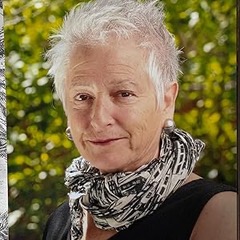
Robin Becker is the author of eight previous books of poetry, including The Black Bear Inside Me and the Lambda Award winner All-American Girl, both published in the Pitt Poetry Series. A liberal arts research professor emerita in English and women’s studies at the Pennsylvania State University, she lives in central Pennsylvania and southwestern New Hampshire.
From Midsummer Count
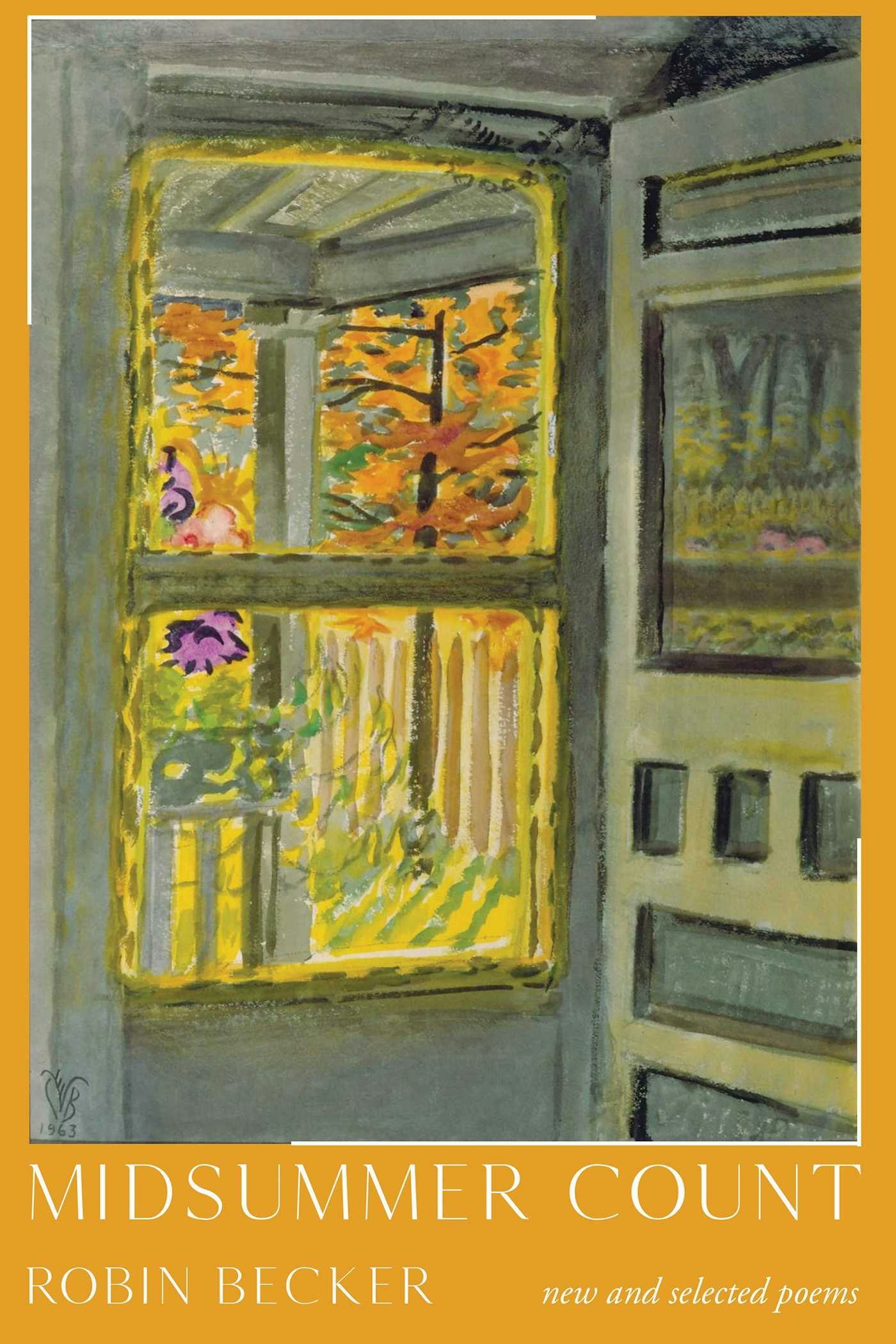
Midsummer Count collects the best work of Robin Becker, considered by many to be the foremost feminist poet of her generation. With selections from each of her previously published books and nearly thirty new poems, readers enter Becker’s lifelong exploration of childhood, animals, cherished places, complex friendships, and romantic intimacy. A life-affirming current yokes these narratives across time, even as a sister’s early suicide haunts the decades. In blank and free verse, in couplets, quatrains, and sonnets, the poet wrestles formal tensions, creating a present-day idiom for beauty, grief, and compassion. Lovers of Becker’s work and those new to it will find in Midsummer Count a master class by one of today’s most dynamic poets.
Available from: University of New Mexico Press
Contents
Chapbook Poem: Slow Burn by Evan Wang
“The concept of personifying a slow burn deeply resonated with who I thought myself to be—a slow burn, love flickering around me.” Read the featured Chapbook Poem of the Month for April 2026, “Slow Burn” by Evan Wang, along with a few words from the poet.
Book Excerpt: She wants shimmering scales by Nicole Alston Zdeb
“The nexus of the erotic, the social, and the body felt relevant to what I was experiencing at the end of the 20th Century. There are glimmers of personal lore as well…” Read the featured Excerpt Poem of the Month for April 2026, “She wants shimmering scales” from The End of Welcome by Nicole Alston Zdeb, along with a few words from the poet.
“I wanted to explore how time was registered not only by the calendar and clock, but also in the various utilitarian tasks of my mother’s life.” Read three poems by Ron Mohring, our first biweekly poet of the Spring 2026 issue, along with a few words about “Fuse.”
Three Poems by Andrew Pelham-Burn
“Children in these circumstances are deprived of love at a formative stage and learn to immediately behave like adults without the benefit of the learning path of childhood.” Read three poems by Andrew Pelham-Burn, our second biweekly poet of the Spring 2026 issue, along with a few words about “Conkers.”
A Conversation with John deSouza
“Language is a powerful tool and can do great harm both to ourselves and to those most close to us when used cruelly or selfishly.” Poet John deSouza discusses his chapbook, This Rough Magic, his creative process, and the influence of John Ashbery in this interview with editor Danielle McMahon.
Chapbook Poem: from Stray Hunter’s Bullet by Lance Le Grys
“…what interested me was the idea of a character who didn’t do what he was capable of, not because of external circumstances, but because of either a lack of will or a seemingly perverse one.” Read the featured Chapbook Poem of the Month for May 2026, from Stray Hunter’s Bullet by Lance Le Grys, along with a few words from the poet.
Book Excerpt: Love does not exist by Maria Giesbrecht
“This poem was inspired by a dream… I had this strange feeling when I woke up that it meant something more and started writing a poem to see if anything would reveal itself to me.” Read the featured Excerpt Poem of the Month for May 2026, “Love does not exist” from A Little Feral by Maria Giesbrecht, along with a few words from the poet.
“After a loss in my family, I discovered one grieves for both the living who hide their pain and for the dead who sleep in silence.” Read two poems by Patricia Wallace, our third biweekly poet of the Spring 2026 issue, along with a few words about “Fox.”
May ’26: New Staff, New Calls, New(ish) Name
Editor Aiden Hunt provides information about changes to PCR’s name, format, and staff in this editor’s note, which also contains links to our Spring calls for submissions.
“I kept thinking about how easily adults learn to stop seeing what’s right in front of them, especially when they’re somewhere between one country and another, neither arriving nor leaving.” Read four poems by Nivara Lune, our fourth biweekly poet of the Spring 2026 issue, along with a few words about “Notes Toward an Elsewhere.”
The Lines of Landscape: on The Catastrophes by Marie Scarles
“Scarles’ choice of title points away from place, and toward the book’s deeper and more powerful offering: a changed way of seeing, one of the hallmarks of any successful poetics.” Read the full chapbook review by contributing editor, D.W. Baker.
“Every time I plucked a few of the little orange sun sugars to take inside, their garden smell lingered on my fingers. It was almost enough to just sit with that scent…” Read three poems by Kait Quinn, our fifth biweekly poet of the Spring 2026 issue, along with a few words about “The Tomato.”
Chapbook Poem: Superbloom by Joyce Schmid
“That June, flowers bloomed everywhere in Northern California—as if to honor her, to celebrate her life. This poem is an attempt to accept the fact that she is really gone.” Read the featured Chapbook Poem of the Month for June 2026, from Superbloom by Joyce Schmid, along with a few words from the poet.
Book Excerpt: The Well by Robin Becker
“Allowing flickering sentiments and images to play against one another, I replicated one form of consciousness. A surprising aspect of the poem: the sudden appearance of figures of government.” Read the featured Excerpt Poem of the Month for June 2026, “The Well” from Midsummer Count by Robin Becker, along with a few words from the poet.
“Like a lot of my poems, this one reaches toward something impossibly out of grasp. But … maybe that’s the power of a poem, to momentarily touch something out of our reach.” Read three poems by Scott Weaver, our sixth and final biweekly poet of the Spring 2026 issue, along with a few words about “Annotating The Inferno.”
A Conversation with Abby Minor
“[A] long time ago I realized, and more or less accepted, that I would commune with most of my poet teachers and comrades via their work, not in person. And my work is how I talk to them.” Poet Abby Minor discusses her chapbook, Infinity Ballot, her Jewish-Appalachian heritage, and her convictions in this interview with new contributor, Julie Swarstad Johnson.