We here at Philly Poetry Chapbook Review love poetry, whether it’s in chapbooks or full-length collections. We have a hunch that our readers do, too. Every Tuesday, we publish an update about what full-length poetry titles we know are releasing in the following week.
Information, including product descriptions, is provided by the publisher and not a critical judgment. If we cover the book on this site, links will be included.
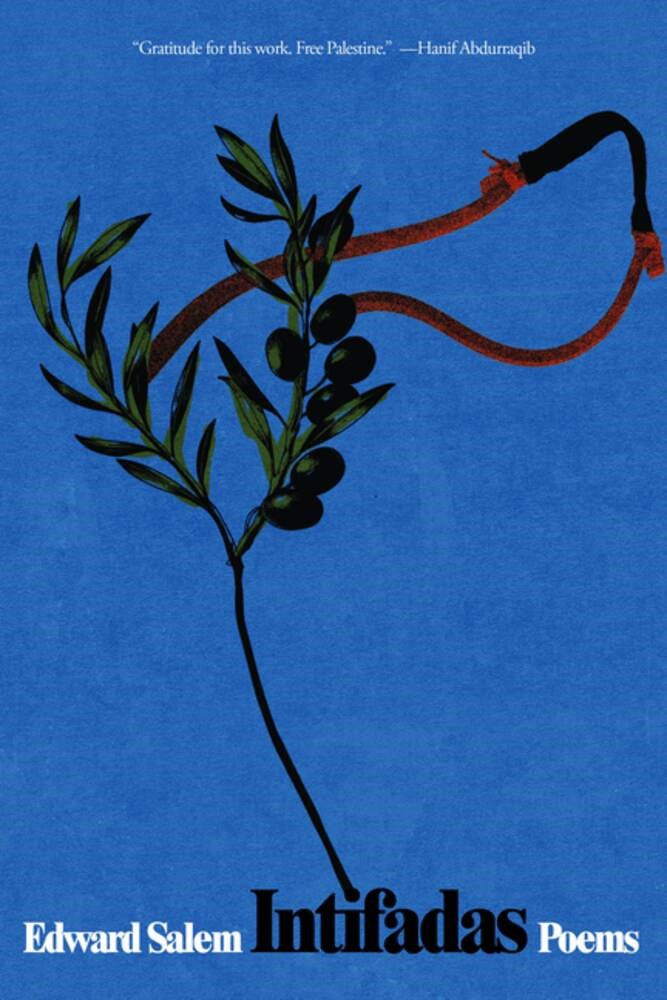
Intifadas, Edward Salem
Publisher: Sarabande Books
Publication Date: April 21, 2026
Format: Paperback
Written across Palestine and its diaspora—from Gaza and the West Bank to the United States—Intifadas is a subtly transgressive poetry collection about uprising in its many forms—in art, politics, and in our most personal relationships. Whether by dumping black paint on a park where a tank and fighter jet commemorate a war, or by trying to rescue a moth trapped in a garage, the defiant and resilient voices in this collection subvert traditional narratives of loss. Furious, tender, and darkly funny, Intifadas asks what art can do in the face of catastrophe, and answers with poems that refuse easy consolations.
Edward Salem is the author of Monk Fruit (Nightboat, 2025) and Intifadas (Sarabande, 2026), which was the winner of the Kathryn A. Morton Prize, selected by Hanif Abdurraqib, and a finalist for the National Poetry Series. His poems have appeared in The Paris Review, The New York Review of Books, Poetry, The Kenyon Review, and elsewhere. His fiction can be found in Granta and BOMB. Born in Detroit to Palestinian parents, he was an artist throughout his thirties, working in performance, street interventions, and experimental film. His work has been exhibited at the Museo Nacional Centro de Arte Reina Sofía in Madrid, the Khalil Sakakini Cultural Center in Ramallah, The Hangar in Beirut, and many other venues. He currently resides in Detroit and is the founding co-director of City of Asylum/Detroit.
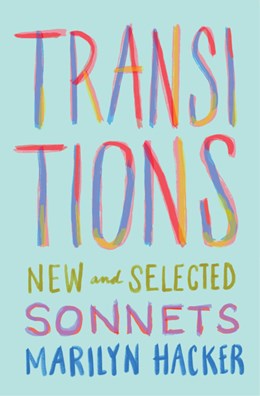
Transitions: New and Selected Sonnets, Marilyn Hacker
Publisher: Milkweed Editions
Publication Date: April 21, 2026
Format: Paperback
Over the course of her celebrated fifty-year career, Marilyn Hacker has continuously proven to be a timely, fearless, and lauded poet highly skilled in a wide variety of forms—most famously, the sonnet. Transitions is her first volume consisting entirely of the beloved form.
Hacker is a poet of quiet mastery. In her hands, the sonnet, despite the stricture of meter and rhyme, blooms into a living, breathing thing, one that’s contemporary, confessional, and subversive. Sentences effortlessly fall into formal constraint, and words that evoke the pleasure of everyday language become Petrarchan rhymes. As Jan Heller Levi wrote, “No one writes about lust and lunch like Marilyn Hacker. And certainly no one has done more to demonstrate that form has nothing to do with formula.”
From her early sonnets to those written decades later, this book offers a portrait of the seasons of an extraordinary life, a life lived between New York, Paris, and Beirut as an activist, a polyglot, and a queer woman. We see Hacker’s speaker grappling with young motherhood, the dissolution of her heterosexual marriage, middle age, relationships with women, chronic illness, care received from her adult child, and her twilight years, all while confronting geopolitical tension and global tragedies, from the AIDS epidemic to the war in Gaza.
Transitions is a remarkable celebration of a life lived in verse. Intelligent, contemplative, and justice-driven, this profound collection cements Marilyn Hacker’s reputation of one of the indispensable poets of our time.
Marilyn Hacker is the author of twenty-one books of poems and twenty-two collections of poetry in translation from the French. Over the course of her fifty-year career, she has received numerous honors, including the National Book Award, the PEN Award for Poetry in Translation, the PEN/Voelcker Award, the Argana International Poetry Prize, and fellowships from the Guggenheim Foundation, the Ingram Merrill Foundation, and the National Endowment for the Arts. She has served as a Chancellor of the Academy of American Poets, editor of The Kenyon Review, and editor of the French literary journal Siècle 21. She lives between Paris and New York.
Squirming, Monika Ostrowska
Publisher: Coffee House Press
Publication Date: April 21, 2026
Format: Paperback
Monika Ostrowska’s provocative, plainspoken debut tracks its speaker’s intensifying sexual fantasies as they become at once more intellectualized and embodied, tracing a desperate need for enlightenment. Squirming is a primal meditation on embracing the erotic, challenging the complexities of womanhood, and bridging the chasm between self-awareness and external perception.
Monika Ostrowska is a writer and founder of Triangle House whose work has appeared in Joyland, New York Times Magazine, Guernica, Peach Mag, Newest York, and other publications. Born in Poland, she now lives in Greenpoint, NY with her son. Squirming is her first book.
Breathe, Bob Hicok
Publisher: Copper Canyon Press
Publication Date: April 21, 2026
Format: Paperback
Hicok’s poetry has long been distinctive for its compassionate breadth of feeling, curiosity, and play. In Breathe, he meets the social and cultural moment, soothing distress with tenderness while meditating on the persistence of love. Hicok writes with candid intimacy and affection to his wife, to his cat, to his dying father, and always to the extraordinary within the quotidian. Playful and absurdist, these poems yet reveal an undeniable longing “to believe in something.” Honest in his witness of death and violence, Hicok celebrates the potential for change within each of us. Breathe is a call for stillness—a call “to understand what leaves / are saying to the wind. To be deserving / of the giddyup of your breath.”
Bob Hicok was born in Grand Ledge, Michigan, in 1960. For more than twenty years, he owned an automotive die designing company and also worked as a computer systems analyst. Hicok, a recipient of two fellowships from the National Endowment for the Arts as well as a Guggenheim, began writing poems when he was 20. In 2004, following the publication of his first four books, he received an MFA from the Vermont College of Fine Arts. Along with Breathe, Hicok is the author of twelve previous collections, including Animal Soul, This Clumsy Living, Elegy Owed, shortlisted for the 2013 National Book Critics Circle Award, and, most recently, Water Look Away. In 2013, This Clumsy Living was translated into German by Judith Zander and released by Luxbooks. His writing has appeared in journals and magazines including The New Yorker, Poetry Magazine, and The American Poetry Review, and has been anthologized in nine volumes of The Best American Poetry. Currently, Hicok teaches in the MFA program at Virginia Tech University.
August, September, October, Craig Morgan Teicher
Publisher: BOA Editions
Publication Date: April 21, 2026
Format: Hardcover / Paperback
In two long, diaristic poems and a constellation of lyrical reflections that accrue into a day book of sorts, this collection traces the daily experiences of a poet—someone very much, though not exactly, like Craig Morgan Teicher—through the emotional and existential terrain of caregiving during the COVID-19 lockdown.
In the title poem, “August September October,” the speaker tends to his medically fragile son during a harrowing stretch of illness and hospitalization while pondering the deathbed book of Irish poet Ciaran Carson. The second extended poem, “Midsummer Days,” takes off from Bernadette Mayer’s classic Midwinter Day, following the speaker as he fails to write a memoir and climbs his way back to poetry and toward faith in a world overwhelmed by upheaval. Surrounding these central poems are shorter poems that meditate on grim games, the music of Sonny Rollins, memories of being a young writer, the tyranny of TV screens, and the insane politics of our time.
August, September, October offers a profoundly human snapshot of a family navigating disability, grief, and fleeting hope, all while trying to keep the imagination alive in an age of catastrophe.
Craig Morgan Teicher is the author of five books of poems: August, September, October (BOA, 2026); Welcome to Sonnetville, New Jersey (BOA, 2021), winner of the Paterson Poetry Prize; The Trembling Answers (BOA, 2017), winner of the 2015 Lenore Marshall Poetry Prize; To Keep Love Blurry (BOA, 2012); and Brenda Is in the Room and Other Poems, (CLP, 2007), winner of the Colorado Prize for Poetry and more. He lives in West Orange, New Jersey.
Perennial Counterpart, Yongyu Chen
Publisher: Nightboat Books
Publication Date: April 21, 2026
Format: Paperback
Written over several years of solitude, study, and transformation, the poems in Perennial Counterpart trace an evolving, self-questioning practice of thinking-in-poetry where long, reflective lines—evoking both prose and photography—brush against elliptical, fractured modes of film and literary criticism. Anchored by the author’s obsessive reading life, this is a book where lyric inquiry becomes its own form of company. Here, the poem is written to remake its writer through glittering connections to a personal lineage of thought.
Yongyu Chen lives in Cambridge, MA, and their work has appeared or is forthcoming in journals including The Paris Review, Poetry, and The White Review.
Get Funky, Get Swoll, Akhim Yuseff Cabéy
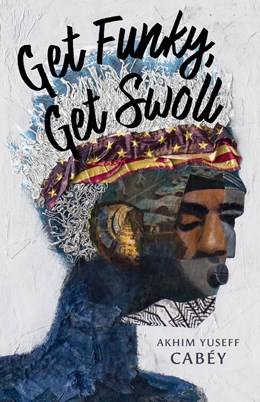
Publisher: Black Lawrence Press
Publication Date: April 21, 2026
Format: Paperback
Get Funky, Get Swoll explores, demonstrates, and indicts the multifaceted and multifarious ways white supremacy, white culture, and, in very specific instances white people, have had a profound and tragic impact on the human experience of those people known as Black.
The collection’s opening examines intimate racism—the kind that exists between friends and friend groups and lovers; the kind which does not holler or thump or come crashing into the heart but does so quietly, stealthily, inflicting grave harm. The book’s latter half comprises a series of love poems to Black people, and specifically to Black women—a Black female muse and the ethereal, transcendental, metaphysical Black Female. These poems serve as a countermeasure to the insidious impact of a society that pushes the simultaneous endeavor of self-hate while offering its own pale flesh as a refuge.
Get Funky, Get Swoll makes complex once again the so-called Black experience, which is to say, the human experience. Akhim Yuseff Cabéy’s collection functions not only as a reminder of the tragic impact of white supremacy on the hearts and minds and souls of Black people, but as a signpost: more danger is headed our way, and we must hold on to the spirit we have left.
Akhim Yuseff Cabéy was born in the Bronx and educated upstate both at Siena College and SUNY Albany. After receiving an MFA from The Ohio State University, he taught at the university level before pivoting to the non-profit sector of adult education. A Pushcart Prize-winning Black author, he is a six-time recipient of the Ohio Arts Council Individual Excellence Award and a Headlands Center for the Arts resident fellow. Winner of the 2024 Palette Poetry Rising Poet Prize, his work has appeared in Colorado Review, RHINO, Indiana Review, The Florida Review, Shenandoah, and Callaloo.
Shake Until Cloudy, Amanda Nadelberg
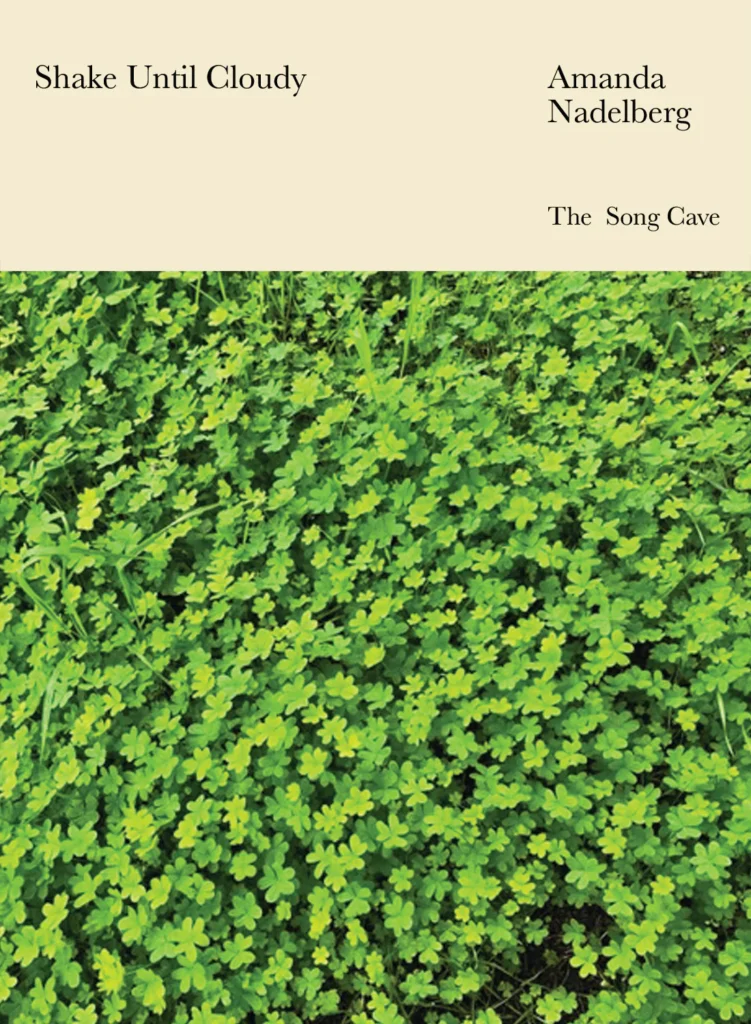
Publisher: The Song Cave
Publication Date: April 21, 2026
Format: Paperback
In her fourth collection, Shake Until Cloudy, Amanda Nadelberg (born 1982) approaches the everyday from a slant that reappraises reality and inspires wonder. The book begins with an assembly of Micropoems—conceptual miniatures with a sense of humor—which lead into lyric mediations on love, personhood and the desire to begin again. Filled with tenderness and temporality, these poems open into metaphysical questions and possibilities—“Faces appeared in fragments / I didn’t remember how to go / going through the world / being who you are.” With Shake Until Cloudy, Nadelberg shows us once more how forms can create the sway of life, rhythmic and emotional, and how our observations reveal the transformative nature of attention.
Amanda Nadelberg is the author of three previous poetry collections—Isa the Truck Named Isadore (winner of the 2005 Slope Editions Book Prize), Bright Brave Phenomena (Coffee House Press, 2012) and Songs from a Mountain (Coffee House Press, 2016)—and her work has appeared in The Nation, Harper’s, Hyperallergic and Conjunctions. A graduate of Carleton College (Northfield, MN) and the Iowa Writers’ Workshop, she was raised in Boston and lives in Oakland, CA.
Arsenic Flower, Dakota Feirer
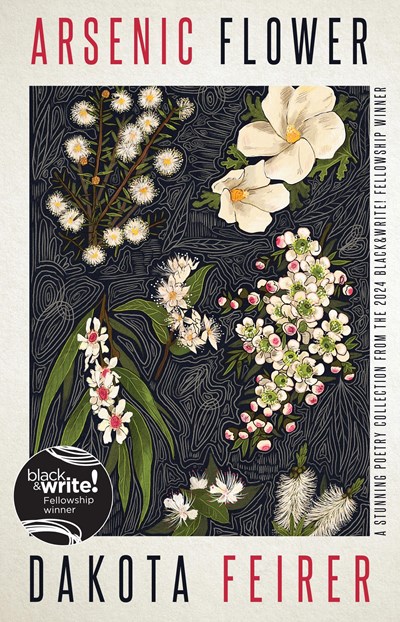
Publisher: Hachette Australia
Publication Date: April 21, 2026
Format: Paperback / eBook
In this breathtaking debut collection, Bundjalung and Gumbaynggirr man Dakota Feirer potently explores the legacy of generational trauma and the cultural wisdom of First Nations people. In a landscape of loss, his words act as both spear and shield.
With dazzling imagery and rhythms inspired by lo-fi hip-hop, these poems confront the violence of colonialism that echoes still in the complexities of blak masculinity.
Drawing on cultural memories sprung from stolen Country, bloodstained soil, broken promises and poisoned waterholes, Feirer’s words roar and whisper as he gives voice to silenced histories.
Dakota Feirer is a First Nations Australian (Bundjalung and Gumbaynggirr) storyteller with his work published in Overland literary journal, Wonderground journal, Rabbit Poetry and Australian Poetry. His work consists of poems, prose and spoken word performances that engage with Country, culture, resurgence and manhood. Dakota believes in healing Country and our communities through art and storytelling.
Don’t see a poetry title published between 4/21 and 4/27 here? Contact us to let us know!
Contents
Chapbook Poem: Slow Burn by Evan Wang
“The concept of personifying a slow burn deeply resonated with who I thought myself to be—a slow burn, love flickering around me.” Read the featured Chapbook Poem of the Month for April 2026, “Slow Burn” by Evan Wang, along with a few words from the poet.
Book Excerpt: She wants shimmering scales by Nicole Alston Zdeb
“The nexus of the erotic, the social, and the body felt relevant to what I was experiencing at the end of the 20th Century. There are glimmers of personal lore as well…” Read the featured Excerpt Poem of the Month for April 2026, “She wants shimmering scales” from The End of Welcome by Nicole Alston Zdeb, along with a few words from the poet.
“I wanted to explore how time was registered not only by the calendar and clock, but also in the various utilitarian tasks of my mother’s life.” Read three poems by Ron Mohring, our first biweekly poet of the Spring 2026 issue, along with a few words about “Fuse.”
Three Poems by Andrew Pelham-Burn
“Children in these circumstances are deprived of love at a formative stage and learn to immediately behave like adults without the benefit of the learning path of childhood.” Read three poems by Andrew Pelham-Burn, our second biweekly poet of the Spring 2026 issue, along with a few words about “Conkers.”
A Conversation with John deSouza
“Language is a powerful tool and can do great harm both to ourselves and to those most close to us when used cruelly or selfishly.” Poet John deSouza discusses his chapbook, This Rough Magic, his creative process, and the influence of John Ashbery in this interview with editor Danielle McMahon.
Chapbook Poem: from Stray Hunter’s Bullet by Lance Le Grys
“…what interested me was the idea of a character who didn’t do what he was capable of, not because of external circumstances, but because of either a lack of will or a seemingly perverse one.” Read the featured Chapbook Poem of the Month for May 2026, from Stray Hunter’s Bullet by Lance Le Grys, along with a few words from the poet.
Book Excerpt: Love does not exist by Maria Giesbrecht
“This poem was inspired by a dream… I had this strange feeling when I woke up that it meant something more and started writing a poem to see if anything would reveal itself to me.” Read the featured Excerpt Poem of the Month for May 2026, “Love does not exist” from A Little Feral by Maria Giesbrecht, along with a few words from the poet.
“After a loss in my family, I discovered one grieves for both the living who hide their pain and for the dead who sleep in silence.” Read two poems by Patricia Wallace, our third biweekly poet of the Spring 2026 issue, along with a few words about “Fox.”
May ’26: New Staff, New Calls, New(ish) Name
Editor Aiden Hunt provides information about changes to PCR’s name, format, and staff in this editor’s note, which also contains links to our Spring calls for submissions.
“I kept thinking about how easily adults learn to stop seeing what’s right in front of them, especially when they’re somewhere between one country and another, neither arriving nor leaving.” Read four poems by Nivara Lune, our fourth biweekly poet of the Spring 2026 issue, along with a few words about “Notes Toward an Elsewhere.”
The Lines of Landscape: on The Catastrophes by Marie Scarles
“Scarles’ choice of title points away from place, and toward the book’s deeper and more powerful offering: a changed way of seeing, one of the hallmarks of any successful poetics.” Read the full chapbook review by contributing editor, D.W. Baker.
“Every time I plucked a few of the little orange sun sugars to take inside, their garden smell lingered on my fingers. It was almost enough to just sit with that scent…” Read three poems by Kait Quinn, our fifth biweekly poet of the Spring 2026 issue, along with a few words about “The Tomato.”
Chapbook Poem: Superbloom by Joyce Schmid
“That June, flowers bloomed everywhere in Northern California—as if to honor her, to celebrate her life. This poem is an attempt to accept the fact that she is really gone.” Read the featured Chapbook Poem of the Month for June 2026, from Superbloom by Joyce Schmid, along with a few words from the poet.
Book Excerpt: The Well by Robin Becker
“Allowing flickering sentiments and images to play against one another, I replicated one form of consciousness. A surprising aspect of the poem: the sudden appearance of figures of government.” Read the featured Excerpt Poem of the Month for June 2026, “The Well” from Midsummer Count by Robin Becker, along with a few words from the poet.
“Like a lot of my poems, this one reaches toward something impossibly out of grasp. But … maybe that’s the power of a poem, to momentarily touch something out of our reach.” Read three poems by Scott Weaver, our sixth and final biweekly poet of the Spring 2026 issue, along with a few words about “Annotating The Inferno.”
A Conversation with Abby Minor
“[A] long time ago I realized, and more or less accepted, that I would commune with most of my poet teachers and comrades via their work, not in person. And my work is how I talk to them.” Poet Abby Minor discusses her chapbook, Infinity Ballot, her Jewish-Appalachian heritage, and her convictions in this interview with new contributor, Julie Swarstad Johnson.