
Philly Chapbook Review is pleased to present three original poems by A.R. Dugan as our fifth biweekly featured poet of the Summer 2026 issue.
Poems
Sleeptalking
You cover your face
with a blanket & scream
every word you know
How can I tell you
I feel the blackness too &
want to give it a voice
I waited two years to be named
father & it was not real
until you could say it
An identity deferred bursts &
the volume is really surprising
like learning to disappear in plain sight
The cries from your bed
feral in the night
I breathe the water of the sound &
drown too slowly to go limp
I learn the futility of drinking rage
The sound of surf on a dark shore
You speak for us all
We refuse the silence
we wish to create
Whose fault is this
The blame curls up moon
I don’t know how
Your words are few but they fill all
the rooms of this house & now
the floors bow
You say I love you daddy
I say I love you too
You say I love you too
You say it twice
That ought to be enough
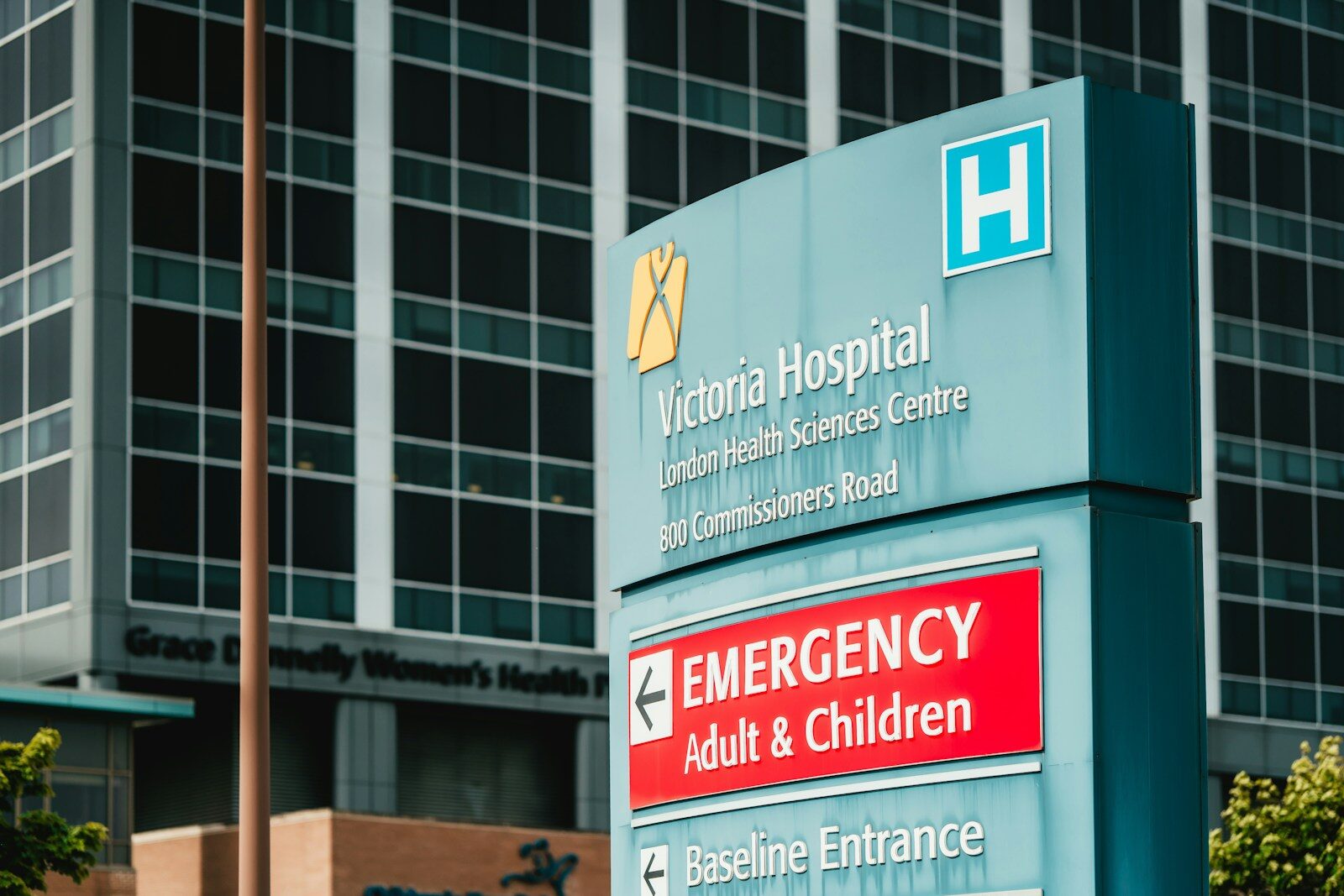
When your wife tells the lady at the ER check-in that she might hurt herself,
you get to pick a seat in the waiting room while they photocopy your insurance card
When you’re here. When you’ve come. / When you’ve said the story once, you can do it again and again. / When you thought the most complete act of the body was birth / then it gets easier. / When it’s all downhill from here. / When your newborn is a visible god. One you can touch and hold. / When the god’s power is to show you to yourself. / When you’ve been thinking that even though you look like one, / you’re not really a parent. / When you follow the colored lines down the halls. / When you use the word need a lot. / When all the sharp instruments and cords are pad locked behind steel rollaways. / When the wall is glass. / The kind with chicken wire criss-crossed through it. / When people with badges watch from outside like an aquarium. / When mouths will repeat the same question / like reading a fish’s lips, Are you a danger. . . / When responding yes means you get to recede into this room. / When even though you think this room isn’t meant for you, this is where you belong now. / When time softens. / When the lights are always on. / When the rubberized floor tiles are brown / with little discs for traction when wet. / When you tell yourself you’re just here for your wife, your son’s mother. / When there is no sheet on the stretcher, just vinyl onyx worn greenish and edgeless. / When sitting on it would be a risk if it wasn’t implicit. / When you’re here because the newborn god has rained down plagues / and you deserve them / and you don’t want to believe in anything anymore. / When even though it looks like it, you’re not here for support. // You’re here to make sure. / Because you know you can’t do it. / You can’t worship this god alone.
Suburbia
“I used to be on my way somewhere. Now I’m simply here.”
—Nick Flynn
The body is the only compass.
Where did I used to find
the time to read the direction?
My body used to make
a sound you could feel,
like opening a carbonated can,
when I was pointing true.
Pop the tab. Point the needle.
I sip cabernet now.
It pairs nicely with whatever.
There must be an echo somewhere.
A déjà vu or an earworm.
All the houses and their streets
are different. Their sameness
accretes into everyday.
I took a photo of myself in a mirror.
When you see the image
it’s just that same mirror.
I was on my way. Everyone said so.
Pretty sure they did.
I think it happens.
Could you pass me that mirror?
The one with my reflection’s
reflection’s mirror stuck in it?
I like small, simple things now.
A spider’s web made overnight
in the morning dew.
If you pull a strand
will it shudder?
Hung with condensation
you’d notice the movement.
For sure, you’d notice.
About “Sleeptalking”
Aging and fatherhood are the two most prominent themes running through these poems. They have had a positive correlation in my experience. I’m not in the what-did-it-all-mean? phase yet, but squarely in the how-did-I-get-here? phase. These poems try to make sense of how I arrived at a life that probably seems well thought-out, but has been one reactionary choice after another. The availability in the career I had prepared for shrunk. Even if it hadn’t, it seemed the career I gave up as a high school English teacher was bound to repeat itself–not focused on the work I most wanted to be doing or helping the people I cared most about. So, I sat at reception desks at law and investment firms answering the phone. I checked tickets at a Downton Abbey exhibit (I never saw the show). I played mini golf in a department store (I don’t remember why). These were temporary jobs, until one turned into a career in technology. I tell you this so you can feel the undercurrent in these poems. All the temporary moments lean into the gratitude I find it hard to embrace. Fatherhood, being a parent, is a great gift. It’s an immense privilege. It’s also one of the hardest things I’ve done. I’ve never felt exhaustion like that, and I didn’t do any of the work to bring my son into the world. I’ve learned things about myself that I don’t like. I feel guilty bringing up my child in this place. I wish so many things for him that I can’t control. If there is a unifying structural element to these pieces, which are both formally lineated and prose poems, it is that the form tries to create order, but it breaks down. It won’t quite cohere. The rhythm for this time in my life is elusive, but the moments accrete.
Author Bio
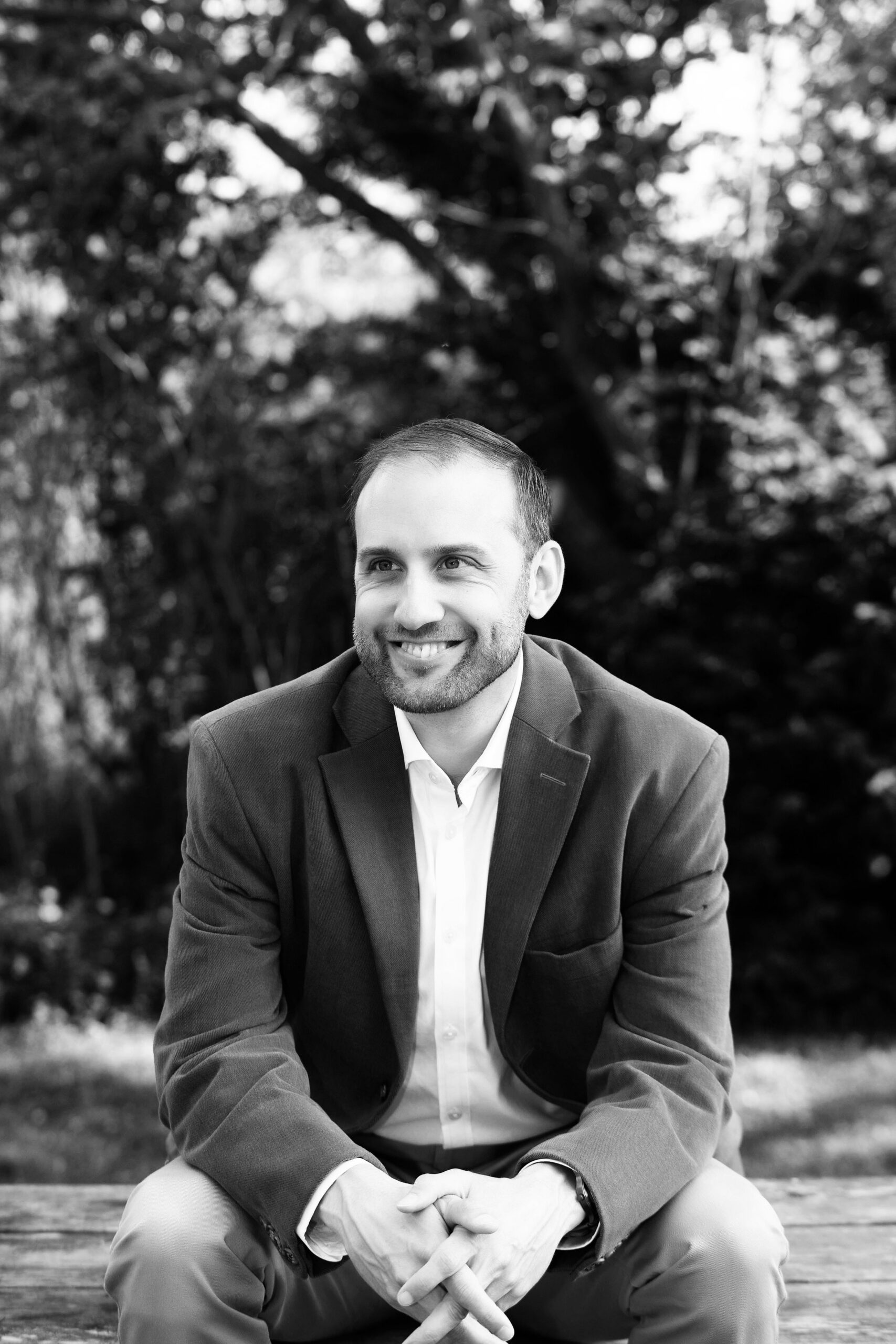
A.R. Dugan is the author of the chapbooks Call / Response (Finishing Line Press, 2019) and Wanted: Comedy, Addicts (Cathexis Northwest Press, 2021). He has an MFA in creative writing from Emerson College. His poetry can be seen in a number of literary magazines and reviews, most recently in Blood Tree Literature. He taught literature and writing in high school and higher higher education for fifteen years. He now works in the space where communication and technology intersect. He lives in greater Boston.
Contents
“This language offers one possible framing through which to appreciate the law’s capacity to hope for, request, and even command commitment to a more just future.” Read two poems by Maggie Wang, our first biweekly poet of the Summer 2026 issue, along with a few words about “Possibilities for Action.”
Chapbook Poem: I’ll Never Look This Good Again by Douglas Piccinnini
“[The poem] came out of real pressure: despair, worry, and grief I wanted to hold unflinchingly, alongside the anxiety of becoming a parent… For me the poem became a meditation on all the feeling that surfaces precisely when we’re told to feel only joy.” Read an excerpt from Douglas Piccinnini’s chapbook, House of Bad Memories, along with a few words from the poet.
“She sees herself in carbon, the element that bonds with almost anything- not because it wants to, but because it has empty spaces and things keep showing up to fill them. Notifications. Noise. Needs that never stop arriving.” Read four poems by Joely Williams, our second biweekly poet of the Summer 2026 issue, along with a few words about “Single Mother Considers the Periodic Table.”
ADHD in a Non-ADHD World: on Undersight by Alison Hurwitz
“[Hurwitz] shares moments of angst and moments of awe. More than that, there are moments of deep recognition. She sees herself in [her sons] and, in fact, receives a later-life ADHD diagnosis of her own.” Read the full chapbook review by new contributor, Nancy Murphy.
“The woman’s head & hair are lavishly dressed. I probably leapt off the logic of the hairdresser being blind and therefore had to work on the head/body/mind rather than just hair as a surface issue of presentation.” Read two poems by Irene Cunningham, our third biweekly poet of the Summer 2026 issue, along with a few words about “The Blind Hairdresser.”
Flash Fiction: Nova by Kimmy Chang
“‘Nova’ is a lyrical second-person story about the narrator’s first true encounter with death…the story presents loss not as beautiful in itself, but as the place where beauty begins.” Read the first original fiction piece of the Summer 2026 issue, “Nova” by Kimmy Chang.
“To fit the nuanced, dimensional experience of dysphoria and transition into narrative…often feels flattening, falsely assured. I wanted to look at this discomfort I felt, to see what was necessary in it.” Read three poems by Joshua Zeitler, our fourth biweekly poet of the Summer 2026 issue, along with a few words about “Cobbling.”
Excerpt: “On the puzzle still inside my head” by Truong Tran
“I am trying to excavate memories. I am trying to negotiate the difficult realities of existing as a brown man in this country and within the consciousness of white America.” Read an excerpt from Truong Tran’s forthcoming book from City Lights, How to Exi(s)t: A Poet’s Memoir.
“These poems try to make sense of how I arrived at a life that probably seems well thought-out, but has been one reactionary choice after another.” Read three poems by A.R. Dugan, our fifth biweekly poet of the Summer 2026 issue, along with a few words about “Sleeptalking.”