
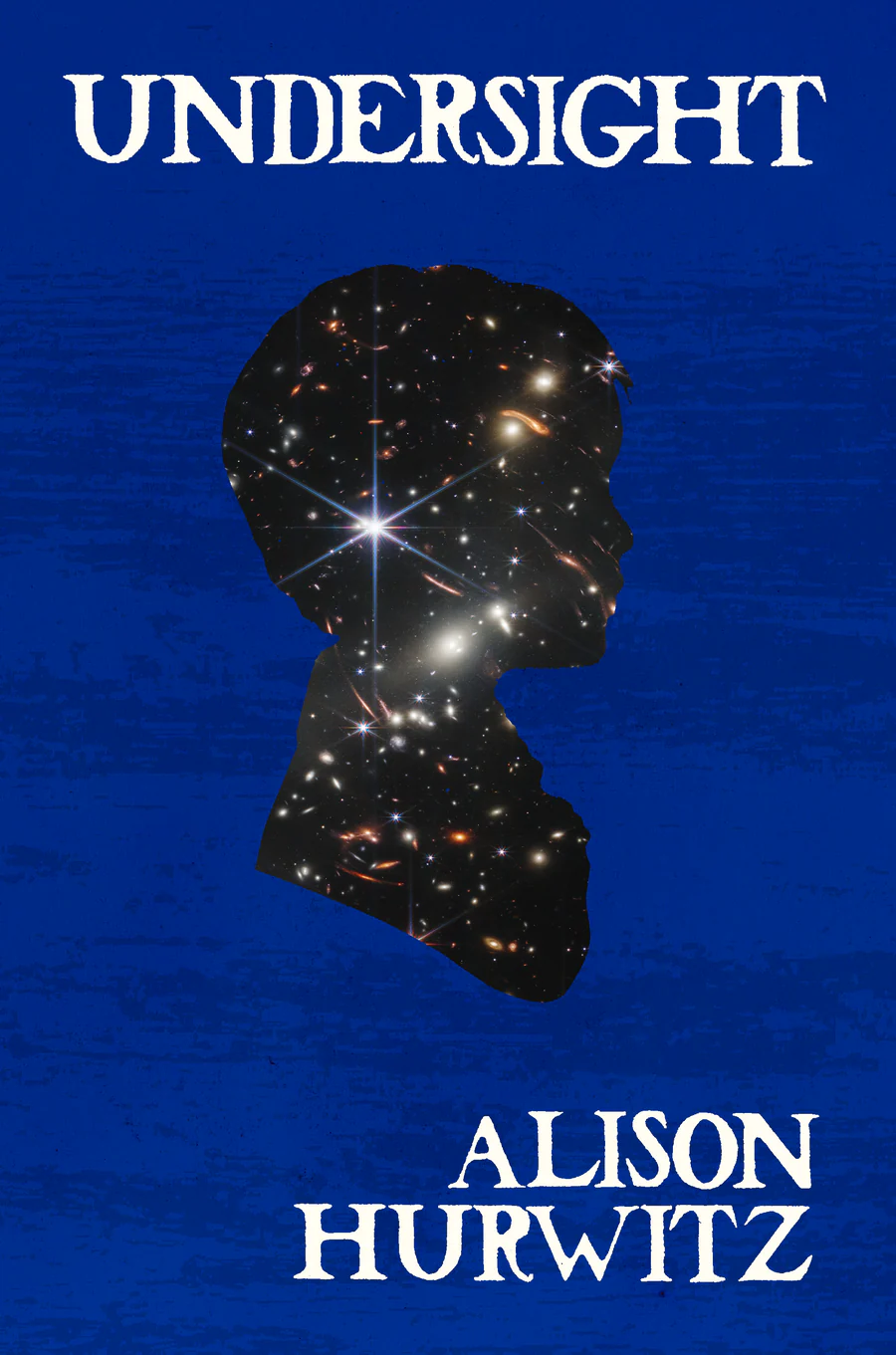
Undersight
Alison Hurwitz
Bottlecap Press, 36pp., $10.00
Undersight by Alison Hurwitz is a rich debut chapbook by an accomplished poet. The title is an unusual word, the first clue that we are entering new territory. It introduces a different way of looking and understanding. The second clue to the content ahead is in the dedication:
for my children, and all those whose brains give them
the gift of seeing the world a bit differently.
Here, Hurwitz reveals her theme of neurodivergence and the way its heightened sensitivity can be a doorway to creativity. In the twenty-one poems that follow, she is a tender observer of—and fierce advocate for—her two sons who have been diagnosed with ADHD (Attention-Deficit/Hyperactivity Disorder). She shares moments of angst and moments of awe. More than that, there are moments of deep recognition. She sees herself in them and, in fact, receives a later-life ADHD diagnosis of her own. She knows this terrain well; knowledge that brings both challenges and advantages for her.
In the first poem, “Morning Pill,” the author writes about the responsibility she feels to her sons, describing one as “an artifact I ward.” Artifact is an interesting word choice here as one of its meanings is an anomaly in science or medicine caused by an error in a measuring tool. The speaker seems to be saying she is a protector of the vulnerability that arises out of her son’s differences. She counterbalances this with a portrait of the beautiful delicacy and light of his interiority. He is described as:
a fine boned bird, a maze
to trace, a hand outlined
by its own flame.
It’s not always easy for her to observe her sons, as she writes in “He Rises Before Waking.” The day starts off peacefully: “We drive, as early light combs / tangled tips of pines, crosses / the threshold of morning.” By contrast, when they arrive at school drop-off, these lines capture the way it could feel to her son:
…Sudden pelting
chaos and middle school shoves
sound at him from every side.
The reader can feel her heartsickness as she watches him leave in the ending: “The hardest thing: / to drive away.”
This is one of the recurring struggles depicted in the collection—the ache of what she understands and feels but can’t fix. Most pointedly, the poem “My Selkie Child in Middle School,” gives us a painfully raw metaphor of her son as a mythological selkie who leaves behind one skin for another version of itself. We view her son mid-transformation, having stepped out of the “old skin” but not yet discovered,
some place of refuge or a different way to swim,
the courage to change shape, the necessary
time to grow another skin.
Instead, he is “stranded…bruised and wary.” As she looks on, the autobiographical speaker is clear that she “cannot come too close, / must not try to save him.” This sentiment is echoed by the speaker of “In the Butterfly House,” in which one of her sons wishes a butterfly would come to him, as he’s seen happen for someone else in the pavilion. He whispers inside the place, instinctively feeling its holiness. He envisions himself as a tree for long stretches of time. Yet he is disappointed when it doesn’t happen and “his face falls.” She feels the magnitude of this and it reverberates in her beyond the moment. She writes in this deep revelation,
I stay silent. If I brush the edges
of his sadness, it might steal his chance at flight. I think
of all the times I’ve tried to breathe myself to branch,
and then, “I know that ache of being close but never near enough.”
However, as we see in “504 Plan Meeting,” while the author controls her impulse to rescue her sons, that doesn’t mean she abandons them. In that poem, the speaker and her husband attempt to corral school resources to help one of their sons. The contrast between the cold administrative procedures and how the author wants to have her child truly seen is striking. Instead of completing a form asking her to “describe your child,” she yearns to show them,
the whole picture: wait long enough and look–our son
becomes a multitude of colors. Shadow and light.
A boat on summer water. A parasol.
In these words, she shows us her different way of seeing. Her son has become a poem.
“The Apple” demonstrates a warm interconnectedness between the speaker and her sons. When her “synapses deploy their fluster of shocked chemistry // at the slightest provocation,” such as the jolt of hitting a curb while driving in fog, her son hands her an apple slice from his lunch saying, “sometimes it can help to crunch on something sweet.” It is a touching interaction that doesn’t require any further words between them.
Music is a language in which the family shares a deep connection. For example, in “The Young Men’s Chorus Sings,” the speaker sees the boys with their faces “illuminated” as they stand together and “their shoulders brush. They breathe as one.” She continues, “Their music takes me to a clearing / where the curve of water holds the sky.” We see her previous worries lighten in this image of the sky being held up so easily and elegantly; hopefulness takes root.
Later, in “My Child as the Second Law of Thermodynamics,” she enters one of her son’s rooms and sees his unsettled state of mind. She offers to sing to him. These lines paint an intimate scene:
…The tightness underneath his skin begins
to slacken. Quiet notes unwind his spine as entropy unfastens him,
allows each breath to exhale ghosts of vanished stars.
There is a self-revelatory poem near the end of Undersight titled “My Children’s Doctor Asks If I Also Get Distracted.” Here, Hurwitz reflects on the ways she navigated her world since childhood as,
…my mind kept falling into
rime, furring as the clouded sky uncrowded,
soft motes sifting into snow.
By bestowing such evocative language on her past, she reframes memories of school struggles and embraces her ability to see what others did not—“a serrated leaf” with
its form rewritten, each vein wintered into intricate,
translated to another tongue
which spoke in syllables of ice.
The title poem concludes the book, by which point the meaning of undersight has become clear. As described in this poem, it is not a view of her sons from a “bird’s eye flight,” but rather a view from underneath, from within, away from bright sunlight and certainty. It is knowledge gained from listening, from dimness, from the earth, from the water. And it is never finished or complete. As she begins this poem saying, “I want to learn you,” she also ends, reaching for understanding with profound mother-love and full commitment saying, “[l]et me learn you / as a sightless fish learns water.”
The word undersight conveys the idea of seeing beyond or below the surface. On one hand, there are the challenges of ADHD in a ableist world. On the other, this is where the gifts lie: the ability to disappear into imagination, acute attunement to details, a capacity for extended focus. Hurwitz faces both unblinkingly. In these poems for her sons, and ultimately for herself too, she makes a convincing case that these rewards are real and worth celebrating.
About the Author
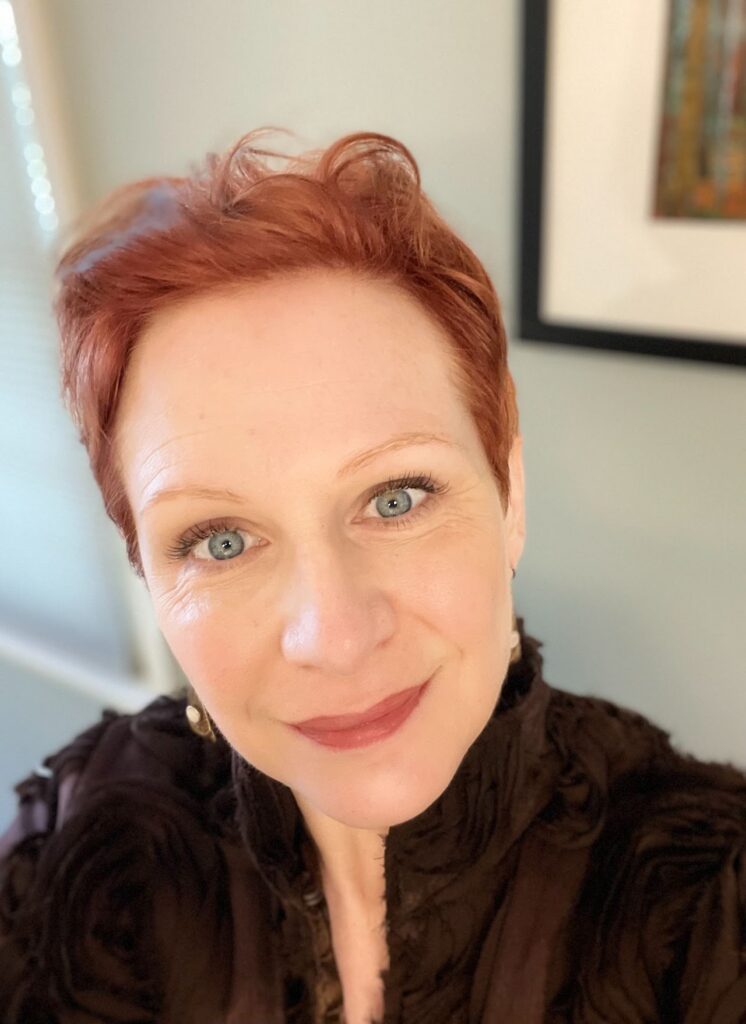
Alison Hurwitz (she/her) is a former cellist and dancer who finds music in language. Nominated multiple times for both the Pushcart Prize and Best of the Net, Alison hosts the monthly online reading, Well-Versed Words. Her work was acknowledged as a finalist for RockPaperPoem’s 2025 Poetry Award. When not writing, Alison officiates weddings and celebrations of life, takes long walks in the North Carolina woods with her husband, sons, and dog, and dances in her kitchen. Undersight (Bottlecap Press, 2026) is her first chapbook.
Contributor Bio
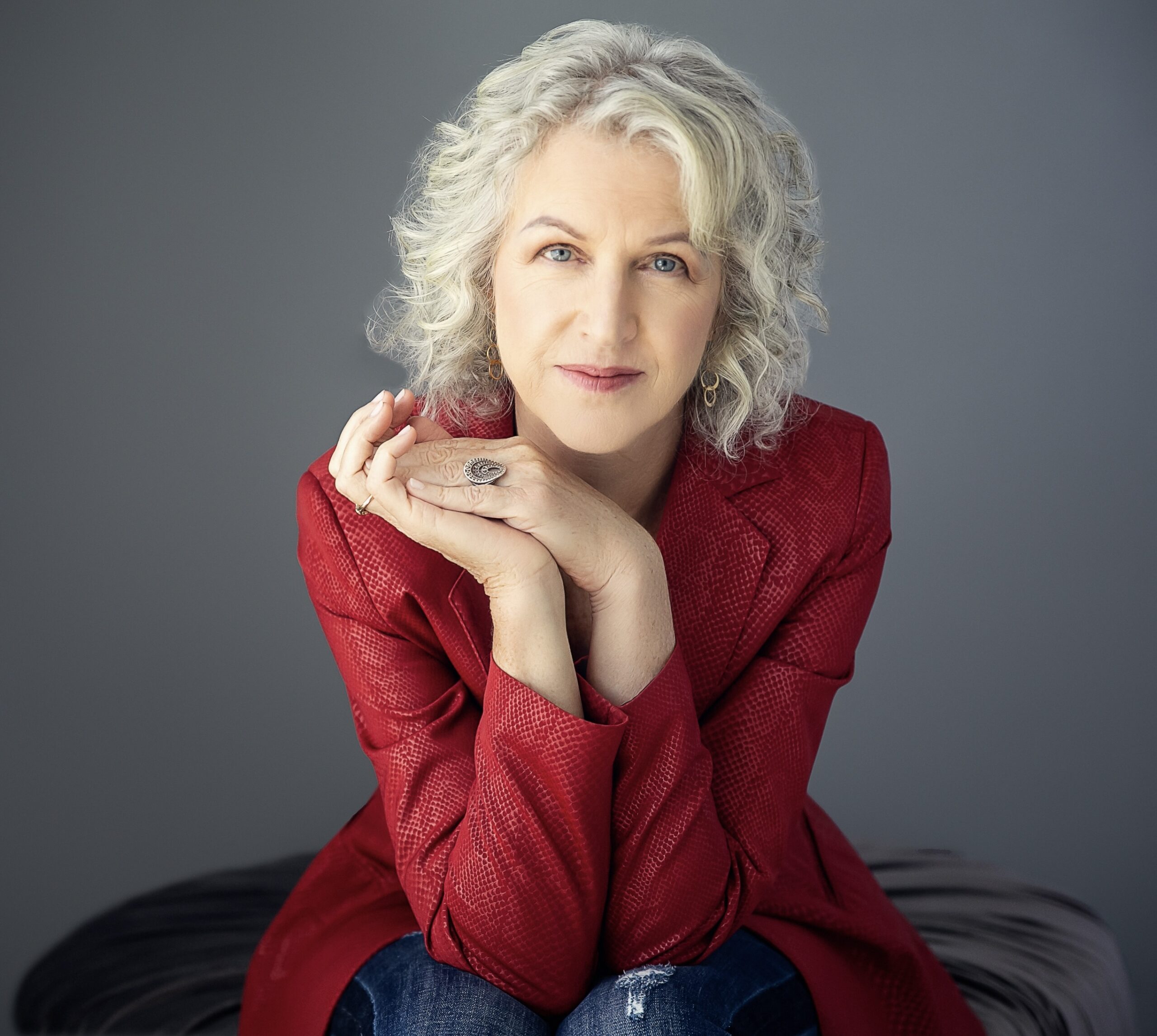
Nancy Murphy is the author of the poetry chapbook, The Space Carved by the Sharpness of Your Absence (Gyroscope Press, 2022). She was a winner in the Aurora Poetry contest in Winter, 2020. Previous poetry publications include The Baltimore Review, SWWIM, Sheila-Na-Gig, glassworks, The Ekphrastic Review, Schuylkill Valley Journal, Cultural Daily and others. A long time volunteer at WriteGirl, Nancy has mentored teens through writing workshops and in the juvenile detention system. She earned a BA from Union College in Schenectady NY.

Contents
“This language offers one possible framing through which to appreciate the law’s capacity to hope for, request, and even command commitment to a more just future.” Read two poems by Maggie Wang, our first biweekly poet of the Summer 2026 issue, along with a few words about “Possibilities for Action.”
Chapbook Poem: I’ll Never Look This Good Again by Douglas Piccinnini
“[The poem] came out of real pressure: despair, worry, and grief I wanted to hold unflinchingly, alongside the anxiety of becoming a parent… For me the poem became a meditation on all the feeling that surfaces precisely when we’re told to feel only joy.” Read an excerpt from Douglas Piccinnini’s chapbook, House of Bad Memories, along with a few words from the poet.
“She sees herself in carbon, the element that bonds with almost anything- not because it wants to, but because it has empty spaces and things keep showing up to fill them. Notifications. Noise. Needs that never stop arriving.” Read four poems by Joely Williams, our second biweekly poet of the Summer 2026 issue, along with a few words about “Single Mother Considers the Periodic Table.”
ADHD in a Non-ADHD World: on Undersight by Alison Hurwitz
“[Hurwitz] shares moments of angst and moments of awe. More than that, there are moments of deep recognition. She sees herself in [her sons] and, in fact, receives a later-life ADHD diagnosis of her own.” Read the full chapbook review by new contributor, Nancy Murphy.
“The woman’s head & hair are lavishly dressed. I probably leapt off the logic of the hairdresser being blind and therefore had to work on the head/body/mind rather than just hair as a surface issue of presentation.” Read two poems by Irene Cunningham, our third biweekly poet of the Summer 2026 issue, along with a few words about “The Blind Hairdresser.”
Flash Fiction: Nova by Kimmy Chang
“‘Nova’ is a lyrical second-person story about the narrator’s first true encounter with death…the story presents loss not as beautiful in itself, but as the place where beauty begins.” Read the first original fiction piece of the Summer 2026 issue, “Nova” by Kimmy Chang.
“To fit the nuanced, dimensional experience of dysphoria and transition into narrative…often feels flattening, falsely assured. I wanted to look at this discomfort I felt, to see what was necessary in it.” Read three poems by Joshua Zeitler, our fourth biweekly poet of the Summer 2026 issue, along with a few words about “Cobbling.”