
Philly Chapbook Review is pleased to present three original poems by Natalie Zhang in a preview of content from our Winter 2027 issue.
Poems
Sojourn Home
Once, I caught my heritage
Washed up on the delta soil, the static
Beach returning what had once been mine.
That day, behind the border, I watched the
Puget Sound retrace its steps, abandon the
Space Needle in exchange for a
Hazy sandflat. It reminded me of a story
I had heard before: the boat woven from
Brittling reeds, my parents twined together,
Learning the language of this country as
The ocean carried them to their
Destiny. Their clothes wilting into the
Heavy bay, the saltwater they brushed
Onto their sloping faces, the cod my father
Brought back to the city so I could digest
The taste of history. Back then,
He spooned the loin onto his child’s
Tongue, hoping she could remember
The texture of Chinese characters,
The lilt behind my salt-caked accent.
All I could remember then were
The rattling waves transgressing
Into remembrance. The ocean singing,
Like an eternal song I’ve heard before.
Like a memory meant to be held.
I chose to digress from
Negative space and re-learned
The sound of real connection:
An ocean, bridging back these coasts.
Today, I watch the Pacific cascade
Into imagination as my mother’s
Beloved sweater washes up on the ledge
At Pike Place. Tomorrow, I will sojourn home.
Across the Pacific, to 无锡1. Alongside Seattle,
I will remember the taste of the honey cod
My mother made when I said I wanted
More. More ocean, more family, more
Heritage. More stories to remember than
The harmony bellying the junctioned waves,
Her cerulean wool shrinking against the tide.
- 无锡 (Wúxī)– A Chinese coastal city. The poet’s mother’s hometown. ↩︎
Interlude
The first time I did it,
I was so afraid my parents
Would hear the sound.
Pointing a gun
Made of fingers and
Peeling nailpolish
into my mouth
And curling it into petals.
Stuffing roses past my lips,
Like the girls on Pinterest
Sucking a lollipop like it
It was candy and not calories.
Watching myself
Commit and I knew
I was ready for anything.
The gagging reverberating
Throughout the popcorn walls.
The drumming resonance
All there: survival,
School lunches,
Regression formulas,
Like watching a kid
Suck his orange creamsicle
dry, the wooden stick
Fraying at the ends,
The riddle on the back
Fading as his tongue
Grazes past the ink.
Flagship
Say
the fall
of all of this is
coming to a halt:
I can feel it now, Ma.
You asked me in the winter
how I could read in dialects,
remember the love you passed
on to me like mother, like daughter,
like scratchwork on eviction papers but
still choosing to stay. I wanted to tell you
I understand your hurt. I know what it’s like
to feel pressure compressing into pain, but I didn’t.
I wouldn’t. I couldn’t recognize your fingers eroding
into the glass table. I was blind to your regression, your
murmurs, your fear. Ignorance being calligraphied into hurt.
I’m writing this poem to tell you everything I never could have said.
I’m waving my white flag & everything reminds me of you.
The way the flaps sound like wet socks. The smell of reuse
like two-week-old chicken soup at room temperature.
The transcendent white glow in this absolute light.
I’m writing poetry in April & our cherry tree
is just starting to bloom & I am just trying
to understand you like a history textbook
recycled with signatures & marker stains.
Don’t you get it? Won’t you empathize
With me? Can’t you remember what
it’s like to be seventeen & confused
& criminal & conceding my
innocence to remember
remember how much
we had left & how
much we never
got to
say
About “Flagship”
There exists a generational guilt with second-generation Asian American immigrants and their parents. Drawing from a collective immigration narrative, I bear the stereotypes of weighing the immigration story with sadness, regret, and guilt that my parents have sacrificed so much for me, yet I haven’t returned the favor. So this diaspora poem emerges as a cathartic medium to exhale the words I’ve been meaning to say, but can never translate to my mother. ‘Flagship’ is a confessional poem. It is a microcosm of the Asian American experience from the perspective of a young woman, me, writing to her mother. I always feel like I have so much to say to my mother and in this poem, I selected a few memories to share. In a way, this creative choice is symbolic of waving my white flag: choosing to ignore some of the good, some of the bad. This poem is about giving up, sacrifice, and a mutual filial disconnect. It is about letting go.
Author Bio
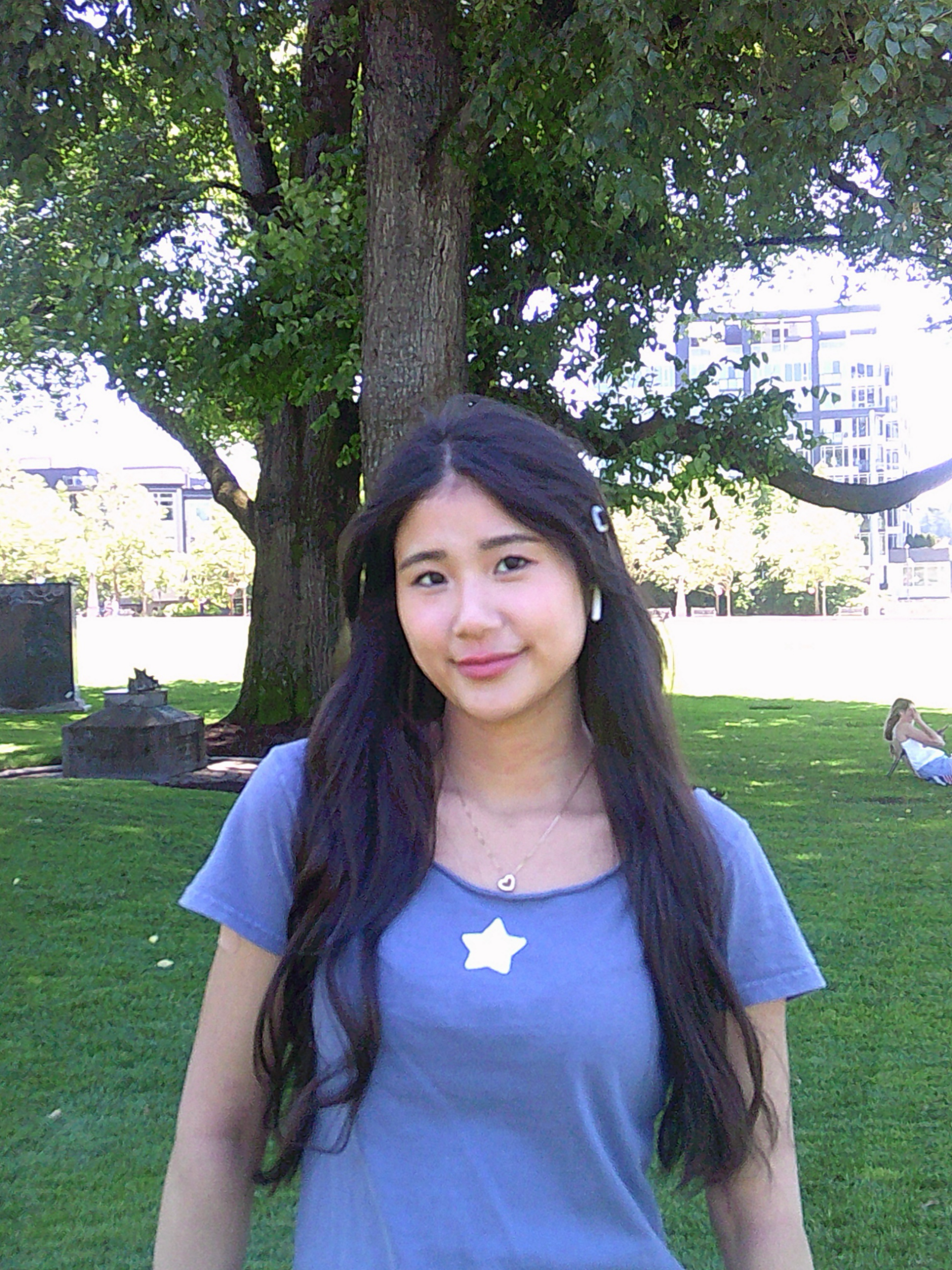
Natalie Zhang is a Chinese American poet from Seattle, Washington. She enjoys writing poetry because she believes literature can be cathartic and feminine. Her work appears or is forthcoming in the minnesota review, Up the Staircase Quarterly, Ink & Marrow, The Long River Review, and more. The best thing someone could give her is a peppermint candy.
Contents
October ’26: Best of the Net, New Staff & New Schedule
Managing Editor Aiden Hunt shares about Philly Chapbook Review’s staff changes, Best of the Net nominations, submission stats, and new publication format in this editor’s note to Issue 14.
“I always feel like I have so much to say to my mother and in this poem, I selected a few memories to share. In a way, this creative choice is symbolic of waving my white flag…” Read three poems by Natalie Zhang, along with a few words about “Flagship.”
The Vocabulary of Disability: On Atropa Belladonna Coursing Through My Veins by Sudikshaa Amar
“Amar’s varied descriptions of embodied experience…let readers see into the work of forging a personal nomenclature for identity and action.” Read the full chapbook review by Contributing Editor, D.W. Baker.