We here at Philly Chapbook Review love poetry, whether it’s in chapbooks or full-length collections. We have a hunch that our readers do, too. Every Tuesday, we publish an update about what full-length poetry titles we know are releasing in the following week.
Information, including product descriptions, is provided by the publisher and not a critical judgment. If we cover the book on this site, links will be included.
Otherwhere: New and Selected Poems, 1976-2026, Carolyn Forché
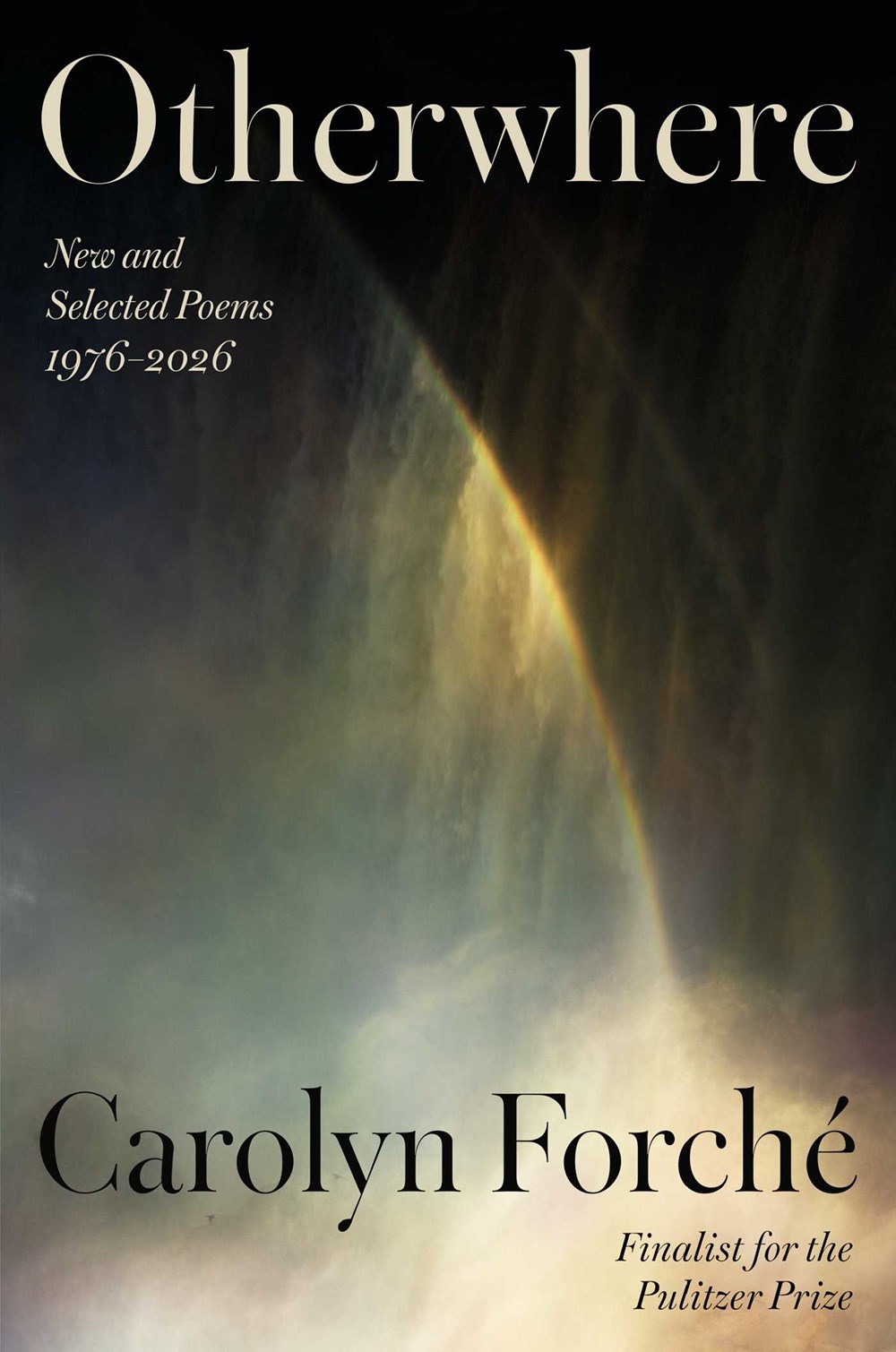
Publisher: Scribner
Publication Date: September 8, 2026
Format: Hardcover / eBook
Over half a century, Carolyn Forché has exemplified how a poet’s voice can cut through the cacophony of an age and speak to our inexhaustible responsibility to each other. Otherwhere spans her groundbreaking career, including the poems crafted in her early twenties from Gathering the Tribes (1976), a world of “horse-breath weather” and the whispering aspens of her grandmother’s language; the “poetry of courage and compassion” (Margaret Atwood) in The Country Between Us (1981) and the elegiac realm of In the Lateness of the World (2020), with its bygone friends, besieged cities, and dreams of the displaced.
Otherwhere gathers the finest poems of Forché’s body of work, selected by the poet herself, and includes a short new collection, If there is ink, which lights a signal fire in a state of emergency. In these new poems, Forché sifts through the new ruins of the present, conjuring the early days of an emergency where people “pretend to live as we have always lived,” and cautioning “There are no secrets to staying completely invisible, so they are not included here.”
Throughout these poems of unparalleled moral conviction, there resounds a “sense of responsibility: to the fullness of lives unnecessarily [bound]; to poetry and its insistence on meaning; to attention and action, no matter the cost” (World Literature Today) that has defined Forché’s work—an inimitable, monumental contribution to American letters.
Carolyn Forché is an American poet, translator, and memoirist. Her books of poetry are In the Lateness of the World, Blue Hour, The Angel of History, The Country Between Us, and Gathering the Tribes. She has also published her memoir, What You Have Heard Is True. In 2013, Forché received the Academy of American Poets Fellowship given for distinguished poetic achievement. In 2017, she became one of the first two poets to receive the Windham-Campbell Prize. She is a University Professor at Georgetown University. She lives in Maryland with her husband, photographer Harry Mattison.
All That Teethes Within, Kari Gunter-Seymour
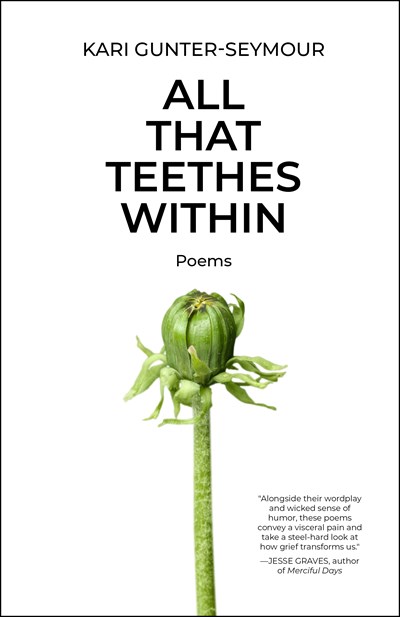
Publisher: The University Press of Kentucky
Publication Date: September 14, 2026
Format: Hardcover / Paperback
In All That Teethes Within, poet Kari Gunter-Seymour translates the poignant complexity of loss into words. This exploration of heartache is layered with the poet’s Appalachian identity and overflows with sadness and anger toward the forces that cause societal and environmental damage in the region. The poems mourn a loved one’s sudden passing, opportunity missed due to poverty or gender inequality, and the piece of one’s identity that vanishes or fades with age.
Gunter-Seymour’s interrogation of grief and destruction quietly weaves in elements of nature—”Breezes whistle like wisps of memory / inside clusters of hemlock”—to counter profound pain. Small joys found in friendship, the land, grandchildren, and wildlife round out this collection. All That Teethes Within reckons with the incomprehensible reality of a sibling’s suicide, serving as a guide for survival and a call to speak the truth of our anguish and our rapture.
Kari Gunter-Seymour is an Academy of American Poets Laureate Fellowship recipient, former poet laureate of Ohio, and a retired instructor in the E. W. Scripps School of Journalism at Ohio University. She is the executive director of the Women of Appalachia Project and editor of its anthology series, Women Speak. Her award-winning poetry collections include Dirt Songs, Alone in the House of My Heart, and A Place So Deep Inside America It Can’t Be Seen.
Even Blood, Ralph Angel
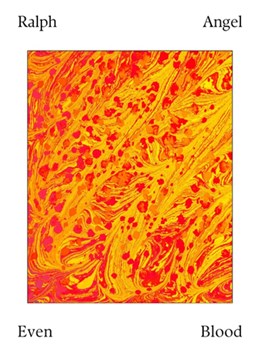
Publisher: Black Ocean
Publication Date: September 8, 2026
Format: Paperback
In his own words, Ralph Angel described poetry as “the language for which we have no language.” Across his more than seven books of poetry, Angel’s work has been distinguished by his attention to the spare lyric, at once abstract and philosophical. These are poems that sit at the intersection of immediacy and meditation, offering a thoughtful companionship to the reader.
Even Blood is Angel’s final collection of poems, distilling his lifelong engagement with poetry and showcasing the power of his vivid imagery, sharp diction, and attention to structure, no matter how slight.
Ralph Angel (1951–2020) was the Edith R. White Distinguished Professor at the University of Redlands, where he shaped the Creative Writing Department and taught for 39 years, and a member of the MFA in Writing Faculty at Vermont College of Fine Arts. His last collection of poems, Your Moon, was awarded the Green Rose Poetry Prize. Exceptions and Melancholies: Poems 1986-2006 received the PEN USA Poetry Award, and his Neither World won the James Laughlin Award from the Academy of American Poets. In addition to five books of poetry, he also published an award-winning translation of the Federico García Lorca collection, Poema del cante jondo / Poem of the Deep Song. His later work included entropia, a collection of thirty-one fine art images, and Strays, a limited-edition chapbook of poems.
Oil Courses, Carolyn Williams-Noren
Publisher: Kent State University Press
Publication Date: September 8, 2026
Format: Paperback
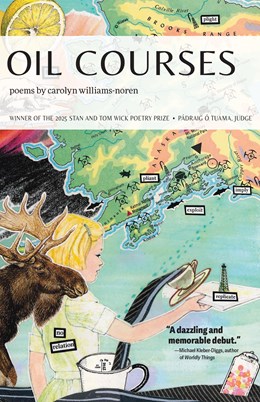
Grounded in deep concern about the climate crisis, Carolyn Williams-Noren’s Oil Courses recalls a family reliant on the oil industry—her father worked for British Petroleum in Anchorage, Alaska—and a summer spent in its service on Endicott Island. What “curriculum” has oil offered each of us? To answer, Oil Courses turns to strange happenings in the changing landscape and in our interior lives, magnifying odd scenes that once seemed ordinary and filing them under the names of school subjects such as physics, economics, and history.
In these poems, the absurd, the beautiful, and the alarming collide. Tiny fish begin to swim sideways, poisoned. The permafrost melts. Whales are hunted and skinned. The high school yearbook features students who have hit moose with their cars. The speaker of one poem wins a trophy for an essay on the subject “What Petroleum Means to Me,” presented by a group of women called the “Petroleum Wives.”
Oil Courses speaks to our collective reliance on exploitative industries and questions our responsibilities and relationships to the natural world. These poems are droll, revealing, and ultimately haunting.
Carolyn Williams-Noren has published two poetry chapbooks, and her work has been in AGNI, Prairie Schooner, The Iowa Review, Willow Springs, and many other journals. She’s earned Pushcart nominations and a Best American Essays notables mention, plus support from the McKnight Foundation, among other honors. See more at williams-noren.com.
Breath Taking, Carolyn Smart
Publisher: Book*hug Press
Publication Date: September 8, 2026
Format: Paperback
Carolyn Smart’s latest poetry collection offers a striking meditation on the death of her partner of nearly forty years. Structured in five distinct parts, this deeply moving book unfolds like a tragedy—each section like an act in a play, the individual poems key scenes in a shared life coming to an end.
The language in Breath Taking is direct and exacting, with colloquial phrases that animate and complicate the emotional pressure of the work itself. Familiar references are scattered throughout—Gould Lake, Road 38—not as a device, but as indications of the everyday world that love, pain, and death inhabit.
Intimate and exhaustive, this generous document doesn’t lean on a belief in God or the afterlife, nor does nature’s continuity offer an uncomplicated source of comfort. Instead, what is revealed is the unvarnished reality of love and loss—the arduous responsibilities, the fragile attempts at recovery, the wishful thinking that what is gone will one day return. Breath Taking is a profound, vital reflection on the end of a life, and on those who go on living.
Carolyn Smart is the author of six previous poetry collections. She is a winner of the CBC Nonfiction Prize and was the director of creative writing at Queen’s University for three decades. Founder of the Bronwen Wallace Award for Emerging Writers, she frequently works with other writers via mentorship and editing. Born in the United Kingdom, Smart lives north of Kingston, Ontario.
Night said, Barbara Rockman
Publisher: UNM Press
Publication Date: September 8, 2026
Format: Paperback / eBook
From the endless star-filled skies of her chosen high-desert home to the lakes and farmland of her New England childhood to the imagined villages of her Ukrainian ancestors, award-winning poet Barbara Rockman reaches for belonging. Rockman’s Jewish heritage is woven through her searches for the ineffable, complemented by ruminations on aging, memory, and our place in the natural world. Grief sings here, tempered by grace and gratitude in this powerful collection by a poet at the height of her craft.
Barbara Rockman is the author of two other award-winning collections of poetry, to cleave (UNM Press) and Sting and Nest. For the past thirty years Rockman has taught poetry at Santa Fe Community College and in community workshops. She lives in Santa Fe, New Mexico.
Wrong Feast, Rivka Clifton
Publisher: Baobab Press
Publication Date: September 8, 2026
Format: Paperback
Wrong Feast. Indeed, in Cliftons’ second full-length collection, the lyric image, in all its ambiguous potential, flexes the tensions between Capitalism’s mass-produced nightmares and the individually strange experiences of death, art, and queerness to depict a world both sumptuous and awry engaging Charles Simic’s surrealist question: “How to think without recourse to abstractions, logic, and categorical postulates.” Clifton turns the sensory details in her poems until their most mundane aspects become uncanny — a fish becomes a purse, a dog’s head is deified as it is impaled on a fence, a buzzing cellphone is birthed into a crib . . . Page after page, Wrong Feast models close attention, while fully considering the ambiguities and the possibilities within Clifton’s creations. These are not merely poems of action and consequence, but ones of call and response. They will not provide lessons or insights. They are not the prophecy garnered from entrails.
They are the entrails.
Rivka Clifton is the transfemme author of Muzzle (JackLeg Press, 2025) as well as the chapbooks MOT and Agape (Osmanthus Press). Clifton’s work has appeared in Pleiades, Guernica, Black Warrior Review, Colorado Review, and other magazines. She lives in Seattle.
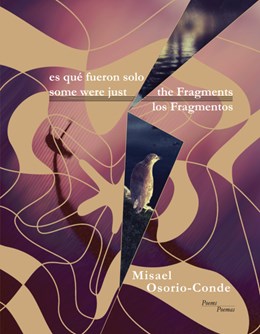
some were just the Fragments // es que fueron solo los Fragmentos (Bilingual edition), Misael Osorio-Conde
Publisher: Baobab Press
Publication Date: September 8, 2026
Format: Paperback
Osorio-Conde’s poems chart the experiences of his formative years where he learned to live in the shadows of exile as well as within a new language. Threading the needle between disclosure and acceptance, lyricism and narrative, and encapsulating new and inventive formal structures, the poems in some were just the Fragments / es qué fueron sólo unos Fragmentos attempt to make sense of Osorio-Conde’s crossing while grieving an indefinitely deferred return to his native land. The poems presented in this bilingual collection are built for our contemporary moment, while laced with the timeless realities, hardships, and most importantly, the successes, loves, family, and camaraderie that define human experience.
Misael Osorio-Conde is a poet and translator currently living in the Midwest. He earned his MFA at the University of Notre Dame and is currently enrolled in the Program for Writers at University of Illinois, Chicago. In his work he attempts to capture the passage of language through the threshold of the body. He is interested in the traumas of crossing borders and how those traumas follow the language; interested in the marks those traumas leave inscribed in the psyche by their passage, and how memory helps us to reconstruct our humanity. Osorio-Conde’s work has appeared in Protean Magazine, The Brooklyn Rail, The Texas Review, and elsewhere.
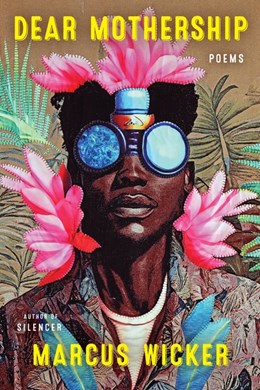
Dear Mothership, Marcus Wicker
Publisher: Ecco
Publication Date: September 8, 2026
Format: Paperback / eBook
In Dear Mothership, Marcus Wicker channels the lyrical dexterity of Outkast and the speculative vision of poet Robert Hayden to chart a course through personal and political upheaval.
The collection’s centerpiece is the “Break Beat Crown”—Wicker’s original take on the heroic crown of sonnets—presented as a travelogue from an extraterrestrial who has touched down in modern-day Atlanta. Across linked poems, the outsider records field notes on pandemic discord, isolation, tenderness, late-stage capitalism, empathy, and art. The longer the speaker inhabits a dysfunctional society, the more alien he feels. In addition to these science fictional experiments, Wicker delivers affecting, personal poems grounded in lived experience: lingering grief over two miscarriages, the sudden death of a friend, a sustained search for joy on the other side of those heartbreaks.
With its singular imagination, Dear Mothership kindles a new understanding of what makes us most human.
Marcus Wicker is the author of three books of poetry: Dear Mothership, Silencer, and Maybe the Saddest Thing, selected by D.A. Powell for the National Poetry Series. His honors include a National Endowment for the Arts Creative Writing Fellowship, the Poetry Society of America’s Lyric Poetry Award, a Pushcart Prize, and Ruth Lilly Fellowship, as well as fellowships from the Harvard Radcliffe Institute, The Fine Arts Work Center, and Cave Canem. Wicker’s poems have appeared in The Nation, The New Republic, The Atlantic, Oxford American, and Poetry Magazine. He is an Associate Professor and the Orgill Chair of English at the University of Memphis, where he teaches in the MFA program.
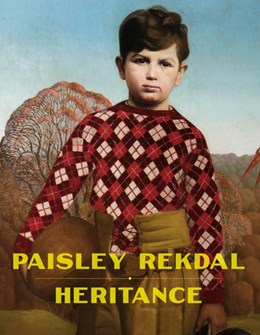
Heritance, Paisley Rekdal
Publisher: Copper Canyon Press
Publication Date: September 8, 2026
Format: Paperback
In Paisley Rekdal’s latest collection, Heritance, the body and its meanings are ever shifting—it is, at once, a legacy, an obligation, and a means of generating more bodies. Summoning memories of parents, former partners, and children both real and hypothetical, Heritance examines the personal and familial shames we inherit. Can something so ephemeral as memory be owned? In what ways do we become complicit in the political values of our families, our nations, and our chosen—or assumed—communities? Here, Rekdal grapples with the inevitable loss of loved ones and relationships, but also of climate change and social evolution—asking what values do we choose to preserve, and which ones do we reinvent for a new era? And in what ways can art recompense for our personal and cultural wounds? Meditating on race, violence, and lineage, Rekdal challenges the reader to contextualize their perspective within the corporeal, and to question what it means to love outside of “the lens of someone else’s imagining.”
Paisley Rekdal is the author of five books of nonfiction and seven collections of poetry, including Animal Eye (2012), Imaginary Vessels (2016), Nightingale (2019), and West: A Translation, which was longlisted for the 2023 National Book Award in Poetry. Her work has received a Guggenheim Fellowship, the Amy Lowell Poetry Traveling Fellowship, a Fulbright Fellowship, a Civitella Ranieri Residency, a National Endowment for the Arts Fellowship, Pushcart Prizes (2009, 2013), Narrative‘s Poetry Prize, the AWP Creative Nonfiction Prize, and various state arts council awards. She is a distinguished professor at the University of Utah, where she teaches in the creative writing program and directs the American West Center. Between 2017–2022, she served as Utah’s Poet Laureate, receiving a 2019 Academy of American Poets Laureate Fellowship. She currently serves as poetry editor for High Country News, and as co-chair of PEN America’s Utah Chapter.
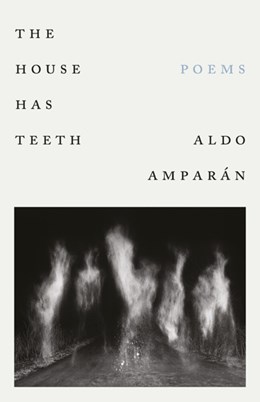
The House Has Teeth, Aldo Amparán
Publisher: Alice James Books
Publication Date: September 8, 2026
Format: Paperback / eBook
Influenced by fever dreams, horror movies, and ghost stories, the poems of this second collection eloquently articulate the way in which people who have been traumatized can carry a violence within themselves. Speakers grapple with an internal unrest that simmers long after the initial wound, becoming attuned to the subtle alarms sounding around them that go unheard by others.
In these pages, nightmares become a vehicle for deeper understanding as Amparán investigates how we learn to live with trauma—how we hold onto it, and how it holds onto us; how it haunts us like a ghost. Lyrical and steeped in surrealism, The House Has Teeth asks whether it’s possible to ever escape— to unknow—such violence. To transcend it. To reach toward love.
Aldo Amparán is the author of Brother Sleep (Alice James Books, 2022), which won the Alice James Award in 2020, and was a finalist for the Lambda Literary Award for Gay Poetry in 2023. They have received fellowships from the National Endowment for the Arts & CantoMundo. Amparán’s work has been published in magazines & anthologies, including the Academy of American Poets’ Poem-a-Day, Best New Poets, Gulf Coast, Kenyon Review Online, New England Review, Ploughshares, Poetry Magazine, & elsewhere. Born & raised in the border cities of El Paso, TX, USA, & Ciudad Juárez, CHIH, Mexico, Amparán received their MFA in Creative Writing from the University of Texas at El Paso.
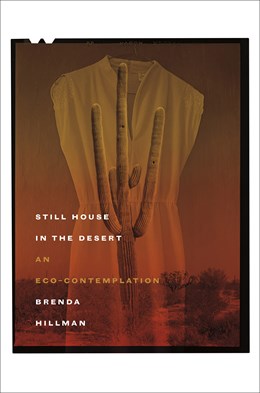
Still House in the Desert: An eco-contemplation, Brenda Hillman
Publisher: Wesleyan University Press
Publication Date: September 8, 2026
Format: Hardcover / eBook
Each of Brenda Hillman’s books has been transformative for her readers, and her twelfth collection is no exception. Building on previous volumes about seasons, days and minutes, Hillman concludes her masterful quartet about time with an ecological journey into a family home of the mid-twentieth century. Here, magical poems explore rooms as opportunities for dream, and domestic objects as the dream-shapes where culture and imagination inform each other. In that way, the poet celebrates the layered lives of children and adults, including, strikingly, the life of her mother, a native of Brazil whose presence intimately links the processes of inner vision and daily tasks. Like Hillman’s other pioneering work, these poems are personal and collective; they braid the spiritual, the scientific, the political, and the visionary. Short spare lyrics are placed beside longer pieces; small photos add to the visual structures of the pages. One long prose poem explores the child’s neurological anxiety and the awakening of mid-century environmental consciousness, while another is a meditation on women’s domestic work with textiles and the rhetoric of literary repetition. The closing sequence gives homage to unlikely intersections of humans with non-human lives, including dust mites, moths, and mycorrhizal roots. This remarkable collection will plunge readers into the mysteries of childhood and of childhood houses everywhere.
Brenda Hillman was born in Tucson, Arizona, and has been an active part of the Bay Area literary community since 1975. She has published chapbooks with Penumbra Press, a+bend press, EmPress, A Minus Press, and Albion Books and is the author of twelve full-length collections from Wesleyan University Press, the most recent of which are In a Few Minutes Before Later (2022), Seasonal Works with Letters on Fire (2013), which received the Griffin International Poetry Prize, and Extra Hidden Life, among the Days (2018), winner of the Northern California Book Award.
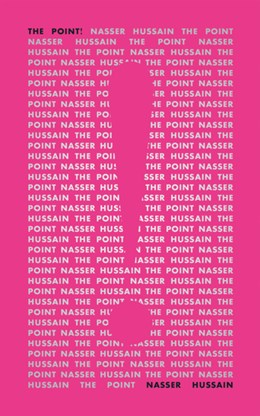
The Point, Nasser Hussain
Publisher: Coach House Books
Publication Date: September 8, 2026
Format: Paperback
The exclamation point is much maligned. It’s bad style. It’s like laughing at your own joke. It screams, it yells, it’s hysterical, it’s maybe even embarrassingly obsequious.
Nasser Hussain disagrees! What’s so bad about expressing enthusiasm? What if you really need to scream? The prescriptions of ‘style’ can feel like an artificial limit placed on our language, insisting we produce a bland monotone that trades on its appearance as rational, subdued, civilized discourse. Against this, The Point, where poetry bangs its head against this veneer of rationality. Poetry, it insists, is exciting! Is, maybe, excitement itself!
The Point is composed using only exclamation marks, seeking to reclaim the dignity of the bang’s and explore its expressive possibilities. Against the well-known derision of F. Scott Fitzgerald, Elmore Leonard, and Gertrude Stein, Hussain uses the exclamation point to make a point: let’s celebrate the possibility of enthusiasm!
Nasser Hussain is a Lecturer in Literature and Creative Writing at Leeds Beckett University in the UK. His first book, boldface, was published in 2014. He holds a PhD in English from the University of York (UK), an MA in Creative Writing from the University of Windsor, and a BA in English from Queen’s University. Nasser has had a number of occupations: treeplanter, wilderness guide, amateur restaurateur, and now academic and poet. He likes his new job best. For him, poems are best described as ‘language with a pattern,’ and much of his recent practice takes pleasure in finding new patterns to wonder at. SKY WRI TEI NGS is the first expression of a larger interest in mass transit, and is his attempt to find a literal and poetic intersection between two things that ‘move’ us (in this case, planes, and poems). He currently lives in Sheffield, UK.
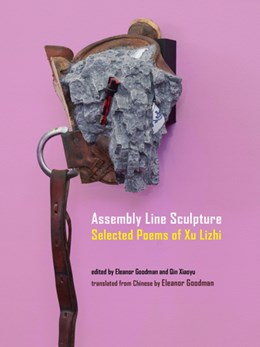
Assembly Line Sculpture (Bilingual edition), Xu Lizhi, Eleanor Goodman (Tr)
Publisher: Zephyr Press
Publication Date: September 8, 2026
Format: Paperback
Xu Lizhi was a young poet working on an assembly line at a Foxconn factory in China, one of the largest manufacturers of Apple and other electronic devices. Unable to afford university and after multiple unsuccessful attempts to get a job elsewhere, he took his life at the age of 24. His haunting poems describe the suffering, dehumanization, and harsh conditions at such factories, conditions that our sleek shiny devices obscure. After his death, Xu Lizhi’s story was picked up by major media around the world, including the Washington Post, Wall Street Journal, Die Zeit, and Time. Most of Xu Lizhi’s poems have not been available in English—until now. This book is a searing indictment of globalization, capitalism, labor relations, and the dark underside of technology development and manufacturing.
Xu Lizhi was born in 1990 in the village of Jieyang, Guangdong. Unable to afford university, he took a job on an assembly line at a Foxconn factory complex in Shenzhen that employs some 100,000 people. He began writing poetry as an outlet for his feelings, and a number of his poems were published, often describing the harsh and dehumanizing conditions at the factory. Despite numerous attempts to find employment at libraries and literary outlets, he could not get hired, likely in part because he lacked a college degree. He died by suicide in 2014 at the age of 24, leaving behind some 200 poems. His friends published a small collection of his poems posthumously. Major news media reported on his death, including the Washington Post, Bloomberg News, and Time. The title for the anthology Iron Moon: An Anthology of Chinese Migrant Worker Poetry, edited by Qin Xiaoyu, and translated by Eleanor Goodman, was taken from a poem by Xu Lizhi, and six of his poems are included in the collection (White Pine, 2016).
Eleanor Goodman is the author of two poetry collections, Nine Dragon Island, Lessons in Glass, and the translator of six books from Chinese, including most recently In the Roar of the Machine: Selected Poems of Zheng Xiaoqiong (NYRB, 2025). She is a Research Associate at the Harvard University Fairbank Center, as well as a recipient of a National Endowment for the Arts Fellowship and a Fulbright Fellowship. Her translation of Wang Xiaoni’s Something Crosses My Mind (Zephyr Press, 2014), was a finalist for the Griffin International Poetry Prize and won the Lucien Stryk Asian Translation Prize, and her translation of Roots of Wisdom: Selected Poetry by Zang Di (Zephyr Press, 2017), won the Patrick D. Hanan Prize from the Association for Asian Studies.
Qin Xiaoyu is a poet, critic, and poetic theorist, born in the Inner Mongolian city of Hohhot in 1974. While studying to be an engineer in college, he founded the literary magazine New Century. His critical collection, Jade Ladder: Essays on Contemporary Chinese Poetry, came out in 2012 (Bloodaxe Books). He has won the Liu Li’an Poetry Prize, and is a judge for the ArtsBeijing International Chinese Poetry Competition.
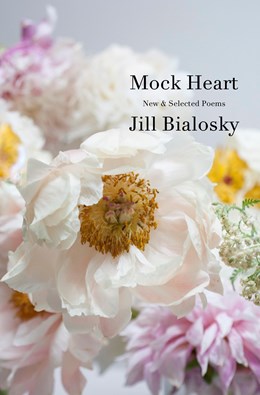
Mock Heart: New & Selected Poems, Jill Bialosky
Publisher: Knopf
Publication Date: September 8, 2026
Format: Hardcover / eBook
Bialosky’s poems, “always intently alive with lyrical truths” (Yusef Komunyakaa), weave tragedy, language, and perception in poignant works of personal and public exploration. In Mock Heart, a powerful gathering of her work thus far, she opens with a cache of searing new poems and proceeds backward in time through selections from her five previous collections. We move from lyric sections of the acclaimed Asylum, a work that reveals personal and historical traumas and how we search for understanding in their wake, to the folly of The Players, about a son’s maturing into manhood in a space of intimate wonder, to Intruder, a haunting exploration of passion and its myths, to Subterranean, a book of maternal yearning, and finally we arrive back at her debut, The End of Desire, probing the mysteries of girlhood, premonitions of loss, and the temptations and challenges of becoming.
A daring poet of lyric mastery, one who delves into the spaces where desire blooms, Bialosky is never content to rest on the laurels of the beauty she finds around her. Throughout her journey, sorrow and loss as well as joy feed the earned wisdom that finished poems will bestow.
Jill Bialosky’s newest work of prose is The End Is the Beginning: A Personal History of My Mother. Her most recent volume of poetry, Asylum: A Personal, Historical, Natural Inquiry in 103 Lyric Sections, was a finalist for the National Jewish Book Award. She is the author of five acclaimed collections of poetry, four critically acclaimed novels—most recently The Deceptions, a finalist for the Gotham Book Prize—and two memoirs, Poetry Will Save Your Life and the New York Times bestselling History of a Suicide: My Sister’s Unfinished Life. Her poems and essays have appeared in The New Yorker; The Atlantic; Harper’s Magazine; O, the Oprah Magazine; The Kenyon Review; Harvard Review; The Paris Review; and The Best American Poetry, among others. She coedited with Helen Schulman the anthology Wanting a Child. She is an executive editor and vice president at W. W. Norton & Company. In 2014 she was honored by the Poetry Society of America for her distinguished contribution to poetry.
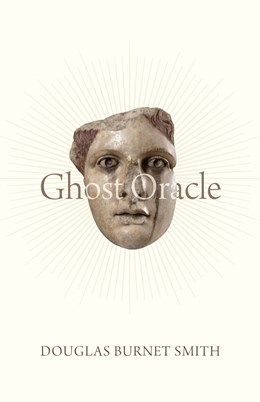
Ghost Oracle, Douglas Burnet Smith
Publisher: University of Regina Press
Publication Date: September 8, 2026
Format: Paperback
In Ghost Oracle, a Santorini “dream reader” slices open the poet’s palm with a thorn and analyzes the blood pattern; Athenian subways rattle under the Acropolis as protesters are teargassed in the streets; hooded specters rise out of a blaze of poppies at a café beside a 3,000 year-old cult site. From sun-drenched islands in the Aegean to remote mountain hideaways where hawks soar overhead and love goes astray, Smith’s poems are alive with the sounds of haunted ruins and the spell of history.
The classics are considered with an ear for the vernacular, for how Plato and Aristotle might behave today, and what they would make of the so-called death of poetry. There are haunting pronouncements by the titular ghost oracle plus dramatic monologues by Xeno (who loses his member to the frost) and Du Fu, the eighth-century Chinese poet (during a visit to the Acropolis), as they confront the wonders and horrors of our world.
By turns sensuous, darkly comic, and spellbindingly lucid, this collection of poetry aspires to music—a music that rings as true as the fragments of Sappho and the epics of Homer.
Douglas Burnet Smith is the Governor General’s Award–nominated author of 18 books of poetry. He teaches at St. Francis Xavier University in Antigonish, Nova Scotia and divides his time between Atlantic Canada and Athens, Greece.
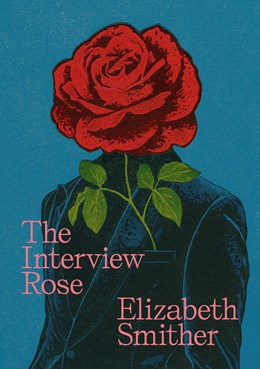
The Interview Rose, Elizabeth Smither
Publisher: Auckland University Press
Publication Date: September 9, 2026
Format: Paperback / eBook
In her twentieth poetry collection, Elizabeth Smither brings together a new ensemble of surprising images and charismatic companions. A herd of cows gathers around a radio to listen wide-eyed to a Mozart concerto. A frog leads us unhurriedly down the garden path. Jane Austen’ s Emma makes an appearance. A cat critiques Wittgenstein. And a flamboyant fabric rose rescues a job interview. Each poem in The Interview Rose is a bridge between the private self and the physical world, travelling the long route through art, religion, philosophy, and the pleasures of language.
Elizabeth Smither has written six novels, six collections of short stories and nineteen poetry collections. She has twice won the major award for New Zealand poetry and was the 2001– 2003 Te Mata Poet Laureate. In 2004, she was awarded an honorary LittD from the University of Auckland, Waipapa Taumata Rau for her contribution to literature and was made a Member of the New Zealand Order of Merit. She received the Prime Minister’ s Award for Literary Achievement in 2008. Her book, Night Horse (Auckland University Press, 2017), won the 2018 Ockham New Zealand Book Award for Poetry.
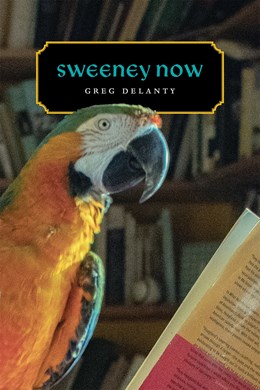
Sweeney Now, Greg Delanty
Publisher: LSU Press
Publication Date: September 10, 2026
Format: Paperback / eBook
Sweeney Now, a new book from the celebrated Irish poet Greg Delanty, is based on the twelfth-century texts of the middle Irish poem Buile Shuibhne (The Frenzy of Sweeney), a sequence in both verse and prose, which Delanty uses as a blueprint, a mythic foundation to tell and review what it is like to be a deracinated person and poet today, spending much of his time away from his native Ireland in the U.S.
In the original, Sweeney, the archetypal poet of Irish myth, is driven mad as a consequence of a curse imposed on him. He sprouts wings and takes flight, exiles himself to the wilderness, where he spends many years alone, naked or sparsely clothed, ostracized by the outside world, living in trees, bemoaning his fate, celebrating nature, intermittently recovering his sanity, conversing with a fellow madman, and grieving this kindred spirit in moving elegies on the latter’s death. Sweeney is also portrayed as somewhat of an amateur seer and converses with various visitors to whom he relates his plight and thoughts. Throughout the story he thinks of himself as a bird.
Delanty’s Sweeney riffs on these situations and predicaments in settings drawn from the modern literary and political world. The Sweeney of these often humorous poems should not be literally mistaken for Delanty himself—not entirely, that is. The poems are more like carnival mirrors, with the concomitant exaggerations, distortions, and partial truths of most any reflective autobiography.
Greg Delanty was born in Cork City, Ireland, and maintains dual citizenship in Ireland and the United States, where he has lived since 1986. He is the author of No More Time and The Professor of Forgetting, among many other poetry collections, and he has received numerous awards for his work, including a Guggenheim Fellowship. He teaches at Saint Michael’s College in Vermont.
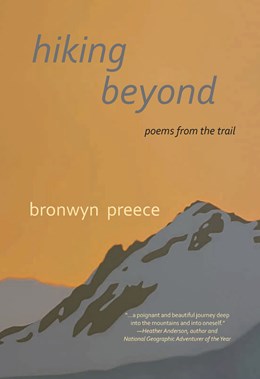
hiking beyond, Bronwyn Preece
Publisher: Caitlin Press
Publication Date: September 13, 2026
Format: Paperback
hiking beyond, Bronwyn Preece’s second poetry collection, is a courageous journey through landscapes both external and internal. In these deeply personal pieces, preece brings us along on her adventures through poems, narratives and reflections from her perspective navigating the trail with a crooked knee and a fierce will to keep going. A collection of poetry written wearing muddy boots, in wet tents and with frozen fingers, bronwyn preece’s hiking beyond is a collection steeped in the messiness of being alive. With reverence for geology, ornithology, botany, history and all that resists easy categorization, preece captures the soundbites, questions and quiet revelations of solo backcountry travel. From recovery from injury to the realities of living with Wilson’s Disease, hiking beyond explores what it means to hike, to heal, and to belong. In this collection, she brings a sensitive awareness of what it means to move through and learn from her experiences as a woman of predominantly settler descent on the unceded ancestral lands of British Columbia and Alberta.
Bronwyn Preece is honoured to have the privilege of living on the unceded Traditional Territories of the Lilwat7ú l and Skwxwú 7mesh Peoples in Whistler, BC. This awareness brings with it many levels of responsibility, humbleness, transparency and collaborative possibilities. She is a multi-disciplinary, community-engaged arts practitioner. She holds a PhD in Performance, along with a MA and BFA in Applied Theatre. She has taught, facilitated workshops, and performed internationally. Her publications range from academic chapters to children’ s books. She is the author of Gulf Islands Alphabet (2012) and Sea to Sky Alphabet (2023). All of her artistic and educational work aims towards cultivating place-based awarenesses and small acts of reconciliatory repair. Bronwyn is an avid, solo backcountry, multi-day backpacker and hiker who writes on the trail.
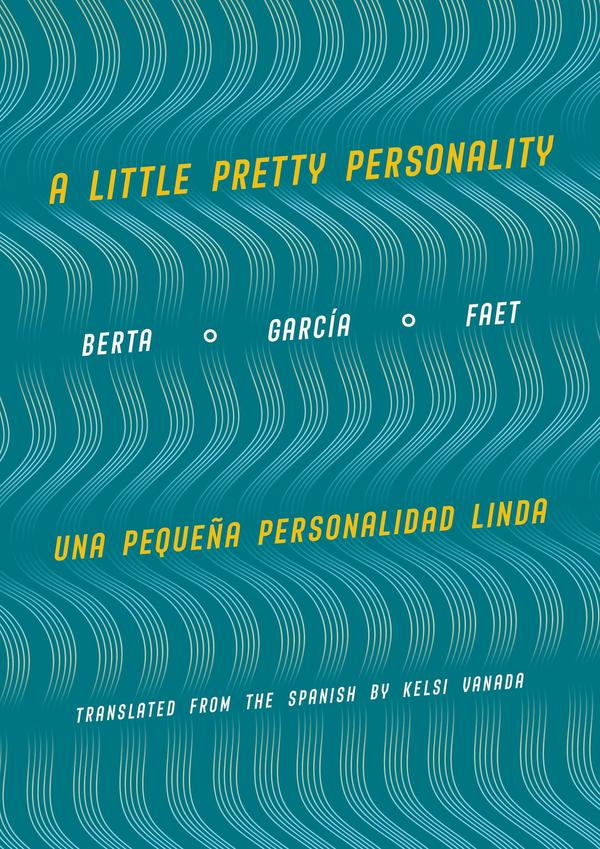
A Little Pretty Personality / Una pequeña personalidad linda, Berta García Faet, Kelsi Vanada (Tr)
Publisher: Cardboard House Press
Publication Date: September 9, 2026
Format: Paperback
A wild romp of an epic, this book sings to us of unperceived formations of language and culture. A Little Pretty Personality summons writings from across eras to assay a communal hymn that examines historical trajectories and constructions of romance, love and gender. Its poems reveal a language in constant fracture, which amalgamates wordplay, archaisms, allusions ranging from the Quijote to pop lyrics, and re-writings of poems by Federico García Lorca, César Vallejo and Alejandra Pizarnik. “Squirting multiplications,” this book leaves “stretch marks” on language, as a voice emerges between echoes and caresses of past lives. As a wandering narrator announces, shifting across landscapes, “don’t be afraid / of not having the keys.”
Berta García Faet was born in Valencia, Spain, in 1988. She is a poet and translator and the recipient of numerous literary prizes, including the “Premio Nacional de Poesía Joven Miguel Hernández” in 2018 (the Spanish Ministry of Culture’s top poetry prize for poets under 31). She holds a PhD in Hispanic Studies from Brown University and has published ten books in Spanish—nine poetry collections and an essay on the reading and writing of poetry. They are all published by La Bella Varsovia, with the exception of the essay El arte de encender las palabras (Barlin, 2023). Poetry: Corazonada (2023), Una pequeña personalidad linda (2021), Corazón tradicionalista. Poesía 2008-2011 (2018), Los salmos fosforitos (2017), La edad de merecer (2015), Fresa y herida (2011), Introducción a todo (2011), Night club para alumnas aplicadas (2009), and Manojo de abominaciones (2008).
Kelsi Vanada is a 2024 NEA Translation Fellow, the author of the poetry collection Optional Saint (Bench Editions, 2025) and the chapbook Rare Earth (Finishing Line Press, 2020), and the translator (from Spanish and Swedish) of seven books of poetry and creative nonfiction: Day’s Fortune by Carlo Acevedo (Sundial House Press, 2025), Basket of Braids by Natalia Litvinova (Shearsman Books, 2024), United Left by Álvaro Lasso (Eulalia Books, 2024), The Visible Unseen by Andrea Chapela (Restless Books, 2022), Damascus, Atlantis: Selected Poems by Marie Silkeberg (Terra Nova Press, 2021), Into Muteness by Sergio Espinosa (Veliz Books, 2020), and The Eligible Age by Berta García Faet (Song Bridge Press, 2018). She is Senior Program Director of the American Literary Translators Association (ALTA) in Tucson, AZ.
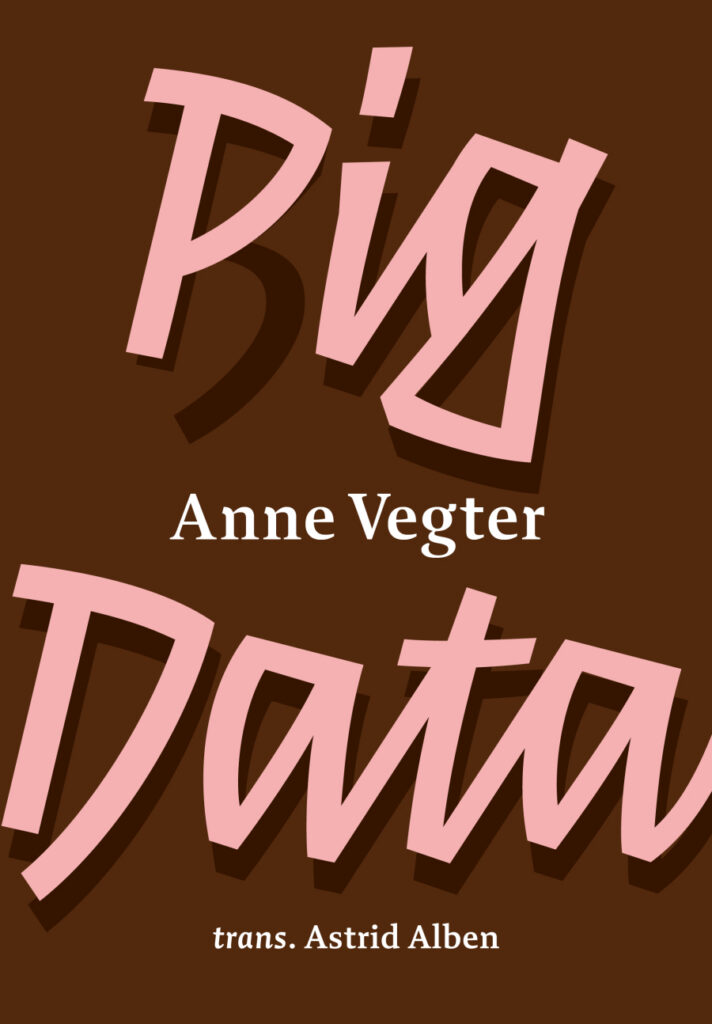
Pig Data, Anne Vegter, Astrid Alben (Tr)
Publisher: Prototype
Publication Date: September 10, 2026
Format: Paperback
A ground-breaking work of contemporary Dutch poetry, following the acclaimed Island mountain glacier (2022), Anne Vegter’s Pig Data exposes the raw nerves of power and desire. The collection orchestrates a mythic and historical collision between three formidable figures – the South African poet Ingrid Jonker, the mythical witch Medea, and a provocative poetic ‘I’ (evoking the trope of the ‘scorned woman’) – to interrogate the male gaze and the transformative potential of female rage. Vegter’s poems tease language to its limit, with a restless energy that is dynamic, vicious and vulgar, infused with humour and absurdist overtones, brought to life through Astrid Alben’s virtuosic translation. Pig Data fearlessly rebuffs the comforts of traditional form, revelling in contradictions, moving between luminous vulnerability and a fractured, explosive urgency.
Anne Vegter is the author of numerous poetry collections, children’s books, theatre monologues and erotic stories. She trained in theatre in Utrecht and taught at the Writers’ Academy in Amsterdam. She made her debut as a children’s book author in 1990 with The Lady and the Rhinoceros, which won the Woutertje Pieterse Prize, a major Dutch award for new children’s literature. Vegter’s first poetry collection, Het veerde, appeared in 1991, followed in 1994 by Ongekuiste versies, a book of erotic tales. Since then, she has published widely across genres.
Astrid Alben is a poet, editor and translator. She is the author of Ai! Ai! Pianissimo, Plainspeak and Little Dead Rabbit. Alben self-translated Little Dead Rabbit and this was published as Klein dood konijn by PoëzieCentrum. Her poetry and non-fiction have appeared in literary journals including Granta and the Times Literary Supplement. She has worked with BBC Radio, the Serpentine Gallery and Wellcome Collection, and with performance and animation.
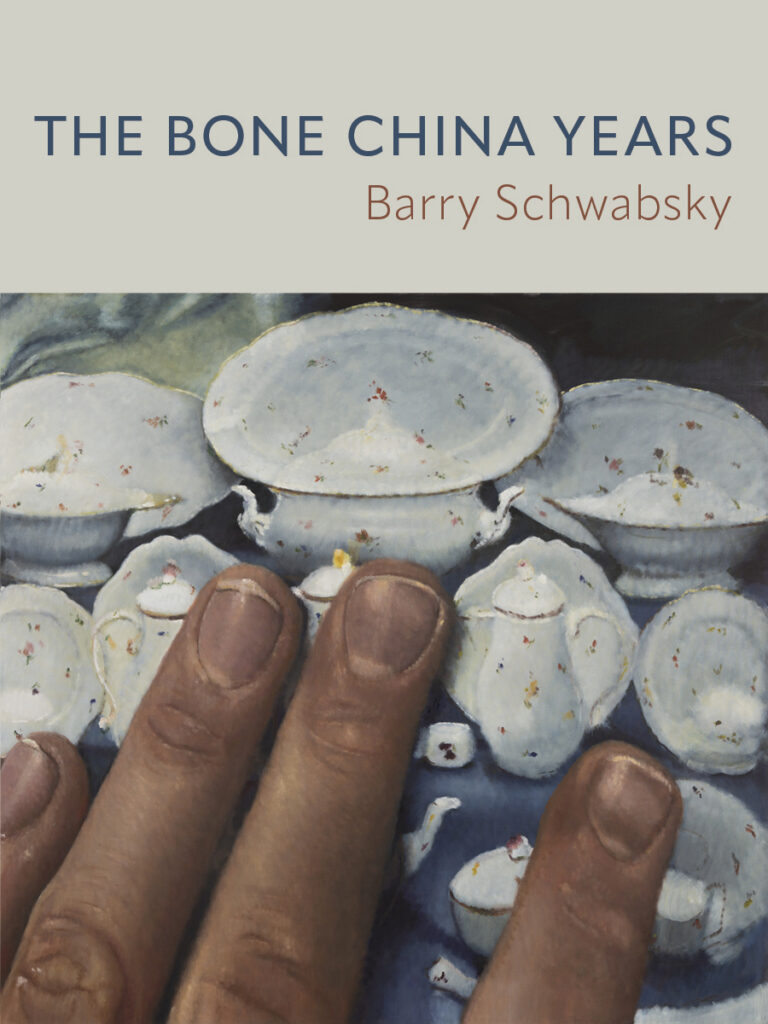
The Bone China Years, Barry Schwabsky
Publisher: Black Square Editions
Publication Date: September 10, 2026
Format: Paperback
Barry Schwabsky’s poetry takes you to mysterious places but it always calls you home. As Marjorie Welish has written in The Poetry Project Newsletter, it “assumes that the debris of one’s mind is the very stuff of poetry. Stray thoughts and self-commentary issuing in excess of what one ought to be doing of a determinate and productive nature, are discontinuously ever-present and ever-ready to be intuited, so by no means wasted. Schwabsky, attuned to this intuitive zone, does not overstate the case for its significance, but in effect displays these intuited by-products of mental representation for possible consideration: is this a poem? If so, on what grounds? Feelings, then, are the subjective remainders of experience as yet to be categorized, let alone anointed as literature. No larger-than-life theatrics here, nor emphasized signi¬ficance; the feelings here come about through the merest indications of experience, for which the first-person singular is co-present. Attentive to properties and their relationships, but with no expectation of entailment, the poet gives assent to matters that strike him as peculiar.” Those peculiar matters that make up poetry are wholly of this world yet can be somehow quite unearthly. They slip through among otherwise mutually uncommunicable realities. Perhaps there is a clue in the epigraph to The Bone China Years, taken from the Pre-Socratic philosopher Heraclitus: “A man in the night kindles a light for himself when his vision is extinguished; living, he is in contact with the dead when asleep and with the sleeper when awake.”
Barry Schwabsky’s previous books with Black Square Editions are the poetry collections Book Left Open in the Rain, Trembling Hand Equilibrium, and Feelings of And, as well as a collection of critical writings, Heretics of Language. He is art critic for The Nation and an editor at Artforum.
Don’t see a poetry title published between 9/8 and 9/14 here? Contact us to let us know!
Contents
“This language offers one possible framing through which to appreciate the law’s capacity to hope for, request, and even command commitment to a more just future.” Read two poems by Maggie Wang, our first biweekly poet of the Summer 2026 issue, along with a few words about “Possibilities for Action.”
Chapbook Poem: I’ll Never Look This Good Again by Douglas Piccinnini
“[The poem] came out of real pressure: despair, worry, and grief I wanted to hold unflinchingly, alongside the anxiety of becoming a parent… For me the poem became a meditation on all the feeling that surfaces precisely when we’re told to feel only joy.” Read an excerpt from Douglas Piccinnini’s chapbook, House of Bad Memories, along with a few words from the poet.
“She sees herself in carbon, the element that bonds with almost anything- not because it wants to, but because it has empty spaces and things keep showing up to fill them. Notifications. Noise. Needs that never stop arriving.” Read four poems by Joely Williams, our second biweekly poet of the Summer 2026 issue, along with a few words about “Single Mother Considers the Periodic Table.”
ADHD in a Non-ADHD World: on Undersight by Alison Hurwitz
“[Hurwitz] shares moments of angst and moments of awe. More than that, there are moments of deep recognition. She sees herself in [her sons] and, in fact, receives a later-life ADHD diagnosis of her own.” Read the full chapbook review by new contributor, Nancy Murphy.
“The woman’s head & hair are lavishly dressed. I probably leapt off the logic of the hairdresser being blind and therefore had to work on the head/body/mind rather than just hair as a surface issue of presentation.” Read two poems by Irene Cunningham, our third biweekly poet of the Summer 2026 issue, along with a few words about “The Blind Hairdresser.”
Flash Fiction: Nova by Kimmy Chang
“‘Nova’ is a lyrical second-person story about the narrator’s first true encounter with death…the story presents loss not as beautiful in itself, but as the place where beauty begins.” Read the first original fiction piece of the Summer 2026 issue, “Nova” by Kimmy Chang.
“To fit the nuanced, dimensional experience of dysphoria and transition into narrative…often feels flattening, falsely assured. I wanted to look at this discomfort I felt, to see what was necessary in it.” Read three poems by Joshua Zeitler, our fourth biweekly poet of the Summer 2026 issue, along with a few words about “Cobbling.”
Excerpt: “On the puzzle still inside my head” by Truong Tran
“I am trying to excavate memories. I am trying to negotiate the difficult realities of existing as a brown man in this country and within the consciousness of white America.” Read an excerpt from Truong Tran’s forthcoming book from City Lights, How to Exi(s)t: A Poet’s Memoir.
“These poems try to make sense of how I arrived at a life that probably seems well thought-out, but has been one reactionary choice after another.” Read three poems by A.R. Dugan, our fifth biweekly poet of the Summer 2026 issue, along with a few words about “Sleeptalking.”
Original Fiction: Muse by Somtoo Celestine Ezioha
“What I tried to trace was the underside. How watching someone closely for long enough becomes a substitute for approaching them.” Read the second original fiction piece of the Summer 2026 issue, “Muse” by Somtoo Celestine Ezioha.