
Philly Chapbook Review is pleased to present two original poems by Aardhra Chandran as our seventh, and final, biweekly featured poet of the Summer 2026 issue.
Poems
The Paring Knife
My grandmother.
No name for the border.
No river words.
Mud that ate her shoes—she forgets it.
The sister lost before the trucks started—never mentioned.
She sits by the glass with a sack of brown earth,
the knife with its split wood wrapped in gray tape.
She strips the potato skin into one long, unbroken ribbon.
No waste.
Never any waste.
The silence here is heavy as unwashed wool,
wedged tight between the salt and the cold iron stove.
The kitchen window is small, letting in only a sliver of gray noon.
Hear the old years
in the dry snap of the root breaking under her thumb,
a dark bruise like an ink stamp on meat,
the words for what happened gone missing
under the tongue-root where the salt rots.
Street View, 2021
The camera lens caught you mid-step
by the corner chemist on a gray Tuesday.
You have that thin denim coat on:
the left sleeve frayed to a thread.
The software smeared your face, a thumbprint
of charcoal where your teeth used to show.
In the real earth, the grass has knitted over you.
The small bedroom is painted a different blue.
My mother gave away your shoes last winter.
She cried in the hallway because they still smelled
like the yard.
But in this frame, the sun stays stuck at noon.
You are always holding that white plastic bag of milk.
I scroll until the glass breaks into tiny, blind squares
and your black shadow refuses to walk.
About “Street View, 2021”
‘Street View, 2021’ explores the fragile relationship between memory, grief, and the digital traces people leave behind. The poem was inspired by the unsettling experience of encountering someone who is no longer present through an ordinary street image preserved online. It reflects on how technology can accidentally preserve fragments of a life while also revealing the limits of what can be recovered. Through images of a familiar street, personal belongings, and a figure suspended in time, the poem considers absence, remembrance, and the quiet ways we continue searching for those who are gone.
Author Bio
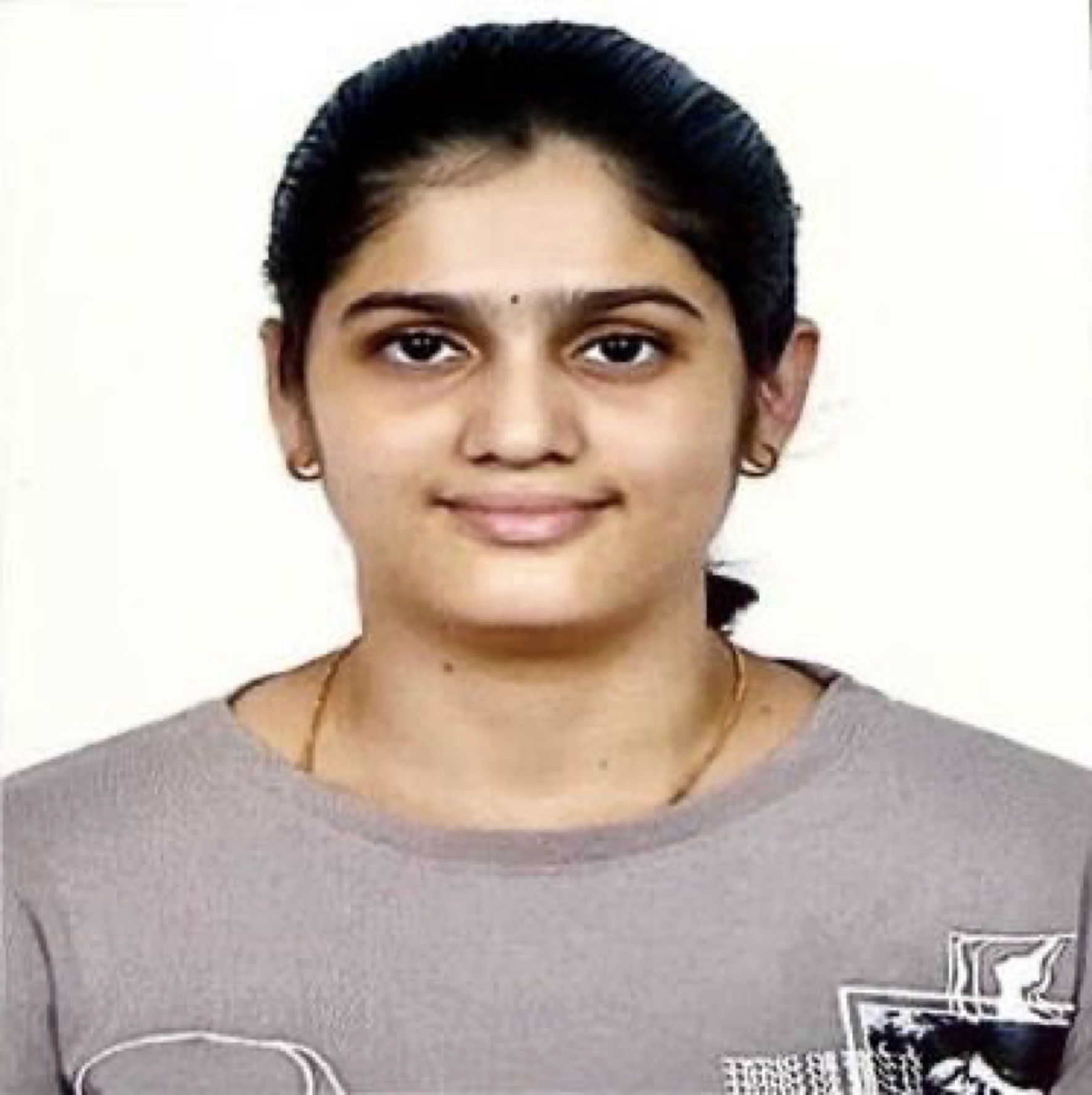
Aardhra Chandran is a poet and postgraduate student from Kerala, India. Her poetry explores memory, inheritance, grief, and the quiet histories carried by ordinary objects. Her work has appeared in Gulmohur Quarterly, Zhagaram Literary Magazine, The Eunoia Review, Borderless Journal, Punch Magazine, and Active Muse, among others.
Contents
“This language offers one possible framing through which to appreciate the law’s capacity to hope for, request, and even command commitment to a more just future.” Read two poems by Maggie Wang, our first biweekly poet of the Summer 2026 issue, along with a few words about “Possibilities for Action.”
Chapbook Poem: I’ll Never Look This Good Again by Douglas Piccinnini
“[The poem] came out of real pressure: despair, worry, and grief I wanted to hold unflinchingly, alongside the anxiety of becoming a parent… For me the poem became a meditation on all the feeling that surfaces precisely when we’re told to feel only joy.” Read an excerpt from Douglas Piccinnini’s chapbook, House of Bad Memories, along with a few words from the poet.
“She sees herself in carbon, the element that bonds with almost anything- not because it wants to, but because it has empty spaces and things keep showing up to fill them. Notifications. Noise. Needs that never stop arriving.” Read four poems by Joely Williams, our second biweekly poet of the Summer 2026 issue, along with a few words about “Single Mother Considers the Periodic Table.”
ADHD in a Non-ADHD World: on Undersight by Alison Hurwitz
“[Hurwitz] shares moments of angst and moments of awe. More than that, there are moments of deep recognition. She sees herself in [her sons] and, in fact, receives a later-life ADHD diagnosis of her own.” Read the full chapbook review by new contributor, Nancy Murphy.
“The woman’s head & hair are lavishly dressed. I probably leapt off the logic of the hairdresser being blind and therefore had to work on the head/body/mind rather than just hair as a surface issue of presentation.” Read two poems by Irene Cunningham, our third biweekly poet of the Summer 2026 issue, along with a few words about “The Blind Hairdresser.”
Flash Fiction: Nova by Kimmy Chang
“‘Nova’ is a lyrical second-person story about the narrator’s first true encounter with death…the story presents loss not as beautiful in itself, but as the place where beauty begins.” Read the first original fiction piece of the Summer 2026 issue, “Nova” by Kimmy Chang.
“To fit the nuanced, dimensional experience of dysphoria and transition into narrative…often feels flattening, falsely assured. I wanted to look at this discomfort I felt, to see what was necessary in it.” Read three poems by Joshua Zeitler, our fourth biweekly poet of the Summer 2026 issue, along with a few words about “Cobbling.”
Excerpt: “On the puzzle still inside my head” by Truong Tran
“I am trying to excavate memories. I am trying to negotiate the difficult realities of existing as a brown man in this country and within the consciousness of white America.” Read an excerpt from Truong Tran’s forthcoming book from City Lights, How to Exi(s)t: A Poet’s Memoir.
“These poems try to make sense of how I arrived at a life that probably seems well thought-out, but has been one reactionary choice after another.” Read three poems by A.R. Dugan, our fifth biweekly poet of the Summer 2026 issue, along with a few words about “Sleeptalking.”
Original Fiction: Muse by Somtoo Celestine Ezioha
“What I tried to trace was the underside. How watching someone closely for long enough becomes a substitute for approaching them.” Read the second original fiction piece of the Summer 2026 issue, “Muse” by Somtoo Celestine Ezioha.
“After childbirth, my body became a site of criticism rather than something to be celebrated for what it had endured and created. Writing this became a way to confront that experience…” Read three poems by Tanya Tuzeo, our sixth biweekly poet of the Summer 2026 issue, along with a few words about “i get Botox.”
“Through images of a familiar street, personal belongings, and a figure suspended in time, the poem considers absence, remembrance, and the quiet ways we continue searching for those who are gone.” Read two poems by Aardhra Chandran, our seventh, and final, biweekly poet of the Summer 2026 issue, along with a few words about “Street View, 2021.”
Original Fiction: Aletheia by Kalliste Hardy
“Each fragment opens a door to the unsaid or the forgotten, letting language bruise and bloom. It is a study in red, in inheritance, in language, and of the quiet haunt of becoming.” Read the third, and final, original fiction piece of the Summer 2026 issue, “Aletheia” by Kalliste Hardy.