
Philly Chapbook Review is pleased to present third piece of original fiction for the Summer 2026 issue, “Aletheia” by Kalliste Hardy.
Aletheia
“Very early in my life it was too late.”
—Marguerite Duras
The Lover
“Let me begin again.”
—Ocean Vuong
On Earth We’re Briefly Gorgeous
A as in A PRIORI
Begin it, then, with a verb rattling in its socket, a tooth swinging from the vein. If the tooth falls, something instinctively wants to reach out, catch it. Back then, our bodies were covered in fur. We played connect-the-dots with the night sky. Time was all moss and spores. Then, people started to think: What do I fear worse than wasting my life? Now, we try to dance more and we press buttons on gambling machines and if we see a bare shoulder we want to kiss it. If we see a bare shoulder we want to kiss it, I wrote. It was true.
The first word in the Book of Genesis starts with B. What we translate in English as three words is only one in Hebrew, bereshit (בְּרֵאשִׁית). Why doesn’t our alphabet start there, then? B as in BORN, BREAK, BE CAREFUL SOMETHING WANTS TO HAPPEN.
Everything I write has a crack in it. Something else is always trying to get in. I drive on the wrong side of the road (I did it because she told me not to). A doe falls through a melting lake (I’m not good in emergencies). The table was set for three but there were only two (his car twisted around an oak tree).
I might swear, by Almighty God, to tell the truth, the whole truth, and nothing but the truth. My hand might be on the Bible. After all, death comes before life in the dictionary.
This is the past: wasn’t the blue just endless.
B as in BOMBLETS
Of this year, remembering only heat. Hypocrites under glass evil eyes. The radio fizzing like a sugarbomb dropped in water. Agios Nektarios dangling from his rearview mirror-noose. No miracles today.
A fight with my grandmother about the lightbulbs. We fan ourselves with yellowing newspapers. The same stray dogs have been here since I was a child. How long can an animal live? I pinch my wrists, trying to find out. In the elevator,
a neighbor smokes a cigar. The machine gets tired and we get trapped between levels. A dangerous limbo. We’re both sweating abstract shapes into our shirts and I suppose he gets bored of that because tries to reach under my dress. I am only half-awake, a dangerous limbo. Dressed like the stolen Caryatid,
so I can’t cry. The Turkish delight, intended as a gift, has melted through its wax wrappings and into my finger-webs. I keep my seatbelt under my armpit. The taxi driver lets the radio sing us threats. An extreme heatwave is triggering the cluster explosions of buried landmines across the Germije National Park. I want to whip the words I don’t understand.
Everywhere, the blooming of tulipa kosovarica, fields like bathtubs filled with rubies. Everywhere, clouds tracking their mud across the sky. Antibiotics for my molar, even though my grandmother insisted on saffron.
Over nine million square metres of munition remains underground, failed-to-detonate bomblets left over from the 1999 NATO campaign. My nightingale radio. I left my engagement ring on the edge of the sink in our hotel room. I’m always too late to turn back. Bombs laced together underneath us, combustible abacus.
Ndonjë armë zjarri, municion apo eksploziv?1 No, no explosives here, aside from the wiring twitching in my grandmother’s heart.
Bomba, my sister whispers in airport security, her breath on the crest of my ear, making an explosion gesture with her hands.
C as in CHRISTENING
I’m trying to play dead under another girl’s candy cane sheets. She has a two-syllable name, something with squealy vowels, like Jen-ny or Min-nie. The girls are drawing with lipstick on my face. I don’t cry because a dead girl wouldn’t cry. I can’t remember who the celebrity cut-out in the corner is meant to be. I’m telling time with the glow-in-the-dark stars on her ceiling. Lime = midnight. Pear = dawn. If they bury me, I hope they do it right. Foreheadfirst.
D as in DRIVE
When my dad visits, we drive up to the theme park cities. I always want to ride the big ones until we’re clipped in and the padded neck support doesn’t let me shake my head no, no, no, no. I hate the ones where we hit the loop and stop upside-down, because stray flip-flops and car keys always whizz past our heads like space debris. The ride attendant must be my cousin’s age, that age when you start wearing deodorant. Because I’m sitting at the front, he tells me I have to activate the ride by saying three, two, one, Kamikaze! really loud. He already has his hand on the lever. Highway to hell, my dad says, and thrusts a fist in front of him like Superman. I can’t help it, I always cry.
In the arcade, my dad advises me not to be a quitter. There are teenagers stomping on neon tiles, mirroring the moves of a pixelated robot on the screen. Everywhere I look, tickets eject from plastic sockets in long braids. I collect stray tokens I find on the floor, enough for the biggest Scooby Doo behind the front counter, velvety with glass eyes, the one I want.
Your mother was a quitter, he says.
Okay.
That’s why we got divorced, because she quit me, he says.
Okay.
Maybe I was bad for her.
Mmmm. Can we go on the AquaLoop?
Okay.
Dad lets me have a cherry coke and he takes deep gulps of his beer. I don’t why I asked for it, I don’t like fizzy drinks, they make the backs of my teeth go fuzzy. The frosted cup sweats so much, I have to hold it with both hands. We eat fries out of a paper boat, our fingers dripping in hot cheese. It clots under my fingernails and I peel them out one by one, little gluey crescents. I like this too much, things are much easier and less spiked here, I’m hiccupping, everything is glowing, I don’t know what day of the week it is. I smile, shoveling Slurpee into my mouth with the spoon side of a straw.
There is a large gambling arcade. My dad wears his cap backwards and slaps giant buttons like it’s Whack-a-Mole.
He takes my left hand and puts it on a tile that says SUPER SPIN. It clacks down softly.
Good luck charm, he says.
When I was sixteen I caught a tiger snake. He likes telling me this story. I kept him in a shoebox under my bed for a year. His name was Mick Jagger.
I nod. I wish I could catch things with my bare hands, like that Irwin family.
Highway to hell, he says, all the time, which I suppose is his favorite song, though he only played it for me once, years later, when he taught me how to drive. We got up early so that the roads would be empty. The sun was a big plump yolk behind the windscreen, the sky a Windows screensaver-blue. I’m barefoot. He shows me where my foot goes.
Don’t be a quitter, he says, even when I stall at an intersection, even through lukewarm tears, even when he gets out of the passenger seat to swap with me.
E as in EIDOLON
my name didn’t exist before I was born. my mother coughed it up during childbirth, her very own invention, big banged into the world like the strike of a match. they say I was born in july, in a hospital with a hyphened name, on a full moon. it is not myth. there are photographs, birthday cards with my name on them. they tell me the foam jigsaw mat was my favorite, but by two years old, I had gnawed it to a pulp. teeth-marks in everything, they inform me. they show me the polaroids, me scowling in every one. that rippled cavern in my brow that my mother picked out as flaw with the umbilical cord still unsnipped. she would smooth it down with the crust of her thumb for years after, as if in exorcism. first birthday, wearing some greying uncle’s sunglasses. I must have been keeping secrets, even then. look, that stuffed dog in my arms, the one that was confiscated from my bed at seven because no big girl requires a puppet for sleeping. that’s you, they say, pointing above the mantelpiece. a little girl at the wild horse saloon, wedged between two smiles, held by four warm hands. I’m all eavesdropped. baby blue was my color, until it became my sister’s. was it really a full moon? or could I have begun in the sepia of a dirty fingernail? look here, here, and here. egg yolk dripping gold and glossy from my mouth. they say, I am an only child, and the oldest one. when I move out for the first time, I shatter all the built-in mirrors, lock all the drawers, keep the keys in the ignition.
F as in FANKS
The morning my yiayia died I got my first toothache. Perfect and divine correlation. By the afternoon, I begged for time off work to identify the pain, too afraid to look for myself in the mirror in case I found something rotten there, fizzing my mouth away like a sugar cube.
Yiayia collected only two things during her life: women and teeth. Both varied in shape and temperament. The latter were easier to preserve: molars, canines, animalistic, rogue wisdoms, some still covered in dried blood. They occupied every possible shelf in her house, pearly kernels in glass jars, clinking in fear whenever someone stomped up the stairs.
What do you need them for?
Child, not everything needs a reason. Would you ask God the same question?
I suppose I would not.
But where do you find them all?
✢
In the waiting room, I searched the internet for answers.
In Catholic orthodoxy, dreams of toothaches and cavities imply shame, loss of words, embarrassment to speak, or the withholding of secrets.
A nurse scurried past me, then doubled back. You’re bleeding, did you know? On your cheek.
✢
My dentist has a TV glued to the roof, playing foreign teledramas with Thai subtitles. While I was in the chair, the hotel where I cleaned rooms caught on fire, the rooftop suites sneezing glass and ash across entire floors. I swallowed my spit every nine seconds, ritualistic.
The dentist didn’t have an assistant. He probed around my mouth, a lone Giacomo, with multiple weapons that I could not understand the origins of. His gloves shone with a wet, filmy coat. I can tell you’re nervous, he whispered, Cheshire-smile sneaking out of his mask. I ask him if he ever has dreams about losing teeth. He says something that rhymes with just try to relax, and I do try, naming the things that bloom in yiayia’s birthplace during the summer: smoke bush, redcurrant, cherries, sweet peas, tiger lilies, squash blossom.
✢
I woke to a flurry of new characters huddled like penguins over a silver workbench. I tongued the chamber in my gum, perturbed by the sweetness I tasted there. Congratulations, a new female voice said, swivelling in her chair to hand me a thumb-sized vessel, containing a single tooth. I was going to tell her to keep it, something for her troubles, I have no use for it – but as she pulled off her mask she looked something like yiayia from the old photographs, so I gave her my fanks, took my beast, and fled.
G as in GOODBYE-VACATION
My mother’s city, its blonde hills like rows of buzzcut heads.
The little boy at the grocery store who dropped a lemon and chased it halfway down the aisle, laughing like something that just learnt how.
Two women kissing on the second day, pressed with their backs against limestone. Above their heads, a graffito in English: IF YOUR CHILD IS LAUGHING THEN YOUR CHILD IS A FASCIST! One of the women cradles her lover’s neck in an arm, the other hanging loosely by her side clutching half of a peach, sweet meat still clinging to its pit. A handsome lick of neck. The one facing you, with the short hair, lips open and a little slack, as if ready to ask for something she’d been long deprived of.
Every morning, the kettle completes its crescendo, the coffee poured. On the kitchen counter, olives with tiny red tongues. No one speaks.
Your mother, insisting that you’re finally old enough to get your ears pierced. Do not flinch. All you really wanted was to smell the sea, blazing blue and textured sago.
A young woman, formally dressed for this time of the morning, with one pant leg stuffed into her sock.
Spitting in the street, earning a slap on the cheek. The salted whip of a hand. Dad tells you to stop staring at every punk with a piercing. One parent goes into a souvenir store and the other one turns to you and explains that she doesn’t love your father anymore. You ask her why you are on vacation then.
This is a goodbye vacation.
A goodbye-vacation?
In German, they glue words together in simple equations to birth new ones. Sick + house = hospital. Goodbye + vacation = now.
Barefoot during the day, teenage skin peeling into cobblestones. Your mother’s suitcase in the hotel room, vomiting socks and sweaters next to dad’s satchel, its leather zipper-lips sealed. The blue tarpaulin of ocean, swelling on an inhale, like some giant’s lungs.
Thumb through your phrasebook, look for a way to say goodbye-vacation. Later, eat a peach in front of the bathroom mirror, suck the pit clean until it leaves splinters in your gums.
H as in HOMEWRECKER
My mother loved the teledramas. The ones with the alliterative titles – The Bold & The Beautiful – the ones that sum up the show in a single word – Before, You, Revenge. She loved it when the mother-in-law found out about her son’s affair, or when one sibling poisons another to secure the crown for their own. She would howl at the screen, ears blushing from wine. I would do my homework on the floor, learning my verb conjugations: I am breaking, I broke, I was breaking, I had broken, I will have broken. My mother would throttle into the kitchen and ask me, Did you give our only daughter away, Brent?, wrist on forehead in a faux-swoon. You’ve been watching dramas again, my grandmother would say, smiling mostly into her bowl.
When it snowed, I craved only American movies. The ones where the teenagers drove to school in cherry convertibles and called each other on rhinestoned flip-phones.
My mother would fall for the neon infomercials that played in the breaks. But Wait, There’s More! Our rooms became plasticky dollhouses full of TV fripperies: thermometer chopsticks, a printer that looked like a bread loaf, the LazyChef 12-in-1 Cooking Wand, which made my grandmother particularly upset. Once, my mother’s phone call was broadcast live on an advertisement for a psychic hotline. Mystic Maria only wore purple and promised revelations live on air. Yes or No answers only. I did my cross and prayed that my mother would ask something important. Will Brooke and Ridge ever get back together? My mother’s TV voice bounced around our living room, making me dizzy, like my head was stuck inside a kaleidoscope. What a waste of Maria, my grandmother said from behind her orchids.
Three aunties died, one each year: heart failure, heatstroke, house fire. Everyone is leaving me, my mother said to us one night, and it’s very selfish. My grandmother sat with swollen ankles propped on the pleather ottoman, deaf to the teledramas blaring. I won’t leave you Ma, I told her, but a housewife was throwing vases at her unfaithful husband, and my mother had already migrated in front of the box, the hair on her temples fuzzing from the static.
The funerals happened in quick succession, one each week. I wasn’t allowed to attend, but my mother let me pretend to get ready with her. I covered my hair with my grandmother’s silk scarves, tied in a knot at my chin. I’m sorry for your loss, I rehearsed, very grown-up of me. I watched my mother trace her eyes with a thick pen, which still had the price sticker on, slipping TV-bought mood rings onto each of her fingers, and then one on mine.
K as in KITCHENETTE
You were always supposed to be named after me, she said into the pot, hair from her temples frilled around her head like a halo. I liked the idea of being named for a yew tree, which I started to tell her, but she was dicing the onions with animal ferocity and the pasta water was frothing over the lip, so I kept quiet, peeling figs from their skins with my teeth.
My seven-year old body didn’t possess the language for the smells of her kitchen: orange zest clotted under her fingernails; buttered fish skins coated festively with herbs; crisped artichoke hearts, petals curled like half-open fists. To cook is to be reverent, she said over her shoulder, her apron undone at the back. She wiped a peach-sticky palm on her chest, leaving a handprint there.
I stood on a chair to open a cupboard and found forgotten things there: lace tablecloths with frayed tassels, electric tealight candles, jars of mandarin jam that neither of us could reach. How did they get there in the first place? I tried to ask her, but she was singing a cantata, head lolled out the kitchen window like a dog in a car.
She pointed to objects in the room and made me name them in English: magnet, placemat, tupperware. I felt haunted by all the words I didn’t know yet, which I knew floated somewhere out there. They sound ugly, I said. Not from your mouth, my girl.
Now I am smeared with cherry juice in my own kitchen, now I think I hear singing, now I remember the blue-tiled kitchen and the rising steam that blurs her face, memory leaking through scent, through skin.
M as in MILO MOU KOKKINO
Yiayia said that when the apples were ripe, they sang.
my red apple, red as my eye,
why have you made me wilted and bitter?
Starkrimson, starking delicious, clone, firiki, zagoras.
I come, I go, but I cannot find you
your keyhole is filled with apple seeds
I envied for why she danced, to see what she saw in those baums, something that made her ripple and swoop under that fever-sun until her shoulders began to peel like leatherbark.
I ask your door, where is your lady
my lady has drowned in the wellspring
Bury me under here, she would say, pointing to her favorite one.
N as in NESTING DOLLS
The house was born peeling, so beloved by the ocean that we both waited for the day we’d be swallowed. Ours was the one in the dimple of the cliff, the closest you could get to the bottom without touching water.
My mother told us that if you were to stand at the top of the hill and cry, your tears wouldn’t make it to your mouth, the meltemi wind would dry them right there on your cheeks, crusted like dried glue.
My sister is pruning the thorns from the Jerusalem Sage when she declares that she wants to live in a nest. I knew she craved high-up places, places where her lungs weren’t salted over with seafoam. When she cried so much she hiccuped water, I’d tell her we’d leave, we’d get off the island. She would stop weeping when I put my hand between her shoulderblades. I knew she didn’t believe me.
The ocean thrashes its head against the cliff, begging for our attention.
Sounds like an evil laugh, my sister says, head hidden beyond an almanac.
I bring her a red grapefruit before bed, a thing sugared like a jewel. I pluck the meat of any cottony veins, for they always get stuck between her front teeth. Fanks, she says. The almanac on the bedside table, bookmarked to a spread on the wintering sites of migratory birds.
Our room is a nest, she says.
That gap between your front teeth could be, too.
She nods triumphantly, like she invented the idea herself.
P as in PERISHABLE GOODS
Dear Red,
dear thread tails,
dear chalk red quail egg, swollen with luck,
dear pesticide shade of a coming heatwave,
gessoed haloed figurine,
simmered thyme-and-bean,
skin of pruned red aubergine,
warp and wail of liquid memory,
dear glass plate,
red nerves and their woven endings,
glacial riptide crackling wide,
mango honeydew tide,
red as an apple, red as her eye,
she called herself Red when she needed to hide,
dear volcanic jam bleeding passion pits,
dear scar tissue, the body’s soft fault lines,
funeralistic dirt, scorched red
lipstick-crust left on knees and saints,
wax-swollen letters for opening post-death,
finches fluttering inside a piano,
home is where they clip your wings,
dear Red.
T as in THUMBSUCKER
There is a flatland that exists between the wings of bone in your back. When I would have the nightmares, my father would put his hand there, me on my tummy. I was starting to dream in that second language. I would argue with the specters that found me in that sleepland, but the words were too long, their looping letters would sprout limbs to garrote me with. I was particularly afraid of γ, λ, ς. Bravest girl I’ve ever known, he’d say.
In the absence of teddy bears or a patchwork blanket, I had resorted to thumb-sucking. I’d chew on the finger so hard that I’d always wake with raw cheeks, ruby drool staining my pillow. Most mornings, I could reach the bathroom before my father woke, washing away the smell of mouth-sores and teeth-gnash with lemon water and vinegar.
One morning, I didn’t make it there fast enough. My father saw my culprit mouth for the first time. I felt like a cannibal. He said nothing but the next morning there was a jar of carmine syrup on my bedside table. The jar was still warm from his hands. When he returned home that evening, I didn’t even thank him, only chanted in my head,
please,
and,
more.
U as in UNTRANSLATABLE
As the Argonauts were leaving Colchis with the Golden Fleece, the god Triton appeared to them disguised as a wealthy young man. As a gesture of goodwill, he handed a divine clod of earth to the Argonauts. But the men, with their calloused palms and sky-peeled shoulders, didn’t care for divinities. They craved hard sand and home. They tossed the dirt overboard. They never saw it hit the spume, birth the most beautiful island, with the most beautiful pine trees, the most beautiful starfish suctioning to sandstone.
There’s something overspilled about giving a name. I never wanted the one I had, the one embossed into me like a branding iron into a cow’s thigh. Used both as a given name and divine epithet. My father told me once, my name is a superlative. It means the most beautiful. My parents were disappointed that the most beautiful name did not pair well with my propensities for foulness and fibbing, scabbed knees, nooses and knots.
The original translators of Pindar’s Fourth Pythian Ode struggled with the word kallístē. It drove the linguists mad. It behaves like light on water, one wrote. They tried to pin it down, like moth wings in a corkboard. But just as they agreed on a definition, the fairest, it tilted, revealing something closer to the one who is called forth. I might vow the word carries the scent of burnt honey, one wrote. A name disguised as an adjective, made of muscle, vestigial consonants, the oar brittle from a tottering ship.
Callisto, Kallistē
- Second-largest moon of Jupiter
- Asteroid belt discovered by Johann Palisa in 1879
- Nunatuk located in the Palmer Land region of Antarctica
- Genus of plants
- Postmetal band born out of Turku, Finland
- Software platform used for MDM
- Arcadian mountain nymph, turned into a bear by a jealous Hera
The older I get, the harder it is to leave this name, the harder it is to ignore the blue through the skin of my arms, bearing flecks of gold and mosaic and the feathers left behind by Icarus when he flew. I gave my mother my eighty-page manuscript to print, where half the names I took from our own relatives, the story so old it’s written in the Argonautian clod. I didn’t ask her to read it, or not to. I didn’t see her for two days. I know she did.
V as in VEGETARIANS
ma learnt to please my father especially after accidents
or blood tests she was vegetarian until he died after that she
devoured pork ribs until their ossa became flint cravings included
tagine lamb leftover moussaka tinned tuna the oily
trunk of a burrito lapping the fatty puddles off paper plates
then she’d confess you were such an easy child hugging me
with her dishwashing gloves still on nightgown all soaked suds
crackling in my earshell always going along with me
she calls her cousin we ignore me hairnetted licking
cinnamon carcasses I don’t recall ever finding her quiet
polishing his loafers raw and missing their owner too
sipping retsina I confess to my sister I want to drown
my childhood she knows it’s not mine to dispose of a few
months later I hear dad’s snores foaming through the corridor
so I make a list of all the impossible things that can’t unwind
W as in WEDNESDAY
musical chairs, but with Greek days of the week instead of some jangle, and my mother’s family instead of schoolmates. only gnawed cigarettes or lollipops between lips. I sat on my uncle’s lap accidentally and the garden leaked kid-laughter. he held me on his throne for a beat too long. I do know some things: his trousers pounding like a rabbit thumping its foot.
τετἀρτη, I guessed, my voice all whipped, like speaking into a whirring fan. I knew it was the wrong day. I remember – I forget. the word for shame? ντροπή, which is only one letter away from the word for transform, turn, spin.
these days I can only write on my bed with my legs against the wall, making myself a right-angle. by the time I fill a page, my toes are clammy, blood-let. I like sitting on thrones but not like that. I like the inflatable ones, or the ones from TV shows that are made of plastic swords.
how can I explain that shame flushes so naturally in me, that I always run home wearing it as a rabbit-fur coat, my arms pounding their own pulse when I try to hang it on its silver fishhook.
X as in XOANON
—and we laughed as we erupted memories in our different languages and thrummed our fingertips on the oak table and waited for the μελομακάρονα to stop weeping syrup and arranged knives on the right and forks on the left, all as some hateful kilometres away, a silence was being prescribed to his wreckage, a stillness that only death could plaster unto earth.
—and because of the bloodspill and because of the glovebox vomiting its contents and because of the vehicle zippered through dendron, he dials 112 instead of 000 because he thinks he’s back home, where the shaved hills knuckle into the distance, and the whipbirds stitch into that aperture sky, forever, as far as he can see.
—and there are faces in the upholstery and it becomes clear that something had happened that couldn’t unhappen. the home phone trills like the herald of a restless king. nothing good ever happens after midnight, dad once said. the night crackles like a webbing of fear, like fingers lacing up a throat.
—and while everything was still upside-down and isosceles, he crawled for the passenger door, swung it open for the ambulance to find him, which was odd because he never actually called one. some limbs inside-out-backward-fold, not to worry. the giant oak, embossed with the Subaru his daughter was born in. the oak – remember this, it will be significant in the beginning.
—and the dinner guests are silent and ma screams and the sound is like a tantrum of blades and instead of crying you think of what the policeman said, about how the paramedics heard the car before they saw it because a certain rock song was carbonating through the speakers, singing something about a motorway and purgatory.
Y as in YEARS LATER, I
still can’t drive, even when my mother holds the wheel
steady like lighthouse rock
get half-drunk under a full-moon, yell
at the ones left, loud enough to rattle my pebble-heart loose
will probably never become my mother, unless God decides to undo all my prayers
get engaged. sticker rhinestones to my gums so
I can taste how good we were like it was
diamond-fresh
swear I can’t love someone who believes a rabbit foot keychain
brings good luck.
beautiful tuft, I’ll set you free
spend hours slathering olive oil into the reptilian skin between my fingers and toes while my mother lifts me up by the collarbones
learn that the word shadowboxing means to stage defensive manoeuvres against an invisible opponent.
my sister says, you’ve been doing that for years
get sucked into a riptide. the current around my ankles like a vine. I drown
until someone else’s father crushes me back into life
can’t get the smell of their dreams off my hands
Z as in ZENO’S PARADOX
To the best of your ability, arrange the following into chronological order.
I can’t.
- “Any firearms, ammunition, or explosives?” (Albanian) ↩︎
About the Story
‘Aletheia’ is a collection of the things that hairline fracture — the moments that whip themselves up all the way from childhood into adulthood. Using the alphabet as my trellis, a fictional me moves through memories, myths, and the small violences that shape a life into a necklace of echoes. Each fragment opens a door to the unsaid or the forgotten, letting language bruise and bloom. It is a study in red, in inheritance, in language, and of the quiet haunt of becoming.
Contributor Bio
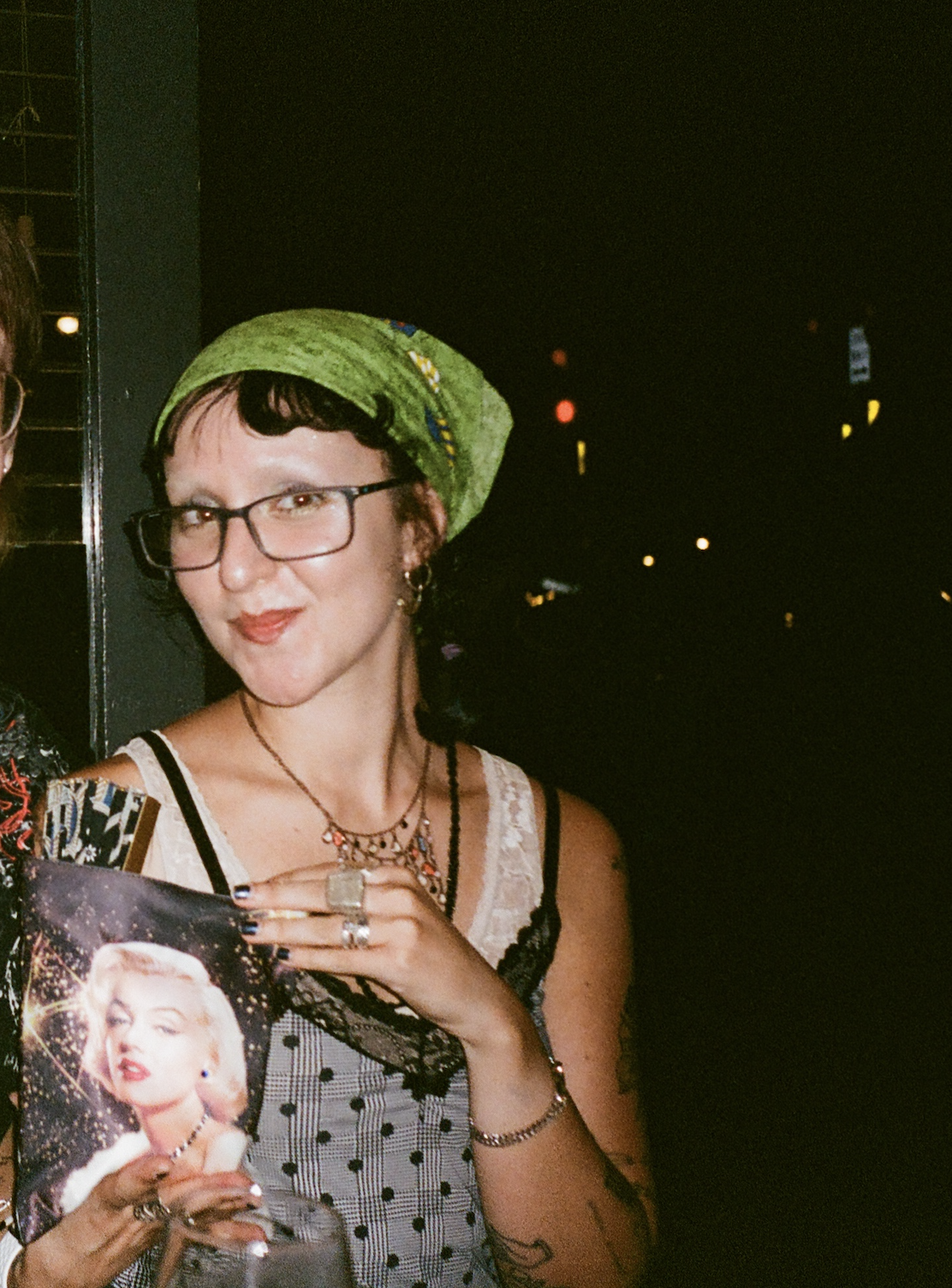
Kalliste Hardy is a Greek-Australian writer living on unceded Gayamaygal land in so-called Australia, currently pursuing a Master of Creative Writing at the University of Sydney. Her work has been published in Voiceworks, Notch, Two Thirds North and more. At any given moment, she can be found playing hide and seek with her shadow. She is on Instagram as @applebottomreads and on X (Twitter) as @umkalli.
Contents
“This language offers one possible framing through which to appreciate the law’s capacity to hope for, request, and even command commitment to a more just future.” Read two poems by Maggie Wang, our first biweekly poet of the Summer 2026 issue, along with a few words about “Possibilities for Action.”
Chapbook Poem: I’ll Never Look This Good Again by Douglas Piccinnini
“[The poem] came out of real pressure: despair, worry, and grief I wanted to hold unflinchingly, alongside the anxiety of becoming a parent… For me the poem became a meditation on all the feeling that surfaces precisely when we’re told to feel only joy.” Read an excerpt from Douglas Piccinnini’s chapbook, House of Bad Memories, along with a few words from the poet.
“She sees herself in carbon, the element that bonds with almost anything- not because it wants to, but because it has empty spaces and things keep showing up to fill them. Notifications. Noise. Needs that never stop arriving.” Read four poems by Joely Williams, our second biweekly poet of the Summer 2026 issue, along with a few words about “Single Mother Considers the Periodic Table.”
ADHD in a Non-ADHD World: on Undersight by Alison Hurwitz
“[Hurwitz] shares moments of angst and moments of awe. More than that, there are moments of deep recognition. She sees herself in [her sons] and, in fact, receives a later-life ADHD diagnosis of her own.” Read the full chapbook review by new contributor, Nancy Murphy.
“The woman’s head & hair are lavishly dressed. I probably leapt off the logic of the hairdresser being blind and therefore had to work on the head/body/mind rather than just hair as a surface issue of presentation.” Read two poems by Irene Cunningham, our third biweekly poet of the Summer 2026 issue, along with a few words about “The Blind Hairdresser.”
Flash Fiction: Nova by Kimmy Chang
“‘Nova’ is a lyrical second-person story about the narrator’s first true encounter with death…the story presents loss not as beautiful in itself, but as the place where beauty begins.” Read the first original fiction piece of the Summer 2026 issue, “Nova” by Kimmy Chang.
“To fit the nuanced, dimensional experience of dysphoria and transition into narrative…often feels flattening, falsely assured. I wanted to look at this discomfort I felt, to see what was necessary in it.” Read three poems by Joshua Zeitler, our fourth biweekly poet of the Summer 2026 issue, along with a few words about “Cobbling.”
Excerpt: “On the puzzle still inside my head” by Truong Tran
“I am trying to excavate memories. I am trying to negotiate the difficult realities of existing as a brown man in this country and within the consciousness of white America.” Read an excerpt from Truong Tran’s forthcoming book from City Lights, How to Exi(s)t: A Poet’s Memoir.
“These poems try to make sense of how I arrived at a life that probably seems well thought-out, but has been one reactionary choice after another.” Read three poems by A.R. Dugan, our fifth biweekly poet of the Summer 2026 issue, along with a few words about “Sleeptalking.”
Original Fiction: Muse by Somtoo Celestine Ezioha
“What I tried to trace was the underside. How watching someone closely for long enough becomes a substitute for approaching them.” Read the second original fiction piece of the Summer 2026 issue, “Muse” by Somtoo Celestine Ezioha.
“After childbirth, my body became a site of criticism rather than something to be celebrated for what it had endured and created. Writing this became a way to confront that experience…” Read three poems by Tanya Tuzeo, our sixth biweekly poet of the Summer 2026 issue, along with a few words about “i get Botox.”
“Through images of a familiar street, personal belongings, and a figure suspended in time, the poem considers absence, remembrance, and the quiet ways we continue searching for those who are gone.” Read two poems by Aardhra Chandran, our seventh, and final, biweekly poet of the Summer 2026 issue, along with a few words about “Street View, 2021.”
Original Fiction: Aletheia by Kalliste Hardy
“Each fragment opens a door to the unsaid or the forgotten, letting language bruise and bloom. It is a study in red, in inheritance, in language, and of the quiet haunt of becoming.” Read the third, and final, original fiction piece of the Summer 2026 issue, “Aletheia” by Kalliste Hardy.