We here at Philly Chapbook Review love poetry, whether it’s in chapbooks or full-length collections. We have a hunch that our readers do, too. Every Tuesday, we publish an update about what full-length poetry titles we know are releasing in the following week.
Information, including product descriptions, is provided by the publisher and not a critical judgment. If we cover the book on this site, links will be included.
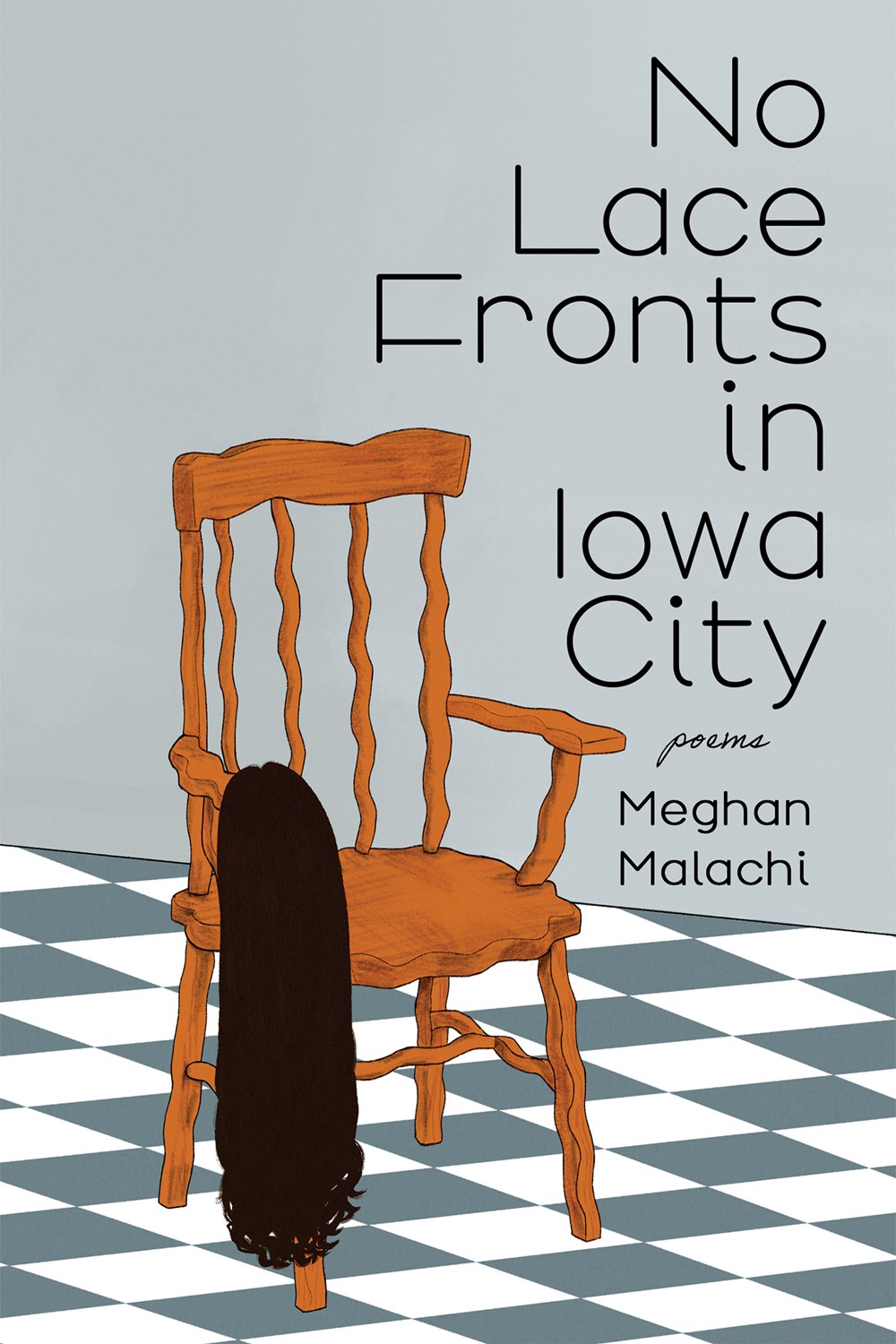
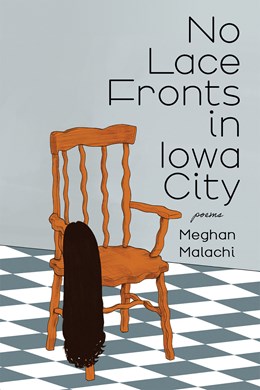
No Lace Fronts in Iowa City, Meghan Malachi
Publisher: Madville Publishing
Publication Date: June 16, 2026
Format: Paperback / eBook
In her debut collection, No Lace Fronts in Iowa City, Meghan Malachi explores how community, desirability, and notions of home influence the journeys by which girls come of age. These poems celebrate a South Bronx childhood and navigate a complicated womanhood in the Midwest through confessional musings on Black Latinx identity and intimate epistolary interludes. Favorite wigs, main character moments, and reimagined anti-heroines are all vessels for exploring girlhood in this love letter to female kinship. No Lace Fronts in Iowa City is ultimately a testament to the desires for belonging and tenderness that we all harbor.
Meghan Malachi is a poet and writer from The Bronx, New York. She Meghan Malachi is a poet from The Bronx, New York. She is the first-place winner of the Spoon River Poetry Review 2022 Editor’s Prize Contest and runner-up of the 2024 Princemere Poetry Prize. Her collection No Lace Fronts in Iowa City was selected by Allison Joseph as runner-up for Madville’s 2024 Arthur Smith Poetry Prize. Her chapbook The Autodidact was published by Ethel Zine & Micro Press. Meghan has an MS in Mathematics from the University of Iowa and an MFA in Creative Writing & Publishing from DePaul University. She is an associate editor at RHINO and lives in Chicago, Illinois.
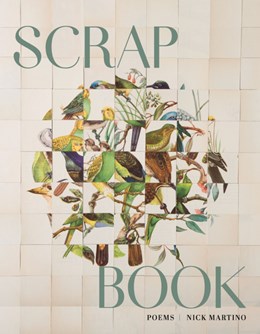
Scrap Book, Nick Martino
Publisher: Alice James Books
Publication Date: June 16, 2026
Format: Paperback / eBook
Set within a Midwestern family home along the shores of Lake Michigan, Scrap Book draws on Marianne Hirsch’s theory of postmemory: “the relationship of the second generation to powerful, often traumatic, experiences that preceded their birth but that were nevertheless transmitted to them so deeply.” Interwoven with poems grounded in a familial archive—such as journal entries and Polaroids of Martino’s father in prison—the collection uses the idea of photographic development as a framework for exploring how insight into family history can emerge gradually, like an image appearing in a darkroom.
Through its use of ekphrasis and archival fragments, Scrap Book creates a textural interior landscape in which the speaker wrestles with how they see themselves and how they are seen by others. Ultimately, Scrap Book is a work of gathering and repair—a lyrical stitching-together of fragments in search of meaning. In reassembling the family archive, Martino opens a space for readers to do the same: to sift through memory, injury, and ego, and fashion from their own “scraps” a deeper understanding of what they carry.
Nick Martino is a poet and teacher from Milwaukee. His debut poetry collection, Scrap Book (Alice James Books), won the 2024 Alice James Editors’ Choice Award and will be published in 2026. His poems have been published in Best New Poets, Narrative, Ninth Letter, The Boston Review, and The Southern Review, among others. A finalist for the 2024 Sewanee Review Poetry Prize, he holds an MFA from the University of California, Irvine, where he received the 2022 Excellence in Poetry Prize. He lives in LA.
Small Theatres, Mark Truscott
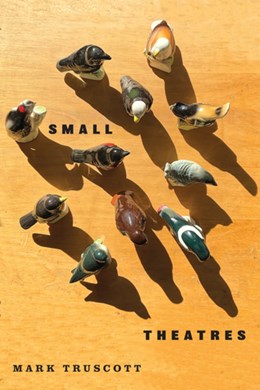
Publisher: McGill-Queen’s University Press
Publication Date: June 16, 2026
Format: Paperback / eBook
Marshalling minimalist and objectivist techniques and a relentless attention to the fissures running through every moment of our lives, Small Theatres gives shape to a reality constantly on the verge of collapse.
The world’s / face like a / picture plane. / Its space / offered to the / eye as a / colour might be.
In these poems, everyday occurrences – an imprint in grass, crumbs in a wrapper, the sound of a thermostat engaging – are opportunities for thinking through close attention. Small Theatres is the latest instalment in Mark Truscott’s exploration of our perceptions and feelings of separation from the world around us.
Truscott has mobilized the materiality of language, pushing it into territories of its own failure. These poems find a haunting, opaque song, as they shift theme and method toward time-based disciplines such as music and drama. Small Theatres looks for meaning in an increasingly meaningless world where simultaneous scarcity and excessive availability are products of mechanisms seemingly beyond our grasp. Marshalling minimalist and objectivist techniques and a relentless attention to the fissures running through each thought and every moment of our lives, these poems give shape to a reality constantly on the verge of collapse.
Composed at home in the quiet of early morning, Small Theatres evokes practices of solitude, domesticity, and sober attentiveness to the seemingly insignificant.
Mark Truscott is the author of three other books of poetry. His most recent collection, Branches, won the inaugural Nelson Ball Prize for “poetry of observation.” He lives in Toronto.
Stegosaurus Moon, Scott Beal

Publisher: Dzanc Books
Publication Date: June 16, 2026
Format: Paperback
Stegosaurus Moon explores heartbreak, divorce, parenthood and the discovery of new, often unexpected, ways forward. Poem by poem, the speakers puzzle through how one love comes apart and how a new life comes together in its wake.
Through encounters with everything from dinosaurs and scorpionflies, Britney Spears and the Rock, birthdays, deaths, pets, teenagers, Raiders of the Lost Ark and Rupaul’s Drag Race, the sequence builds into an examination of how the language of queer identity can be weaponized or can open space for more expansive ways to live and love. A tender accounting of the poet peering into a mirror that morphs and warps with language that consistently astounds, these pieces walk in step with the work of Ross Gay, Jeffrey McDaniel, Denise Duhamel, and Jennifer L. Knox.
Scott Beal is the author of Wait ‘Til You Have Real Problems (Dzanc Books, 2014) as well as the chapbook The Octopus (Gertrude Press, 2016). He directs the Lloyd Scholars for Writing and the Arts program at the University of Michigan and teaches in the Sweetland Center for Writing. He co-hosts the Skazat! monthly online poetry series and co-edits Public School Poetry.
Bottom Feeders, Arielle Hebert
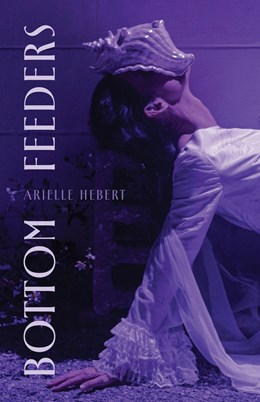
Publisher: Black Lawrence Press
Publication Date: June 16, 2026
Format: Paperback
A vibrant and gritty debut from poet Arielle Hebert, Bottom Feeders is a queer coming-of-age collection set in late 2000s Florida, during the height of the opioid epidemic. Here, overdoses, red tide blooms, and hurricanes are as much a part of growing up as fleeting teenage desires, beach parties, and prom.
This is a landscape of glitter and grime, where young queer love is tested by the tides of addiction and recovery. The collection thrums with a sense of spectacle and surreality, accented by Sarasota’s history as a circus town and Florida’s deadly wildlife—alligators, needlefish, invasive snakes. The heat, humidity, and salt air of the Gulf become characters in their own right, as haunting as the love, grief, and loss found here. Despite the long shadows cast over these poems, there is beauty, friendship, chosen family, and hope in Bottom Feeders.
Arielle Hebert is a queer poet based in Durham, NC, with roots in Florida and Louisiana. She holds an MFA in poetry from North Carolina State University. She won the 2024 Lit/South Award for Poetry selected by Jericho Brown and was included in Best New Poets 2024, guest edited by Anders Carlson-Wee. Her work has appeared in Southern Humanities Review, Grist, Great River Review, Nimrod, and Redivider, among others. Bottom Feeders was a finalist for the St. Lawrence Book Award and is her debut poetry collection.
sipèstisyon, Mckendy Fils-Aimé
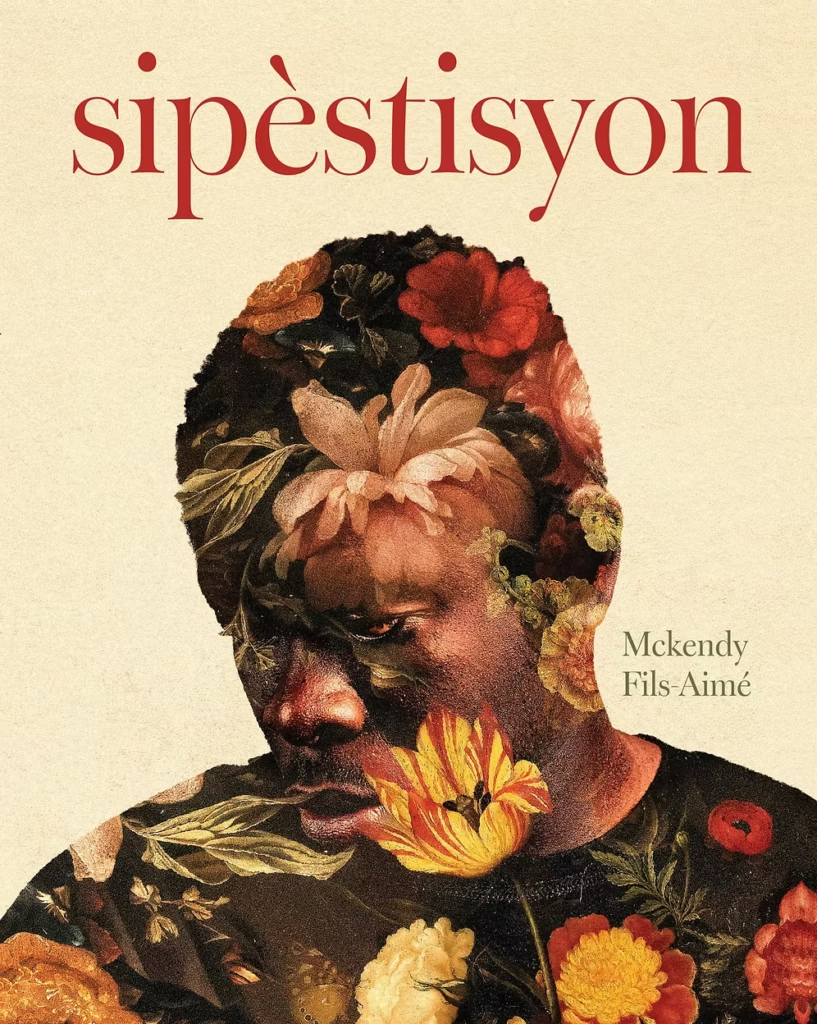
Publisher: YesYes Books
Publication Date: June 16, 2026
Format: Paperback
sipèstisyon unflinchingly navigates generational trauma, migration, and spirituality. In this powerful debut, Haitian-American poet Mckendy Fils-Aimé examines wounds left by abuse, familial estrangement, and racial violence. Through the lens of Haitian superstitions, sipèstisyon explores the imperfect and non-linear nature of healing. These poems don’t pretend that moving on is as simple as moving on. They know that mending a wound requires understanding its shape and origin and that confrontation is sometimes necessary. In each poem, sipèstisyon asks which is louder: the sound of our ache or the call to forgive?
Mckendy Fils-Aimé is a New England based Haitian American poet, organizer, and teaching artist. He has received fellowships from Callaloo, Cave Canem, The Watering Hole, CantoMundo, and Periplus. Over the span of nearly two decades, Mckendy has represented New England in several regional and national poetry slams, making numerous semi-final and final stage appearances. Mckendy’s work has been featured or is forthcoming in Best New Poets, Adroit, Muzzle, Obsidian, the Academy of American Poets’ Poem-a-Day series, and elsewhere. sipèstisyon (YesYes Books, 2026) is his debut poetry collection.
Wherever You Go, There You Are: Letters Rescued from a Fire, Mark Fleckenstein
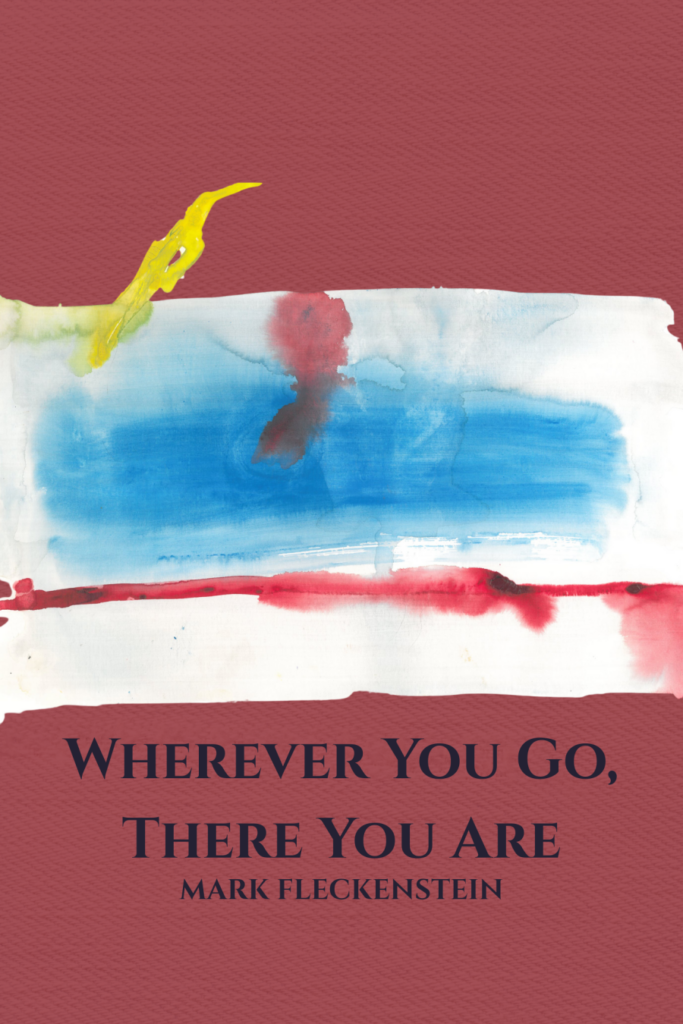
Publisher: Unsolicited Press
Publication Date: June 16, 2026
Format: Paperback
Wherever You Go, There You Are: Letters Rescued from a Fire by Mark Fleckenstein is a fractured, obsessive, deeply intimate collection that moves through longing, memory, art, emotional collapse, and the impossible desire to reconstruct what has already vanished. Part poetry collection, part epistolary artifact, part meditation on obsession and survival, the book assembles “left-handed correspondence” from a brief but life-altering exchange between two artists whose connection burns long after contact ends.
Across letters, commentary, prose fragments, and poems threaded through recurring symbols of red shoes, birds, mirrors, windows, photographs, and unfinished conversations, Fleckenstein interrogates what happens when memory becomes both sanctuary and wound. The collection wrestles with the limits of language itself: how words fail, distort, seduce, memorialize, and sometimes imprison the people who depend on them most.
Mark Fleckenstein was born in Chicago, and grew up in Ohio, Michigan, Connecticut, North Carolina and New Hampshire. He graduated from University of North Carolina in Charlotte with a B.A. in English and after completing his MFA in Writing at Vermont College of Fine Arts, he moved to Massachusetts, and became very involved in the Boston area poetry community. He was an assistant editor for (BLuR), the Boston Literary Review, founder/coordinator of two bi-weekly poetry reading series in Boston and a workshop leader. He’s given poetry readings with famous poets (Charles Simic, Linda Gregg, Mark Doty, Mark Cox and Carl Phillips) and not so famous poets.
The Universe Thinks about Anger Management, Jake Bauer
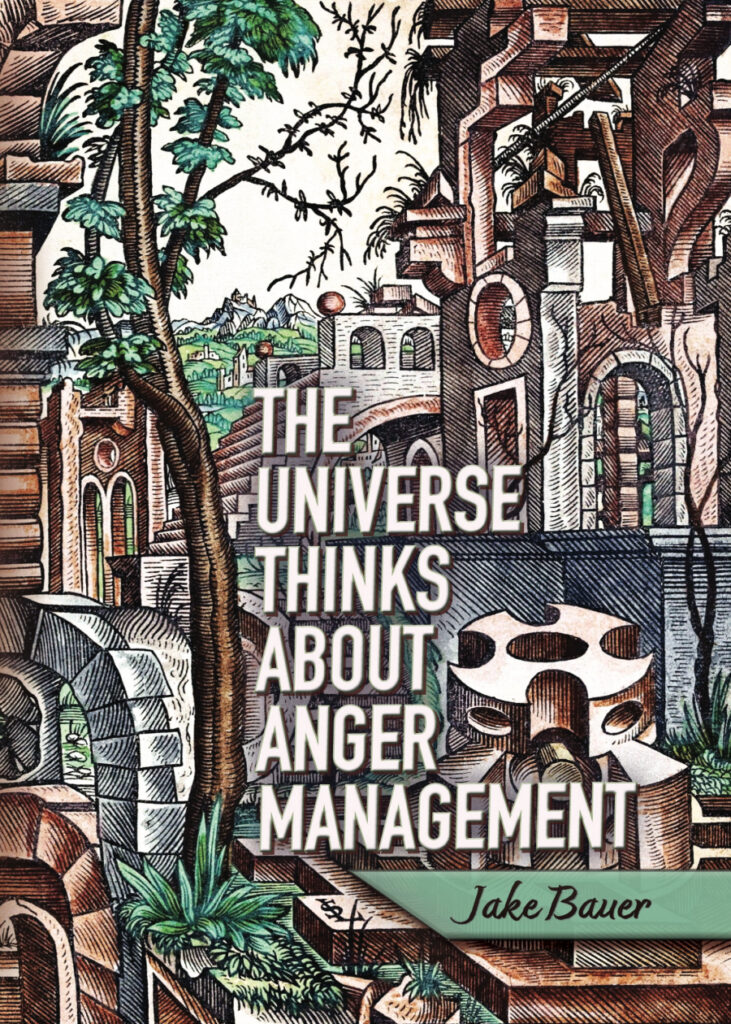
Publisher: Burnside Review Press
Publication Date: June 17, 2026
Format: Paperback
“In Jake Bauer’s The Universe Thinks about Anger Management, the universe thinks about anger management, time is a lunch box, and small piranhas become big piranhas over time. Bauer’s surreal, daring, whimsical collection offers us a delightful exploration of language and sense making. It surprises us at every turn with brilliant line breaks, syntactic reversals and truly unexpected images. It made me think about things I had never thought before and see small moments and the world around me anew. With its tiny sunglasses, tiny crowns and mirrors, this book delighted me and stretched my brain.” —Ananda Lima
Jake Bauer’s second book, The Universe Thinks about Anger Management, was selected by Ananda Lima as the winner of the 2024 Burnside Review Press Book Award. He is also the author of Tracey Emin’s Tent and the chapbook Big Pool, Oh and is the co-author of the chapbook Idaho Falls.
Don’t see a poetry title published between 6/16 and 6/22 here? Contact us to let us know!
Contents
Chapbook Poem: Slow Burn by Evan Wang
“The concept of personifying a slow burn deeply resonated with who I thought myself to be—a slow burn, love flickering around me.” Read the featured Chapbook Poem of the Month for April 2026, “Slow Burn” by Evan Wang, along with a few words from the poet.
Book Excerpt: She wants shimmering scales by Nicole Alston Zdeb
“The nexus of the erotic, the social, and the body felt relevant to what I was experiencing at the end of the 20th Century. There are glimmers of personal lore as well…” Read the featured Excerpt Poem of the Month for April 2026, “She wants shimmering scales” from The End of Welcome by Nicole Alston Zdeb, along with a few words from the poet.
“I wanted to explore how time was registered not only by the calendar and clock, but also in the various utilitarian tasks of my mother’s life.” Read three poems by Ron Mohring, our first biweekly poet of the Spring 2026 issue, along with a few words about “Fuse.”
Three Poems by Andrew Pelham-Burn
“Children in these circumstances are deprived of love at a formative stage and learn to immediately behave like adults without the benefit of the learning path of childhood.” Read three poems by Andrew Pelham-Burn, our second biweekly poet of the Spring 2026 issue, along with a few words about “Conkers.”
A Conversation with John deSouza
“Language is a powerful tool and can do great harm both to ourselves and to those most close to us when used cruelly or selfishly.” Poet John deSouza discusses his chapbook, This Rough Magic, his creative process, and the influence of John Ashbery in this interview with editor Danielle McMahon.
Chapbook Poem: from Stray Hunter’s Bullet by Lance Le Grys
“…what interested me was the idea of a character who didn’t do what he was capable of, not because of external circumstances, but because of either a lack of will or a seemingly perverse one.” Read the featured Chapbook Poem of the Month for May 2026, from Stray Hunter’s Bullet by Lance Le Grys, along with a few words from the poet.
Book Excerpt: Love does not exist by Maria Giesbrecht
“This poem was inspired by a dream… I had this strange feeling when I woke up that it meant something more and started writing a poem to see if anything would reveal itself to me.” Read the featured Excerpt Poem of the Month for May 2026, “Love does not exist” from A Little Feral by Maria Giesbrecht, along with a few words from the poet.
“After a loss in my family, I discovered one grieves for both the living who hide their pain and for the dead who sleep in silence.” Read two poems by Patricia Wallace, our third biweekly poet of the Spring 2026 issue, along with a few words about “Fox.”
May ’26: New Staff, New Calls, New(ish) Name
Editor Aiden Hunt provides information about changes to PCR’s name, format, and staff in this editor’s note, which also contains links to our Spring calls for submissions.
“I kept thinking about how easily adults learn to stop seeing what’s right in front of them, especially when they’re somewhere between one country and another, neither arriving nor leaving.” Read four poems by Nivara Lune, our fourth biweekly poet of the Spring 2026 issue, along with a few words about “Notes Toward an Elsewhere.”
The Lines of Landscape: on The Catastrophes by Marie Scarles
“Scarles’ choice of title points away from place, and toward the book’s deeper and more powerful offering: a changed way of seeing, one of the hallmarks of any successful poetics.” Read the full chapbook review by contributing editor, D.W. Baker.
“Every time I plucked a few of the little orange sun sugars to take inside, their garden smell lingered on my fingers. It was almost enough to just sit with that scent…” Read three poems by Kait Quinn, our fifth biweekly poet of the Spring 2026 issue, along with a few words about “The Tomato.”
Chapbook Poem: Superbloom by Joyce Schmid
“That June, flowers bloomed everywhere in Northern California—as if to honor her, to celebrate her life. This poem is an attempt to accept the fact that she is really gone.” Read the featured Chapbook Poem of the Month for June 2026, from Superbloom by Joyce Schmid, along with a few words from the poet.
Book Excerpt: The Well by Robin Becker
“Allowing flickering sentiments and images to play against one another, I replicated one form of consciousness. A surprising aspect of the poem: the sudden appearance of figures of government.” Read the featured Excerpt Poem of the Month for June 2026, “The Well” from Midsummer Count by Robin Becker, along with a few words from the poet.
“Like a lot of my poems, this one reaches toward something impossibly out of grasp. But … maybe that’s the power of a poem, to momentarily touch something out of our reach.” Read three poems by Scott Weaver, our sixth and final biweekly poet of the Spring 2026 issue, along with a few words about “Annotating The Inferno.”
A Conversation with Abby Minor
“[A] long time ago I realized, and more or less accepted, that I would commune with most of my poet teachers and comrades via their work, not in person. And my work is how I talk to them.” Poet Abby Minor discusses her chapbook, Infinity Ballot, her Jewish-Appalachian heritage, and her convictions in this interview with new contributor, Julie Swarstad Johnson.