
We here at Philly Chapbook Review love poetry, whether it’s in chapbooks or full-length collections. We have a hunch that our readers do, too. Every Tuesday, we publish an update about what full-length poetry titles we know are releasing in the following week.
Information, including product descriptions, is provided by the publisher and not a critical judgment. If we cover the book on this site, links will be included.
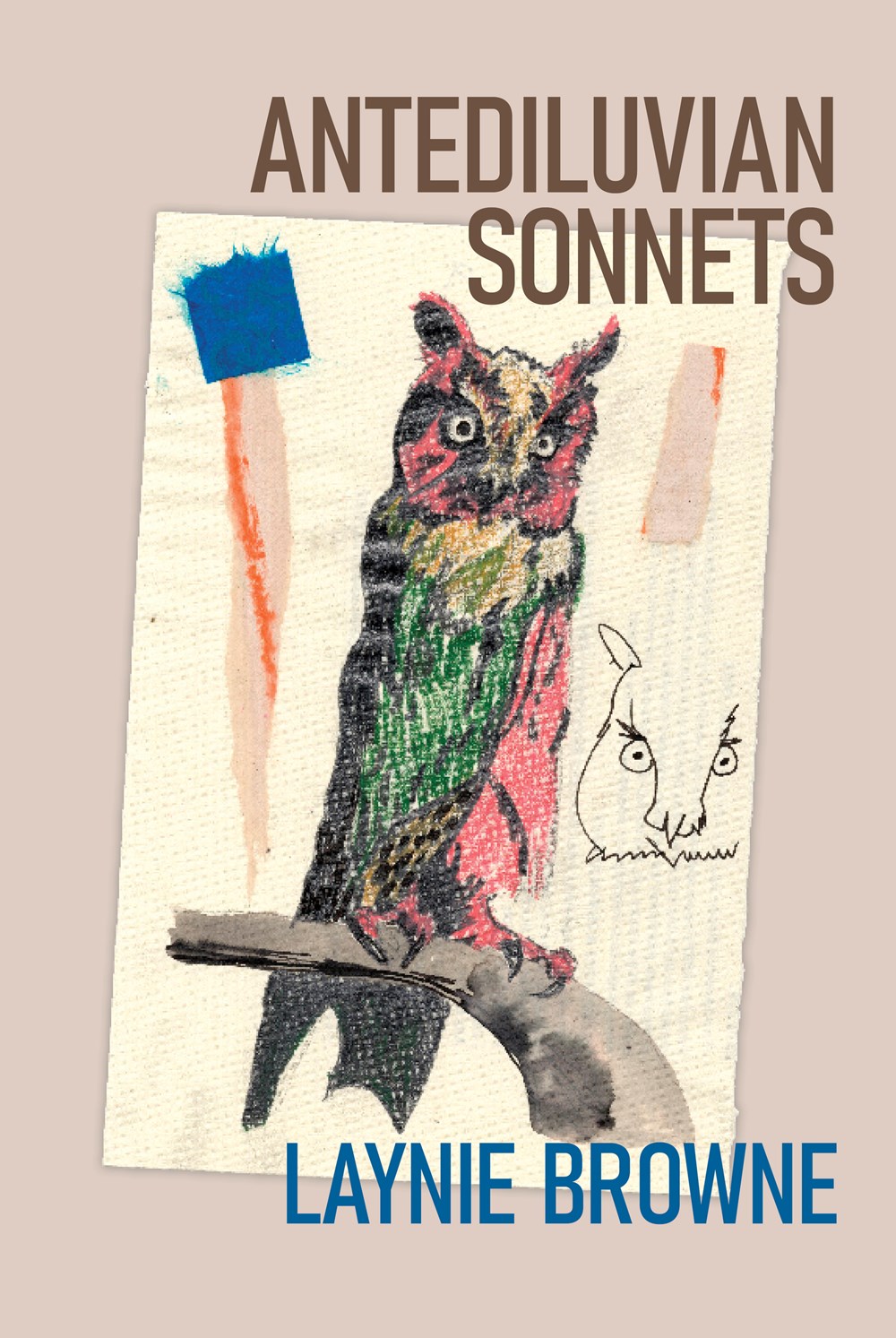
Antediluvian Sonnets, Laynie Browne
Publisher: Bull City Press
Publication Date: August 4, 2026
Format: Paperback
Antediluvian Sonnets sets out to reflect and refract the ways time is constantly bent, especially through elegy. This book is also a love letter and homage text, tracing the lineage of experiments received from one mother of the modern sonnet, Bernadette Mayer. Loss is ageless, and transmutes the notion of any life being linear. Form is another way to consider time, another way for the ancient to become the future.
Laynie Browne‘s recent books of poetry include Everyone & Her Resemblances (Pamenar 2024) and Intaglio Daughters (Ornithopter 2023). She co-edited the anthology I’ ll Drown My Book: Conceptual Writing by Women (Les Figues Press) and edited the anthology A Forest on Many Stems: Essays on The Poet’ s Novel (Nightboat). Honors include a Pew Fellowship, the National Poetry Series Award for her collection The Scented Fox, and the Contemporary Poetry Series Award for her collection Drawing of a Swan Before Memory. She teaches at the University of Pennsylvania.
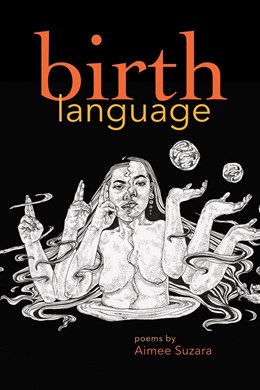
Birth Language, Aimee Suzara
Publisher: Tia Chucha Press
Publication Date: August 4, 2026
Format: Paperback
The book fuses English, Spanish, and Tagalog. It employs archival texts from as early as the 1500s when European conquistadors and explorers encountered the pre-colonial Philippine islands. Guided by the babaylan (shaman) and populated by mythical creatures like the mananneansal kapre, and sireno, the collection celebrates a history of resistance, reclaiming and redefining the self despite colonization, assimilation, and cultural loss.
Filipino American poet, playwright, performer, and educator, Aimee Suzara, is the author of the poetry collection SOUVENIR (Wordtech Editions, 2014) and two chapbooks, Finding the Bones and The Space Between (Finishing Line Press, 2013 and 2008). Her poems, prose, and plays have appeared in Kartika Review, California Language Association Journal, Orion Magazine, Raising Mothers, Poets.org, Mom Egg Review, and Women Re-Creating Classics (Bloomsbury 2025), among others. As a multidisciplinary performer, Suzara has collaborated with dance theater and music ensembles such as Deep Waters Dance Theater and the Grammy Award-winning Kronos Quartet. She holds degrees from UC Berkeley and Mills College. Based in Oakland, California, she teaches writing at Bay Area colleges and universities and through her coaching business, Wild Tongues.
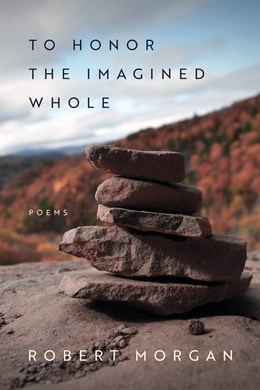
To Honor the Imagined Whole, Robert Morgan
Publisher: LSU Press
Publication Date: August 5, 2026
Format: Paperback / eBook
Many of the poems in To Honor the Imagined Whole, a new collection of verse from Robert Morgan, are concerned with music. The longest, “The Oratorio That Was Time,” celebrates the discovery by a youth that music surrounds us, not only in the call of a quail in fields and doves in morning fog, or in sounds of wind and thunder, music at church and on the radio, but in the late-night creak of a house, the distant bark of a dog, rippling water, the ache of silence, consciousness, and time itself. Other poems recall the notes of an ancestor’s harmonica, a faraway cowbell, a mandolin played by an unpopular step-grandmother.
Accompanying poems address subjects drawn from recent events, such as the sweet growing solipsism of pandemic lockdown, and the simultaneous sense of lateness and anticipation in our lives. In other poems, Morgan seeks to illustrate and understand discoveries of contemporary science, the surprising poetry of the everyday, and the way history impacts the present on the most unexpected occasions. Besides music, a leading theme of the book is the power of family stories. Morgan writes of how people long gone but vivid in memory, through bonds of kinship—sometimes painful, often liberating—create a sense of community and recognition across time.
Robert Morgan has published more than twenty-five books of poetry, fiction, and nonfiction, including the bestselling Boone: A Biography. His novel Gap Creek was a New York Times bestseller and Notable Book, and an Oprah’s Book Club selection. He is the Kappa Alpha Professor of English Emeritus at Cornell University.
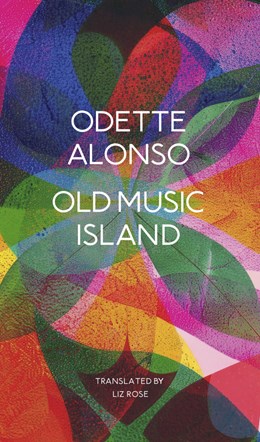
Old Music Island, Odette Alonso, Liz Rose (Tr)
Publisher: Seagull Books
Publication Date: August 5, 2026
Format: Paperback
Old Music Island is a sensuous, dreamlike poetry collection by Odette Alonso, a leading voice in contemporary Cuban and Mexican literature. Born in Santiago de Cuba and living in Mexico since 1992, Alonso is an award-winning poet whose work transforms exile, desire, and memory into sites of lyrical and emotional intensity.
These poems move to the rhythm of nostalgia and smoke. The collection begins with a dream of light and song. The intimate encounter, always an island, is surrounded by the sea experience, and an exchange of glances is but a threshold into the vast expanse. Then comes fear, the fuss of hands, brackish tongue, a conflagration. Only those daring to enter will learn the patterns of the tide and the arrhythmia of the heart. The collection is a somatic encounter of tastes, touch, comings and goings, surprise, and seduction.
Translated by Liz Rose, whose work bridges lyric practice, trans theory, and feminist thought, Old Music Island offers an English-language rendering that honors the book’s lush musicality and charged physical presence. This is poetry of fleeting contact and lasting imprint—an invitation to listen closely, and to cross the threshold.
Odette Alonso was born in Santiago de Cuba and has lived in Mexico since 1992. In addition to writing a novel and two short story collections, she has published twenty poetry collections, receiving numerous prizes in the genre. Alonso is currently coordinator for the Bulevar Arcoíris, a cultural project that promotes gender-dissident art and literature.
Liz Rose lives and writes on the occupied ancestral lands of the Tohono O’odham Nation and the Pascua Yaqui Tribe. They translate from Spanish and Portuguese and are the author of Trans Temporalities: Contemporary Experiments Beyond Racialized Gender.
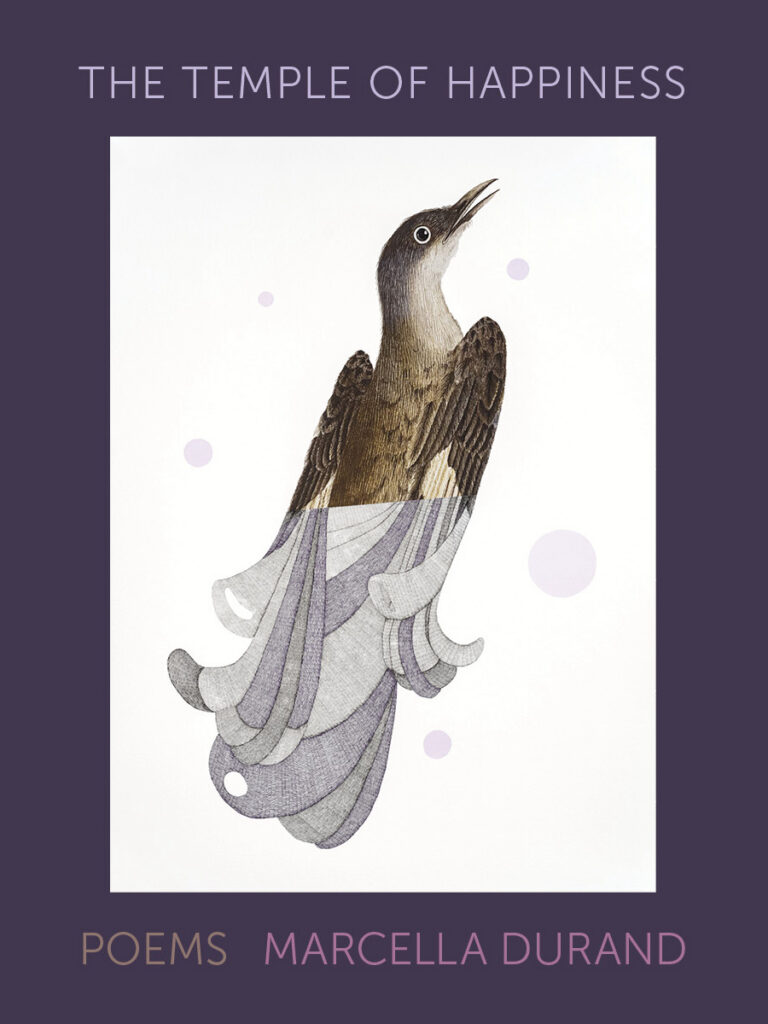
The Temple of Happiness, Marcella Durand
Publisher: Black Square Editions
Publication Date: August 8, 2026
Format: Paperback
Marcella Durand explores the creative-emotional processes behind building a Temple of Happiness, laying poems one upon the other over loss, anxiety, love and beauty almost too intense to bear. In five sections, she moves from tracing how she might understand reality when reality is reflected through a million deceptive mirrors, to the salvatory prospects of visual art and poetry, to inhabiting the micro and macro universes, from insects to birds to trees to stars to where the universe curves, to deep familial grief only graspable through color. In the last section, she traces the points where her own body meets the rocks and ocean at the edge of a land stolen, claimed, owned and privatized, and by walking/writing into such, she trespasses: into family history, into migrations, and into where one’s own temple of happiness might, even ephemerally, make some sort of sense.
Marcella Durand’s next book, The Temple of Happiness, is forthcoming from Black Square Editions fall 2026. Her book, A Winter Triangle, received the 2024 Poetic Justice Institute Prize (Fordham University Press, 2025). She is the co-editor with Jennifer Firestone of Other Influences: The Untold History of Avant-Garde Feminist Poetry (MIT Press, 2024).
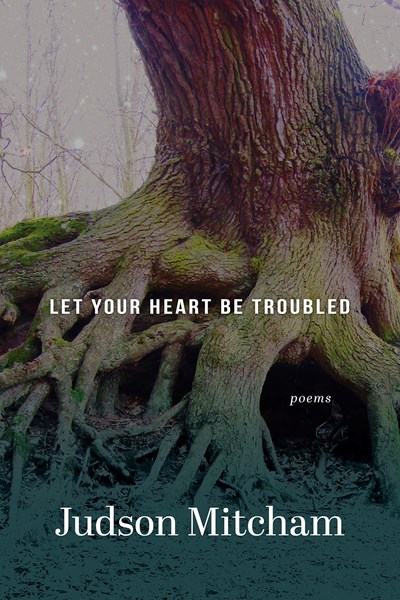
Let Your Heart Be Troubled, Judson Mitcham
Publisher: Mercer University Press
Publication Date: August 4, 2026
Format: Paperback
Let Your Heart Be Troubled is Judson Mitcham’s first collection of poems in twenty years. It takes as its epigraph Paul Valéry’s description of language as “the god gone astray in the flesh.” These poems engage a single life and many lives at once, moving toward what is here called soul, traveling a path laid down by a lexicon of plain words. This is a collection that should reward opening the book at random, but it is structured so that it may also be read as the scaffolding of a narrative. The history it begins with is American history; the soul at the end of its path is an American soul. The lexicon’s journey is orderly, but the language does go astray: it changes tone; it offers a fluid music plus lines so thickly textured as to raise a racket; it revels in vernacular speech; it amuses itself; it plays at irony and keeps moving toward an end. The poems address family and the loss of family; faith and the loss of faith; race and human failure; the Christ-haunted South; the passing of time. Many of these poems were written during the author’s tenure as poet laureate of Georgia. “Prayer” was delivered at The Funeral for 13,000, Andersonville Historic Site, September 19, 2015. “Sadness” and “Praise” served as benedictions at the Governor’s Awards in the Arts and Humanities.
Judson Mitcham is the former poet laureate of Georgia and a member of the Georgia Writers Hall of Fame. His recent novel, What You Cannot Tell, was published by Mercer University Press. Mitcham lives in Macon, Georgia.
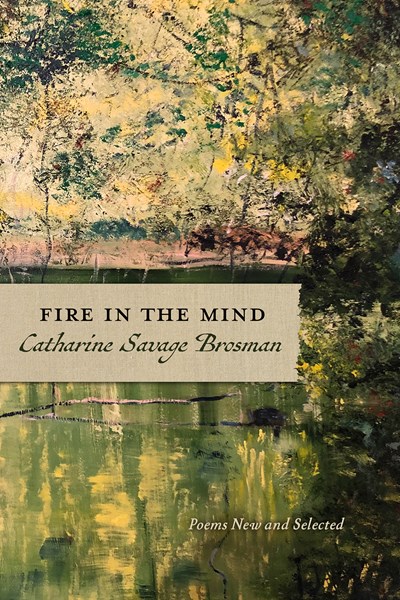
Fire in the Mind: Poems New and Selected, Catharine Savage Brosman
Publisher: Mercer University Press
Publication Date: August 4, 2026
Format: Paperback
Fire in the Mind: Poems New and Selected crowns the lifetime career of an outstanding poet whom Claude Wilkinson calls “one of this country’s finest poets” and James Matthew Wilson identifies as “one of the greatest poets of our age.” This volume presents selections from Brosman’s debut collection, Watering (1972), which received high commendation nationally, through Metates and Other Poems (2025) and new and uncollected work. Page after page induces poetic shivers. The range of topics, mastery of form, and fidelity to what Wilkinson terms “her traditionalist aesthetic” are visible throughout. While often personal, sometimes wrenchingly so, as in “Father,” the work also sketches countless friends and strangers as well as historical figures (“Frémont in the Granite Range”). Romantic sweep and broad strokes, what Wilson praises as an “expansive, loose” quality, alternate with close focus, a classical bent. Many poems are centered on fate: “Destinies may clash. / A tufted titmouse, a bromeliad, and I / are fortune’s darlings, or her trash.” The geographic scope includes Spain, the English Channel, and the American South and Southwest, painted in vast scenes but with great precision. Nature, “a glyph for universals,” occupies a major place, appreciated for itself, insofar as possible, but always in the human light of sensation and intellection, since, though belonging to nature, we also hold nature in our minds and, from it, abstract ideas. The iambic rhythm is felt everywhere, whatever the line and stanza forms–crafted, controlled free verse, blank verse, or traditional rhymed, metered lines. These poems “shake with being.”
Catharine Savage Brosman, professor emerita of French at Tulane University, is prominent in the Republic of Letters as an essayist, scholar in French and American Literature, and, foremost, poet. Her fifteen poetry collections include, most recently, Metates and Other Poems, Arm In Arm, Memory of Manaus, and Clara’s Bees. Her short fiction appeared as An Aesthetic Education and Other Stories. Brosman lives in Houston, Texas.
Don’t see a poetry title published between 8/4 and 8/10 here? Contact us to let us know!
Contents
“This language offers one possible framing through which to appreciate the law’s capacity to hope for, request, and even command commitment to a more just future.” Read two poems by Maggie Wang, our first biweekly poet of the Summer 2026 issue, along with a few words about “Possibilities for Action.”
Chapbook Poem: I’ll Never Look This Good Again by Douglas Piccinnini
“[The poem] came out of real pressure: despair, worry, and grief I wanted to hold unflinchingly, alongside the anxiety of becoming a parent… For me the poem became a meditation on all the feeling that surfaces precisely when we’re told to feel only joy.” Read an excerpt from Douglas Piccinnini’s chapbook, House of Bad Memories, along with a few words from the poet.
“She sees herself in carbon, the element that bonds with almost anything- not because it wants to, but because it has empty spaces and things keep showing up to fill them. Notifications. Noise. Needs that never stop arriving.” Read four poems by Joely Williams, our second biweekly poet of the Summer 2026 issue, along with a few words about “Single Mother Considers the Periodic Table.”
ADHD in a Non-ADHD World: on Undersight by Alison Hurwitz
“[Hurwitz] shares moments of angst and moments of awe. More than that, there are moments of deep recognition. She sees herself in [her sons] and, in fact, receives a later-life ADHD diagnosis of her own.” Read the full chapbook review by new contributor, Nancy Murphy.
“The woman’s head & hair are lavishly dressed. I probably leapt off the logic of the hairdresser being blind and therefore had to work on the head/body/mind rather than just hair as a surface issue of presentation.” Read two poems by Irene Cunningham, our third biweekly poet of the Summer 2026 issue, along with a few words about “The Blind Hairdresser.”
Flash Fiction: Nova by Kimmy Chang
“‘Nova’ is a lyrical second-person story about the narrator’s first true encounter with death…the story presents loss not as beautiful in itself, but as the place where beauty begins.” Read the first original fiction piece of the Summer 2026 issue, “Nova” by Kimmy Chang.
“To fit the nuanced, dimensional experience of dysphoria and transition into narrative…often feels flattening, falsely assured. I wanted to look at this discomfort I felt, to see what was necessary in it.” Read three poems by Joshua Zeitler, our fourth biweekly poet of the Summer 2026 issue, along with a few words about “Cobbling.”
Excerpt: “On the puzzle still inside my head” by Truong Tran
“I am trying to excavate memories. I am trying to negotiate the difficult realities of existing as a brown man in this country and within the consciousness of white America.” Read an excerpt from Truong Tran’s forthcoming book from City Lights, How to Exi(s)t: A Poet’s Memoir.
“These poems try to make sense of how I arrived at a life that probably seems well thought-out, but has been one reactionary choice after another.” Read three poems by A.R. Dugan, our fifth biweekly poet of the Summer 2026 issue, along with a few words about “Sleeptalking.”
Original Fiction: Muse by Somtoo Celestine Ezioha
“What I tried to trace was the underside. How watching someone closely for long enough becomes a substitute for approaching them.” Read the second original fiction piece of the Summer 2026 issue, “Muse” by Somtoo Celestine Ezioha.
“After childbirth, my body became a site of criticism rather than something to be celebrated for what it had endured and created. Writing this became a way to confront that experience…” Read three poems by Tanya Tuzeo, our sixth biweekly poet of the Summer 2026 issue, along with a few words about “i get Botox.”
“Through images of a familiar street, personal belongings, and a figure suspended in time, the poem considers absence, remembrance, and the quiet ways we continue searching for those who are gone.” Read two poems by Aardhra Chandran, our seventh, and final, biweekly poet of the Summer 2026 issue, along with a few words about “Street View, 2021.”
Original Fiction: Aletheia by Kalliste Hardy
“Each fragment opens a door to the unsaid or the forgotten, letting language bruise and bloom. It is a study in red, in inheritance, in language, and of the quiet haunt of becoming.” Read the third, and final, original fiction piece of the Summer 2026 issue, “Aletheia” by Kalliste Hardy.