Contributions
- Original Fiction: Aletheia by Kalliste Hardy
 “Each fragment opens a door to the unsaid or the forgotten, letting language bruise and bloom. It is a study in red, in inheritance, in language, and of the quiet haunt of becoming.” Read the third, and final, original fiction piece of the Summer 2026 issue, “Aletheia” by Kalliste Hardy.
About the Contributor
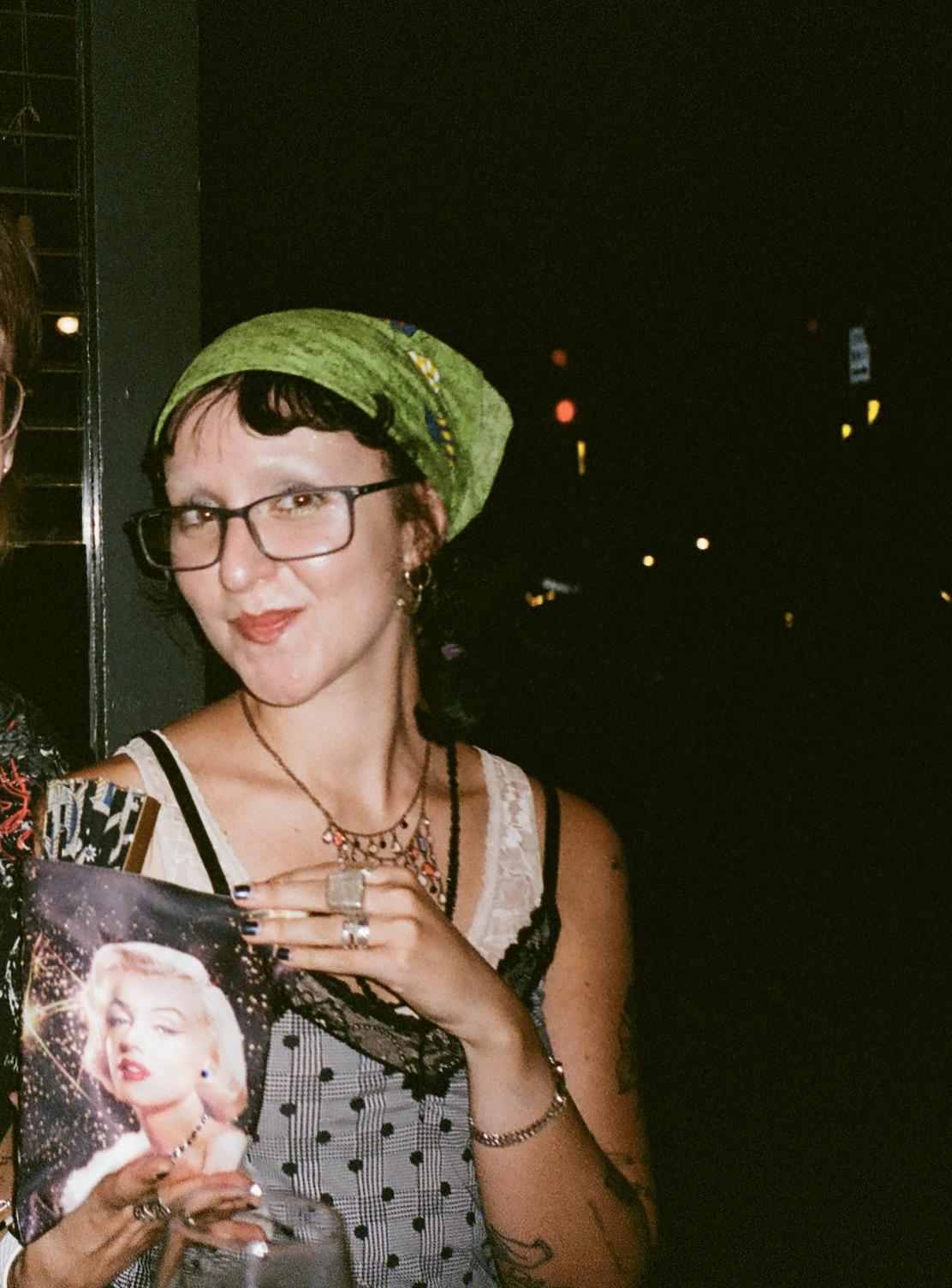
Kalliste Hardy is a Greek-Australian writer living on unceded Gayamaygal land in so-called Australia, currently pursuing a Master of Creative Writing at the University of Sydney. Her work has been published in Voiceworks, Notch, Two Thirds North and more. At any given moment, she can be found playing hide and seek with her shadow. She is on Instagram as @applebottomreads and on X (Twitter) as @umkalli.
Recent Work
- Poem: fortune cookie by Kalliste Hardy (Full House Literary),
- Preview of Poems (Artery Magazine)
Contributor Q & A
Can you tell readers a little about yourself and your life?
To steal Charlotte Lucas' words: I'm 27 years old, I've no money and no prospects. I'm already a burden to my parents. Unlike Miss Lucas, I am lucky enough to be studying a Master of Creative Writing at the University of Sydney, on Gadigal land in so-called Australia. High school English teacher by day, writer and reader when I can steal the time. Currently obsessed with Maggie Nelson (but who isn't?), and a current project I'm working on is a creative-critical ekphrasis in response to some of her books. No pets, although soon hoping to invest in an ant farm.
How long have you been a writer and how did you get started?
A professor recently told me that writing is a childish act. It's work, of course, but it is also scribbles and play. Like most writers, I always have the worlds/words in my head, but only began writing "properly" at the tail end of my undergraduate studies. I applied to an emerging writers' magazine based in Sydney, on a whim, and obviously lathering myself up for rejection. To my elation, they liked what I wrote. Now, working on my first long project, I have to keep reminding myself to simply keep writing: through rejection, through distraction, through life. If writing is childish, I am perfectly content in extending my childhood forever.
What’s an accomplishment in your writing life of which you’re proud and what do you still hope to acheive?
Joining a Creative Writing Masters program was a big step for me. To be inside the molten core of a community in which everyone around you cares as deeply as you do about The Thing - that's very special. Perhaps, though, the idea that my love for literature and writing has only grown over the past few years, that is an accomplishment in itself, to me. As a goal: getting a book published would be incomprehensible.
What do you look for in a book? Who are your favorite writers?
Angela O'Keeffe, Jhumpa Lahiri, Maggie Nelson, Elisa Shua Dusapin. Forgive me. It was very hard to write down only four names.
I think I have great instincts when selecting the books I read. I do get a lot of books recommended to me, and I tend to trust the judgments of those who prescribe them. I am grateful, also, to the reading lists for my university coursework, and the brilliant educators that curate them. This is always where the good stuff is.
I am not great at recommending books to others. When I do love a book so zealously, I tend to proselytise. I'm working on that.
Contents
“This language offers one possible framing through which to appreciate the law’s capacity to hope for, request, and even command commitment to a more just future.” Read two poems by Maggie Wang, our first biweekly poet of the Summer 2026 issue, along with a few words about “Possibilities for Action.”
Chapbook Poem: I’ll Never Look This Good Again by Douglas Piccinnini
“[The poem] came out of real pressure: despair, worry, and grief I wanted to hold unflinchingly, alongside the anxiety of becoming a parent… For me the poem became a meditation on all the feeling that surfaces precisely when we’re told to feel only joy.” Read an excerpt from Douglas Piccinnini’s chapbook, House of Bad Memories, along with a few words from the poet.
“She sees herself in carbon, the element that bonds with almost anything- not because it wants to, but because it has empty spaces and things keep showing up to fill them. Notifications. Noise. Needs that never stop arriving.” Read four poems by Joely Williams, our second biweekly poet of the Summer 2026 issue, along with a few words about “Single Mother Considers the Periodic Table.”
ADHD in a Non-ADHD World: on Undersight by Alison Hurwitz
“[Hurwitz] shares moments of angst and moments of awe. More than that, there are moments of deep recognition. She sees herself in [her sons] and, in fact, receives a later-life ADHD diagnosis of her own.” Read the full chapbook review by new contributor, Nancy Murphy.
“The woman’s head & hair are lavishly dressed. I probably leapt off the logic of the hairdresser being blind and therefore had to work on the head/body/mind rather than just hair as a surface issue of presentation.” Read two poems by Irene Cunningham, our third biweekly poet of the Summer 2026 issue, along with a few words about “The Blind Hairdresser.”
Flash Fiction: Nova by Kimmy Chang
“‘Nova’ is a lyrical second-person story about the narrator’s first true encounter with death…the story presents loss not as beautiful in itself, but as the place where beauty begins.” Read the first original fiction piece of the Summer 2026 issue, “Nova” by Kimmy Chang.
“To fit the nuanced, dimensional experience of dysphoria and transition into narrative…often feels flattening, falsely assured. I wanted to look at this discomfort I felt, to see what was necessary in it.” Read three poems by Joshua Zeitler, our fourth biweekly poet of the Summer 2026 issue, along with a few words about “Cobbling.”
Excerpt: “On the puzzle still inside my head” by Truong Tran
“I am trying to excavate memories. I am trying to negotiate the difficult realities of existing as a brown man in this country and within the consciousness of white America.” Read an excerpt from Truong Tran’s forthcoming book from City Lights, How to Exi(s)t: A Poet’s Memoir.
“These poems try to make sense of how I arrived at a life that probably seems well thought-out, but has been one reactionary choice after another.” Read three poems by A.R. Dugan, our fifth biweekly poet of the Summer 2026 issue, along with a few words about “Sleeptalking.”
Original Fiction: Muse by Somtoo Celestine Ezioha
“What I tried to trace was the underside. How watching someone closely for long enough becomes a substitute for approaching them.” Read the second original fiction piece of the Summer 2026 issue, “Muse” by Somtoo Celestine Ezioha.
“After childbirth, my body became a site of criticism rather than something to be celebrated for what it had endured and created. Writing this became a way to confront that experience…” Read three poems by Tanya Tuzeo, our sixth biweekly poet of the Summer 2026 issue, along with a few words about “i get Botox.”
“Through images of a familiar street, personal belongings, and a figure suspended in time, the poem considers absence, remembrance, and the quiet ways we continue searching for those who are gone.” Read two poems by Aardhra Chandran, our seventh, and final, biweekly poet of the Summer 2026 issue, along with a few words about “Street View, 2021.”
Original Fiction: Aletheia by Kalliste Hardy
“Each fragment opens a door to the unsaid or the forgotten, letting language bruise and bloom. It is a study in red, in inheritance, in language, and of the quiet haunt of becoming.” Read the third, and final, original fiction piece of the Summer 2026 issue, “Aletheia” by Kalliste Hardy.