We here at Philly Chapbook Review love poetry, whether it’s in chapbooks or full-length collections. We have a hunch that our readers do, too. Every Tuesday, we publish an update about what full-length poetry titles we know are releasing in the following week.
Information, including product descriptions, is provided by the publisher and not a critical judgment. If we cover the book on this site, links will be included.
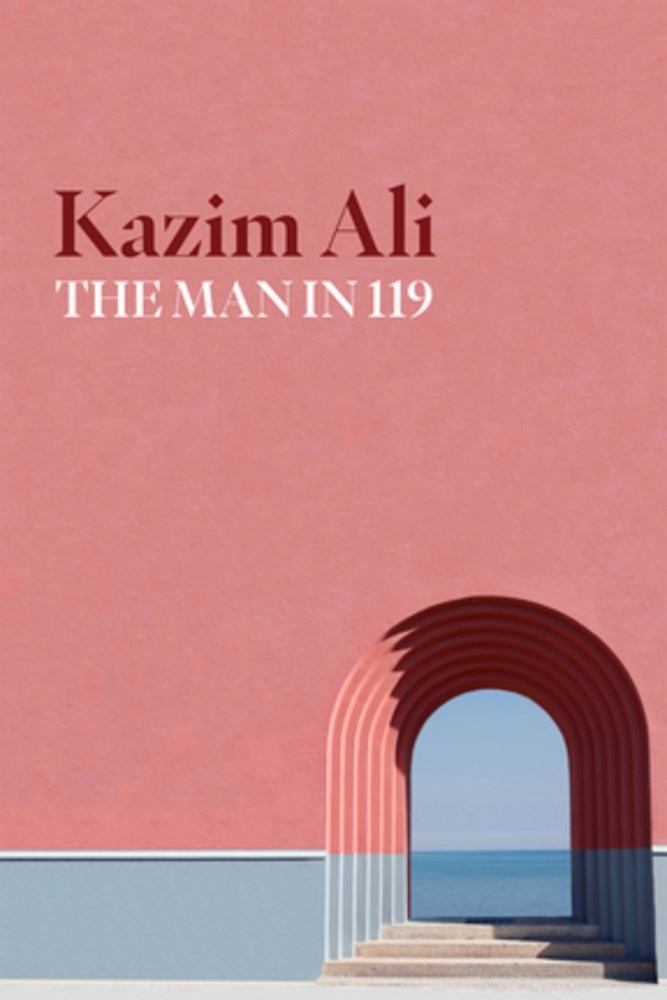
The Man in 119, Kazim Ali
Publisher: Copper Canyon Press
Publication Date: August 25, 2026
Format: Paperback
The Man in 119, the latest collection from accomplished poet Kazim Ali, explores loss and absence alongside the human body and the natural world. Here, the tongue becomes a collaboration between human and glacial current—the self, a “tectonic topography of god.” Grappling with questions of mortality in the wake of his mother’s passing, Ali asks where we go when we leave this world: “earth or sky or memory only.” With musicality, these poems build a space for contemplation, offering vignettes of various individuals, memories, and geographies. We learn that in migration, the body moves, reproduces itself through the experience of losing and living still.
Kazim Ali was born in the United Kingdom and has lived transnationally in the United States, Canada, India, France, and the Middle East. He has written novels, essay collections, translations, a work of memoir, and several poetry collections, including Sukun (Wesleyan University Press, 2023), The Voice of Sheila Chandra (Alice James Books, 2020), Inquisition (Wesleyan University Press, 2018), All One’s Blue (HarperCollins India, 2016), Wind Instrument (Spork Press, 2014), Sky Ward (Wesleyan University Press, 2012), winner of the Ohioana Book Award in Poetry; Bright Felon (Wesleyan University Press, 2009); The Fortieth Day (BOA Editions, 2008); and The Far Mosque (Alice James Books, 2005), winner of Alice James Books’ New England/New York Award. He has also edited New Moons, an anthology of writing by North American Muslims and written essay collections on the poetics of Lucille Clifton and Agha Shahid Ali. He is a Professor of Literature at the University of California, San Diego and founder of the non-profit small poetry press, Nightboat Books.
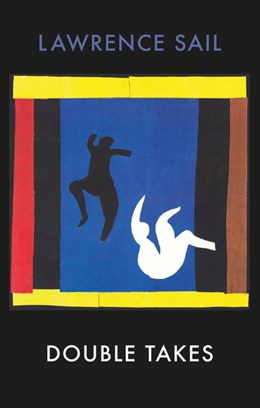
Double Takes, Lawrence Sail
Publisher: Bloodaxe Books
Publication Date: August 25, 2026
Format: Paperback
His book’s title Double Takes reflects the poems’ central concern with many aspects of duality – whether manifested in the context of human relations, translations, ‘the moment saved from time’ or the touchstone of mortality.
In some instances, juxtapositions and counterpoints bring affinities to light; in others, distance and difference. A number of the poems address the political and the public: the plight of refugees, a photo of Putin beside Gorbachev’s coffin, Brecht’s take on the ways of the world. Others confront the hard consequences of illness. Most of all, these are poems that pay proper attention to their subjects, and which amount to an appreciation of beauty and balance, however precarious, as in ‘Moving Out’, where it is only being ‘on the brink of removal’ that makes it possible to ‘engage with the ins and outs’, and to benefit from ‘the startle of those double takes / which reinterpret truth’.
Lawrence Sail’s retrospective, Waking Dreams: New & Selected Poems, a Poetry Book Society Special Commendation, was published by Bloodaxe in 2010, and followed by his later collections The Quick (2015), Guises (2020), and now, Double Takes (2026).
Lawrence Sail was born in London and brought up in Exeter. He studied French and German at Oxford University, then taught for some years in Kenya, before returning to teach in the UK. His retrospective Waking Dreams: New & Selected Poems (Bloodaxe Books, 2010), a Poetry Book Society Special Commendation, covers work written over four decades, drawing on poems from ten collections, from Opposite Views (1974) to the New Poems (2010) first collected in this volume. His other books include Cross-currents: essays (Enitharmon, 2005), a memoir of childhood, Sift (Impress Books, 2010), and Songs of the Darkness, a selection of his Christmas poems with illustrations by his daughter, Erica Sail (Enitharmon, 2010). He was a co-director of the 50th Anniversary Cheltenham Festival of Literature in 1999, and received a Cholmondeley Award in 2004.
The Green Parcel, John Challis
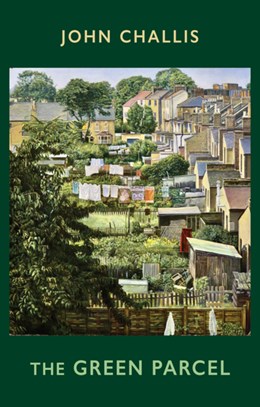
Publisher: Bloodaxe Books
Publication Date: August 25, 2026
Format: Paperback
Much of his debut collection The Resurrectionists concerned working lives in the city: his father a London cabbie, his grandfather a market porter. Here his focus shifts to a crumbling stately home in Northumberland brought to life through the voices of the grounds as well as those who inhabit it and maintain it. London is at a distance. We find ourselves beyond, in backyards, on motorways, in fields, searching for the green patch in Kent, where an East End family picked hops in the summer. Despatches from the early years of fatherhood reflect on ageing, loss and patience. Poems set in the American west consider the idea of freedom. And on the eve of his execution, thief and folk hero Jack Sheppard flees into the forest of his mind. Confronting the tension between wanting to belong and the desire to escape, these poems acknowledge and reckon with the people and places that haunt us.
John Challis was born in London in 1984 and now lives in York. In 2015 he was a poet-in-residence with the Northern Poetry Library and chosen as one of the Poetry Trust’s Aldeburgh Eight. His other residences have included ones at Keats Shelley House in Rome, and at Seaton Delaval Hall, a National Trust property in Northumberland, which produced Hallsong, a collaboration with filmmaker Christo Wallers. His pamphlet, The Black Cab (Poetry Salzburg, 2017), was a 2019 New Writing North Read Regional title. His poems have been broadcast on BBC Radio 4, and published in journals including Magma, The North, Poetry London, The Rialto, Stand, and elsewhere. He has received a Pushcart Prize and a Northern Writers’ Award for his work.
Sadder than Water: New & Selected Poems, Samih Al-Qasim, Nazih Kassis (Tr)
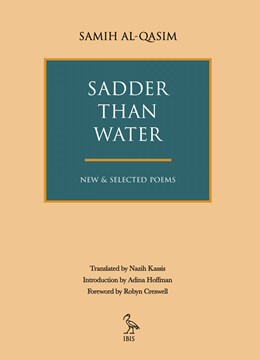
Publisher: Wesleyan University Press
Publication Date: August 25, 2026
Format: Paperback / eBook
One of the foremost Palestinian poets and a major figure in the Arab world, Samih al-Qasim was born in 1939, in Zarqa, Jordan to a Palestinian Druze family from the Galilee. He grew up in the village of Rama and experienced the Palestinian tragedy of 1948 first hand, achieving fame as one of the celebrated “resistance poets” during the 1950s. His first book was published when he was just eighteen, and over the decades he has produced a body of work that is as varied and innovative as it is large. A resident of Rama until his death in 2014, Samih al-Qasim remained to the end an outspoken opponent of racism and oppression on all sides of the Middle East conflict. Given the richness of al-Qasim’s work, and its centrality to Arabic literature at large, it is surprising that his poetry remains almost unknown in English to non-specialists, since one cannot really claim to understand modern Palestinian letters without reading Samih al-Qasim. Sadder Than Water collects poems (with en face Arabic) from his various periods and modes and makes available to English readers the full range of al-Qasim’s oeuvre, which is characterized by its ironic approach to painfully charged political situations, its melancholy music, and its lyrical evocation of Palestinian heritage.
Samih Al-Qasim (1939–2014) was the author of over thirty books of poetry, several novels, collections of plays, essays, and criticism. He appeared regularly at literary festivals throughout the Arab world and in Europe, his work has been translated into many languages, and editions of his collected poems have been published in Beirut and in Cairo.
Nazih Kassis is a lexicographer and translator of contemporary Arabic prose and poetry. He received his doctorate in linguistics from the University of Exeter and has compiled, edited, and translated several dictionaries. He has taught English and Arabic at the University of Haifa, the Academic Arab College for Education, and Portland State University. He writes poetry in the local dialect. Born in the Palestinian village of Iqrit in 1944, he has lived in Rama since 1948.
Grief for the Green That Was, Jacob Shores-Argüello
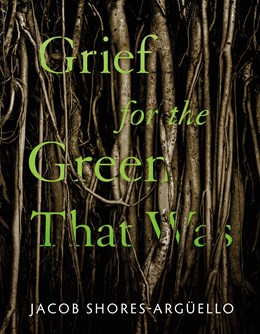
Publisher: University of Arizona Press
Publication Date: August 25, 2026
Format: Paperback / eBook
Grief for the Green That Was is a genre-bending book that traces a journey through personal and ecological loss, weaving between Costa Rica, Oklahoma, and New Zealand. Through innovative use of perspective shifts and experimental forms, Shores-Argüello explores the complex ways that the public grief of climate change intersects with private family grief.
Moving tenderly across memory, continents, and literary forms, Jacob Shores-Argüello’s tightly woven cross-genre collection evolves a private family bereavement into an exploration of collective ecological grief. Following the death of his mother, the speaker navigates between his Costa Rican heritage and his Oklahoma upbringing, eventually arriving at something like healing on the banks of New Zealand’s Whanganui River—the first river in the world granted legal personhood.
Structured around a Spanish nursery rhyme, Grief for the Green That Was finds solace in the prospect of citizenship for a more-than-human world, a possibility it approaches through perspectival shifts and innovative forms—including footnoted poems, hybrid fiction, and an experimental choose-your-own-adventure sequence—that overturn lyric and storytelling conventions.
A book about what we inherit and what we leave behind, both in families and in landscapes, Grief for the Green That Was examines how climate change affects not just the physical world but also our emotional and spiritual relationships to place. Here Shores-Argüello creates a new language for twenty-first-century grief that refuses to separate the personal from the planetary.
Jacob Shores-Argüello is a Costa Rican American poet and prose writer. His second book, Paraíso, was selected for the inaugural CantoMundo Poetry Prize. He is the 2024–25 Rome Prize in Literature winner.
When Godot Arrived: Sonnets, Jim Tilley
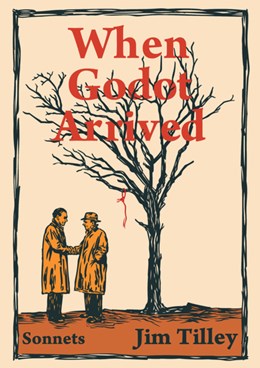
Publisher: Red Hen Press
Publication Date: August 25, 2026
Format: Paperback
Jim Tilley’s latest poetry collection, When Godot Arrived, eighty-one free-verse sonnets, continues the explorations from the set of new poems in his previous book, Ripples in the Fabric of the Universe. As in that previous book, he draws on his experience as a poet and mathematician to fix a lens on the current raw state of the country and the world and on interpersonal relationships. At times, his mood is merely contemplative, especially in his testaments to family, but as he delves relentlessly into matters political, ecological, and environmental, that mood turns darker, even ominous, infused occasionally with humor to present a more optimistic outlook. Together with Ripples in the Fabric of the Universe, When Godot Arrived is a most expansive read.
Jim Tilley’s poetry is inspired by his love of the outdoors, particularly walks in the woods or along a lakeshore or seashore. He has published four full-length collections of poetry and a novel with Red Hen Press. His short memoir, The Elegant Solution, was published as a Ploughshares Solo. Five of his poems have been nominated for a Pushcart Prize. His most recent poetry collection, Ripples in the Fabric of the Universe: New & Selected Poems, was published in June 2024. He lives in Bedford Corners, New York.
LOW FLYING PLANES, Hajjar Baban
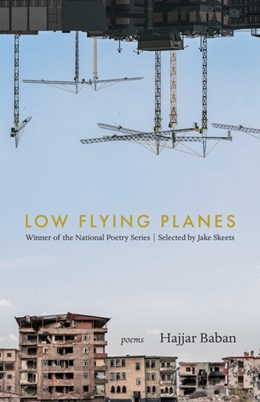
Publisher: Milkweed Editions
Publication Date: August 25, 2026
Format: Paperback
“You looked at me like there was no / nest in my throat,” Hajjar Baban writes in this spare, striking collection. “Like I knew how / to sing. Like it was okay I had nowhere / to be.” Writing from a mixed Afghan Kurdish heritage, she navigates the truth that exists between memory and erasure. Equal measures grounded and unmoored, the poems in LOW FLYING PLANES search for answers to the impossible question of belonging, catching fragmented glimpses of “the plane intercepting sight of the shooting / star,” “satellites in the night sky,” “the language my father / didn’t invite me to.”
Wielding a breakable and cautious syntax, Baban writes with a precision that highlights the complexity of interiority under surveillance and the tension between safety and yearning. Our speaker is hypervigilant and uncommonly observant, seeking to understand what language cannot capture: layered volumes of loss, the unshakable instinct to hide, “a name for how my father looks / at the sky.”
Guarded yet resolute, inquisitive yet profoundly wise, LOW FLYING PLANES paints absence into a tangible shape. “If language is to be made whole, if memory, if truth,” Jake Skeets writes of this collection, “it begins with a book like this.”
Hajjar Baban is a Pakistan-born Afghan Kurdish poet. Her work appears in publications including Prairie Schooner, Guernica, Poetry Daily, and Hayden’s Ferry Review, where she won the 2025 Poetry Contest, selected by Hieu Minh Nguyen. Recipient of a Pushcart Prize in Poetry, Baban is also a cofounder of the Kurdish Poets Collective. LOW FLYING PLANES is her first full-length book of poems.
This Far North, Susan Campbell
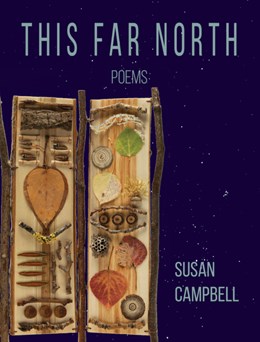
Publisher: Boreal Books
Publication Date: August 25, 2026
Format: Paperback
“When the sound of water shapes sleep. / When cranes disappear from the river. / When maps unfold on hardwood floors. / When north becomes the only direction.” The poems in This Far North hold reverence for the natural world and the ways we find home when we pay attention to what it is offering. Tethered to northern landscapes, Susan Campbell invites readers to look, look deeper at the world’s myriad wonders, to pause and consider what we can learn when we stand still long enough to listen to the trill of kinglets, the susurration of water, snow sloughing in December rain. Seeking gratitude while navigating a world suffused with grief and loss, these poems are compass points, cairns to help us find our way.
Susan Campbell’s life as a poet, teacher, book artist and outdoor adventurer is tethered to the far north. Her poems have appeared in various journals, including Ploughshares, Cirque, Alaska Quarterly Review, and Ice Floe II: International Poetry of the Far North, and in a specially commissioned musical score. She often incorporates poems in handmade artist books. The Alaska State Museum and the University of Alaska Rasmuson Library own some of her work She was a 2024 recipient of an Alaska State Council on the Arts Literary Award and has been an artist-in-residence in Denali National Park. Fairbanks, Alaska is her home.
The River on our Hands, AJ Wright
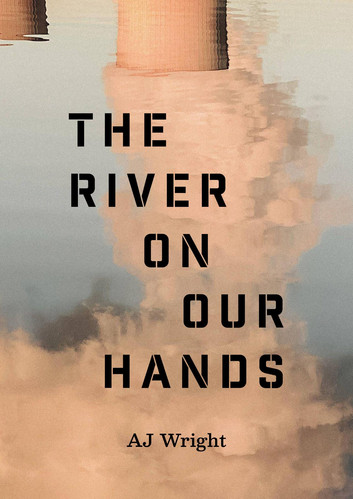
Publisher: Pulley Press
Publication Date: August 25, 2026
Format: Paperback / eBook
AJ Wright’s The River on our Hands is as much a historical account as it is a poetry collection. The book explores growing up in a small West Virginia town on the banks of the Ohio River: our poet faces encroaching floodwater on a trip to the store, constructs a makeshift airplane from leftover wood and rusted metal, and watches the river through the windows of old cars. The backdrop is the aftermath of tragedy, calcifying into the town’s story: the collapse of the Pleasants Power Station cooling tower that killed fifty-one workers. It was the deadliest construction disaster America had known. In The River on our Hands, AJ Wright asks what silence carries through personal and collective memory, and how the tragedy echoes through the land and people who continue to live in the region.
AJ Wright is a poet born in the Ohio River Valley region of West Virginia. She spent her early childhood in a house that stood in the shadow of the Pleasants Power Station at Willow Island. Her work explores the intersections of landscape, labor, and memory in Appalachian communities shaped by industry and environmental change. She is the founding editor of Pictura Journal, and her poems have appeared in Thimble Literary Magazine, Antiphony Journal, wildscape. literary journal, River and South Review, and elsewhere. She holds an MFA from Bowling Green State University and was awarded an Oak Ledge Residency at Hindman Settlement School in 2025. She currently lives five miles downriver from her hometown. The River on Our Hands is her first book.
Museum of Limerence: A Silver Romance in Poetry, Yuan Changming
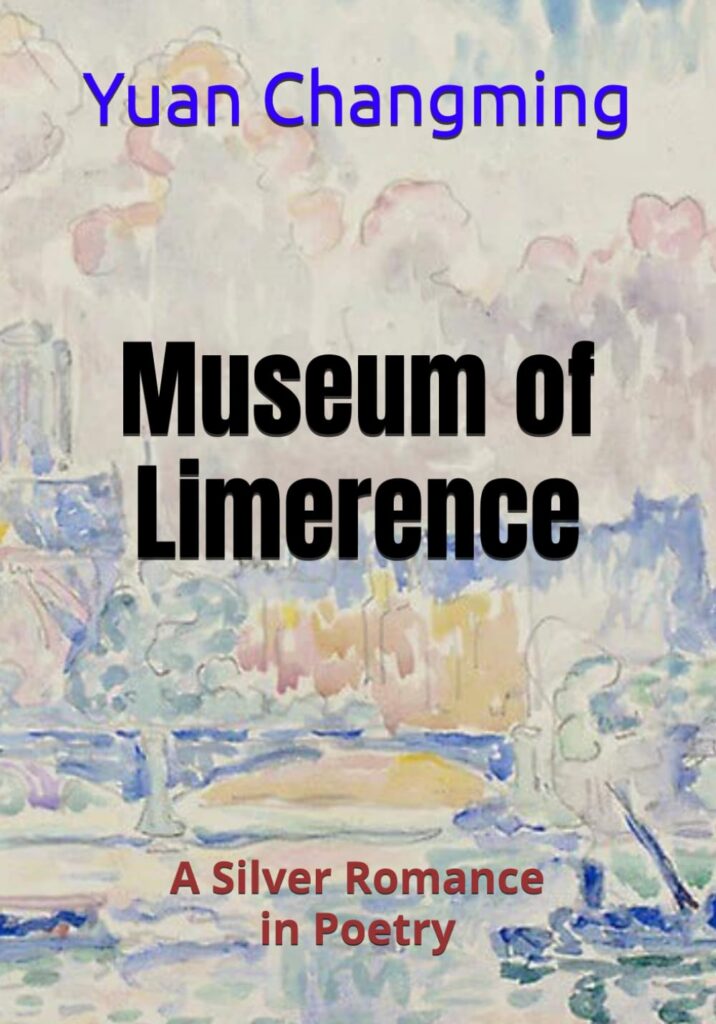
Publisher: Alien Buddha Press
Publication Date: June, 2026
Format: Paperback
In Museum of Limerence: A Silver Romance in Poetry, Yuan Changming transforms forty-two years of separation and silence into a torrential creative outpouring that feels both intimate and cosmically vast. This is Changming’s 4th book with Alien Buddha Press, following Detaching (2024), The Tuner (2025), and Return to Roots (2026), and it may be his most emotionally vulnerable work yet. Structured as five thematic galleries and shaped through the fractured elegance of the Sinnet, these poems navigate the Linguacultural Bridge of the Chinese-English diaspora while exploring the archaeology of silence, long-distance devotion, and the persistence of the heart in a pandemic-scarred, monitored world.
Changming writes of love as quantum entanglement, as spiritual physics, as a force capable of surviving oceans, decades, and mortality itself. The result is a silver romance filled with longing, memory, flesh, myth, and late-life tenderness, where even absence leaves poetry feeling hollowed by love.
Yuan Changming co-edits Poetry Pacific with Allen Yuan. With 18 published collections and 15 Pushcart nominations, Yuan has appeared in Best of the Best Canadian Poetry (2008-17) and 2,207 other literary publications worldwide. A former poetry juror for Canada’s National Magazine Awards, Yuan began to write prose in 2022 and has released a cnf collection (Return to Roots), a novel trilogy (Towards) and two poetry collections (Bamakoola; Museum of Limerence) in 2026.
Don’t see a poetry title published between 8/25 and 8/31 here? Contact us to let us know!
Contents
“This language offers one possible framing through which to appreciate the law’s capacity to hope for, request, and even command commitment to a more just future.” Read two poems by Maggie Wang, our first biweekly poet of the Summer 2026 issue, along with a few words about “Possibilities for Action.”
Chapbook Poem: I’ll Never Look This Good Again by Douglas Piccinnini
“[The poem] came out of real pressure: despair, worry, and grief I wanted to hold unflinchingly, alongside the anxiety of becoming a parent… For me the poem became a meditation on all the feeling that surfaces precisely when we’re told to feel only joy.” Read an excerpt from Douglas Piccinnini’s chapbook, House of Bad Memories, along with a few words from the poet.
“She sees herself in carbon, the element that bonds with almost anything- not because it wants to, but because it has empty spaces and things keep showing up to fill them. Notifications. Noise. Needs that never stop arriving.” Read four poems by Joely Williams, our second biweekly poet of the Summer 2026 issue, along with a few words about “Single Mother Considers the Periodic Table.”
ADHD in a Non-ADHD World: on Undersight by Alison Hurwitz
“[Hurwitz] shares moments of angst and moments of awe. More than that, there are moments of deep recognition. She sees herself in [her sons] and, in fact, receives a later-life ADHD diagnosis of her own.” Read the full chapbook review by new contributor, Nancy Murphy.
“The woman’s head & hair are lavishly dressed. I probably leapt off the logic of the hairdresser being blind and therefore had to work on the head/body/mind rather than just hair as a surface issue of presentation.” Read two poems by Irene Cunningham, our third biweekly poet of the Summer 2026 issue, along with a few words about “The Blind Hairdresser.”
Flash Fiction: Nova by Kimmy Chang
“‘Nova’ is a lyrical second-person story about the narrator’s first true encounter with death…the story presents loss not as beautiful in itself, but as the place where beauty begins.” Read the first original fiction piece of the Summer 2026 issue, “Nova” by Kimmy Chang.
“To fit the nuanced, dimensional experience of dysphoria and transition into narrative…often feels flattening, falsely assured. I wanted to look at this discomfort I felt, to see what was necessary in it.” Read three poems by Joshua Zeitler, our fourth biweekly poet of the Summer 2026 issue, along with a few words about “Cobbling.”
Excerpt: “On the puzzle still inside my head” by Truong Tran
“I am trying to excavate memories. I am trying to negotiate the difficult realities of existing as a brown man in this country and within the consciousness of white America.” Read an excerpt from Truong Tran’s forthcoming book from City Lights, How to Exi(s)t: A Poet’s Memoir.
“These poems try to make sense of how I arrived at a life that probably seems well thought-out, but has been one reactionary choice after another.” Read three poems by A.R. Dugan, our fifth biweekly poet of the Summer 2026 issue, along with a few words about “Sleeptalking.”
Original Fiction: Muse by Somtoo Celestine Ezioha
“What I tried to trace was the underside. How watching someone closely for long enough becomes a substitute for approaching them.” Read the second original fiction piece of the Summer 2026 issue, “Muse” by Somtoo Celestine Ezioha.
“After childbirth, my body became a site of criticism rather than something to be celebrated for what it had endured and created. Writing this became a way to confront that experience…” Read three poems by Tanya Tuzeo, our sixth biweekly poet of the Summer 2026 issue, along with a few words about “i get Botox.”
“Through images of a familiar street, personal belongings, and a figure suspended in time, the poem considers absence, remembrance, and the quiet ways we continue searching for those who are gone.” Read two poems by Aardhra Chandran, our seventh, and final, biweekly poet of the Summer 2026 issue, along with a few words about “Street View, 2021.”
Original Fiction: Aletheia by Kalliste Hardy
“Each fragment opens a door to the unsaid or the forgotten, letting language bruise and bloom. It is a study in red, in inheritance, in language, and of the quiet haunt of becoming.” Read the third, and final, original fiction piece of the Summer 2026 issue, “Aletheia” by Kalliste Hardy.