We here at Philly Chapbook Review love poetry, whether it’s in chapbooks or full-length collections. We have a hunch that our readers do, too. Every Tuesday, we publish an update about what full-length poetry titles we know are releasing in the following week.
Information, including product descriptions, is provided by the publisher and not a critical judgment. If we cover the book on this site, links will be included.
Mother, Dorothea Lasky
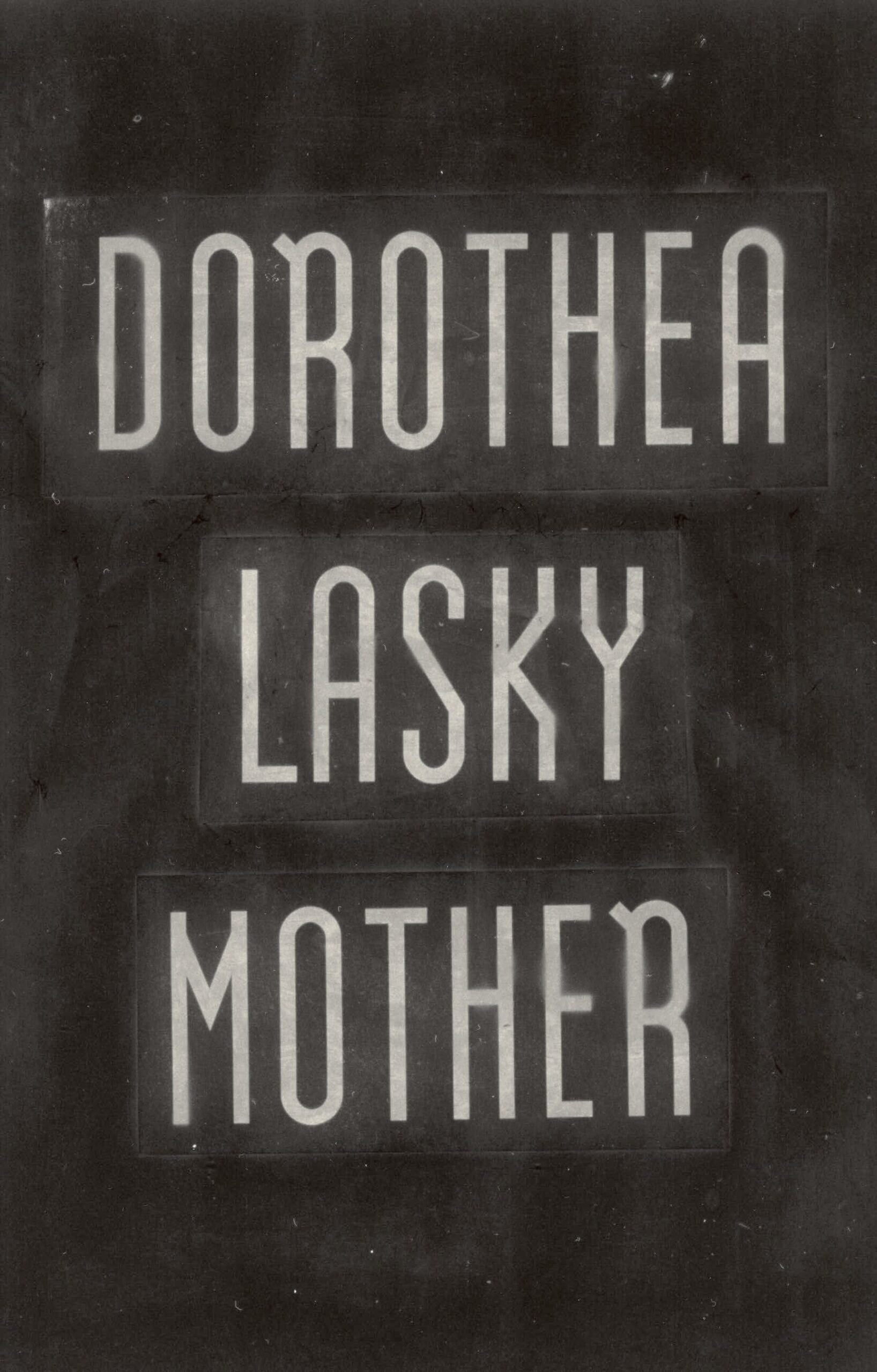
Publisher: Wave Books
Publication Date: September 15, 2026
Format: Paperback
Inspired by Bernadette Mayer’s The Desires of Mothers to Please Others in Letters, Lasky writes from the inner realm of a third pregnancy and guides us through a suspended timeline taut with anticipation. Mother documents caring for small children, the death of the mother, and the simultaneous anxiety and darkness of impending birth, as Lasky transmits from a deep mythic and biologically immediate space: “And even though I’ve spent / Eight months now / Dreading the sight / Of anything red / Now I long to bleed all over.” Invoking the eternal symbol of the mother, Lasky asks us to consider an expansive understanding of the horror and devotion inherent in the daily practices of existence.
Dorothea Lasky is the author of several poetry books, most recently, Mother (Wave Books, 2026) and The Shining (Wave Books, 2023). Her other poetry books include: Milk (Wave Books, 2018), Rome (Liveright/W.W. Norton, 2014), Thunderbird (Wave Books, 2012), Black Life (Wave Books, 2010), and AWE (Wave Books, 2007). She is also the author of Animal, published in 2019 in the Bagley Wright Lecture Series and MEMORY (Semiotext(e), 2025), as well as a future book about Sappho. She is the editor of Essays (Essay Press, 2023) and a coeditor of Open the Door: How to Excite Young People About Poetry (McSweeney’s, 2013). Her first novel, Katie, is forthcoming from HarperCollins. Her writing has appeared in Poetry, The New Yorker, American Poetry Review, and The Paris Review, among other places. She holds a doctorate in creativity and education from the University of Pennsylvania. Currently, she is an Associate Professor of Poetry at Columbia University’s School of the Arts, where she directs the Poetry program. She lives in New York City.
Within the Hour: Poems and Aphorisms, 1971-2026, James Richardson
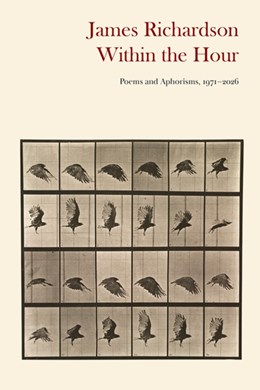
Publisher: Copper Canyon Press
Publication Date: September 15, 2026
Format: Paperback
Winner of the prestigious Jackson Poetry Prize, James Richardson is a poet of extraordinary range, ease, and clarity. Within the Hour joins the best of nine previous volumes to a considerable body of new work: There are piercing, short lyrics, among them elegies for his parents, killed in a car crash, and for his younger brother who died at nineteen. There are hundreds of the aphorisms and ten-second essays for which he is most renowned and beloved, many of them new. Richardson’s meditations on the ordinary and the extraordinary reach from clocks and paper clips and clouds to alt-facts, the suffering ocean, and the erotics of metals. Swerving between wit and tenderness, his poems blend the lyric and the philosophical and turn almost imperceptibly into parables of our lives in love and time.
James Richardson’s collections of poems, aphorisms, and ten-second essays include For Now; During, the winner of the Alice Fay Di Castagnola Prize of the Poetry Society of America; By the Numbers, a National Book Award finalist; Interglacial, a National Book Critics Circle Award finalist; and Vectors. He is the winner of the Jackson Prize for lifetime achievement in poetry and the recipient of a Presidential Teaching Award from Princeton University, where he is professor emeritus of creative writing. Richardson lives on a wooded hillside near Princeton with his wife and first reader, the scholar-critic Constance W. Hassett, author of the go-to book on Christina Rossetti. They have two daughters, one a poet and content strategist, one a professor of criminal justice.
The Going is Forever, Elizabeth Metzger
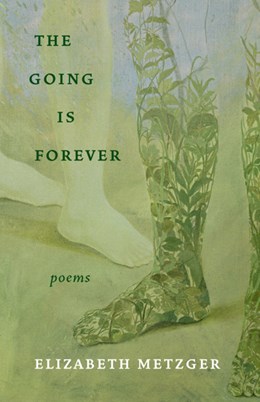
Publisher: Milkweed Editions
Publication Date: September 15, 2026
Format: Paperback
Elizabeth Metzger’s third collection traces both holding on and letting go, tracking the non-linear journeys we take and the daily distances we cross for intimacy. Braiding a dissolving marriage, a son’s medical crisis, and the death of a father, the speaker reconceives loss as transformation and longing as ongoing love, exploring the multiplicity of the self in proximity to others. How do we relate to what we cannot know about those we love? How can we separate from one another without embodying parts of ourselves we haven’t met yet?
The present revives the past, and every ending becomes a devotion to new beginnings as Metzger transforms ordinary domestic ruptures into intimate portals of pleasure and pain. A degenerative disease spurs a creative awakening. A trip to the farmer’s market invites questions of monogamy. An overgrown yard yields a crisis of faith. These poems fall in love with the absences that define us, retracing our chosen roads while following those less traveled and beckoning unlived lives.
Celebrating the ordinary and extraordinary changes we undergo together, this collection explores our most surprising fantasies and deep spiritual yearnings. An honest, intricate, and breathtaking distillation of love’s true nature, The Going Is Forever reminds us that our closest relationships contain endless mysteries, and that there is never just one version of a life.
Elizabeth Metzger is the author of The Going Is Forever and Lying In, as well as The Spirit Papers, winner of the Juniper Prize for Poetry. She has published two chapbooks, Bed and The Nutshell Studies of Unexplained Death. Her poems have recently appeared in The New Yorker, The Paris Review, The New York Review, TLS, and Poetry. She is a poetry editor at The Los Angeles Review of Books and teaches poetry at 92NY and Columbia University.
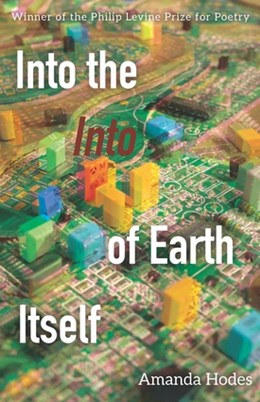
Into the Into of Earth Itself, Amanda Hodes
Publisher: Black Lawrence Press
Publication Date: September 15, 2026
Format: Paperback
Selected by judge Diana Khoi Nguyen, Into the Into of Earth Itself is the debut collection by Amanda Hodes. The poems investigate the dual histories of two Pennsylvania towns: Palmerton and the nearby ghost town of Centralia, which was condemned due to an underground mine fire that will burn for centuries.
Through text mining, these poems excavate legislation, archival material, web comments, and even the Silent Hill screenplay, revealing the inextricable nature of environmental toxicity and toxic masculinity, the violation of the environment and violations of women. Human pollution is a “bug” in the code, prompting forms of material glitch—earthquakes, sinkholes, illness, and shame. Couched in code-like syntax, the collection cycles through an ecology of voices, from bacteria to pigeons to weeds, all the while exploring sexual assault and chronic illness, questioning what it truly means to be “natural” or “clean.”
Amanda Hodes is a writer and new media artist. Her book Into the Into of Earth Itself won the 2024 Philip Levine Prize for Poetry. Her poems have appeared in FENCE, Gulf Coast, Prairie Schooner, Black Warrior Review, Pleiades, Academy of American Poets (online), and elsewhere. She currently teaches creative writing at Oberlin College & Conservatory. Her new media work and audio installations have been exhibited in venues such as the Crisp-Ellert Art Museum, Hirshhorn Sound Scene Festival, and Ammerman Center for Arts & Technology.
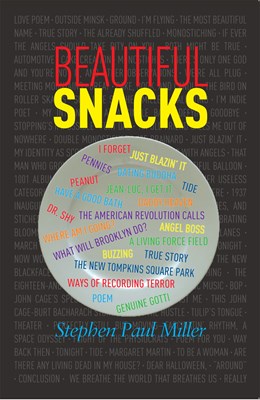
Beautiful Snacks, Stephen Paul Miller
Publisher: Marsh Hawk Press
Publication Date: September 15, 2026
Format: Paperback
It’ s as if poetry died, went to South Park heaven, and was reborn as something new and sparkling. Miller combines the horrors of today’ s world with spirituality, theater, and untraditional eroticism, somehow seasoning it all into something effective and profoundly satisfying. Beautiful Snacks is yummy but good for you. It intelligently and movingly answers questions you may never have considered.
Stephen Paul Miller is the author of eight books of poetry, including Any Lie You Tell Will Be the Truth (Marsh Hawk Press), Art Is Boring for the Same Reason We Stayed in Vietnam (Domestic Editions), Skinny Eighth Avenue (Marsh Hawk Press), and Being with a Bullet (Talisman House). His books include The Seventies Now: Culture as Surveillance (Duke University Press) and The New Deal as a Triumph of Social Work (Palgrave Macmillan).
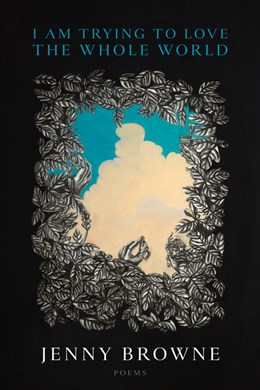
I Am Trying to Love the Whole World, Jenny Browne
Publisher: BOA Editions
Publication Date: September 15, 2026
Format: Hardcover / Paperback / eBook
For nearly a year, Browne began each poem with the line “I am trying to love the whole world,” letting it guide her through loss, love, and survival. The result is a striking meditation on human fragility and the sustaining power of art, even as life—and the world around us—can be made and unmade in an instant.
Moving between tenderness, fierceness, and wry humor, these poems mourn a beloved friend, witness the pandemic, and reflect on the politicization of women’s bodies. Browne delights in a snarky daughter scrolling TikTok, a ghost wearing her best red boots, and the music of Violetta’s aria in La Traviata. Drawing on nature, memory, and human connection, she explores oceans, bones, motherhood, and time itself.
Multivocal, incantatory, and precise, her work asks what it means to live with loss while remaining open to the world, finding solace in the everyday—“sky blue / Mustang paused on the shoulder.”
Jenny Browne the author of five collections of poetry, including Fellow Travelers: New and Selected Poems (TCU Press, 2019). She served concurrent terms as the 2016-2018 City of San Antonio Poet Laureate, and the 2017 State of Texas Poet Laureate. In 2023, she was inducted into the Texas Institute of Letters. She divides her time between San Antonio, Texas and Belfast, Northen Ireland.
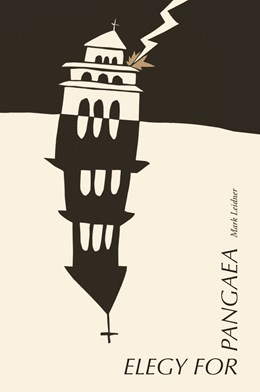
Elegy for Pangaea, Mark Leidner
Publisher: Fonograf Editions
Publication Date: September 15, 2026
Format: Hardcover / eBook
Mark Leidner’s third poetry collection, Elegy for Pangaea, is as funny, strange, and epic as his two previous collections, Returning the Sword to the Stone and Beauty Was the Case that They Gave Me. His new poems explore faith, grief, money, myth, parenting, and poetry itself to create a collection as full of tantalizing ideas and dilemmas as “an enormous library with a waterbed floor.” As mystical as it is satirical, as audacious as it is personal, as hysterical as it is disconcerting, in Elegy for Pangaea, Leidner once again shows us that the only way out of irony is through.
Mark Leidner is the author of two feature films: the sci-fi noir Empathy, Inc. (2019) and the relationship comedy Jammed (2014). He is also the author of the story collection Under the Sea (Tyrant Books, 2018), the poetry collection Beauty Was the Case That They Gave Me (Factory Hollow, 2011), and the book of aphorisms The Angel in the Dream of Our Hangover (Sator, 2011).
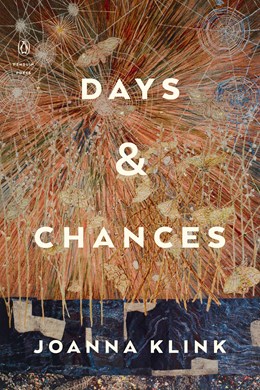
Days & Chances, Joanna Klink
Publisher: Penguin Books
Publication Date: September 15, 2026
Format: Paperback / eBook
In Joanna Klink’s dreamlike sixth book, she turns her gaze to ordinary days and asks, What is the measure of a life? How should we weigh time, luck, love? Against the extreme terrain of Texas—with its soaring temperatures, ice storms, and flash floods—she tries to make sense of the loss of natural spaces, her father going blind, falling in love mid-life. Each of her poems embodies what Virginia Woolf described as “moments of being”: moments of awareness and intense feeling in which we become conscious of our connection to the world around us. Flickering between personal and ecological time, Klink’s poems deepen those connections even as the landscapes and relationships around her become less recognizable. Days & Chances lets us see the depths in everyday moments—and chances to live more fully.
Joanna Klink is the author of five previous books of poetry, most recently The Nightfields. She teaches at the Michener Center for Writers in Austin, Texas, and has received awards and fellowships from The American Academy of Arts and Letters, the Trust of Amy Lowell, and the Guggenheim Foundation.
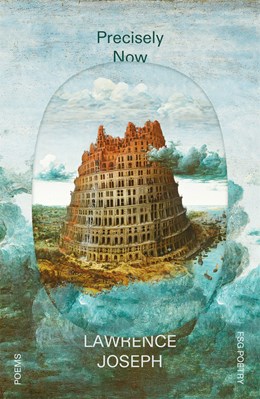
Precisely Now, Lawrence Joseph
Publisher: Farrar, Straus and Giroux
Publication Date: September 15, 2026
Format: Paperback / eBook
Precisely Now unspools against the backdrop of a transmogrified Lower Manhattan, one built back after 9/11, yet where buildings on Wall Street remain pockmarked from anarchist bombings of the 1920s. Out on the very tip of the island, where “moods are painted blue on the blue East River,” on the streets where Federico García Lorca walked on his American tour, where Herman Melville was born, and where emblems of American avarice burn bright, we find the poet seeking to transform what he sees, thinks, and feels into a simple and timeless language describing the present as it happens.
With an incisive intelligence, a pervading dignity, and keen sense of humanity and beauty, Joseph writes unsparingly of the detritus of the Trump presidency, the sins of our nation, the horrors of genocide, and the decline of the body. Challenging, direct, morally focused, fierce in intensity, ultracontemporary yet beating with a sensuous intimacy that has at its core an abiding love, Precisely Now presents a vision as bold and impassioned as any in American poetry.
Lawrence Joseph was born and raised in Detroit, the grandson of Lebanese and Syrian Catholic immigrants. A graduate of the University of Michigan, the University of Cambridge, and the University of Michigan Law School, he is the author of many books of poetry, including A Certain Clarity: Selected Poems, and two books of prose: Lawyerland, a nonfiction novel, and The Game Changed: Essays and Other Prose. He retired as Tinnelly Professor of Law at St. John’s University School of Law, and has taught creative writing at Princeton. He lives in New York City.
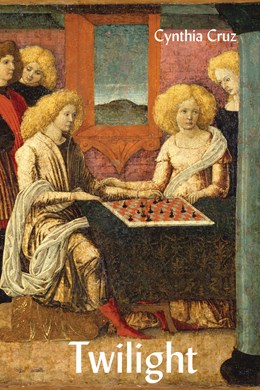
Twilight, Cynthia Cruz
Publisher: Four Way Books
Publication Date: September 15, 2026
Format: Paperback
Twilight is the intermediary state of becoming, the suspension between, when one is no longer who one was and not yet who they will be. At the end of psychoanalysis, after one has worked through the symbolic investitures one has been relegated to, one is reduced to such a state. In this state of momentary suspension, one is, in a sense, nothing.
Twilight also names a historical moment, when one world is ending but the next has yet to appear. That we are existing in the suspension between the the end of the world as we have known it and the void of what has yet to come is a commonly repeated truth. Hegel describes twilight as “a flash” that in “a single stroke brings to view the structure of the new world,” suggesting that novelty arises out of darkness and obscurity. We are living, in other words, in a state of twilight.
Cruz’s tenth poetry collection takes the concept of twilight and presents, through a series of elliptical poems, a working through of the term. The speakers in these poems exist within this wavering. As she writes in one of several poems titled “Twilight,” “Twilight, its world between worlds / its miraculous suspension. / I belong to the school of Freud’s / hypothetical boarding school girls. / We wait and we wait / for the world to begin.”
Cynthia Cruz is the author of nine collections of poems, two collections of critical essays, and one novella. Cruz is the recipient of fellowships from Yaddo and MacDowell, as well as a Hodder Fellowship from Princeton University, a Guggenheim Fellowship, the National Book Critics Circle Award, and a finalist for the Kingsley Tufts Award. Cruz earned a BA in English Literature at Mills College, an MFA in poetry at Sarah Lawrence College, an MFA in Art Writing at the School of Visual Arts, an MA in German Language and Literature at Rutgers University-New Brunswick, and a PhD from the European Graduate School, where she wrote her dissertation on Hegel and madness.
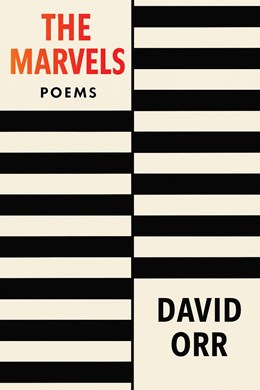
The Marvels, David Orr
Publisher: Four Way Books
Publication Date: September 15, 2026
Format: Paperback
In his second collection, The Marvels, David Orr writes from the conviction that the available world is enough: its worn shirts, coffee cups, rainbows, buses, obsolete machines, failed plans, neighborly borders, and minor acts of courtesy. These poems are clear-eyed without being cold, comic without being merely light. They attend to ordinary things not as symbols waiting to be elevated, but as the actual substance of our shared existence.
Praised by The Washington Post for his “quirky, engaging poetry,” Orr brings formal control, wry wit, whimsy, and an exacting intelligence to the relentless dailiness of life. In “Coffee Cups,” two mugs have been scoured blank by the dishwasher: “Nothing makes them special now. / What they do is all they are.” Yet the household still reaches for them first, “hoping to save the others.” In “Decency,” a nearly useless blue shirt becomes kin to the small social gestures that certify “this shared space as shared”: a held door, a blessing after a sneeze, the habitual signs by which strangers acknowledge one another. And in the title poem, marvels are planted along a property line, where two neighbors meet to prune, argue, trade tools, and admire what grows between them.
Unillusioned but not disenchanted, The Marvels finds its force in persistence, use, courtesy, memory, and care. The poems do not look past the real for consolation. They look steadily at the world we have — its comedy, damage, repetition, and thin but durable fabrics of connection — until its sufficiency comes into view.
David Orr is Professor of Poetry and the Practice of Criticism at Rutgers University and a longtime poetry critic for The New York Times, among other publications. He has published three books about poetry as well as a poetry collection, Dangerous Household Items; those works have been covered in outlets ranging from The Wall Street Journal to NPR to PBS NewsHour. A native South Carolinian, David lives in Princeton, New Jersey, with his wife and daughter.
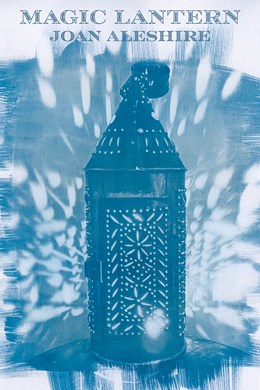
Magic Lantern, Joan Aleshire
Publisher: Four Way Books
Publication Date: September 15, 2026
Format: Paperback
Conceived of as a memoir in poems of late-life love and its betrayal, Magic Lantern traces the borders of loss and investigates the source of our strength to traverse them, finding the roots of resilience in ordinary interactions and illuminating the undramatic power of simple connections. “At a time of our lives when the only hands / we can expect to touch us this gently / will be wearing latex gloves,” Aleshire recounts a tender moment before romantic rupture. “The technician in the ER said softly, / trying to attach your heart monitors, / You’re so hairy, I’m not sure / this will stick, but I thought / it didn’t matter how intimately / they handled you; my love / had covered, would cover / you, before and after them.” When the realization of the beloved’s treachery obliterates this lucidity and generosity, the speaker feels violated and estranged from herself, reducing the narrative of the affair to “what we did / in the dark, until we became / the dark.” The private destabilization of this heartache pales but compounds the shadows of a world already rent by international war and domestic political upheaval, but Aleshire orients toward another light source: the rewarding labor of building community and the noble pursuit of seeking meaning itself. The title poem executes a beautiful metacommentary on the value of art, which is to say going to the effort, trying for trying’s sake. At a local filmmaker’s screening, the speaker marvels at the powerful impression the artist has rendered with black-and-white film, astonished by how “the depths and brights, / shadows and gleams… make us watching / feel more.” In these deeply compassionate and vulnerable poems, Aleshire draws our attention to the artistry of our lives, the luminosity we stroke and orchestrate through our meticulous care and enduring bonds. This is the light we see by. A transportative seventh collection, Magic Lantern draws the disordered overwhelm of the human experience into a dazzling, seamless sequence of images, setting the ordinary into motion so that it not only coheres, but glows.
Joan Aleshire graduated from Harvard/Radcliffe in 1960, and from the MFA Program for Writers at Goddard College in 1980. She worked as Interim Director and was a member of the poetry faculty in the MFA Program at Warren Wilson College from 1982-2013. She has published seven books of poetry and a novel, as well as essays and translations from Russian. She lives in Shrewsbury, Vermont.
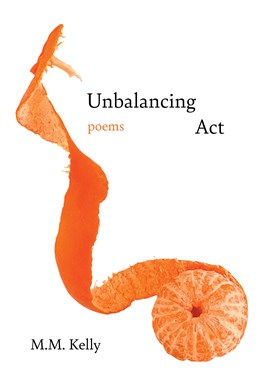
Unbalancing Act, M.M. Kelly
Publisher: Four Way Books
Publication Date: September 15, 2026
Format: Paperback
Unbalancing Act is a haunting collection of poems about the particular physics of loving and losing—about the way grief, desire, memory, and awe can tip a life off its axis, and right it again. The speaker moves through fire and water, childhood, intimacy and abandonment, always with one eye on the natural world: bears, whales, rivers, storms, animals sleeping in impossible ways. The poems are lyric but narrative-driven, often darkly funny, and fascinated—bordering on obsessed—with the strange facts and small surrealities that make ordinary life feel mythic.
At its heart, the book is about imbalance as a kind of truth: the way trauma warps time, the way love can feel like weather, the way the body keeps trying to survive even when the mind wants to disappear. It’s a collection for readers who like their beauty a little feral—poems that are tender but not precious, intelligent but not academic, and emotionally sharp without ever losing their sense of wonder.
M.M. Kelly holds an A.B. in Political Theory from Princeton University, a J.D. from The University of Virginia School of Law, and an MFA in Poetry from Warren Wilson College. After studying at Virginia Law, she co-edited and contributed to the Law of War Anthology Lifting the Fog of War: New Thinking about War and War Prevention. She is also Founder and Lead Guide at Backcountry Academics, an elite academic and admissions consultancy. Her poetry has appeared in The Asheville Review, Consequence, Hanging Loose, Jabberwock, The Shore, and elsewhere. Unbalancing Act is her first collection. She lives on a farm in Virginia with her shepherd dog, Huckleberry.
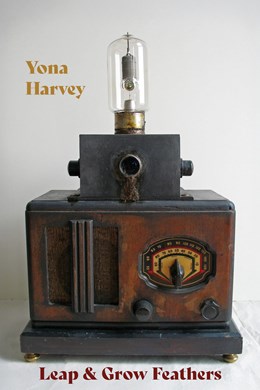
Leap & Grow Feathers, Yona Harvey
Publisher: Four Way Books
Publication Date: September 15, 2026
Format: Paperback
Both an instruction and a divination, Leap & Grow Feathers is an extraordinary transmission. In her third full-length collection, Yona Harvey listens — to her predecessors, her instincts, and her environment — gleaning sense from the static fraying our nerves, knowing the personal and the historical travel along the same frequency. Responding to the physical disruption and emotional disassociation of of the COVID-19 pandemic, the poet argues that the societal insistence on returning to “business as usual” reflects an institutional, academic, and political ineptitude to provide either physiological healing or social repair, a structural denial that erodes our humanity. As authoritarianism and ecological devastation progressively encroach on our lives, these poems prioritize hoodoo, spirit, intuition, and ancestral conversations in their readings, invoking the carekeeping and persistence of Harriet Tubman, Nikki Giovanni, and the countless forbears, unnamed and named, who traveled the Middle Passage and the Kalunga Crossing. This book channels the power and promise of that legacy as well as the full emotional range of sisterhood, the heartache and borrowed strength and shared laughter. Its humor, whitespace, sparseness, and longform narratives elicit reader participation and, in turn, enduring consideration. “This float. This bob. This drown. This rock. // (This Rock. This Rock.) // This Great Goddamn.” What do we find in this vastness, the simultaneity of the ever expanding time that lies ahead and full presence of history consolidating here now? An invitation to join Harvey in her vow: “May I never pretend, / May eye be I.” This collectionunveils our vision so we can see it all, not only yesterday’s “Nina Simone lyric / Spun out over a newborn Sunday” in this very moment but also the music unfurling over each incipient morning of the future world we might build together. Leap & Grow Feathers describes and directs: everything we need to survive, to shelter one another, and to protect the Earth lives already in our bodies, our lineages, and our lore.
Yona Harvey is the author of You Don’t Have to Go to Mars for Love, winner of The Believer Book Award in Poetry, and Hemming the Water, winner of the Kate Tufts Discovery Award and finalist for the Hurston/Wright Award. She’s the recipient of a Guggenheim Fellowship, a Japan Creative Artists Fellowship, the Heinz Foundation’s Carol Brown Award, and the inaugural Lucille Clifton Legacy Award from Saint Mary’s College of Maryland.
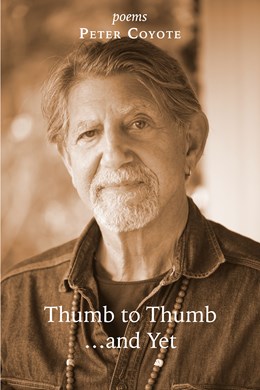
Thumb to Thumb… and Yet, Peter Coyote
Publisher: Four Way Books
Publication Date: September 15, 2026
Format: Paperback
If Emmy Award-winner Peter Coyote’s debut collection represents the culmination of a half-century’s devotion to writing poetry, his second functions as a true encore: triumphant and raw. Thumb to Thumb… and Yet presents eighty-plus years of living — the countercultural adventures, the journey from Zen Buddhist discipleship to priesthood, marriage and divorce, a public career in entertainment, and the private work and rewards of parenthood — not as a retrospective but as a perpetual process of becoming. Coyote captures often-elusive wisdom and infuses these pages with the fullness of human experience: weariness that labor never ceases, that we cannot outgrow suffering, that we’re like “Manteaux ducks, immobilized so the fat / of everything can be forced down our gullets,” the glut of gavage neverending and “no option to stop swallowing”; frustration that ambition and ego persist despite the “pre-dawn Zendo chill” and over five decades spent “thumb-to-thumb sitting” in devoted practice; the satisfaction of pleasure, “smiling in the ruined sheets”; gratitude for life consummated and life ongoing and life that will continue long after us, for the opportunity of existence, for the work itself, for the “single nuthatch [that] bows / upside down on the grand oak” and its reminder during meditation that “everything presents itself as a partner.” The titular qualification of that “and yet” is an argument against and a celebration of conclusion; in a masterful encapsulation of the lyrical moment itself, these poems find Coyote returning to the stage only to perform another finale, every end recycled toward beginning. One song cedes to another, and yet the music flows on.
Peter Coyote has performed as an actor in over 160 films for theaters and TV. He has worked with some of the world’s most distinguished filmmakers, including: Barry Levinson, Roman Polanski, Pedro Almodóvar, Steven Spielberg, Martin Ritt, Steven Soderbergh, Sidney Pollack and Jean-Paul Rappeneau. He is a double Emmy Award-winning narrator of over 150 documentary films, including Ken Burns’s National Parks, Prohibition, The West, The Dust Bowl, and The Roosevelts, for which he received his second Emmy in 2015. Recently, Peter has also completed Vietnam, The History of Country Music, a six-hour series on Ernest Hemingway and this year, a twelve-hour series for Mr. Burns on The American Revolution.
Since 1974, Coyote has remained a serious student and eventually a teacher of Zen Buddhism, studying at the San Francisco Zen Center and several years with Robert Aitken Roshi. Peter’s final teacher, Lewis Richmond, ordained and transmitted him, giving him autonomy as an independent Zen teacher.
Coyote’s memoir of the 1960s counter-culture, Sleeping Where I Fall, received universally excellent reviews and has been in continuous print since 1999. A previously published chapter of this book received a Pushcart Prize for Excellence. His second book, The Rainman’s Third Cure: An Irregular Education, about mentors and the search for wisdom, was named one of the top five non-fiction books published in California in 2015. Coyote’s third book, The Lone Ranger and Tonto Meet The Buddha, chronicles mask/improv classes he taught for 40 years, introducing people to ego-free reality experiences. Tongue of a Crow (Four Way Books, 2021), his first book of poems, selected work from 50 years of poetry writing. Zen in the Vernacular (2024) is his presentation of how Zen can be practiced in a secular environment. Coyote’s sixth book, Smothered by Riches, explores the 70-year history concerning the commitment of some of the nation’s greatest fortunes to subsidizing think-tanks and programs to undercut and eradicate government’s ability to regulate the corporate sector in its efforts to increase its profits without regard to the health and well-being of the nation’s citizens and the environment.
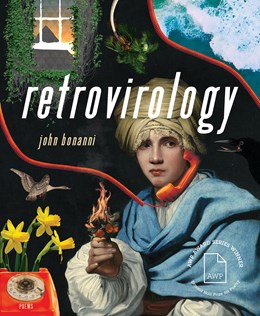
retrovirology, John Bonanni
Publisher: University of Pittsburgh Press
Publication Date: September 15, 2026
Format: Paperback
retrovirology oscillates between Queer childhood erasure and the AIDS epidemic, pulling from the ACT UP oral history project, informal interviews with survivors, and AIDS historians Sarah Schulman and David France. While some poems elegize key figures of AIDS history such as Larry Kramer and Gaëton Dugas, others operate as ekphrasis against the creative artwork of ACT UP’s direct actions. Combining reinterpretations of formal elements such as the concrete poem, the abecedarian, and the villanelle, post-confessional poems converse with a docupoetic history through an arc that examines what it meant to grow up Queer as a child in rural Pennsylvania in the late ’80s and early ’90s, surrounded by messages of gay disease and the violence of its silences. retrovirology, then, resurrects Queer elders to allow memory to “rise from its subjugated state” (Jung) and to carry with it, into our futures, all of its wisdom and fire.
John Bonanni founded and edits the Cape Cod Review. His poems have appeared in North American Review, Foglifter, Black Warrior Review, Washington Square Review, Florida Review, and Gulf Coast, and his literary criticism has been featured in DIAGRAM, Denver Quarterly, The Rumpus, and The Kenyon Review. He teaches on Cape Cod.
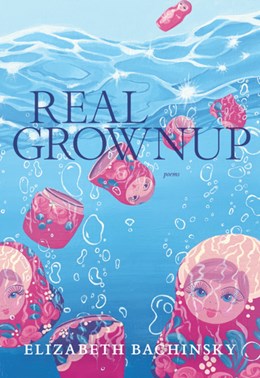
Real Grownup, Elizabeth Bachinsky
Publisher: Nightwood Editions
Publication Date: September 15, 2026
Format: Paperback
If Lorna Crozier, Susan Musgrave, Bronwen Wallace, Evelyn Lau or Joanne Arnott had been in the mosh pit at fifteen when Nirvana performed at the PNE Forum, this is what their poems might have looked like. In Real Grownup, Elizabeth Bachinsky plain-talks her way through the same gritty landscape that illuminated the poetry of her youth, but shows it from the perspective of a person at a waypoint in life, taking stock of the journey: birth, childhood, sex, loss, joy and death. This book is for those who have lived through everyday madness and want to look upon it with acceptance, humour and love.
Elizabeth Bachinsky is the author of six books of poetry, including Home of Sudden Service (2006), which was nominated for a Governor General’s Award, and God of Missed Connections (2009), which was nominated for the Pat Lowther Memorial Award, the KOBZAR Book Award and the George Ryga Award for Social Awareness in Literature. She lives in New Westminster, BC, on the traditional, unceded territories of the Qayqayt, Kwikwetlem, Kwantlen and Musqueam First Nations where she teaches creative writing at Douglas College.
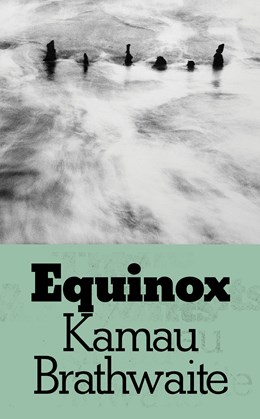
Equinox, Kamau Brathwaite
Publisher: New Directions
Publication Date: September 15, 2026
Format: Paperback
Equinox is an unforgettable and never-before-published masterwork completed by Kamau Brathwaite before his death in 2020. Written in his unique Sycorax typeface and replete with compelling images and photographs, Equinox contains poems written in Brathwaite’s singular Barbadian vernacular and visionary style—poems about the Middle Passage, the natural world, Billie Holiday, Whitney Houston, the Kumina dance in Jamaica, Nelson and Winnie Mandela, the Fukushima nuclear disaster in Japan, and Breughel’s painting “Landscape with the Fall of Icarus,” among many tidalectic topics. The lyrical poems in Equinox weave together history and culture with the imagery of Brathwaite’s native Barbados, weaving a lush tapestry of injustice, redemption, and hope.
Kamau Brathwaite (1930–2020) was a vitally important Caribbean poet and critic who wrote on the experience of Black cultural life throughout the worldwide African diaspora. Born in Bridgetown, Barbados, and educated in Barbados and England, Brathwaite received the Griffin Prize as well as Guggenheim and Fulbright Fellowships. He was for many years a professor of Comparative Literature at New York University and awarded an Honorary Doctorate from the University of Sussex in 2002.
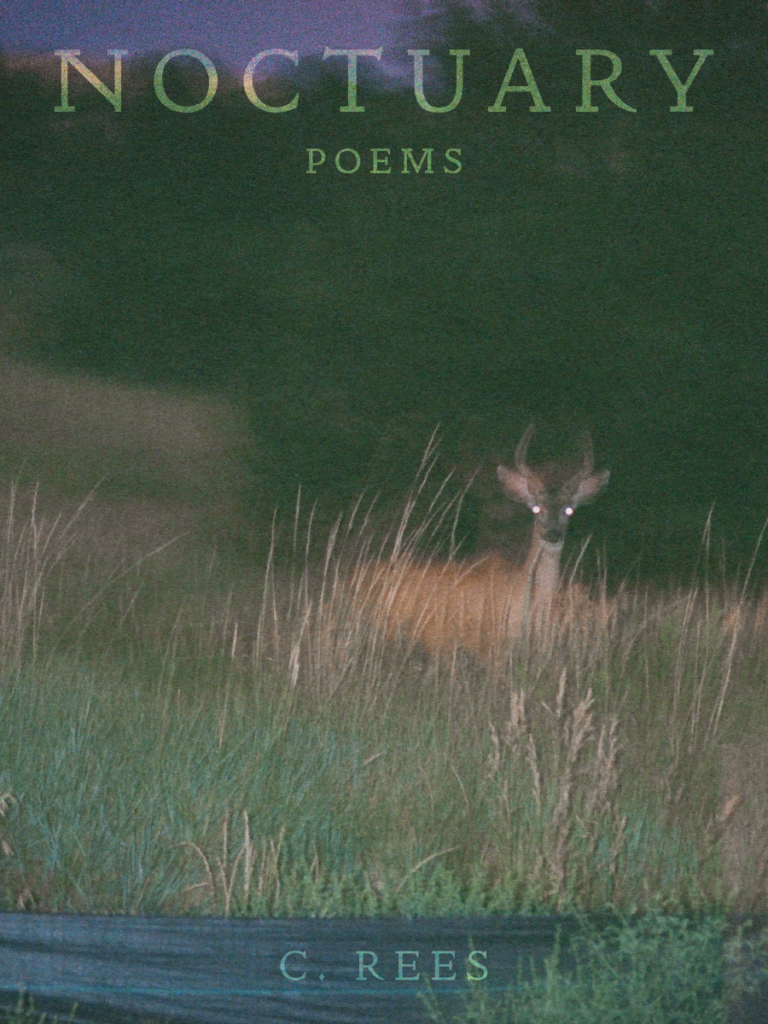
NOCTUARY, C. Rees
Publisher: Host Publications
Publication Date: September 15, 2026
Format: Paperback
In this haunting debut, C. Rees immerses us in a landscape of personal and collective loss, where grief is not a process with beginning and end, but a churning ecology we inhabit. NOCTUARY bears witness to its rivers, trees, and lichens, as well as the contamination and exploitation of a rural county where gods “bleed settler dreams into the water- / shed” and “headstones grow […] like parasitoid wasps,” never looking away from our own complicity in “history’s cruel regard.” In these necropastoral nocturnes, the ruin wrought upon this land and the peoples who continue to inhabit it is unburied, as present as “foxes bruised with exhaust.”
Through a divinatory poetics, wielding formal trickery, bounding echoes, and polyvocality, these poems unsettle inherited puritanical reasoning, favoring only what can be seen with the nightside eye. A queer necromancy, the poems act as invocations calling back the dead. In Rees’s thrilling “ecto-poetics,” a family’s communal grief teems.
Where memory and story fail, these poems make a ritual of attention, attuning to the charged drift of what moves between lifetimes, transforming occlusions into generative sites of inquiry and encounter. Not in a search for what is factual, but what is fractured, burgeoning, and shared, where “time [binds] us like onion grass.” This book invites us to risk a brush with what is possible, to lower into its lyrical floodplain of lamentation, where we may be bound in a complex keening that, like foxgloves, grows from scattered ash.
C. Rees (they/them) is a nonbinary poet, educator, and bookseller. They were raised in Pennsylvania (Lënapehòkink) and currently live on Coahuiltecan, Comanche, Jumanos, Lipan Apache, Sana, and Tonkawa land, what is now Austin, Texas. C. holds an MFA in Poetry from the New Writers Project. They are ideologically and materially committed to a free Palestine.
Tending the Flock, Sally Green
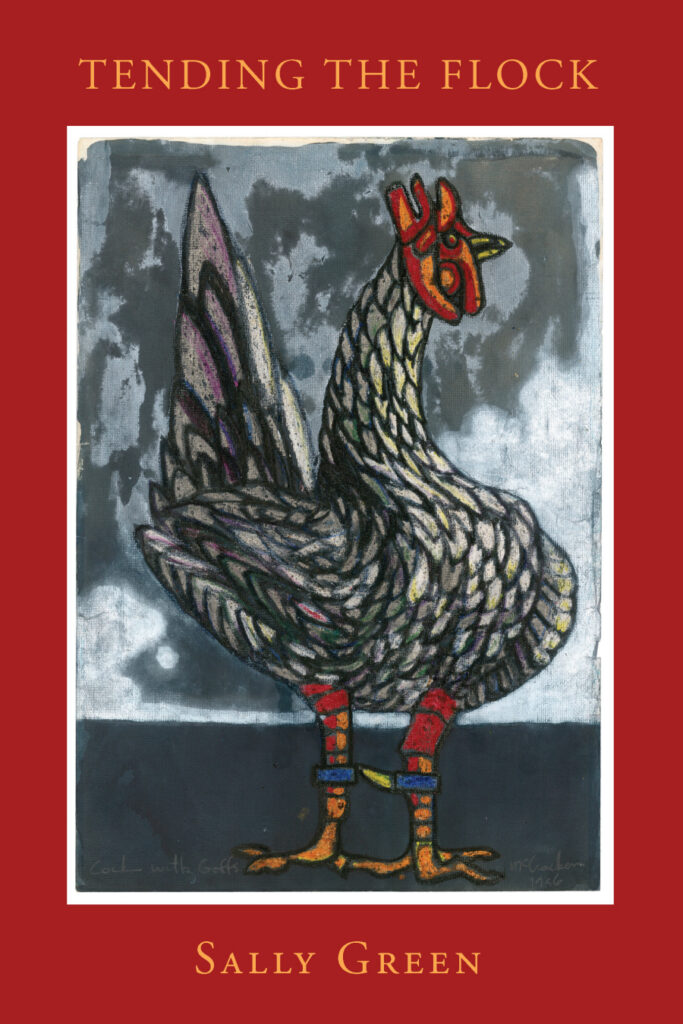
Publisher: Empty Bowl Press
Publication Date: September 15, 2026
Format: Paperback
For half a century Sally Green has been the caretaker of words belonging to other poets, designing and printing books and broadsides as copublisher of the award-winning Brooding Heron Press. During all those years she was also developing her own poetic voice forged from a daily immersion in meaningful work, family, community, and place. In Tending the Flock, the remarkable attention to detail that brought her praise as a letterpress printer is also present in her poems, which former Ireland Professor of Poetry Paula Meehan has called “poems of grace and wisdom,” words treated as though they matter. Whether describing daily life on Waldron Island or adopting the commonsense voice of Aunt Mabel, this is a poet of humility and compassion whose unique way of encountering the world enriches us all.
Sally Green was born in Port Orchard, Washington. Initial exposure to letterpress printing came during a summer workshop at Centrum in 1977, with Tree Swenson, followed by countless hours of hands-on experience and consultation with premier printers of the Northwest (Clifford Burke, Jules Remedios Faye, Christopher Stern, etc.).
She co-founded Brooding Heron Press after moving to remote Waldron Island with her family into a surplus army tent, where she printed her first books. In 1985 the Greens moved into a log house built with their own hands. Sally continued press work in the shop that takes up a third of the ground floor, making books that have won multiple prizes and brought positive notice from Fine Print, Bookways, and the New York Times.
During her time as publisher and printer, Sally was also working on her own poems. Her first collection appeared in 2014.
Everything Has Been Moved, Even the Dead, Jen Siraganian
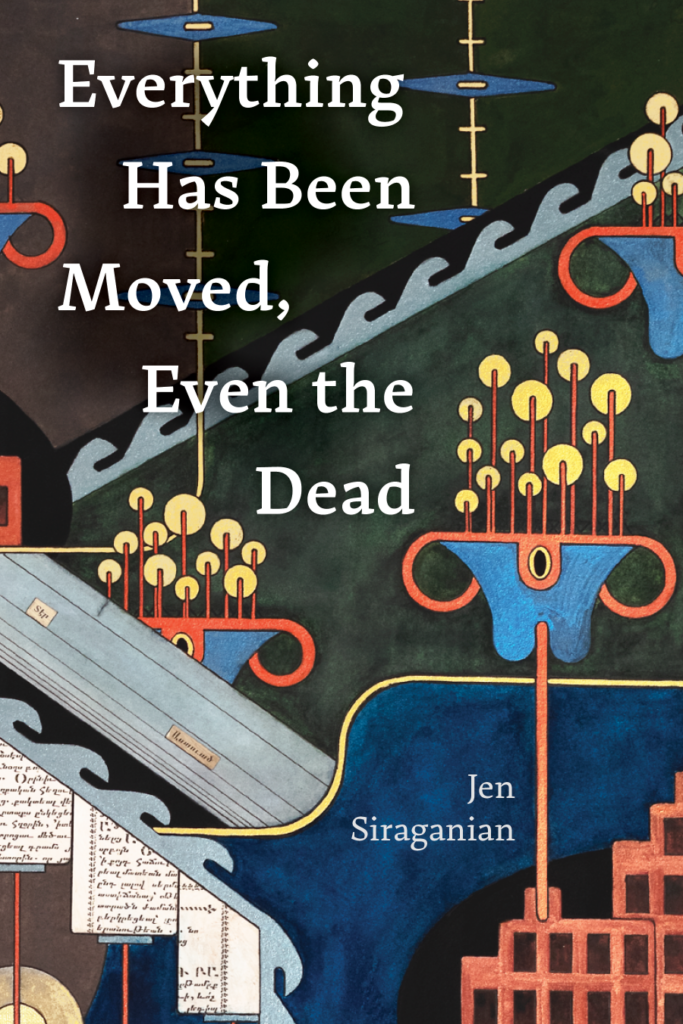
Publisher: Perugia Press
Publication Date: September 15, 2026
Format: Paperback
In her debut collection, Everything Has Been Moved, Even the Dead, Jen Siraganian traces a self shaped by history, fragmentation, and memory as she weaves her family’s past in the Middle East with her identity as an Armenian-American woman and mother. Whether portraying a grandparent’s survival during the Armenian Genocide, a father’s childhood in 1940s Palestine, or a son’s birth when “death is a neighbor,” Siraganian’s poems interrogate concepts of home, origins, belonging, and displacement. Using a docupoetic lens, the poet braids narratives with archival photographs and artifacts to chart cycles of cultural and historic erasure while enacting an intertextual conversation with artists of the diaspora, and with art itself. Through poems that seed each other with recurring images of pomegranates, mushrooms, and fire, Everything Has Been Moved, Even the Dead pushes against annihilation with a voice that resists silence.
Jen Siraganian is an Armenian-American writer, educator, and former poet laureate of Los Gatos, California. Her poetry has appeared in AGNI, Best New Poets 2016 and 2025, The Cincinnati Review, Electric Literature, Poetry Daily, Prairie Schooner, The Rumpus, the anthology Heaven Looks Like Us: Palestinian Poetry, and elsewhere, and she is a winner of the New Ohio Review Poetry Prize and The Writing Salon’s Jane Underwood Poetry Prize, She served as managing director of Litquake: San Francisco’s Literary Festival, and she is a Lucas Artist Fellow at the Montalvo Arts Center in Saratoga, California. Everything Has Been Moved, Even the Dead is her first book.
The Goat’s Tongue, Peace Akintade-Oluwagbeye
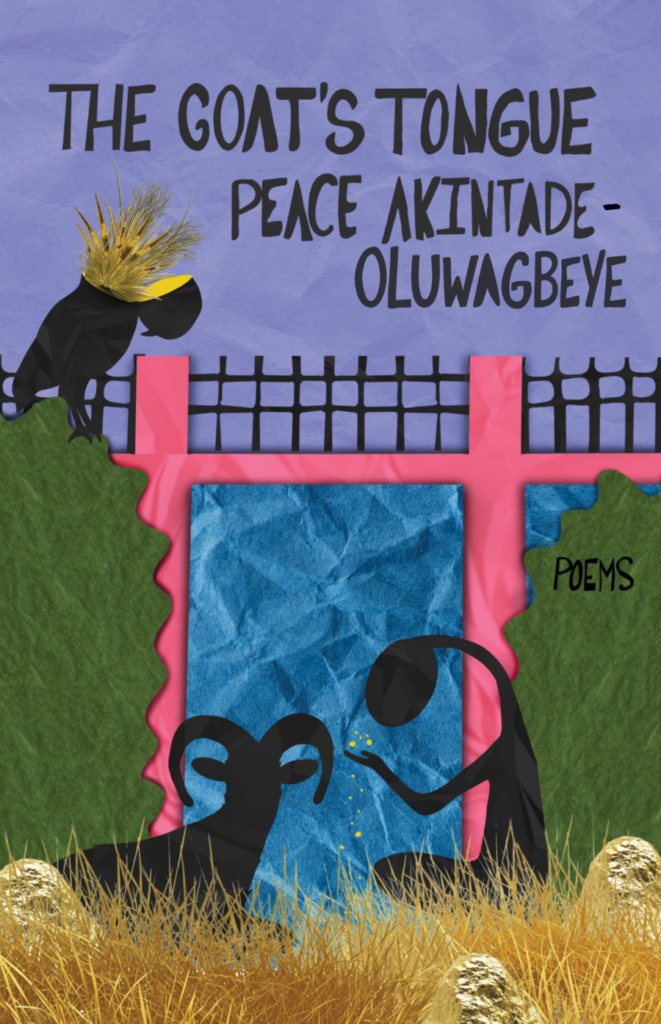
Publisher: Metatron Press
Publication Date: September 17, 2026
Format: Paperback
The Goat’s Tongue is an interdisciplinary poetry collection that follows a girl, a goat, and an owl through the landscapes of vulnerability, belonging, memory, rejection, and forgiveness.
Rooted in Yoruba oral literature and born from Peace Akintade-Oluwagbeye’s durational performance work Ori. Ara. Emi. (Ori. Ori. My Head), the collection moves between English and a symbolic language created by the author. Through poetry, folklore, performance, and visual script, Akintade-Oluwagbeye transforms a childhood memory of silence, dirt, goats, and isolation into a mythic inquiry into what it means to speak, to remember, and to become human.
Haunting, tender, and formally inventive, The Goat’s Tongue is a work of ancestral imagination and embodied poetics — a book about the hunger to belong, the pain of rejection, and the strange, sacred work of finding a voice.
Rooted in childhood memory, ancestral knowledge, and postcolonial questions of isolation and communication, The Goat’s Tongue bridges oral literature and the contemporary page, offering a haunting, intimate, and formally inventive work about the struggle to speak, the hunger for belonging, and the transformative power of poetry.
Peace Akintade-Oluwagbeye, Saskatchewan’s 11th Poet Laureate, is an African-Canadian Interdisciplinary Poet, Public Speaker, Chorus-Poem Playwright, and Thespian residing in Saskatoon Saskatchewan. Organically from Yorubaland Nigeria, Peace explores the intersectionality of the artist community from an explorer’s perspective, dipping her honey-stained fingers into poetry, dance, performance art and the theatre world.
Malocchia, Melissa Eleftherion
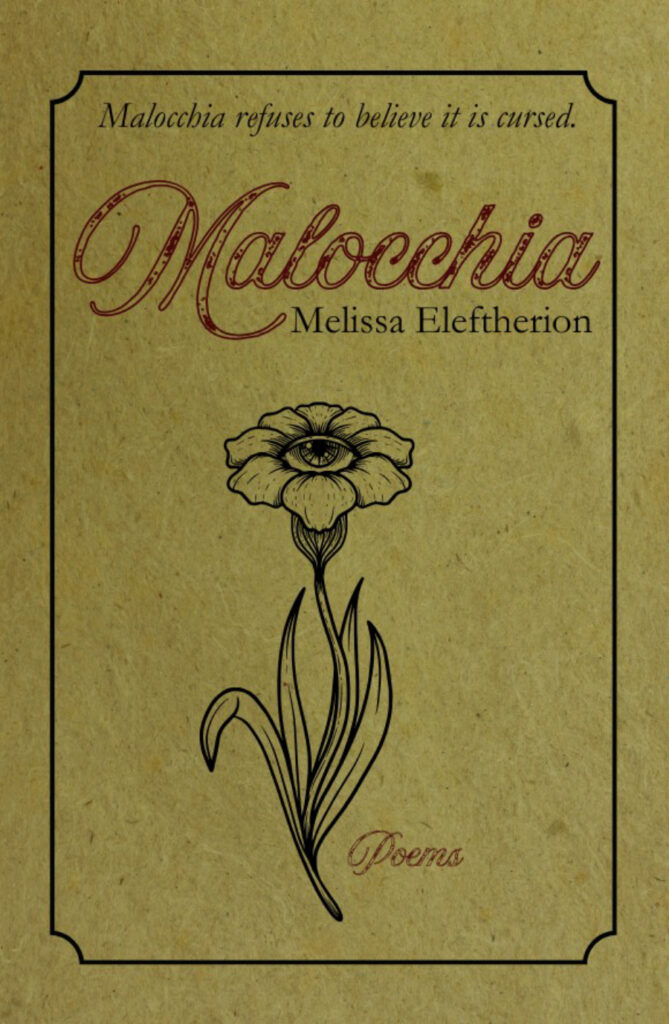
Publisher: White Stag Publishing
Publication Date: September 21, 2026
Format: Paperback
Malocchia is a collection of narrative & erasure poems that wander the haunted terrain of bloodlines, memory, & becoming. Taking its name from the feminized form of the Italian malocchio, or “evil eye”, this book invokes a matriarchal inheritance through which the speaker seeks to discern their own reflection, blessing & curse entwined. This book is an excavation to uncover the relics of ancestry, confront the unseen forces that bind generations together, & explore a self that can endure beyond them. Through erasure, invocation, & revelation, Malocchia is an unflinching meditation on what we carry, what we choose to leave behind, & the possibility of forging a future beyond the weight of lineage.
Malocchia refuses to believe it is cursed.
Melissa Eleftherion (she/they) is a writer, a librarian, and a visual artist. Born & raised in Brooklyn, they are the author of four poetry collections: field guide to autobiography (The Operating System, 2018), gutter rainbows (Querencia Press, 2024), Suture (Cooper Dillon, 2026) & Malocchia (White Stag, 2026) as well as twelve chapbooks including abject sutures (above/ground press, 2024). Melissa holds degrees from Brooklyn College, Mills College, and San Jose State University. A six-time nominee for the Pushcart Prize, her work has been widely published & recently appeared/is forthcoming in Sixth Finch, Verse Daily, DIAGRAM, & South Dakota Review. Melissa served as Poet Laureate for the City of Ukiah (2021-2024), and now lives in Northern California where she manages the Ukiah Branch Library and curates the LOBA Reading Series.
Don’t see a poetry title published between 9/15 and 9/21 here? Contact us to let us know!
Contents
“This language offers one possible framing through which to appreciate the law’s capacity to hope for, request, and even command commitment to a more just future.” Read two poems by Maggie Wang, our first biweekly poet of the Summer 2026 issue, along with a few words about “Possibilities for Action.”
Chapbook Poem: I’ll Never Look This Good Again by Douglas Piccinnini
“[The poem] came out of real pressure: despair, worry, and grief I wanted to hold unflinchingly, alongside the anxiety of becoming a parent… For me the poem became a meditation on all the feeling that surfaces precisely when we’re told to feel only joy.” Read an excerpt from Douglas Piccinnini’s chapbook, House of Bad Memories, along with a few words from the poet.
“She sees herself in carbon, the element that bonds with almost anything- not because it wants to, but because it has empty spaces and things keep showing up to fill them. Notifications. Noise. Needs that never stop arriving.” Read four poems by Joely Williams, our second biweekly poet of the Summer 2026 issue, along with a few words about “Single Mother Considers the Periodic Table.”
ADHD in a Non-ADHD World: on Undersight by Alison Hurwitz
“[Hurwitz] shares moments of angst and moments of awe. More than that, there are moments of deep recognition. She sees herself in [her sons] and, in fact, receives a later-life ADHD diagnosis of her own.” Read the full chapbook review by new contributor, Nancy Murphy.
“The woman’s head & hair are lavishly dressed. I probably leapt off the logic of the hairdresser being blind and therefore had to work on the head/body/mind rather than just hair as a surface issue of presentation.” Read two poems by Irene Cunningham, our third biweekly poet of the Summer 2026 issue, along with a few words about “The Blind Hairdresser.”
Flash Fiction: Nova by Kimmy Chang
“‘Nova’ is a lyrical second-person story about the narrator’s first true encounter with death…the story presents loss not as beautiful in itself, but as the place where beauty begins.” Read the first original fiction piece of the Summer 2026 issue, “Nova” by Kimmy Chang.
“To fit the nuanced, dimensional experience of dysphoria and transition into narrative…often feels flattening, falsely assured. I wanted to look at this discomfort I felt, to see what was necessary in it.” Read three poems by Joshua Zeitler, our fourth biweekly poet of the Summer 2026 issue, along with a few words about “Cobbling.”
Excerpt: “On the puzzle still inside my head” by Truong Tran
“I am trying to excavate memories. I am trying to negotiate the difficult realities of existing as a brown man in this country and within the consciousness of white America.” Read an excerpt from Truong Tran’s forthcoming book from City Lights, How to Exi(s)t: A Poet’s Memoir.
“These poems try to make sense of how I arrived at a life that probably seems well thought-out, but has been one reactionary choice after another.” Read three poems by A.R. Dugan, our fifth biweekly poet of the Summer 2026 issue, along with a few words about “Sleeptalking.”
Original Fiction: Muse by Somtoo Celestine Ezioha
“What I tried to trace was the underside. How watching someone closely for long enough becomes a substitute for approaching them.” Read the second original fiction piece of the Summer 2026 issue, “Muse” by Somtoo Celestine Ezioha.
“After childbirth, my body became a site of criticism rather than something to be celebrated for what it had endured and created. Writing this became a way to confront that experience…” Read three poems by Tanya Tuzeo, our sixth biweekly poet of the Summer 2026 issue, along with a few words about “i get Botox.”
“Through images of a familiar street, personal belongings, and a figure suspended in time, the poem considers absence, remembrance, and the quiet ways we continue searching for those who are gone.” Read two poems by Aardhra Chandran, our seventh, and final, biweekly poet of the Summer 2026 issue, along with a few words about “Street View, 2021.”
Original Fiction: Aletheia by Kalliste Hardy
“Each fragment opens a door to the unsaid or the forgotten, letting language bruise and bloom. It is a study in red, in inheritance, in language, and of the quiet haunt of becoming.” Read the third, and final, original fiction piece of the Summer 2026 issue, “Aletheia” by Kalliste Hardy.